The online journal of Luke Dockery

Category: Christianity (Page 9 of 64)

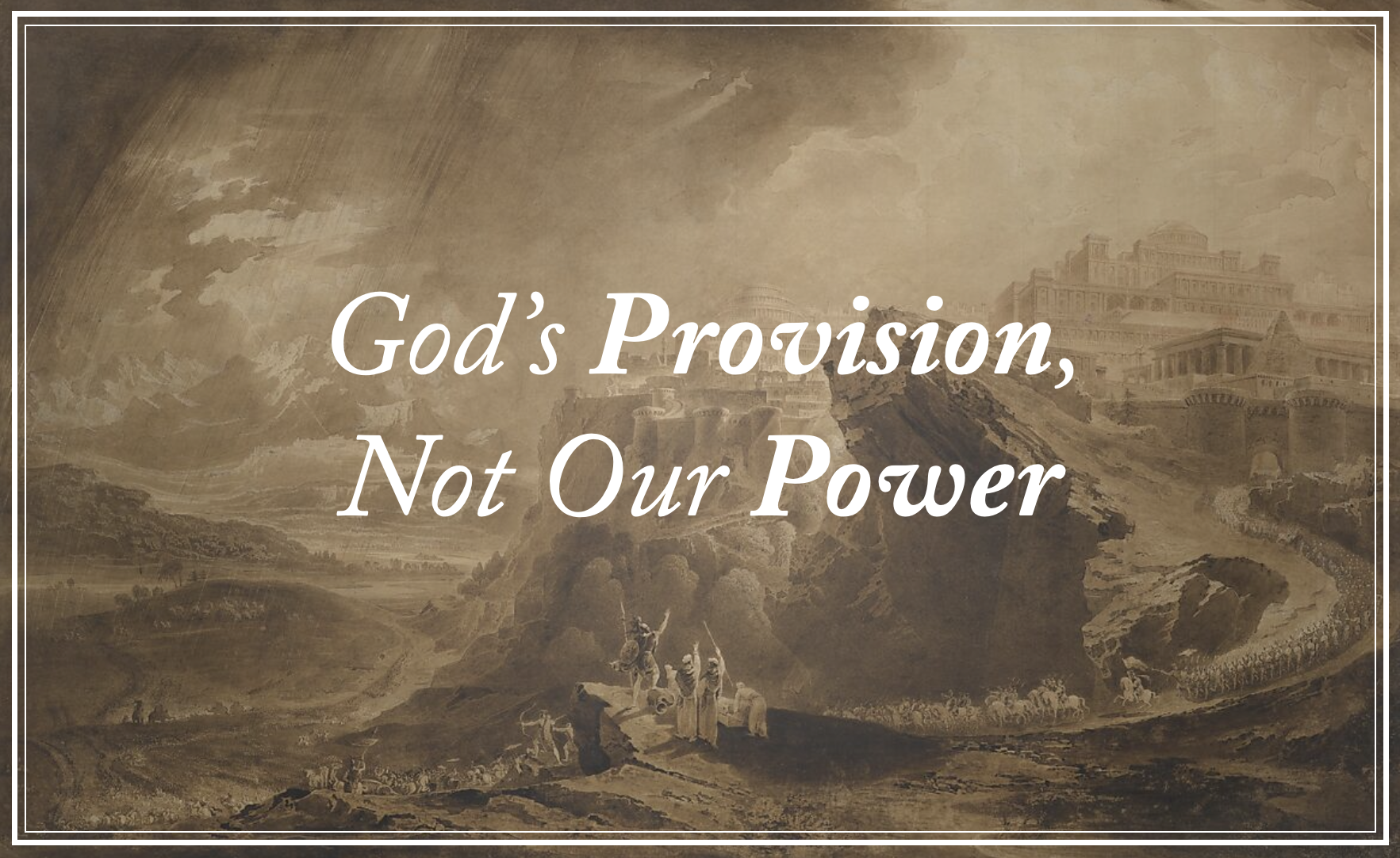
God’s Provision, Not Our Power

At the end of the book of Joshua, the people of Israel find themselves in the promised land of Canaan, and their mission has been largely successful. Joshua, knowing that his time as Israel’s leader is growing short, renews the covenant with the people:

1 Joshua gathered all the tribes of Israel to Shechem and summoned the elders, the heads, the judges, and the officers of Israel. And they presented themselves before God. 2 And Joshua said to all the people, “Thus says the LORD, the God of Israel, ‘Long ago, your fathers lived beyond the Euphrates, Terah, the father of Abraham and of Nahor; and they served other gods. 3 Then I took your father Abraham from beyond the River and led him through all the land of Canaan, and made his offspring many. I gave him Isaac. 4 And to Isaac I gave Jacob and Esau. And I gave Esau the hill country of Seir to possess, but Jacob and his children went down to Egypt. 5 And I sent Moses and Aaron, and I plagued Egypt with what I did in the midst of it, and afterward I brought you out.

6 “‘Then I brought your fathers out of Egypt, and you came to the sea. And the Egyptians pursued your fathers with chariots and horsemen to the Red Sea. 7 And when they cried to the LORD, he put darkness between you and the Egyptians and made the sea come upon them and cover them; and your eyes saw what I did in Egypt. And you lived in the wilderness a long time. 8 Then I brought you to the land of the Amorites, who lived on the other side of the Jordan. They fought with you, and I gave them into your hand, and you took possession of their land, and I destroyed them before you. 9 Then Balak the son of Zippor, king of Moab, arose and fought against Israel. And he sent and invited Balaam the son of Beor to curse you, 10 but I would not listen to Balaam. Indeed, he blessed you. So I delivered you out of his hand. 11 And you went over the Jordan and came to Jericho, and the leaders of Jericho fought against you, and also the Amorites, the Perizzites, the Canaanites, the Hittites, the Girgashites, the Hivites, and the Jebusites. And I gave them into your hand. 12 And I sent the hornet before you, which drove them out before you, the two kings of the Amorites; it was not by your sword or by your bow. 13 I gave you a land on which you had not labored and cities that you had not built, and you dwell in them. You eat the fruit of vineyards and olive orchards that you did not plant.’

(Joshua 24.1-13)

Joshua recounts for the people their story since God had called their ancestor Abraham, a pagan, and guided him to Canaan where He blessed him with land and offspring. Abraham begets Isaac, and Isaac begets Jacob. Jacob and his children end up down in Egypt where they are eventually oppressed, but God provides for them by raising up Moses and Aaron, bringing plagues upon Egypt and freeing His people. He parts the Red Sea and saves them from the Egyptian army. The people live in the wilderness for a long time, where God takes care of them and helps them overcome their enemies. Then, God leads them into the promised land, and God drives out their enemies before them—it is not by their sword or bow that they have success, but God’s provision for them.

Joshua rehearses this story to remind the people that it is God’s provision, not their power, that has led them to the blessings they currently enjoy. It was not something they did; it was not based on some remarkable quality within the people of Israel themselves.

Joshua knows that his time as their leader is drawing to a close, and he wants to motivate them to faithfulness after he is gone. It is essential that the people realize their dependence on God—their welfare as a nation depends on their faithfulness to a God who provides for them.

This idea—that it is not our power, but God’s provision, that leads to our well-being—is not unique to Joshua or this particular time period. Rather, it is a consistent theme of Scripture that comes to its fulfillment in Jesus. As Paul famously states:

8 For by grace you have been saved through faith. And this is not your own doing; it is the gift of God, 9 not a result of works, so that no one may boast.

(Ephesians 2.8-9)

Our salvation is God’s gift, made possible by the work of Jesus Christ. It is not our own doing. There is no cause for us to boast, because we have done nothing. It is all about God’s provision; not our own power.


In this loose series of Scripture Reflections, I am sharing brief thoughts spurred on by my Bible reading. By way of reminder, my goal for these brief posts is two-fold:

(1) To remark on aspects of the biblical text that I find to be of interest that the reader may or may not have thought about previously.

(2) When possible, to point to the work and person of Jesus Christ. I believe the Bible is a unified story that points to Jesus, which means that He is frequently alluded to or foreshadowed in some way throughout the biblical canon.

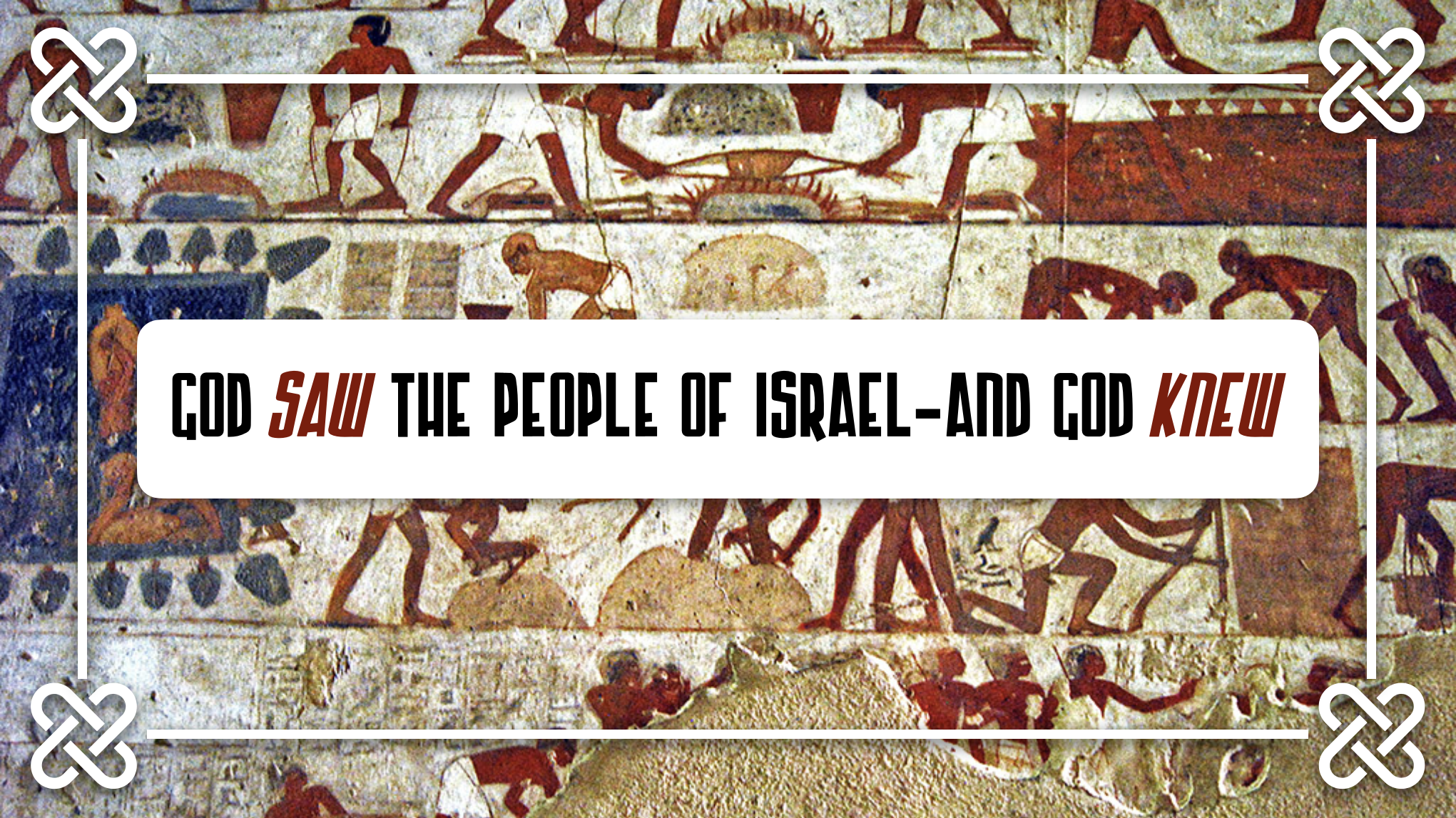
“God Saw the People of Israel—and God Knew”

The early chapters of Exodus recount a dark period in the history of Israel.

Abraham’s descendants had arrived in Egypt through the influence of Joseph, who from his high position as Pharaoh’s right-hand man, had provided for the survival of his family (and many others) during a time of famine. Joseph’s brothers and their families stayed in Egypt, and grew and multiplied over time.

That was at the end of Genesis, but now, at the beginning of Exodus, a lot of time has passed and a new Pharaoh has come to power who doesn’t know Joseph or care about his family or descendants. This new Pharaoh is only concerned about the size and vigor of the Israelites, and so he decides to enslave them and force them into harsh labor. Even worse, he commands that Hebrew baby boys shouldn’t be allowed to live.

In Exodus 2, we have the famous story of the birth of Moses, and also the story of Moses killing an Egyptian when he grows up and then fleeing to the wilderness.

It is in this context that there is a brief note at the end of Exodus 2, as people find their servitude to be unbearable and, as a result, cry out to God:

During those many days the king of Egypt died, and the people of Israel groaned because of their slavery and cried out for help. Their cry for rescue from slavery came up to God. And God heard their groaning, and God remembered his covenant with Abraham, with Isaac, and with Jacob. God saw the people of Israel—and God knew.

(Exodus 2.23-25)

This is easy to overlook, but so powerful—the people cry out to God, and God hears their cry. He sees their suffering and is aware of what is going on. God saw the people of Israel—and God knew.

Of course, God responds to their problem by raising Moses to be his people’s great liberator. This plan would take time to develop, as we know that Moses spent 40 years in the wilderness before returning to Egypt, but the plan was in motion, and Moses would lead the Israelites from slavery to freedom. God saw the people of Israel—and God knew.

But, if you continue in the story of God’s people as told in the Hebrew Bible, you know that this is hardly the end of the people’s problems. There would be many more times in which the people would cry out to God and God would respond. The response wouldn’t always come in the way or the timeframe that the people expected, but God saw the people of Israel—and God knew.

Ultimately, though, we see this truth played out in the person of Jesus.

For generations, God’s people groaned under the burden of the consequences of their sinfulness: captivity in foreign lands, a lackluster return to their promised land, a temple and a nation that was a shell of their former glory, a persistent vulnerability to the pull of sin, and a desperate need for the Davidic descendant, the Messianic king for whom they had waited so long.

Deeply aware of humanity’s slavery to sin, in His own time and in His own way, God responded: the Son put on flesh and lived as a human. Through the incarnation of Jesus, God saw—and God knew in a new and special way, through His own experience of the human condition (Hebrews 4.15). While identifying with our human frailties, Jesus was different in that He lived without sin. He died to release us from our own captivity to sin, and was vindicated by the Father in His resurrection.

But there is more!

Before His crucifixion, Jesus told His disciples that He would be leaving, but that when He did, a Helper would come—God’s Holy Spirit—who would be with them (John 15). The Holy Spirit indwells followers of Jesus and, indeed, helps us in many ways. One of those ways is in our own communication with God:

Likewise the Spirit helps us in our weakness. For we do not know what to pray for as we ought, but the Spirit himself intercedes for us with groanings too deep for words.

(Romans 8.26)

Did you catch that? As we struggle through this life and our ongoing battle with sin, we are at times at a loss for what to pray. But the Spirit Himself intercedes for us with groanings too deep for words. The Israelites groaned to God for help; now, through the power of the Spirit, we don’t just groan to God, God groans in us…to Himself!

The Israelites groaned to God for help; now, through the power of the Spirit, we don’t just groan TO God, God groans IN us…TO Himself! Share on X

But still, there is more!

While we are assured that Jesus has defeated Satan, sin, and death, and the presence of the Spirit in our live serves as a down payment on our salvation, we continue to live in a broken world where there is still much about which we may rightly cry out to God. Against that reality, the promise of Scripture and the source of Christian hope is that Jesus will return one day, the cosmos will be redeemed, and every tear will be wiped from the eyes of God’s people.

The timeline may be different from what we expect, so we wait…and wait. But we can be confident, because God saw—and God knew.


In this loose series of Scripture Reflections, I am sharing brief thoughts spurred on by my Bible reading. By way of reminder, my goal for these brief posts is two-fold:

(1) To remark on aspects of the biblical text that I find to be of interest that the reader may or may not have thought about previously.

(2) When possible, to point to the work and person of Jesus Christ. I believe the Bible is a unified story that points to Jesus, which means that He is frequently alluded to or foreshadowed in some way throughout the biblical canon.


Photo Credit for the image above goes to Ferrell Jenkins. The image comes from the tomb of Vizier Rekhmire (ca. 1470-1445 BC), and depicts a brickmaking and building scene featuring slaves from the rough period of Israelite bondage in Egypt.

Reading in 2023

I enjoy reading and also making lists, so this is always one of my favorite yearly posts because it involves both of those things. I will offer some thoughts on my favorite books of the year below, but first, here is the list of books I read in 2023:

  1. All Things Wise and Wonderful, by James Herriot
  2. I Must Betray You, by Ruth Sepetys
  3. Don’t Know Tough, by Eli Cranor
  4. Erasing Hell: What God Said about Eternity, and the Things We’ve Made Up, by Francis Chan and Preston Sprinkle
  5. Anxious for Nothing: Finding Calm in a Chaotic World, by Max Lucado
  6. Gentle and Lowly: The Heart of Christ for Sinners and Sufferers, by Dane Ortlund
  7. The Deeply Formed Life: Five Transformative Values to Root Us in the Way of Jesus, by Rich Villodas
  8. A Long Obedience in the Same Direction: Discipleship in an Instant Society, by Eugene Peterson
  9. What Happened to the Bennetts, by Lisa Scottoline
  10. The Woman in the Window, by A.J. Finn
  11. Where Men Win Glory: The Odyssey of Pat Tillman, by Jon Krakauer
  12. The Family Remains, by Lisa Jewell
  13. My Name is Lucy Barton, by Elizabeth Strout
  14. Lucy by the Sea, by Elizabeth Strout
  15. Oh William!, by Elizabeth Strout
  16. Anything is Possible, by Elizabeth Strout
  17. The Paris Apartment, by Lucy Foley
  18. The Ruthless Elimination of Hurry: How to Stay Emotionally Healthy and Spiritually Alive in the Chaos of the Modern World, by John Mark Comer
  19. A Tale of Two Cities, by Charles Dickens
  20. Counter Culture: A Study of the Sermon on the Mount, by Luke Dockery
  21. The Baseball 100, by Joe Posnanski
  22. The Revolutionary: Samuel Adams, by Stacy Schiff
  23. At the Blue Hole: Elegy for a Church on the Edge, by Jack Reese
  24. Mama Bear Apologetics: Empowering Your Kids to Challenge Cultural Lies, edited by Hillary Morgan Ferrer
  25. Under an Outlaw Moon: A Novel, by Dietrich Kalteis
  26. Harry Potter and the Sorcerer’s Stone, by J.K. Rowling
  27. The Guest List, by Lucy Foley
  28. Around the Bible in 80 Days: The Story of God from Creation to New Creation, by John Mark Hicks
  29. The Alice Network, by Kate Quinn
  30. War: A Handbook for Spiritual Warfare, by Robb Hadley
  31. The Reason for God: Belief in an Age of Skepticism, by Timothy Keller
  32. White Too Long: The Legacy of White Supremacy in American Christianity, by Robert P. Jones
  33. The Lord God Made Them All, by James Herriot
  34. Surprised by Joy, by C.S. Lewis
  35. Harry Potter and the Sorcerer’s Stone, by J.K. Rowling
  36. Hebrews: Grace and Gratitude, by David deSilva
  37. Waco: David Koresh, the Branch Davidians, and a Legacy of Rage, by Jeff Guinn
  38. Be Thou My Vision: A Liturgy for Daily Worship, by Jonathan Gibson
  39. 10 Questions Every Teen Should Ask (And Answer) about Christianity, by Rebecca McLaughlin
  40. Caste: The Origins of Our Discontents, by Isabel Wilkerson
  41. Everything I Never Told You, by Celeste Ng
  42. The Woman in Cabin 10, by Ruth Ware
  43. How (Not) To Be Secular: Reading Charles Taylor, by James K.A. Smith
  44. The Butchering Art: Joseph Lister’s Quest to Transform the Grisly World of Victorian Medicine, by Lindsey Fitzharris
  45. Seeking Allah, Finding Jesus: A Devout Muslim Encounters Christianity, by Nabeel Qureshi
  46. The Sound and the Fury, by William Faulkner
  47. Autopsy of a Deceased Church: 12 Ways to Keep Yours Alive, by Thom S. Rainer
  48. The Four Loves, by C.S. Lewis
  49. A Farewell to Mars: An Evangelical Pastor’s Journey Toward the Biblical Gospel of Peace, by Brian Zahnd
  50. Transforming Encounters: Baptism, Assembly, and the Lord’s Supper, by John Mark Hicks
  51. Why Are We Here? Ecclesiastes for Teens, by Luke Dockery
  52. Under the Banner of Heaven: A Story of Violent Faith, by Jon Krakauer
  53. Inspired: Slaying Giants, Walking on Water, and Loving the Bible Again, by Rachel Held Evans
  54. Forming Resilient Children: The Role of Spiritual Formation for Healthy Development, by Holly Catterton Allen
  55. Ozark Dogs, by Eli Cranor
  56. Learning to Walk in the Dark, by Barbara Brown Taylor
  57. Ty Cobb: A Terrible Beauty, by Charles Leerhsen
  58. The Road Back to You: An Enneagram Journey to Self-Discovery, by Ian Morgan Cron and Suzanne Stabile
  59. The Ruin of All Witches: Life and Death in the New World, by Malcolm Gaskill
  60. The Genesis of Gender: A Christian Theory, by Abigail Favale
  61. On the Edge of the Dark Sea of Darkness, by Andrew Peterson
  62. The Prestige, by Christopher Priest
  63. Force of Nature, by Jane Harper
  64. North! Or Be Eaten, by Andrew Peterson
  65. The Monster in the Hollows, by Andrew Peterson
  66. Baptism: Uniting Kids to Jesus, by Kathy R. Craig
  67. Kingdom Parables: A Study of the Stories of Jesus, by Jeremy Myers and Luke Dockery
  68. Strange New World: How Thinkers and Activists Redefined Identity and Sparked the Sexual Revolution, by Carl R. Trueman

A few observations before I talk about my favorite books of the year:

  • My reading total increased from 63 books in 2022 to 68 in 2023. This is the most books I have read in a year since I started counting. I don’t have a clear explanation for why my reading numbers increased this year.
  • I read some really good books in 2023, but I wish I had read more books on biblical studies and theology that I really enjoyed.
  • I didn’t intentionally plan this, but I did quite a bit of reading that either focused on apologetics or trying to understand our current, increasingly-secular context (24, 31, 32, 39, 40, 43, 45, 60, 68). This was really good for me, as I think it has given me a better sense of “how we got here” and how to respond from a Christian perspective.
  • My “Books to Read” list (of books that I already own) remains incredibly long. I read a few books from this list this past year (while adding other books to it), and I plan to continue to prioritize this for my reading in 2024 (though I always come across new books that I want to read, and I’m sure that will continue to happen).

Here are my Top 10 books for the year with some brief thoughts on each (presented in order of when I read them, not ranked 1-10):
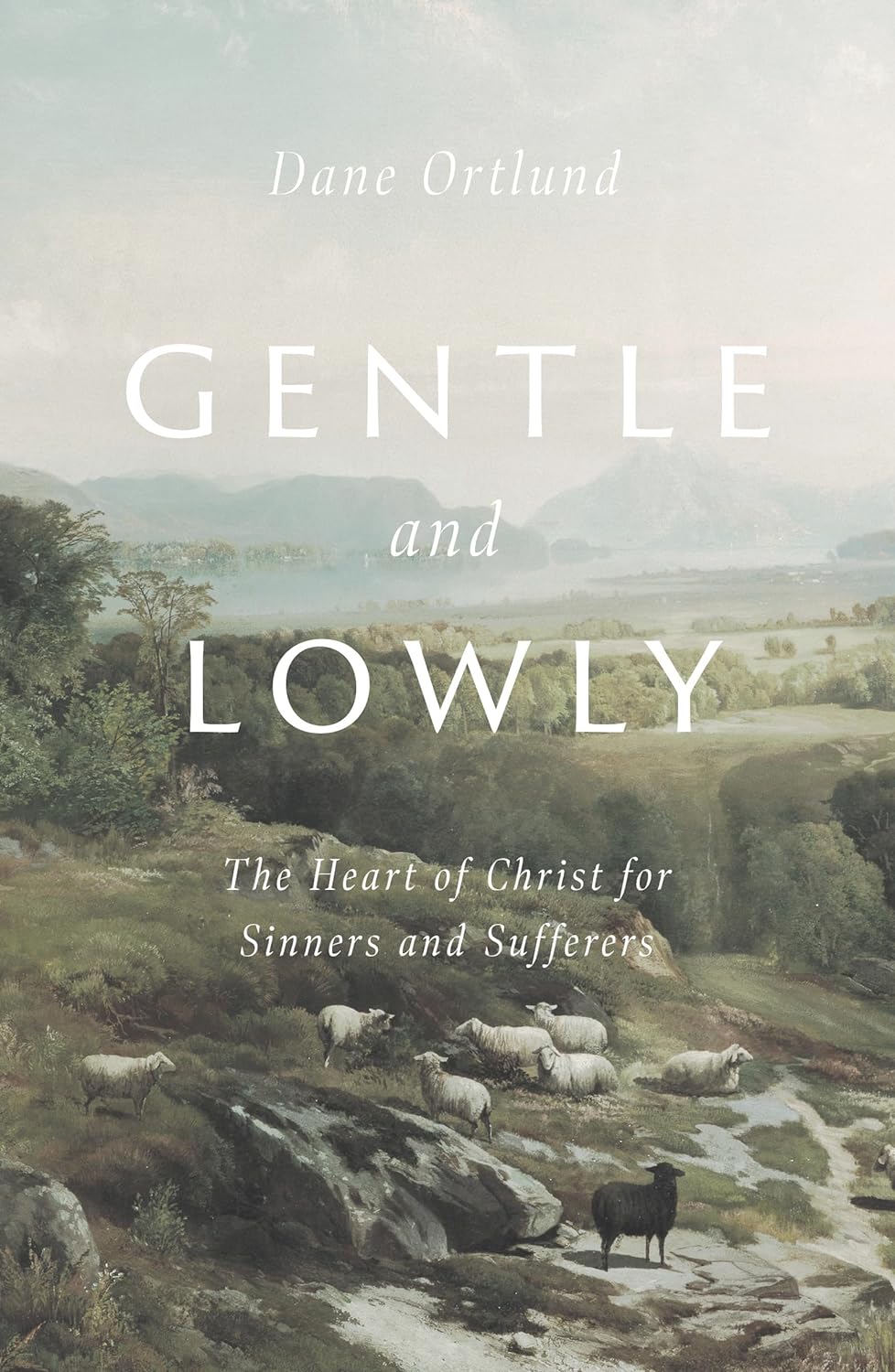
Gentle and Lowly: The Heart of Christ for Sinners and Sufferers, by Dane Ortlund: This book derives its title from Matthew 11, where Jesus describes Himself as “gentle and lowly in heart,” and a source of rest for His people. And yet, Christians—all too aware of our sins and shortcomings—can easily feel that God is constantly disappointed in us and perhaps fed up with us. This book is a needed reminder and comfort that God deeply loves us. Although there are aspects of reformed theology in this book that I disagreed with, the overall message is outstanding, and if you are someone who feels that your performance of the life of faith falls short of the standards of God’s love, this is a great and encouraging read.
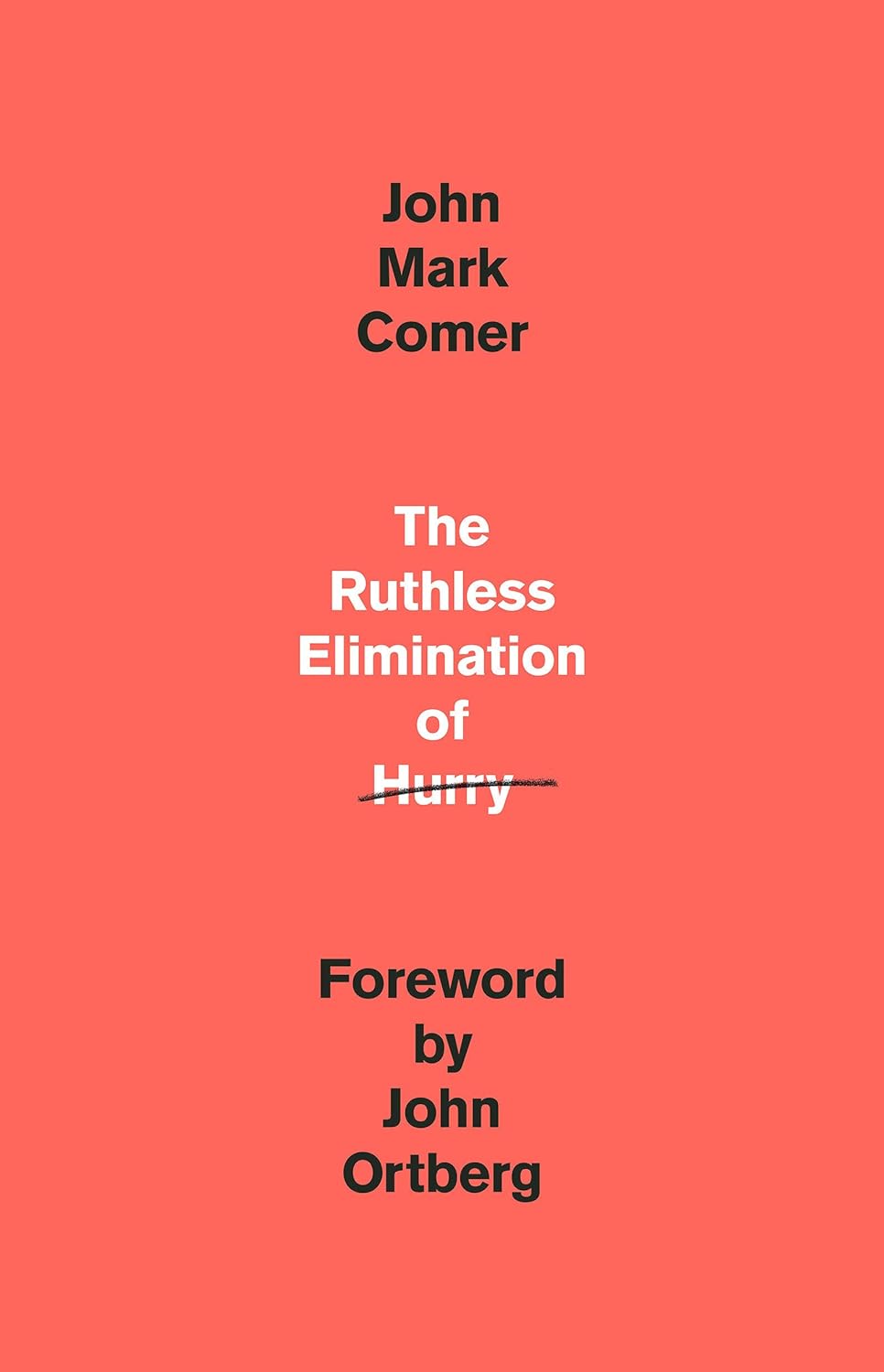
The Ruthless Elimination of Hurry: How to Stay Emotionally Healthy and Spiritually Alive in the Chaos of the Modern World, by John Mark Comer: This was a wonderful book, and one that I really needed to read. To be honest, it’s a book that I suspect I need to reread regularly before I can fully internalize the message. In short, Comer points out that we are so busy that we live hurried and harried lives, and these characteristics are barriers to following Jesus because, well, Jesus’s life didn’t look like this. In Comer’s words, “If you want to experience the life of Jesus, you have to adopt the lifestyle of Jesus.”

I don’t know if you can identify with this, but when people ask me how I am doing or how I have been, my consistent instinctive response is something like, “Good, but really busy.” There is too much hurry in my life, and it is a problem that requires ruthless elimination. If you have similar struggles, this is a great (and easy) read.
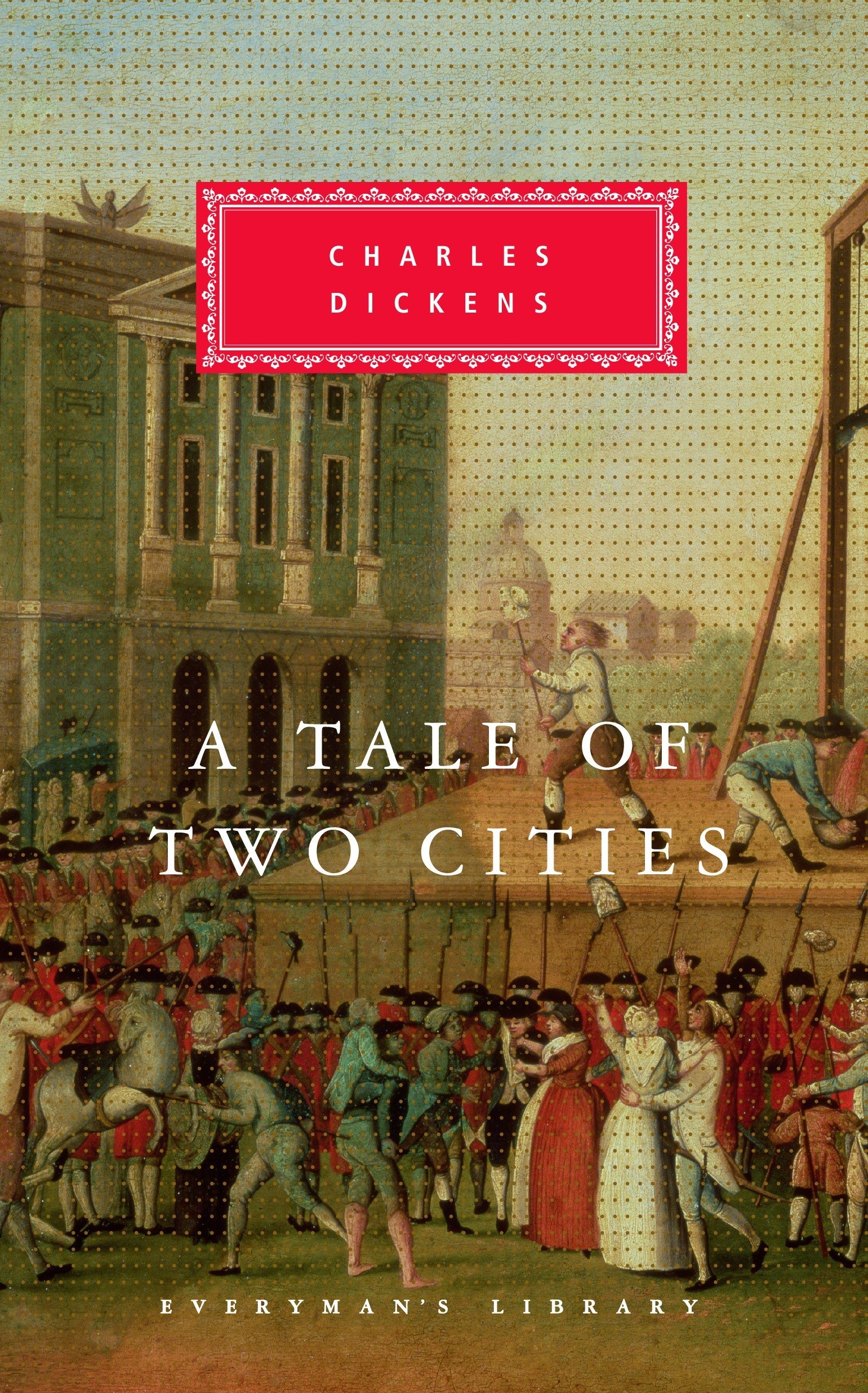
A Tale of Two Cities, by Charles Dickens: I try to read a variety of books, and I want to be more intentional about reading some classics. I am somewhat embarrassed to admit that, outside of children’s versions, the only Dickens I had read was A Christmas Carol, so I wanted to remedy that. Dickens can be frustratingly wordy at times, but he’s also hilarious. A Tale of Two Cities was a great book, and provides keen insight into the human condition. On the negative side, revenge is a destructive, vicious force, and it is so easy for those who have been oppressed to act like their oppressors when given the opportunity. On the positive side, love is a powerful force for good, and can drive the reformation of human character and lead to great personal sacrifice.

The Baseball 100, by Joe Posnanski: Posnanski is, perhaps, my favorite baseball writer, because he knows his stuff and shares it thoughtfully and poetically. This book is basically a series of essays on the 100 greatest baseball players of all time. You’ll disagree with some of his choices and rankings (I certainly did), but they essays are always interesting, and some of them are brilliant. In addition to emphasizing these players’ greatness, Posnanski also has a way of highlighting their humanity. I learned a lot that I didn’t know before, and was repeatedly struck by this poignant work. It is simply one of the best baseball books I have ever read.
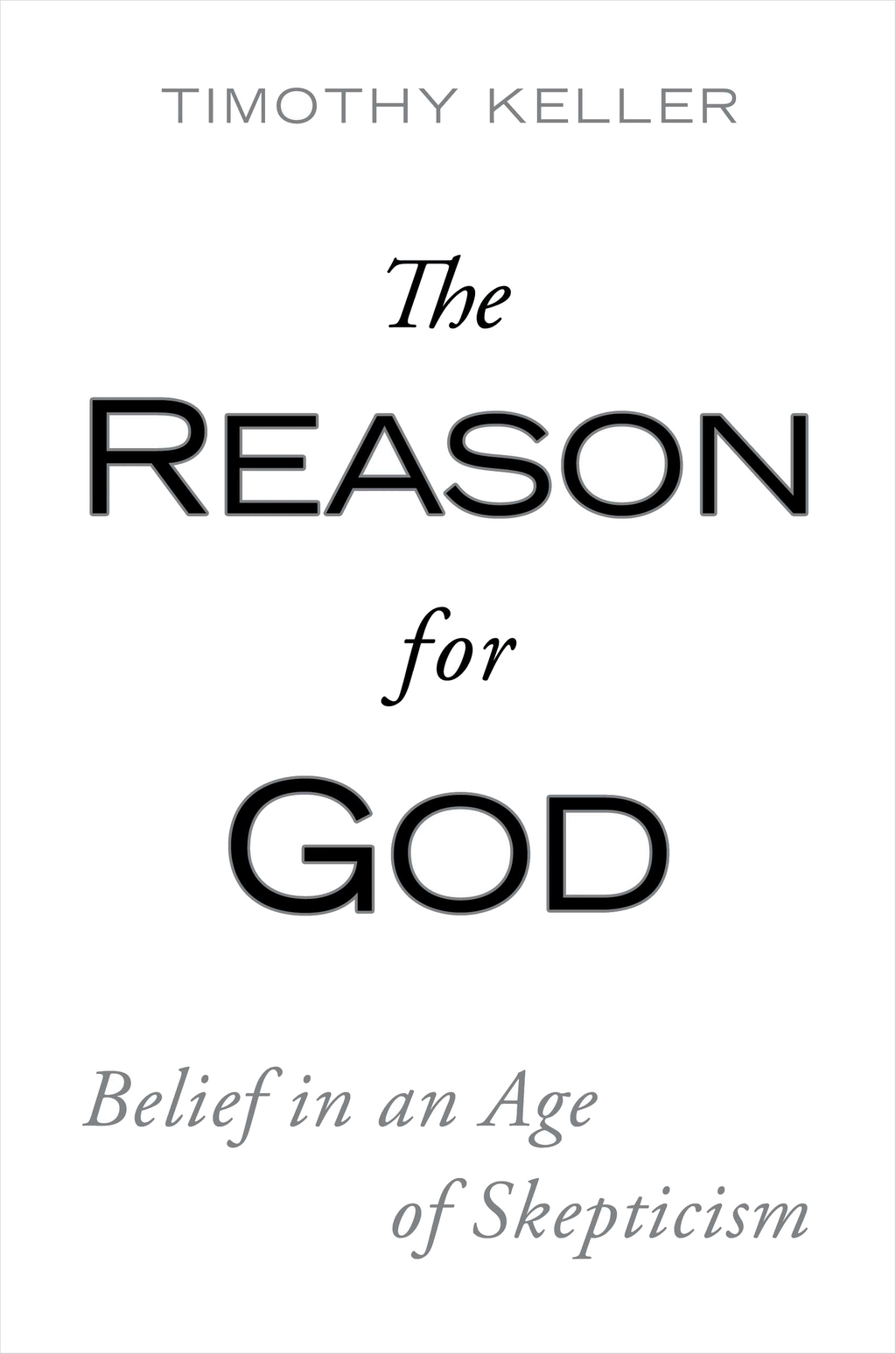
The Reason for God: Belief in an Age of Skepticism, by Tim Keller: I haven’t written much about Tim Keller on The Doc File, which is too bad, because he has become a significant influence for me in recent years. I was profoundly saddened when he passed away in May, and felt like a giant of faith had left us. I read The Reason for God soon after his death, and was struck (as always) by Keller’s thoughtfulness, clarity, and grace.

Interestingly, I had read The Reason for God about 15 years ago when I was a very young minister, and from what I can remember, I wasn’t all that impressed. I was this time around. Keller’s words hadn’t changed in the last 15 years, but I have to a significant degree, and so has the world in which I live. Over the last 15 years, the skeptical, secular culture that Keller was addressing in Manhattan has permeated the Bible Belt in which I live, and his measured, reasoned approach is invaluable. Furthermore, in a context where so many Christian voices have been compromised by personal scandals, political partisanship, or jerkish behavior, Keller courageously engaged culture with grace and truth. His theology differs from mine, but his posture has been deeply influential, and there is a reason why The Reason for God is his best-known work.
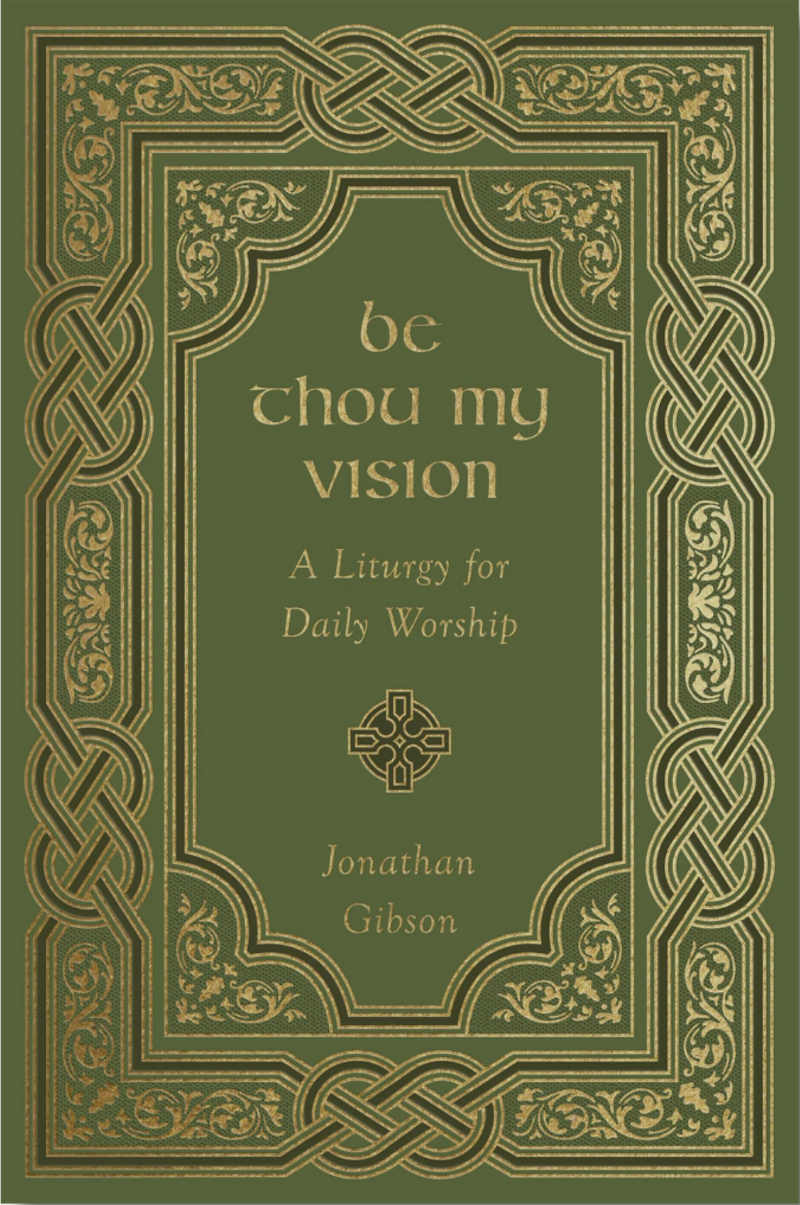
Be Thou My Vision: A Liturgy for Daily Worship, by Jonathan Gibson: I stumbled upon this book with an ad on my Facebook feed, and it might be the first and only time that the Facebook algorithm got it right! The book itself is beautiful (a cloth hardcover with high-quality paper, excellent typesetting, multiple marker ribbons, all in a cardboard slipcase), and remarkably useful. In short, Be Thou My Vision is a daily guide for personal or family worship/devotional time. Each day is a combination of several elements including prayers, songs, Bible reading, recitation of ancient creeds, catechism, and the Lord’s Prayer. The catechetical portions come from the Heidelberg Catechism (1563) and Westminster Shorter Catechism (1657) and there were some bones to spit out there (again—I’m not Reformed), but these sections were still interesting to me. Big picture: this is the best, deepest daily devotional book I have ever read. I will definitely be returning to it.
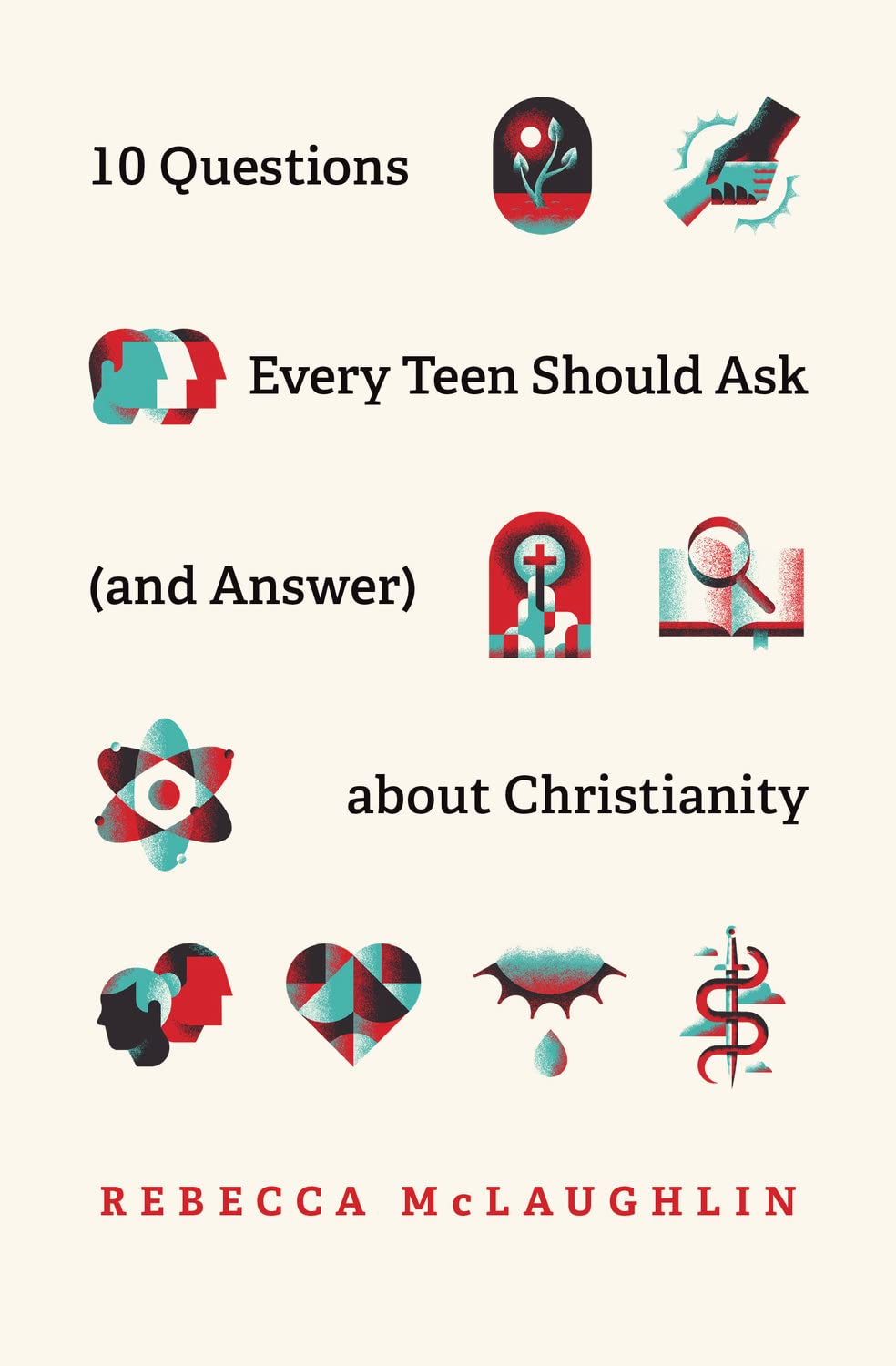
10 Questions Every Teen Should Ask (and Answer) about Christianity, by Rebecca McLaughlin: McLaughlin first came on my radar when I heard good reviews of her book, Confronting Christianity: 12 Hard Questions for the World’s Largest Religion. I had not read that book, but when I realized that she had essentially written a version for teens, I was especially interested and wanted to check it out. In short, I was really impressed. McLaughlin tackles all sorts of tough and relevant subjects for students growing up in today’s world—the notion of truth itself, the reliability of Scripture, gender and sexuality issues, and much more—and she does it in a way that connects to a younger audience with condescending to them. I think it is a really helpful resource; so much so that I plan to use it as the source for a teaching series with my students, and I think I will likely give graduating seniors a copy each year.

Also, I wrote a short post inspired by this book back in August.

Ty Cobb: A Terrible Beauty, by Charles Leerhsen: My description of this book grew longer and longer, and I finally realized that I needed to write a separate review in order to say everything I wanted to say while keeping my comments here mercifully short. This was a helpful (and in some ways uncomfortable) book for me to read because it challenged the notion held almost universally by baseball fans that Ty Cobb was one the great villains—perhaps the greatest villain—in the history of baseball. Instead, in this well-researched and compellingly-told biography, Leerhsen argues that this popular narrative was a story spun by Cobb’s biographer Al Stump, who did shoddy research and played fast and loose with the truth. The real story is more complicated, and suggests that, rather than being a villain that we can easily write off, Cobb was like all of us—a mixture of good and bad.

As an amateur baseball historian and a Christian seeking to see the image of God in all people, this was an important book for me to read.
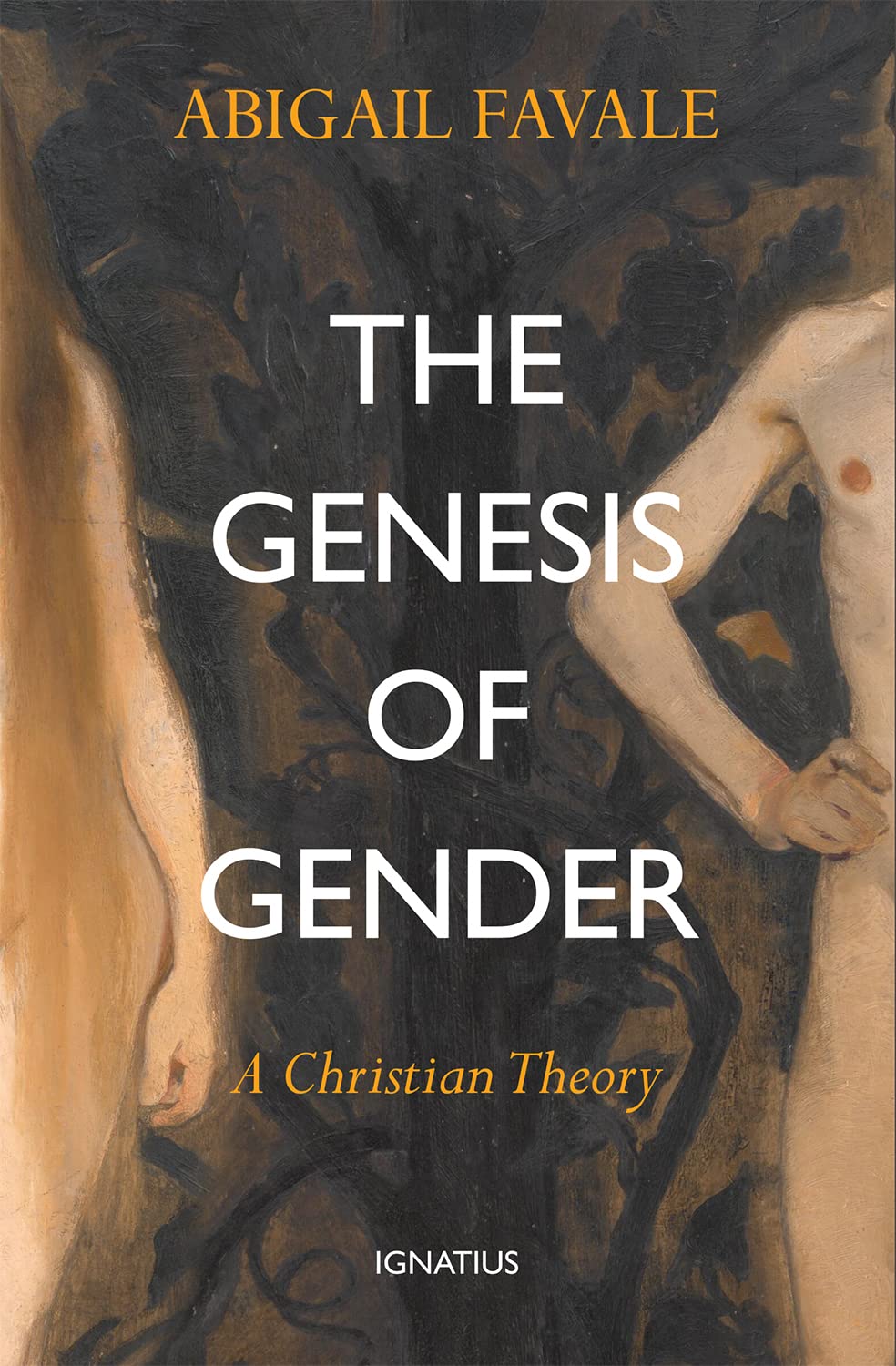
The Genesis of Gender: A Christian Theory, by Abigail Favale: I had never heard of this book or author before I was invited to read it as part of a book club, and found it enjoyable and challenging. Favale’s story is an interesting one: she was raised in an evangelical-ish home, before converting to Mormonism. From there, during her university years, she basically deconverted, and became a strong proponent of secular feminism and Critical Theory. She stayed in that perspective for a while before ultimately finding it incoherent; she is now a devout Catholic (if you’re feeling the whiplash, here’s a recap: evangelical-ish ⇾ Mormon ⇾ secular feminist ⇾ Catholic). As a Catholic, Favale’s views on sexuality and gender are critical of her former beliefs, but what makes her book unique is that she writes as an insider, someone who understood the gender paradigm that is currently en vogue and was a proponent of it before becoming convinced of its flaws. And her feminist perspective is still on display: part of her rejection of the gender paradigm is that she finds it to be deeply harmful to women.

This was a fascinating read. In addition to saying a lot of things that I already agreed with, Favale also helped give me a historical sense of the different “waves” of feminism and how the aims of those had changed over time, as well as really pushing against my (previously not very reflective) thoughts on birth control. Favale writes with grace and compassion, and from a unique perspective; The Genesis of Gender is a helpful voice in this pressing conversation.
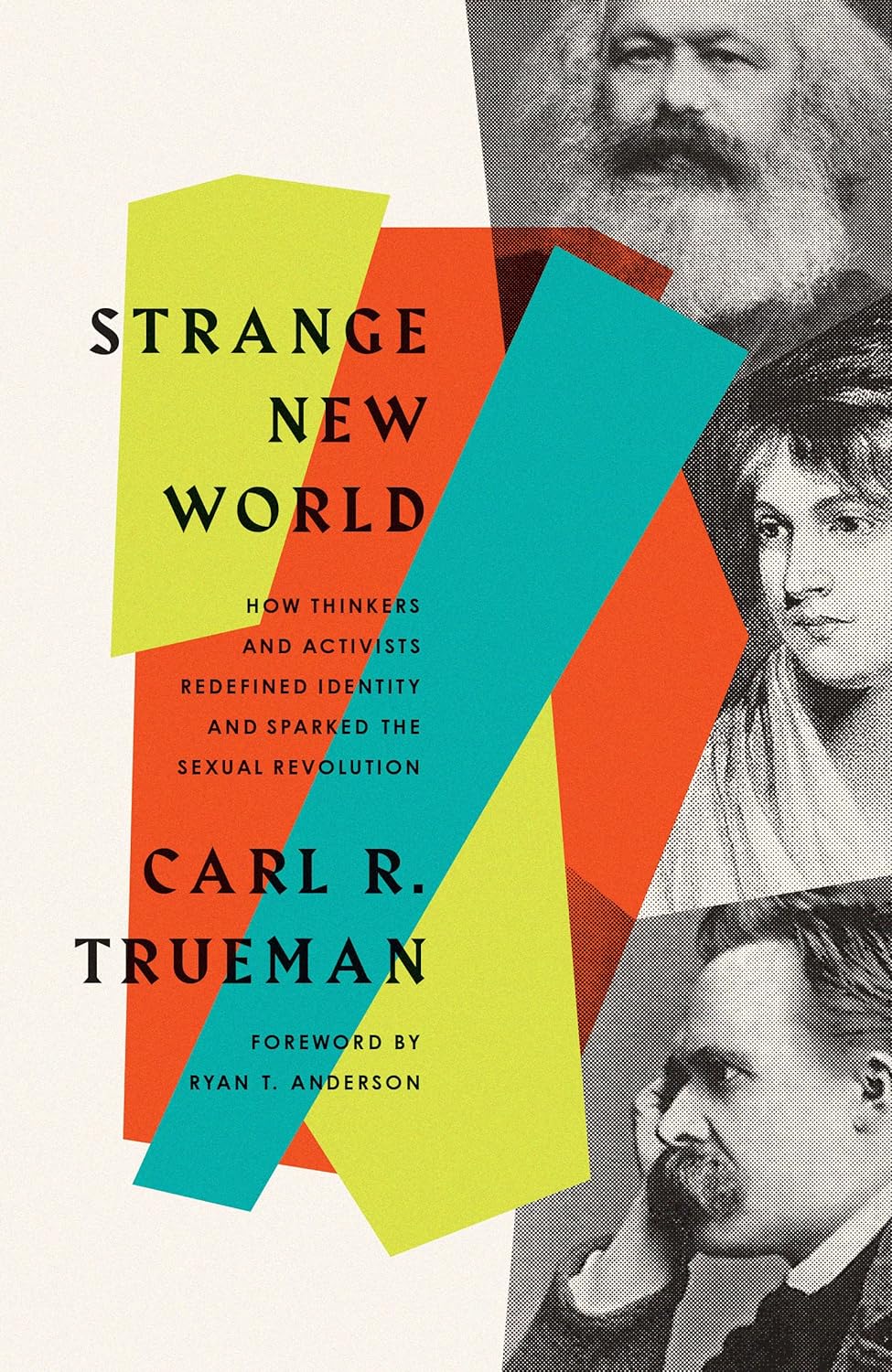
Strange New World: How Thinkers and Activists Redefined Identity and Sparked the Sexual Revolution, by Carl R. Trueman: in a similar vein to The Genesis of Gender, Strange New World also is a helpful resource for those who are seeking to better understand “how we got here” in reference to the current cultural moment on gender and sexuality (I actually read these two books overlapping and found them to be really helpful in conversation with one another). Trueman is trained as a theologian and historian, and while Favale takes the reader through a personal journey of transformation highlighted by feminist thought, Trueman leads the reader through a train of philosophical thought (Rousseau, Nietzsche, Marx, Freud, etc.), showing how a series of thinkers and ideas after the Reformation created the necessary preconditions for us to get to where we are today.


That was my reading in 2023! For comparison’s sake, if you are interested, you can see my reading lists from previous years:

What are some of the best books you read this past year?
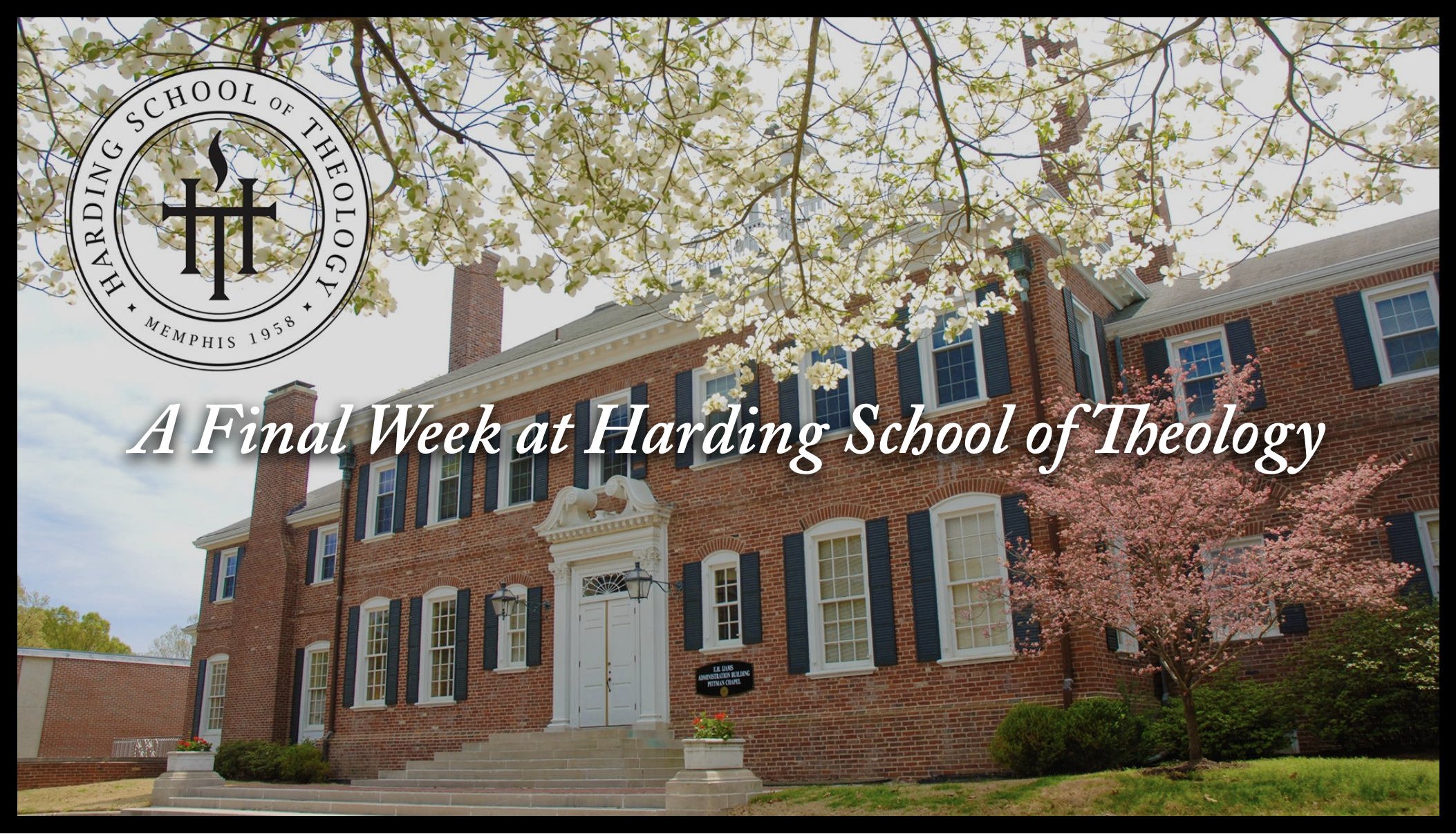
A Final Week at Harding School of Theology

Back in October, I was blessed to be able to spend a week on the campus of Harding School of Theology in Memphis, where I audited a week-long intensive course, “Christian Formation of Children.” This was a great blessing to me for multiple reasons.

First, I was a student there from 2010-2018 (yes, I know it was a long time) before receiving my MDiv, and it was an incredibly formative place for me (more on that below). Second, I got to spend the week with my wife Caroline, who was enrolled in the same class as a credit student. In all my time as a student at HST, I always left my wife at home with the kids while I would go to Memphis for intensive course weeks, and I felt like I finally got to share this part of my life with her. We sat next to each other in class during the day, ate at all my favorite Memphis restaurants, did homework in the library, and walked through the neighborhoods around campus together. Third, it seems quite possible that this will be my last opportunity to spend any significant time on the HST campus in Memphis, with the announcement that HST will be moving to Searcy in Fall 2024. Finally, it was a great class!

Much has been written and said about HST moving from Memphis to Searcy, and I’m not sure I have anything of significance to add to that conversation. I remain personally unconvinced that this move is what is best for the school, but I also acknowledge that I am not an insider in this discussion and that there are many factors and variables of which I am probably unaware. I do know that, in a climate where seminaries associated with Churches of Christ are closing (see Austin Graduate Seminary and Oklahoma Christian Graduate School of Theology), I am grateful that HST is not closing its doors, and I am confident that God will continue to use the school to bless churches and train ministers in its new location.


As I mentioned above, HST was a deeply formative place for me. I went to Harding University for undergrad and had a wonderful experience there. I met Caroline there as many lifelong friends. It was at Harding that I developed my deep love for ultimate frisbee, and also where I began to make my faith my own. I learned a lot of things in various classes, but I would also say that I didn’t make deep connections with faculty members or older mentors (largely my own fault). I entered and graduated HU with very little idea of what I wanted to do in life.

Harding School of Theology was different. I began there later in life (I was 27), and had already been in youth ministry for a few years. Honestly, I began my degree because I was seeking credentials so I could teach at the college level someday. My plan was to get in and get out as soon as possible and move on to the next thing. That is not at all what happened, but I got so much more in the bargain:

  • I have very fond memories of my intensive course weeks in Memphis, which were some of the most challenging weeks of my life, but also some of the best weeks of my life. There I met a new set of lifelong friends, and many of these were friends who were similarly “in the trenches” of ministry and knew about its challenges, but also its value. Somewhere along the way, I largely forgot about the dream of teaching, and developed my love for congregational ministry. More specifically, it was work for classes at HST that led to the youth ministry-related research that would ultimately change my life in profound ways.
  • There, I met a set of mentors who would pour into me both in and out of the classroom. They would push me academically, spiritually, and theologically, but always in ways that were respectful and affirming to my faith. I have written before about the idea of “deconstruction,” which is a very slippery concept, but it would be fair to say that HST significantly contributed to the deconstruction of my faith in the healthiest sense: it became my own, mature faith.
  • When I began at HST, Caroline and I were still relatively newlyweds and weren’t parents yet. Life would get real for us soon after, though. My HST community would mourn a miscarriage with us, celebrate the birth of our first daughter, and then pray faithfully for her and us as we learned that she had a rare genetic condition and began the life-altering journey of being parents to a precious daughter with special needs.

As I was reflecting on my time at Harding School of Theology, I realized that, through all of what I mentioned above, HST gave me the twin gifts of humility and confidence. That may seem like a strange pair, but they actually fit together quite well. Regarding humility, my graduate school training helped me to understand how little I really knew and convinced me of the need to be a lifelong learner. Regarding confidence, my time at HST helped me to develop a really solid foundation of biblical, theological, and ministerial skills. I didn’t know everything, but there were some things I did know, really important things that I could build my life around. And even though I’m never going to master Scripture or ministry, I developed skills to study Scripture well and do ministry faithfully. Humility and confidence are wonderful gifts that I received and which I have tried to use faithfully in service of God’s Kingdom, and I can confidently say that I wouldn’t still be in ministry without my training at HST.

For all these reasons and more, the HST campus in Memphis is hallowed grounds for me. It was a great blessing, albeit a bittersweet one, to spend a week there with my wife whose sacrifices made it possible for me to attend graduate school in the first place, and who has been my partner in ministry and in all things.


The HST Mansion serves as the administration building of the school and is also where chapel is held. I took this photo after one of my early morning walks before class. October was a beautiful time to be in Memphis.

My very favorite person in one of my very favorite places!

Blessed Are Those Who Are Persecuted

As discussed in the introductory post of this series, Jesus’s Beatitudes in the Sermon on the Mount are basically a description of what a good life really looks like from God’s perspective. Jesus redefines what blessedness is, and provides an alternative set of values for His followers, those who desire to be a part of His alternative community. Here are the Beatitudes we have discussed thus far:


Blessed Are Those Who Are Persecuted

“Blessed are those who are persecuted for righteousness’ sake, for theirs is the kingdom of heaven. Blessed are you when others revile you and persecute you and utter all kinds of evil against you falsely on My account. Rejoice and be glad, for your reward is great in heaven, for so they persecuted the prophets who were before you.”

(Matthew 5.10-12)

The last two beatitudes are closely related, so we will discuss them together, and this will conclude our study of the Beatitudes. Both say that God’s favor rests upon those who are persecuted on account of Jesus.

These verses do not indicate that disciples of Jesus are to have a persecution complex, always imagining that people are mistreating us. Neither are we to go looking for persecution by behaving in ways that are over the top or offensive.[1] However, if in the course of living as disciples of Jesus (by exhibiting the characteristics we have been talking about) we are persecuted or mistreated, Jesus says that we are blessed in this.

It might seem strange for us to think that simply by living the way Jesus calls us to, we could face persecution. But it is important to remember that the values of Jesus’s kingdom are completely at odds with the values of the world, and when we seek to live according to kingdom values, it threatens the way the world works. This was true for Jesus, who was ultimately killed by the collaboration of Jewish and Roman leaders who were in power and were threatened by Him, and also for His disciples, many of whom were martyred for their faith.[2]

Honestly, for those of us who are Americans, we don’t have a very good understanding of what it means to be persecuted for our faith because we live in a country that provides us with a great deal of religious freedom—you have likely heard someone pray before, “God, we thank You that we are able to worship without fear of persecution.” However, in the early days of Christianity, Christians were often cast out of society, beaten, imprisoned, and even killed because of their faith, and this is still the reality for many Christians in the world today.

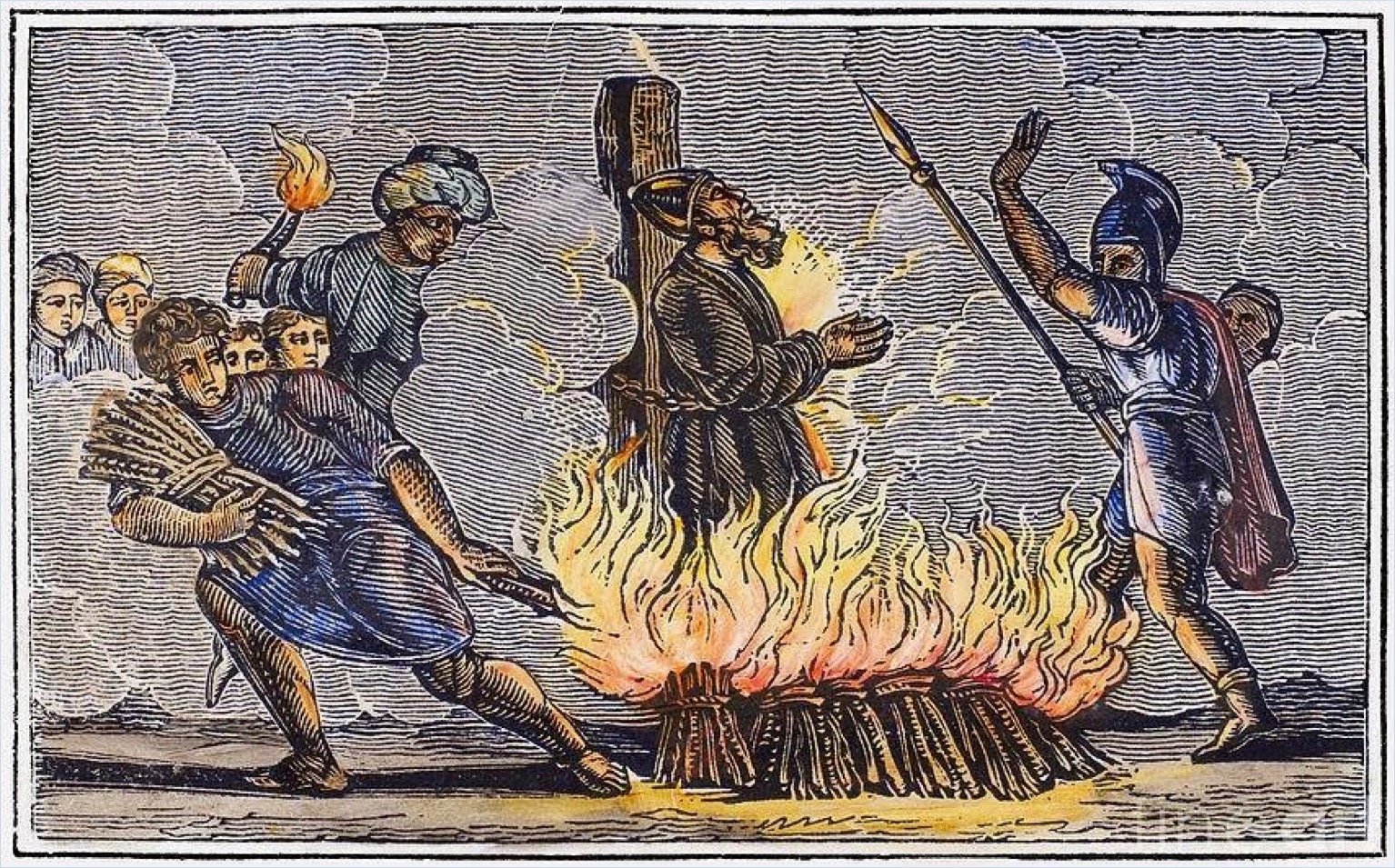
One of the most famous of the early Christian martyrs was Polycarp, who was an elder of the church in Smyrna. Because of his faith, he was taken before the Roman authorities and given the choice to make a sacrifice to Caesar as a god or to die. Polycarp’s response is famous:

“Eighty and six years have I served Christ, and He has done me no wrong. How can I blaspheme my King who saved me?”

Based on his refusal to worship the emperor, Polycarp was brought to be burned at the stake. In his last words, he said,

“O Lord God Almighty, the Father of Thy well-beloved and ever-blessed Son, by whom we have received the knowledge of Thee…I thank Thee that Thou hast graciously thought me worthy of this day and of this hour.”

Polycarp is an example of someone living as a citizen of God’s kingdom.[3]

The Martyrdom of Polycarp

Of course, that is not our experience in the United States, and sometimes, I think we have become too attached to our persecution-free environment. To be clear, I enjoy the religious freedom that I have as a U.S. citizen and am not eager for a day when I am persecuted for my faith, but sometimes I feel that Christians are overly concerned and fearful about the possibility of us losing our religious freedoms and facing persecution. We need to remember that Jesus calls those who suffer for His sake “blessed” because they will be rewarded in eternity, and that eternal reward empowers us to endure suffering in the present.[4]

Sometimes Christians are overly concerned about the possibility of losing religious freedom and facing persecution. We need to remember that Jesus calls those who suffer for His sake “blessed”. Share on X

A Final Word

The characteristics that Jesus describes as blessed in the Beatitudes are shocking to us because these values are so misaligned with the values of our own society. They would have been shocking to Jesus’s original audience as well. Often, people will describe Jesus’s kingdom as being “Upside-Down”, because it is so at odds with the kingdoms of this world. But really, from the proper perspective, it is our world as it is that is truly Upside-Down; Jesus came to set it to rights, to turn what is Upside-Down, Rightside-Up.

When disciples of Jesus are characterized by the values described in the Beatitudes, we join Jesus in setting the world to rights.

When disciples of Jesus are characterized by the values described in the Beatitudes, we join Jesus in setting the world to rights. Share on X

If you enjoyed this post, you might enjoy my book on the Sermon on the Mount, Counter Culture: A Study of the Sermon on the Mount. 

Although this book was written specifically as an aid to teaching the Sermon on the Mount to junior high and high school students, it is also useful for personal Bible study, and the depth of the material makes it a great resource for adult Bible classes.


[1] Albert Barnes, Matthew and Mark, Notes on the New Testament (Grand Rapids, MI: Baker Book House, 1949), 46.

[2] Warren Carter, “Power and Identities: The Contexts of Matthew’s Sermon on the Mount,” in Preaching the Sermon on the Mount: The World It Imagines, ed. David Fleer and Dave Bland (St. Louis: Chalice Press, 2007), 20.

[3] William Barclay, The Gospel of Matthew Volume 1, The Daily Study Bible (Philadelphia, Westminster Press, 1956), 111.

[4] Larry Chouinard, Matthew, The College Press NIV Commentary (Joplin, MO, College Press, 1997), 100.

« Older posts Newer posts »

© 2026 The Doc File

Theme by Anders Noren — Up ↑