The online journal of Luke Dockery

Category: Ministry (Page 2 of 17)

2025 Harding University Lectureship Recap

Every year, I write a post recapping Harding’s annual Bible Lectureship, which occurs in late September–early October. Since I am writing this post in November, I am a little behind, but it is still a helpful practice for me, and perhaps others will find something of interest here as well.

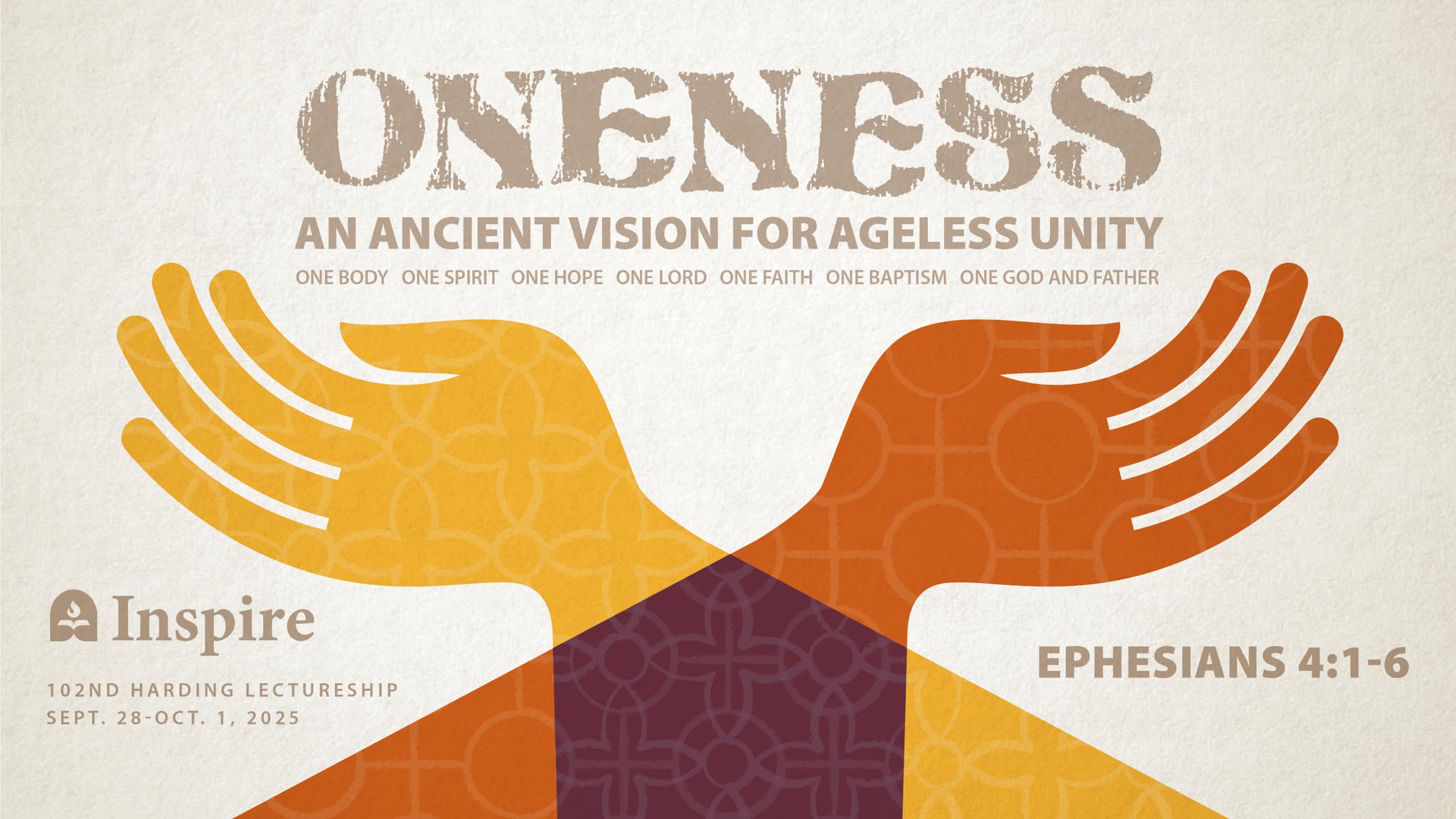
The theme of the Inspire Lectureship this year was Oneness: An Ancient Vision for Ageless Unity, and focused on the 7 Ones of Ephesians 4 as a source of unity among God’s people. As part of that emphasis on unity, the Lectureship Committee seemed to make a concerted effort to cross some traditional divides, inviting a large number of ethnically diverse presenters (African American, Latino, and Native American, among others), as well as some speakers from outside the fellowship of Churches of Christ (albeit, ones with broad theological kinship, like the Independent Christian Churches or a local nondenominational church). This latter move generated great controversy on social media, which I thought was unfortunate. Focusing on that controversy is not the main point of this post, but I feel I would be remiss if I ignored it and pretended it didn’t happen, so here are some brief thoughts:[1] 

  1. I coauthored a book earlier this year on the history of Churches of Christ and the American Restoration Movement, and how unity was an early and driving goal of that movement. I have written before how unity itself is a doctrine, a teaching of Jesus, and how we must take it seriously if we desire to follow Him. With that in mind, it is more than a little ironic that those purporting to be faithful caused an online uproar in response to a concerted effort to seriously reflect on the doctrine of unity.
  2. Many of the critics hold the opinion that only members of Churches of Christ should be allowed to speak at Harding’s Lectureship (and, to be more accurate, only members of the right kind of Churches of Christ). They are certainly entitled to that perspective, but objectively, it is a sectarian one.
  3. Some of the critics suggested that this Lectureship reflected a dangerous slide down the slippery slope to liberalism for Harding, and that they were not sure if they could continue to support the school. These warnings could be taken more seriously if the same critics had not been saying the same things for years; as it is, it comes across as disingenuous.
  4. For all of the controversy, I found this year’s Lectureship to be remarkably similar to previous ones. It did not seem to be edgy, and when I spoke to others in attendance, they agreed. Furthermore, for a school purportedly sliding into liberalism, it was surprising on the first night to hear the school president share Harding’s new Statement of Faith that requires alignment from faculty and staff on a historically Christian sexual ethic (Harding has never done this in the past, so this represents a markedly theological conservative move), the president affirm a continued commitment to a cappella worship and male spiritual leadership, and the keynote speaker reject theological progressivism as an exit to non-faith (see below).

Now, on to the main thing!


With the new format that was adopted last year, there is a greater emphasis on multi-session tracks than standalone lectures. For a variety of reasons (sometimes I wanted to be sure to stop in for a session to greet a presenter I knew; other times I had meetings that interrupted my schedule), I ended up often hopping around and catching bits and pieces of different tracks. I still heard good content, but overall I lament my haphazard approach because I know I would have gotten more out of the week if I would have stayed with a few of the tracks for their entirety.

I got to attend a variety of lectures and classes, and here is a brief recap of what I went to, along with some takeaway quotes:

One Body, Rubel Shelly: Shelly has been a longtime preacher and academic within Churches of Christ, and as you will see, I heard from him multiple times at this year’s lectureship. He offered the opening keynote and I thought did a great job at challenging us to appreciate the very notion of unity:

“Few topics in the Churches of Christ are as divisive as unity.”

“We are one body whether we like it or not.”

“The greater concern than accepting someone Jesus rejected is rejecting someone Jesus accepted.”

“It’s not about us being right and everyone else being wrong, but Christ being right and all of us being wrong.”

I thought one of the best parts of Rubel’s presentation was his warning against theological progressivism, which he referred to as the opening of the door for people to exit to non-faith. This warning might come as a surprise to many within Churches of Christ who consider Shelly himself to be a progressive, but this is kind of the point: there is a desperate need in our churches to be able to distinguish between orthodoxy and progressivism. For a variety of reasons, most within our churches are not well equipped see the difference between practices that go against our traditions and convictions (that we often label as “progressivism”) and true progressivism, which is faith-destroying. Maybe I’ll write more on this sometime, but I thought this was a valuable admonition.

S.R. Cassius and the Fight against Racism in America, Edward Robinson: Dr. Robinson is the preeminent historian of African American Churches of Christ, and did a three-part series on noted African American leaders in Churches of Christ. He was also a former professor of mine in grad school, and I loved his class on the American Restoration Movement.

I was only able to attend one of Robinson’s sessions, which was on S.R. Cassius, a bi-racial preacher in Churches of Christ in the late 1800s and early 1900s. Unlike the more famous Marshal Keeble who came after him, Cassius openly and consistently criticized racism, and worked more diligently than anyone else in Churches of Christ to lift up his race.

One Baptism, Scott Adair: Scott teaches in the College of Bible and Ministry at Harding, and offered the Monday morning keynote. Scott talked about how in the ancient world, the way you walked revealed something about who you were. Paul uses “walk” thirty times in the New Testament, and in Ephesians, addresses the idea of walking a lot. Unfortunately, after receiving our commission at baptism, we often walk like the world.

In Ephesians, Paul is not trying to baptize people; he’s talking to baptized people. And as baptized people, we should know that baptism is supposed to remind us of who we are:

  • At baptism, we make a confession of Jesus as one Lord. We are loyal servants of the crucified and risen Savior, so we should act accordingly.
  • We are baptized in the name of the Father, Son, and Holy Spirit—the one God. This reminds us that we are beloved children, and the one Spirit seals us with the one hope.
  • Baptism is a reenactment of the death, burial, and resurrection of Jesus, the core historical event the one faith rests upon.
  • We are baptized by someone else; someone else re-presents the church, the one body to us. The church is the presence of God in the world.

“Our calling: we are washed, resurrected sons and daughters of God who are empowered by the Spirit to re-present Christ to the world.”

The Future of Churches of Christ: Proposals for Unity, Keith Stanglin, Scott Adair, Rubel Shelly: This was a three-part series over the course of three days where each day one speaker would present his ideas and the other two would respond. Unfortunately, it was a popular series in a too-small room, and I wasn’t able to attend one of the presentations (Adair’s).

Keith Stanglin went first, and presented the common argument that the Restoration goal of achieving unity through restoration has not worked. Churches of Christ today represent significant diversity, but the tension between unity and restoration is still present. Furthermore, Stanglin argued that it wasn’t the Bible that united first-century Christians, because the New Testament wasn’t completed yet. Instead, it was the common belief in the core content of Christian proclamation, the common confession of the apostolic faith. Ultimately, Stanglin’s argument is that unity should be based on something like the Apostle’s Creed, which sums up the earliest proclamations of the gospel.

“The faith confessed at baptism should be a sufficient test of unity.”

“Everyone including God recognizes the difference between ignorance and willful disobedience.”

“Is there room for a category that is not essential but still worth defending?”

In Shelly’s session, what stood out to me was his suggestions that we need to start with Ephesians 4.1-3 before skipping ahead to the “seven ones” of Ephesians 4.4. Unity begins not with doctrine, but with a spirit of humility, gentleness, patience, and bearing with one another in love. The reality is that we can agree about the seven ones, but still violate Ephesians 4.1-3.

“We would do well to pray the prayer that Jesus prayed in John 17. It must be possible or Jesus wouldn’t pray for it.”

One Lord, Rodney Dulin: Rodney serves as the Senior Minister for the Central Pointé Church of Christ in Dallas and delivered the Monday evening keynote. Dulin emphasized that our salvation is centered on the person and work of the one Lord, Jesus Christ.

The early Christian confession that Jesus is Lord was significant and controversial no matter who you were—for Gentiles, it meant that Caesar was not Lord, and for Jews, it identified Jesus with the God of the Hebrew Scriptures. We reference Jesus as Lord and Savior; Him being Savior is what He did for us; Him being Lord is what we do for Him—we must respond to the rule and reign of our Lord.

“It doesn’t matter if you went to Penn State or the state pen, if you’ve been baptized…you belong to the one church.”

Where on Earth is Heaven? Rubel Shelly: This was a three-part series of which I was only able to catch the first session. Much of this was introduction where Shelly was laying the groundwork for what he was going to say next (which I missed), but he did a good job of showing how Plato’s views significantly affected Christian thought in a way that departed from biblical teaching:

  • The material world is deficient and negative to spirituality (in extreme forms, matter is evil)
  • The human soul is immortal (a necessary conclusion for Plato because of the transmigration of souls)
  • Our new bodies will be “ethereal” and escape the flesh (envisioned the world of “forms” beyond matter)
  • The goal of life is to escape Earth/flesh/matter (the biblical goal is quite the opposite!)

I wish I would have been able to take in more of this track, but ultimately, Rubel affirms what I argue for in this series (see especially this post on our resurrection bodies).

One Faith, Olu Shabazz: Shabazz serves as the Senior Minister and Evangelist for the Harlem Church of Christ in New York City, and delivered the Tuesday morning keynote. He emphasized how the “7 Ones” speak to the exclusivity of apostolic Christianity, which distinctly contrasts with the subjectivity of our own time. It is simply not possible to look at the “one faith” of Ephesians 4 and come away thinking that just any path will lead to God; when man rejects the one faith, he establishes his own religion instead.

“If your truth is not God’s truth, then it is no truth at all.”

The Anxious Generation: The Challenge of Collective Action, Monte Cox and Rachel Wisdom: Monte serves as the Dean of the College of Bible and Ministry at Harding, and Rachel, his daughter, is a school counselor in a nearby town. Their track focused on big ideas from Jonathan Haidt’s The Anxious Generation, a book I love and reviewed here.

Because I had already read the book and am very familiar with Haidt’s ideas, I decided not to attend this entire track, but just went to one session (so I could be with my wife, who attended this track). The session I went to, “The Challenge of Collective Action,” was great, and it made me regret missing the other sessions. Cox and Wisdom were a brilliant combination, and clearly enjoyed presenting together. They were witty and knew the material well. The material itself was not new for those who had read the book, but Wisdom’s insights from her school context were helpful, and it is always good to be reminded of important things that you already know.

One helpful reminder from Haidt is the metaphor of parenting as carpentry or gardening. Carpenters follow detailed plans with precise measurements, and if they follow the plans precisely, they get the result they desire. Gardeners realize that they are not ultimately in control of producing growth, but that instead their job is to create an environment where healthy growth can occur. Many people try to parent as carpenters, following the right plan and controlling all the variables to produce the perfect, ideal children, but parenting is more like gardening than carpentry: as parents, our job is to provide a healthy environment where children can thrive, and not try to micromanage the outcome. Though Haidt is not a person of faith, I think there is deep biblical wisdom in this admonition, as we know that we are ultimately in control of very little, and that our task to is to be faithful in our opportunities and trust God to yield the results that honor Him, including with our children! As a parent who is often inclined toward carpentry, this is a very helpful metaphor and reminder.

The Restoration of Israel, the Kingdom of God, and the Church in Luke–Acts, Mark Black: Mark Black is a long-time professor at Lipscomb University (His older brother Allen was one of my professors at HST). Black shared a ton of information, but ultimately was reflecting the work of Jacob Jervell, a Norwegian theologian who argued that the church in Acts is the beginning of the fulfillment of promises made to Israel. His views have largely won the day in the academy, but are not necessarily as widely understood in the church.

I couldn’t even begin to write down all that Dr. Black shared, but here were some concluding remarks (some of which are fairly provocative for a variety of reasons). If the church is essentially restored Israel…

  1. We shouldn’t call ourselves the New Israel.
  2. The Old Testament has not been abolished.
  3. God didn’t change His ways with the Messiah; His interactions with humanity have always been based on grace.
  4. The church does not replace Israel.
  5. The are no Christians outside of the church anymore than there are Jews outside of the people of Israel.
  6. The mission of the church remains the same mission of Israel—bless all the nations and bring them into God’s people.
  7. We should take kingdom language literally—the land itself will be restored.
  8. There is no “right” proscribed method of church leadership.

Some of these conclusions seem evident to me, and others less so; I wish there would have been more time for all of these to be unpacked! But this was a rich session with lots of important ideas that would help the average church member to better understand the story of Scripture and the implications of it.

Who Are You Really? Accepted and Secure in Christ (Eph. 1.3-14), Evan Todachine: Evan preaches at the Kayenta church of Christ on the Navajo Reservation in Northeast Arizona. I first met Evan when my former church began to support his work in Arizona, and I wanted to reconnect with him and support him as he spoke as part of the Youth Ministry track.

Evan talked about the idea of identity and what that looks like in a Navajo context (you introduce yourselves through your clan identity), and how we live in a world that is obsessed with identity, but according to the Bible, identity is God-declared rather than self-defined.

“Until we know who Christ is, we will always struggle with identity.”

Does a Man’s Color Matter? Olu Shabazz: I went to a couple sessions from this track, and it was fascinating—Bro. Shabazz shared his experience growing up in a family in the Nation of Islam and also discussed Black Hebrew Israelites. This was part of a larger discussion about ethnic identity and whether or how a person’s skin color matters. God created humans as “trichotomy beings,” or, in the words of Shabazz, “You are a spirit that has a soul that lives in a body.”

This is another session where I would have enjoyed being able to sit down and have a follow-up discussion with the speaker. I believe Bro. Shabazz would argue that our embodied experiences matter and that we should seek to understand one another based on those experiences, but that one’s skin color doesn’t give particular insight into spiritual truth or special access to God.

Does God Predestine Individuals to Salvation or Condemnation? Kevin Burr: Kevin is one of my best friends, and is now a Bible professor at Harding. He tackled a historically controversial question regarding predestination, and did a great job. His basic thesis is not particularly controversial to me: the Bible teaches predestination and free will. Here are some key points:

  • Scripture repeatedly affirms God’s election of Israel, and Paul knows this—He believes God’s election of those in Christ is based on this.
  • Choice and love are essential, necessary actions in establishing and continuing a relationship.
  • Paul understands a “corporate election” model for Israel, and preserves corporate election for the church. I have held to a model of corporate election for a long time, but it was new to me that Paul bases his understanding of this in God’s relationship with Israel. It seems obvious to me now!
  • God’s predestination has room for human agency; if your view of predestination rejects human agency, then Paul’s words are nonsense.

One Hope, Matt Love: Matt preaches for the Beebe Church of Christ and also teaches at Harding School of Theology, and wrapped up the Lectureship with the Wednesday evening keynote. Matt offered some poignant thoughts on hope as an essential element of the Christian faith that we are perhaps in danger of losing. Noting the increasing move toward happy funerals that avoid the heaviness of death:

“We have a big problem and it is death…but Jesus rose and we will too. Your entire life was supposed to point people to Jesus, and your final gift is to point people to Jesus one last time.”

Perhaps, one of our problems is that we have hoped in the wrong things…hoping that “our team” (Churches of Christ) would win, hoping that this Christian life would be easy, hoping that death wasn’t waiting for us at the end of this:

“When the time comes, will we let go of our other hopes for the sake of one hope?”

“When it comes to our faith, there is only one basket to put our eggs in…. Our hope is not in the idea of God, but God. Not church, doctrines, or religious systems; our hope is in a single person—the Lord Jesus Christ.”
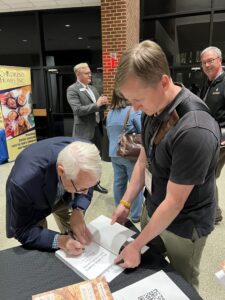

Dr. Black signing my copy of the new book in his honor.

In addition to attending all of the lectures described above, a highlight of Lectureship was a presentation of a festschrift (a book of essays in honor of someone) to Dr. Allen Black. Dr. Black, as mentioned above, was one of my professors at Harding School of Theology. He had a profound impact on my life, faith, and ministry, and several of his former students banded together to write and produce Teaching God’s Sons and Daughters: Essays in Honor of Allen Black. 

This was presented during one of the evening keynotes, and when prompted, dozens of Dr. Black’s former students stood up. Dr. Black was overjoyed and overwhelmed, and it was a touching moment.

As mentioned previously, I wish I would have done a better job planning out my week, but I still got to hear a lot of good sessions at Inspire this year, and it was a blessing to see so many old friends and professors. For me, autumn is a season of blessing, and the Harding Lectureship is one of the many great blessings I enjoy in my life.


[1] I am employed (albeit, in a very part-time fashion) by Harding University, so I should note that I am in no way speaking on behalf of the school in an official capacity. Furthermore, I had nothing to do with the planning of the Lectureship, so I was not responsible for anything that happened, and nor am I automatically defensive of it. My thoughts here are my own.
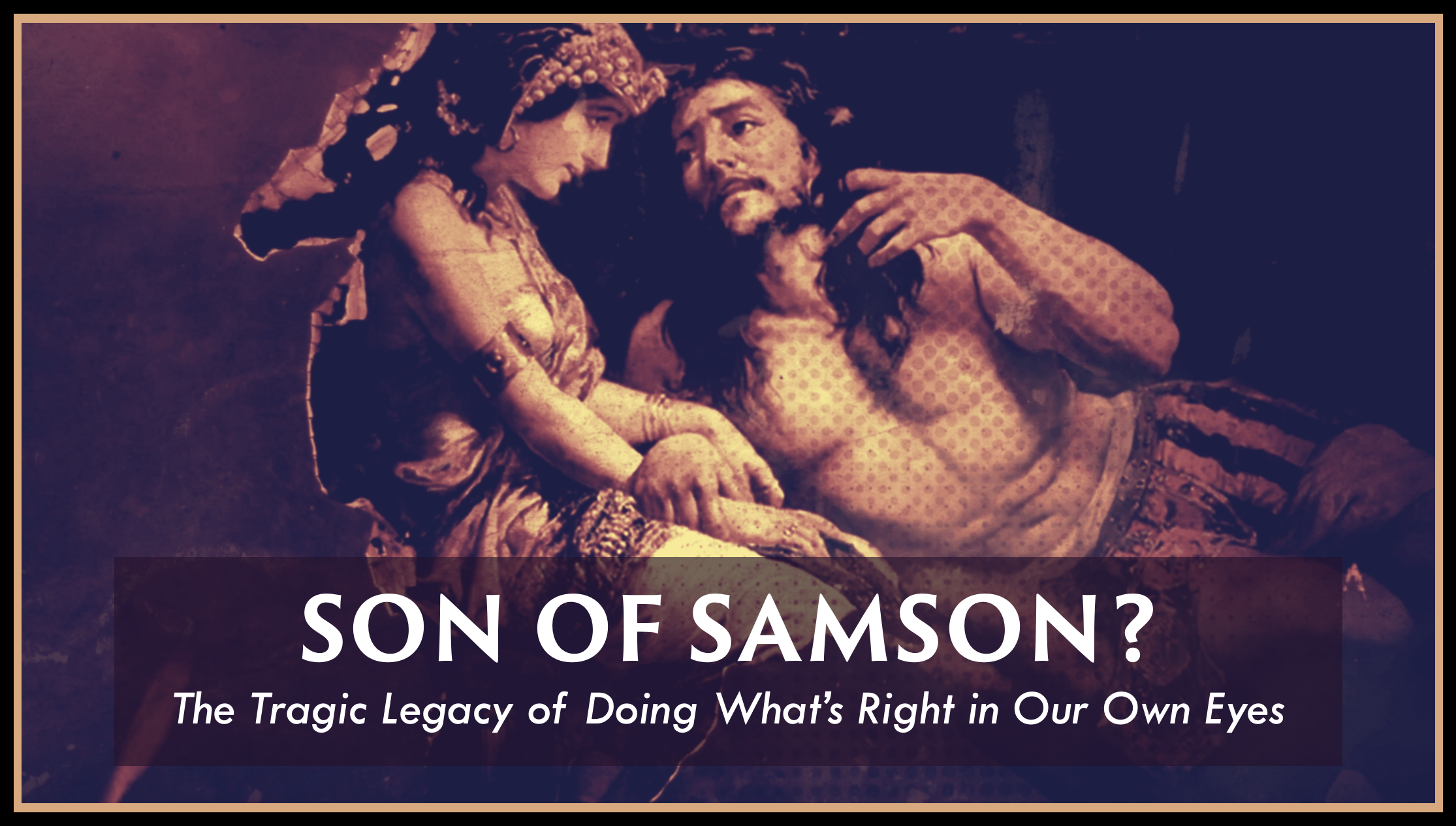

Son of Samson? The Tragic Legacy of Doing What’s Right in Our Own Eyes

Samson is a tragic Old Testament figure. Far from being the hero that children’s storybooks often make him out to be, he is more of a cautionary tale of what happens when we give in to our own selfish desires rather listen to God’s call and direction for our life.

Samson was specially chosen by God: a miraculous offspring to a barren woman, set apart as a Nazirite all his days, with the mission of beginning to save the people of Israel from the Philistines (Judges 13.3-5). Famously, he is blessed with great strength by God, but he mainly uses it to pursue personal vengeance or evade consequences for his actions rather than any sort of concerted effort on behalf of the people of Israel. Further, he apparently despises his Nazirite vow, violating every element of it, from touching a lion corpse, to participating in drunken parties, to ultimately letting his hair be cut (Judges 14–16).

This latter event occurs while he is in the clutches of the femme fatale Delilah, and is the direct cause of his downfall. Samson is blinded and enslaved by the Philistines, but even in this lowly state, God works through him to bring about a final act of judgment on the Philistines (Judges 16.23-31).

And thus, the tragic tale of Samson comes to an end…or does it? I’ve read through the book of Judges numerous times, but on my last reading, I discovered something that I had never seen before.


Judges 17–21 are different from the rest of the book. Rather than providing narratives of different judges, these chapters relate stories to indicate the lawlessness of Israel in a time when “there was no king” and “everyone did what was right in their own eyes.”[1]  Judges 17–18 might be described as religious lawlessness, while chapters 19–21 are indicative of moral lawlessness. The point is that things have thoroughly gotten really bad in Israel, in all aspects of life.

But, are these chapters more directly connected with what has come before? Judges 17 introduces the character of Micah:

1 There was a man of the hill country of Ephraim, whose name was Micah. 2 And he said to his mother, “The 1,100 pieces of silver that were taken from you, about which you uttered a curse, and also spoke it in my ears, behold, the silver is with me; I took it.” And his mother said, “Blessed be my son by the LORD.” (Judges 17.1-2a)

The lawlessness of Israel is on immediate display here, as Micah steals from his own mother, but the interesting detail that should catch our attention is the amount that he stole: 1,100 pieces of silver. This same number appeared in the last chapter, as it was the amount that each of the “lords of the Philistines” promised to pay Delilah for delivering Samson into their hands.

So, is this a mere coincidence, or is the narrator deliberately linking Micah’s unnamed mother with the character of Delilah? Furthermore, is it possible that Samson himself could be the father of Micah? Scholars have suggested so:

“The Philistine lords each give Delilah eleven hundred pieces of silver, the same amount Micah steals. The question immediately arises as to why the amounts are the same. The easiest answer is that the narrator attempts to establish a connection between the two stories: that Samson is Micah’s father and Delilah, his mother.”[2]

In addition to the link of the amount of silver pieces, there are other points of connection:

  • The story is told directly after the Samson cycle in Judges 13–16.
  • Both Delilah and Micah’s mother are portrayed as unattached, and interfere with God’s religious activity among His people—Delilah compromises an Israelite judge, and Micah’s mother compromises Israelite religion by encouraging Micah to create an idol.[3]
  • There is a geographical link: the “hill country of Ephraim” is close to the Valley of Sorek where Samson meets Delilah.[4]
  • Micah has no named father; this would be the first case in Judges where a main male character did not have a named father. [5]
  • In the story, Micah will have significant dealings with the tribe of Dan, Samson’s own tribe.[6]

Micah himself is a shady character: after confessing to stealing from his mother, she returns some of the silver to him so he can make an idol from it. He then goes on to create a shrine in his house, and ordains one of his sons to become a priest. Later, when a Levite travels through town, Micah offers him a job as a priest in his heretical shrine, and thinks that somehow this will manipulate the LORD into blessing him (Judges 17.13). Blessing does not come, however, as a group of thuggish Danites arrive in Judges 18, and steal Micah’s new Levite priest from him and threaten him with violence. Again, it is a sad story that points to the lawlessness and depravity of Israel.

Connecting this story to Samson isn’t necessary to interpret it well, but is there anything gained from this connection? I think so. Part of the theme of the book of Judges is that Israel experiences a downward spiral of unfaithfulness—things get worse and worse as time goes on, and Israel’s spiritual dysfunction is intergenerational. We already have an example of one judge with a mixed record whose offspring is a villain (Gideon and Abimelech), and Samson and Micah could be a recapitulation of this theme. And perhaps, this is the big point: when even the leaders of God’s people do “what is right in their own eyes,” what hope is there for the next generation?

When even the leaders of God’s people do “what is right in their own eyes,” what hope is there for the next generation? Share on X

May God, in His grace, save us from such leaders, and for those of us who are leaders, may we seek what is right in God’s eyes rather than our own!


[1] Regardless of the inclinations of postmodern culture where everyone is encouraged to “live out their own truth,” the biblical narrative is clear: when everyone does what is right in their own eyes, the result is lawlessness and depravity.

[2] Rob Fleenor and Mark S. Ziese, Judges & Ruth, The College Press NIV Commentary (Joplin, MO: College Press, 2008), 249.

[3] Fleenor and Ziese, Judges & Ruth, 249.

[4] Ibid.

[5] Tammi Schneider, Judges, Berit Olam (Collegeville, MN: Liturgical Press, 1999), 232.

[6] Schneider, Judges, 232.

So You Want to Hire a Youth Minister…

(About the picture: no, we don’t all look like this!)

On a fairly regular basis, I will have a church reach out to me to say something like this: “We are looking for a youth minister…I don’t suppose you would be interested? If not, is there someone good you can point us to or send our way?”

I tend to have several of these interactions because there are lots of churches looking for youth ministers, I have been a youth minister for a long time so there is an assumption that I am aware of potential candidates, and a lot of people know that I teach youth ministry at the college level and actively work to train youth ministry apprentices. Unfortunately, I usually don’t have great news for them. The reality is that there are more churches looking for youth ministers than there are youth ministers looking for churches. Our Christian colleges are seeking to train ministers and greatly incentivize students to study Bible and ministry, but there simply aren’t enough students to meet the demand. In my own case, in the six years I have been at my current position, I have mentored six young men who have all landed youth ministry jobs—the demand is so high that the last two accepted jobs months before they had graduated and finished with their apprenticeships!

In such a landscape, it is hard to find good candidates. The traditional approach of posting your job to some sort of listing service and then critically sifting through a stack of resumes to find the perfect fit isn’t likely to work anymore. I have witnessed even large, 1000+ member flagship congregations with impressive histories and reputations wait a year to find someone to fill their open positions. It is even harder for churches that are looking for a youth minister with significant experience—most of the youth ministry veterans I know are either well established at their churches and not interested in leaving, are transitioning to another kind of ministry, or are getting out of ministry altogether.


All of this may sound discouraging, but it’s important for churches to have a realistic understanding of the current landscape. Hiring a youth minister is not easy, but it is important, and it is a process that should be bathed in prayer. With all of that in mind, here are four strategies for churches in need of a youth minister:

(1) Keep the Youth Minister You Already Have

This may sound like a cop-out, and honestly it doesn’t apply to churches that already have a vacancy, but there is an important truth here that needs to be heard both by those looking to hire someone new and others who may be less than enthused with what they have and might wonder if the grass is greener elsewhere. There are exceptions to this, but churches tend to not have a great track record in how they treat ministers, and it is even worse for youth ministers, who tend to be younger, less experienced, and get paid less. There was a time when churches could burn through ministers confident that they could easily find the next guy to come along. That is not the case anymore.

If you have a youth minister who is struggling in various ways but is a loyal disciple of Jesus who loves kids, do everything you can to hold onto him. Provide him with mentoring or opportunities for further education to help him work on his weak areas. Encourage him by affirming the things he does well. Make sure to show that he is appreciated by paying him well (vacation, retirement, and insurance are parts of a compensation package too!). It is much easier to invest in the youth minister you already have and help him improve than to run him off and roll the dice on a new hire.

(2) Find Someone Good and Lure Them Away

So, I don’t feel great about this, because it kind of sounds like I am encouraging stealing good ministers from sister congregations! Certainly, that doesn’t seem like a very kingdom-minded approach. That’s not quite what I mean, though. Basically, this is where you try to use personal contacts of people in your congregation to reach out to youth ministers they know and respect who they think would do a good job and might have some incentive to move.

Perhaps it is not that they are unhappy in their current location, but maybe a move to your congregation would bring them closer to family, provide better opportunities for their own family, or give them the ability to grow and multiply their ministries. It is always risky to leave one successful ministry to go to another, but if there are some personal connections in place already, it can make the leap of faith more manageable.

(3) Alter Your Expectations

Look, everyone wants to find someone with good experience who is already married, has a couple of kids, and a wife who is eager to serve in 17 church ministries. But the reality is there aren’t many people like that out there who are looking, and if they are, everyone will be trying to hire them! Chances are that if you are a smaller church (100-200 people), you’re facing a youth ministry rebuild, or you have a track record of burning through youth ministers quickly, you are not the congregation they are going to choose.

Instead, be prepared to change your expectations somewhat. After all, the very best youth ministers in the world had to start somewhere, without experience. Jesus and Paul were not married, but most would argue that they did some decent ministry work in their day! Rather than setting your sights on an established “All-Star,” seek a younger minister who is eager to learn and grow into the role. A minister like this would need mentoring, perhaps additional schooling, and would need to be shown a great deal of patience, but the payoff can be huge![1]

It can be hard for a congregation that seems to be doing well and considers itself to be successful to accept the reality that they might have to “settle” for an inexperienced rookie, but again, the landscape is not what it once was. The good news is that especially if you are willing to hire someone younger, you can align your minister search with college graduation cycles and potentially hire someone before they graduate. Depending on how close they are geographically, they might even be able to come and do some events with your church and youth group between now and the time they graduate.[2]

(4) Raise Up Someone from within Your Congregation

Is there someone at your church that has a gifting or interest in working with teenagers? Affirm the giftedness you see within them (a key part of a calling to ministry is the testimony and affirmation of fellow believers), encourage them to consider the position, and provide them with the training they need to do the job. This could be on a part-time basis, but for the right person, it might represent a full career transition. I have known multiple people who have done this successfully. An advantage to this is that you potentially get the maturity that you are looking for, and someone who already knows the culture of the congregation and fits well within it (which is a major element of successful ministry). All they need is more focused biblical and youth ministry training, and that is readily available.

For the record, I think our churches in general need to start shifting toward this mindset of actively identifying people of character and passion within the congregation to raise up as ministers (whether preachers, youth ministers, children’s ministers, etc.) and equip them to do so. As mentioned above, our colleges simply cannot produce enough trained graduates to meet the great need on their own.

Hiring a youth minister is challenging in the best of circumstances, and these aren’t the best of circumstances. It requires patience, resilience, and a great deal of prayer. But if I found myself as a church leader or part of a search committee at a church that was looking, these are the strategies I would adopt.


[1] I’m biased because this was my own story. I’ll always be grateful to the Farmington Church of Christ, which took a chance on a young, untrained minister without experience and provided me space and grace to grow, and supported me going back to school for additional training.

[2] My last apprentice was hired last spring by a church even though he won’t graduate until this coming December. So, the church is having to wait several months for him, but he was able to work there over summer break. By the time he starts in January, he will already have had a full three-month stint working with the church and leading the youth group under his belt.

2024 Blog Review

I think reflection is a healthy practice, and I like to end each year by looking back and reviewing my year of blogging here at The Doc File (Here are some previous reviews from 2023, 2022, 2021, 2020, 2019, 2018, 2016, 2015, and 2012).

Overview

This past year—especially the first three-fourths of it—was extremely busy for me, and that negatively impacted how often I was able to write in this space. I will end the year with 19 posts, which is the fewest since 2019, when I wrote only 17 times. A goal for the new year is to prioritize writing more than I did last year.

Top Posts

By traffic totals, here are my most-read posts during 2024 (posts in bold were actually written this year):

  1. A New Heaven & A New Earth Series, April 29, 2020
  2. Reading in 2023, January 9, 2024
  3. A New Heaven & A New Earth: What the Bible Teaches about Eternity, April 9, 2020
  4. 2024 Harding University Lectureship Recap, December 19, 2024
  5. Jesus, Christmas, and Hanukkah, December 18, 2015
  6. Ranking Walt Disney World Parks, March 22, 2024
  7. A Great Week of Youth Ministry, March 2, 2024
  8. Politics from a Christian Perspective: Introduction, October 20, 2020
  9. A New Heaven & A New Earth Part 5: “Problem” Texts—John 14.1-3, May 8, 2020
  10. A New Heaven & A New Earth Part 6: The Redemption of All Things, May 14, 2020

Four of the top posts from 2023 were actually written this year, and it is always good to see new content get some traction:

  • I have developed certain traditions of posts that I write each year, and these have developed somewhat of a following over time. Reading in 2023 reviewed the books I read over the previous year, along with my favorites for 2023 (the 2024 version of this post is right around the corner!). I also review Harding’s Lectureship each year, and this year’s post got some traction, most likely because it discussed some controversy.
  • At the end of 2023, my family got to take an awesome trip to Disney World in Florida, and Ranking Walt Disney World Parks was a fun post that helped me to relive some of those memories and preserve my definitive rankings of the different parks.
  • A Great Week of Youth Ministry was one of my favorite posts to write, as it helped me reflect upon and process a particularly full and meaningful week of youth ministry and bask in the blessings of this wonderful vocation to which I have been called.

At the same time, part of the reason for preserving over 15 years of posts on this site is for people to be able to go back and read things they missed, and I am always gratified when older posts are read by new people. The series I wrote in 2020 on renewed eschatology continues to get a lot of views (taking four of the top ten spots), as does my post on Jesus, Christmas, and Hanukkah. Additionally, during this year’s election season, I reshared my series on Politics from a Christian Perspective, which garnered a decent amount of attention.

Blog Series

I didn’t do as much with ongoing Blog Series in 2024, but I did continue to contribute to Scripture Reflections. I added six more posts to this ongoing series over the past year:

This brings the series to a total to 26 posts. I plan to continue adding to this indefinitely, and suspect that it will eventually turn into a book project.


So, that was The Doc File in 2024! As mentioned above, it was a somewhat modest year for my blog, and I hope to write more here in 2025, and to make some adjustments to my regular schedule to help with that. This has become a formative spiritual discipline for me to process my thoughts here over the years, and so I want to intentionally support that practice. As always, I am thankful for your readership and support!

In Christ’s Image: A Guide to Youth and Family Ministry

I am pleased to announce that a multi-author project to which I submitted a chapter has now been published and is available for purchase. In Christ’s Image: A Guide to Youth and Family Ministry, put out by Heritage Christian University Press and edited by Kirk Brothers, is essentially a youth ministry textbook, and covers a wide range of youth ministry-related topics. My own chapter, “Essential Elements of Youth Ministry,” is based on a framework I teach in my youth ministry course at Harding University, and expands on ideas I originally shared here.

Here is the press release/description from the website:

In Christ’s Image: A Guide to Youth Ministry is a comprehensive and insightful exploration of the dynamic field of youth ministry. Edited by Dr. Kirk Brothers, President and Professor of Leadership and Ministry at Heritage Christian University, this volume brings together a distinguished group of authors who are considered “giants” within Christian ministry.

In Christ’s Image offers a well-rounded perspective on the multifaceted challenges and opportunities inherent in ministering to young people. Each chapter delves deep into the various aspects of youth ministry, providing readers with a robust and detailed understanding of this vital area of Christian service.

For quite some time, the need for a definitive youth ministry “textbook” has been evident, and In Christ’s Image stands to fill this void. This book has the potential to transform the way we approach and implement youth ministry, equipping practitioners with the knowledge, tools, and inspiration to better serve the next generation of believers.

Whether you are a seasoned youth worker or a newcomer to the field, In Christ’s Image is a must-read resource that will challenge, enlighten, and empower you to deepen your impact on the lives of young people. With its comprehensive coverage and the collective wisdom of its experienced contributors, this book is poised to become a seminal work in the field of youth ministry.

I just recently got my own copy and haven’t read it yet, so I can’t give any sort of review. However, I can verify that it is a robust offering of hundreds of pages written by many others I have come to respect and admire. There is sure to be a lot of wisdom here to glean for those who are youth ministry practitioners.

Purchase the Book

From HCU Press: $59.99 (Hardcover); $39.99 (E-Book)

« Older posts Newer posts »

© 2026 The Doc File

Theme by Anders Noren — Up ↑