Like many people, I have been distressed by so many aspects of the race-related incidents that have been erupting all over the nation:
- The tragic and unjust deaths of African Americans, whether at the hands of overreaching and brutal law enforcement officers or racist vigilantes
- The protests in response to these outrageous acts that have, at times, turned violent (and seemingly, at times have been coopted and corrupted by outside influences)
- In some places, the brutal and violent responses by police officers to even peaceful protests
- The very poor handling of the entire situation by President Trump whose rhetoric only escalates the tensions
- The negative attention received by countless law enforcement officers across the country who seek to serve and protect and want to be a part of the solution rather than the problem
Though I am deeply convicted by what I have seen and heard, I am always uncertain about how to respond, at least, in a public proclamatory way such as this. On the one hand, as a middle-class white guy in a largely-white context, I don’t presume to be an expert in such matters, and I have been doing my best to listen rather than to speak. Furthermore, I am not interested in virtue signaling, which can seem like an easy practice that doesn’t actually accomplish or help anything.
On the other hand, I have seen and heard from many black friends and acquaintances about how painful it is when white people (especially Christians) maintain silence, and how supported and loved they feel when people such as myself speak out in solidarity instead. So, that’s what this post is, in a disorganized sort of way.
Foundational Issues
As a Christian, there are two fundamental ideas that guide my thoughts on race before anything else:
- All humans are created in the image of God. This conveys the notion of being God’s representatives on earth, tasked with carrying out His will (we see this in Genesis 1-2). Unfortunately, due to sin, humans fail to properly reflect the image of God, but that doesn’t change the God-appointed identity given to each and every human. We are equal. This is antithetical to the notion and practice of racism.
- Jesus said that the greatest commandment is to love God with everything we have, and the second is to love our neighbors as ourselves. Loving my neighbor is also antithetical to the notion and practice of racism. Beyond that, loving my neighbor compels me to try to see things from my neighbor’s perspective, and appreciate that his/her experiences may be different from my own.
Personal Repentance
My position is a fairly simple one: I think we have massive racial issues in our country. I think we come by those issues honestly because they are an original part of our national DNA, and I think that the solution to the problem is challenging and will never fully be realized until Jesus returns (more on that below). But the solution must start with me. Here is a statement made by a (white) minister friend of mine, which exactly echoes my own sentiments:
I don’t like the phrase “there’s not a racist bone in my body.” Because if I’m being honest with myself, I am inclined to judge a man by the color of his skin. Just because I don’t like that part of me doesn’t mean it’s not in there. The recent unjust killings of black folks in our country shouldn’t only cause us to point fingers at the perpetrators, though we should demand justice. These killings should also cause us to lift the hoods of our hearts to see the racism that might be lurking there. My goal as a Christian is not to deny my prejudice but to repent of it. The God I worship seeks to bring people of all colors into His kingdom, to make us all children of Abraham through faith in Christ. So I must turn my racist bone over to God so He can renovate my heart. True change in our churches and systems and nation starts with my willingness to say, “Lord, change this wicked way in me.”
Personal repentance must be my first response.
Systemic Racism
Here is a definition of systemic (or, institutional) racism from an excellent article by David French (I will discuss this article further below):
A system in which public policies, institutional practices, cultural representations, and other norms work in various, often reinforcing ways to perpetuate racial group inequity. It identifies dimensions of our history and culture that have allowed privileges associated with “whiteness” and disadvantages associated with “color” to endure and adapt over time. Structural racism is not something that a few people or institutions choose to practice. Instead it has been a feature of the social, economic and political systems in which we all exist.
This is a hotly-debated topic (along with the corresponding idea of white privilege), and I don’t really intend to get into it in this post, but based on my reading and listening to the perspectives of black friends and acquaintances, it seems clear to me that this sort of racism exists in this country. We could debate how and where we see it and how intentional it is in its various manifestations, but it exists.
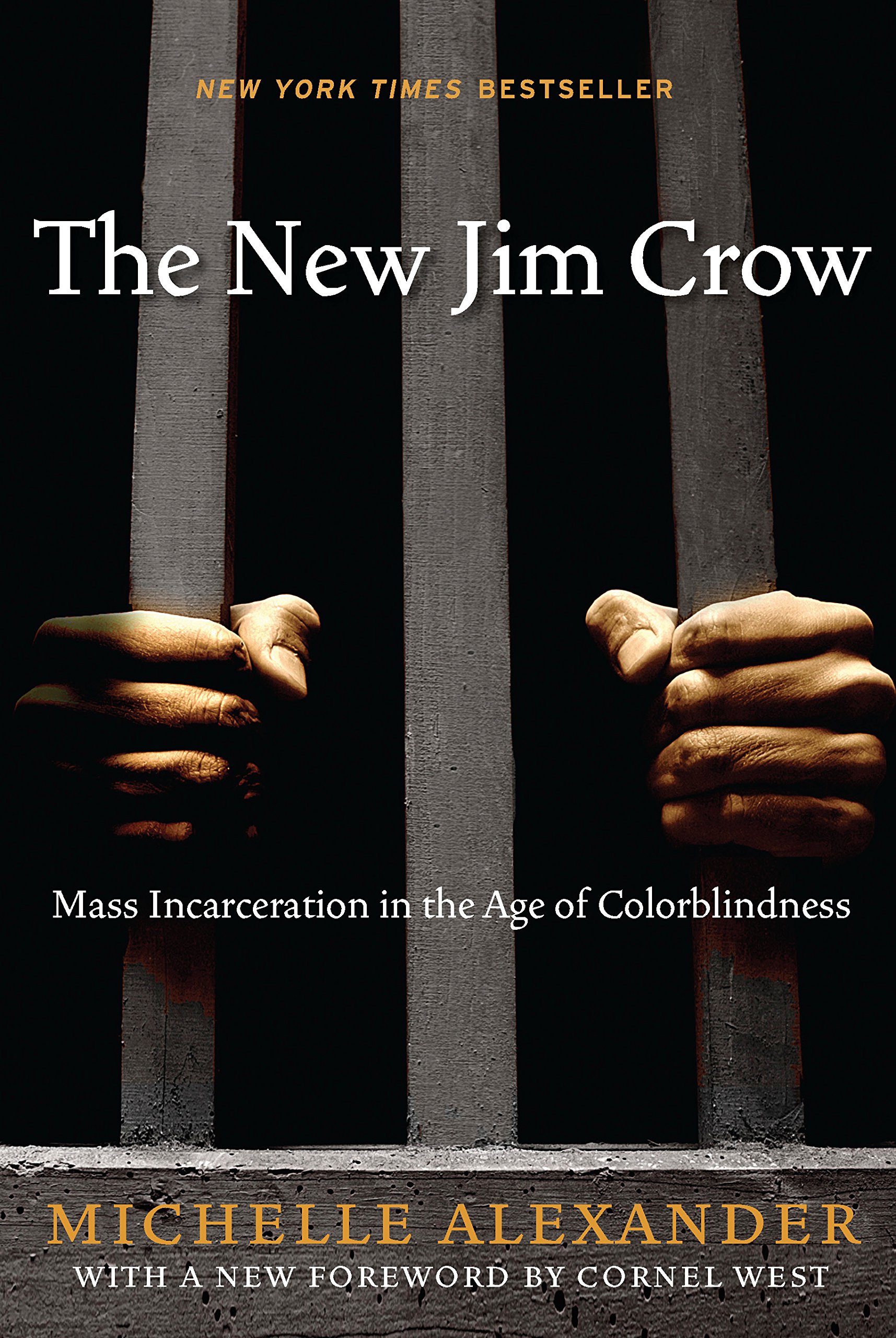
If that statement upsets you or makes you defensive, but you are open to having your perspective changed, I would recommend Michelle Alexander’s, The New Jim Crow: Mass Incarceration in the Age of Colorblindness. I read this book last year, and it was one of my top books of 2019, but let’s be clear: I did not enjoy reading it at all. It was a punch in the gut. But it was meticulously researched and footnoted, and it clearly established (to my mind, at least) one aspect of systemic racism.
I also recommend David French’s wonderful article that I referenced above: “American Racism: We’ve Got So Very Far To Go”. French is a thoughtful, conservative commentator, and shares his own journey in coming to terms with the immensity of the racial problem in the US. This is a calm, even-handed, and reflective piece, and I like the simple way he handles systemic racism as a logical progression (emphasis added by me):
Slavery was legal and defended morally and (ultimately) militarily from 1619 to 1865.
- After slavery, racial discrimination was lawful and defended morally (and often violently) from 1865 to 1964.
- The Civil Rights Act of 1964 did not end illegal discrimination or racism, it mainly gave black Americans the legal tools to fight back against legal injustices.
- It is unreasonable to believe that social structures and cultural attitudes that were constructed over a period of 345 years will disappear in 56.
Moreover, the consequences of 345 years of legal and cultural discrimination, are going to be dire, deep-seated, complex, and extraordinarily difficult to comprehensively ameliorate.
Black Lives Matter
There are specific groups that use the “Black Lives Matter” slogan that have detailed ideologies, portions of which I disagree with (I am decidedly not a Marxist, for example). But “Black Lives Matter” as a slogan is completely true and I have no issues with it. Frankly, I have a hard time understanding those who do. From the beginning, to anyone who is listening, it is clear that the slogan means “Black Lives Matter too” rather than “only Black Lives Matter.”
“Black Lives Matter” is a true statement. It doesn’t need qualification (Here is a thoughtful article, written from a Christian perspective, on that very idea.)
Colorblind
I was raised at a time when I think it was a popular idea to promote “colorblindness” as the solution to racism, and you hear these notions a lot today: “I don’t see people in color! We are all the same! There’s only one race; the human race.”
I think these statements generally come from very well-meaning people who truly wish that racism wasn’t a problem, but I think they are problematic. From a theological perspective, God clearly appreciates diversity, because it is what He created! The story of the Old Testament is the promise of God to save all peoples of the earth through Abraham and his descendants, and in the New Testament, we see this become a reality as people from all points of the globe become part of God’s multi-ethnic family. So much of the New Testament writings reflect the tension between Jews and Gentiles, and the answer isn’t a colorblind approach that pretends no differences exists or that forces one group to become just like the other, but for different parts of the body to learn to live in unity with one another! This same idea is what is portrayed in beautiful and vivid language in the Book of Revelation:
After this I looked, and behold, a great multitude that no one could number, from every nation, from all tribes and peoples and languages, standing before the throne and before the Lamb, clothed in white robes, with palm branches in their hands, and crying out with a loud voice, “Salvation belongs to our God who sits on the throne, and to the Lamb!”
(Revelation 7.9-10)
Furthermore, I think “colorblind” perspectives are also problematic because they fall short of loving our neighbors. Part of loving our neighbors is trying to understand them and what it is like to walk in their shoes. It is to sympathize with their struggles and support them in those struggles. I don’t see how we can do that while doggedly insisting that we don’t see color and failing to appreciate the way in which color shapes who we are and what we experience.
On this topic, I found a comment from another friend to be particularly helpful:
As a Native American man, I get nervous when I hear people say they don’t see color. In essence you are saying you don’t see the beauty and diversity of God’s creation. The Psalmist says that “we are fearfully and wonderfully made” (Psalm 139.14). The problem is not that we see differences—for God made us all intentionally and unique from one another. The problem arises when we conclude others are lesser because of those differences.
Notice different skin colors.
Observe the beauty of other cultures.
Admire different languages.
Then praise God for His creativity and love.
“…Brown and yellow, black and white – they are precious in His sight. Jesus loves the little children of the world.”
Calls For Patience
Sometimes, well-meaning but truly oblivious people wonder why there is such an urgency to deal with this now. Why all the protests? Why the frustration? Why the violence? Instead, the suggestion is made, wouldn’t it be preferable to be patient and work for the change that you want to see?
Well, I certainly don’t approve of violence, but I wonder, just how patient can you expect people to be?
At times, it seems to me that we (as a society) ask African Americans to have superhuman amounts of forgiveness and patience: forgiveness for the inhumane ways they have been treated in the past (and continue to be treated), and patience as they wait for things to get better. Not only is this unfair, it is also highly ironic, considering the fact that, historically in the US, African Americans have been treated as subhuman. This is an undeniable fact, from the practice of slavery, to the 3/5 Compromise, to the practice of segregation, and more.
The following words from Langston Hughes touch on this, and are both prophetic and haunting:
Negroes
Sweet and docile,
Meek, humble, and kind:
Beware the day
They change their minds!Wind
In the cotton fields,
Gentle breeze:
Beware the hour
It uproots trees!
The reality is that it has been far too long, and we are reaping the consequences of that reality.
The Solution to the Problem
I don’t actually think that the problem of racism will be solved until Jesus returns, because ultimately, it is one of the many consequences of sin that plagues the broken world in which we live. That does not mean that I think we should do nothing about it and just wait until Jesus returns to sort it all out. On the contrary, I think the sin in my own life will continue to be a problem until I die or until Jesus returns, but identifying that sin and repenting of it is a major concern of mine!
So, to be clear, I am in favor of efforts to root out racism and bring about reconciliation and equality in our society. It is my hope that recents events will lead to change in that direction.
Having said that, as a Christian, I don’t believe that the primary way in which I am called to change the world is through the political process. Rather, it is being salt and light, living as a citizen of God’s kingdom, and being an agent of new creation in an old and dying world. This may sound naive (“Christians have excused and supported racism in all sorts of ways over the years!”), but I don’t think this is naive at all: if each and every person in the world who names Jesus as Lord actually lived according to the kingdom principles Jesus established, then the world would be radically different.
Ultimately, this will be the solution to racism. When Jesus returns, and God’s will is done on earth as it is in heaven, then racism and every other form of sin will be a thing of the past. In the meantime, the best thing I can do is to allow God’s Spirit to transform my life and bring it in line with the character of Christ.
If all Christians, by God’s grace, were to do that, imagine the leavening influence that could have in our families…and our churches…and our communities…and our world.
Lord, have mercy. And come quickly.







 Tweet This