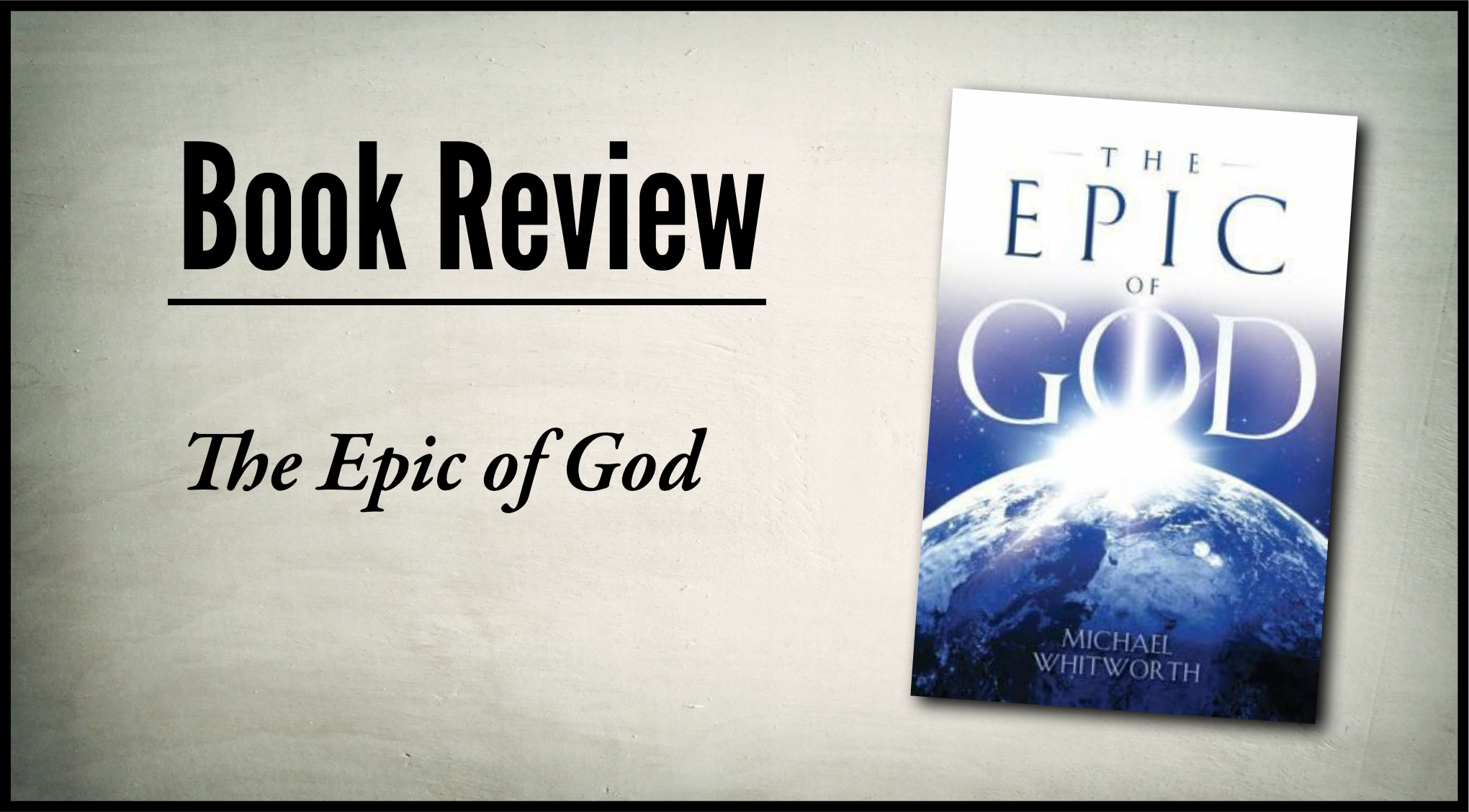
Last night I finished reading Michael Whitworth’s The Epic of God, which is a guide to the Book of Genesis (rather than a full commentary), and it was a really good book.
The Epic of God is not written to be a scholarly commentary, and there’s absolutely nothing wrong with that. In fact, I would argue that what Whitworth has done is equally if not more valuable: he has produced a text which is informed and supported by scholarship (it is a well-researched book) but is easily read and understood by the average Christian. This is an important accomplishment, and I am always appreciative of efforts that bridge the gap between the church and the academy.
Anyway, I wrote a somewhat more in-depth review on the book’s Amazon page, but here I just wanted to do what I enjoy—share good quotations! Here they are (with my comments in brackets):
“After Adam was created and placed in Eden, he was given the task of working and keeping the garden. Work is often though to be a consequence of the Fall, but notice that in the perfect world that God created, man was created to work as a means of glorifying the Lord.” (26) [Amen! Work is a good thing!]
“Sin is not a blunder we can flippantly dismiss with ‘Everyone makes mistakes.’ A mistake is wearing two socks that don’t match; sin is an offense and abomination against a holy God. Our sins cost God the life of his Son.” (79)
“There is never an excuse to be selfish with God’s blessings.” (120)
“The God of Abraham has fixed an appointed time, unknown to all but him, when all suffering will come to a fantastic end! It will be the moment when the Son comes to be glorified with his church and render awestruck all who have put their faith in him…knowing that our heartache will eventually give way to hallelujahs can help us bear the pain a little while longer. God sees. God knows. God cares. He has appointed a time when he will visit his people in their distress and bring with him the redemption of the ages!” (165) [One of the definite strengths of the book is the way the author ties the story of Genesis into God’s greater story of the redemption and salvation of his creation.]
“And this is the truth that Abraham discovered on that occasion, that God’s commitment to justice is greater than our own…But his commitment to mercy is equally greater than our own.” (167-68)
“The life of faith is an odyssey of unexpected twists and turns.” (190) [This has certainly been true in my life!]
“If you are having difficulty surrendering to God what is most valuable to you, perhaps you have never acknowledged it as coming from him to begin with.” (215) [Ouch.]
“Prayer is for our benefit, not God’s. Praying for something that is in the will of God shapes us spiritually in ways few other things can. God’s desires become our own, and we start to see things as he does.” (232-33)
“It is natural and healthy for parents to want their children to succeed in every area. But what shall it profit a child if he becomes a Rhodes scholar or wins the Heisman trophy, yet loses his soul? (303) [Yeah, I wish every youth group parent I have or will ever have would read this quote about three times a day.]
“It is not healthy, not does it deepen our faith, to play the what-if game…when we find ourselves in the throes of suffering and pain, we must refuse to play the what-if game. Ask instead, ‘What if God is greater than my current circumstances? If God is indeed working out a plan to bring Himself greater glory, how should I react?’ Then respond accordingly, confident that he can use our disappointments to deepen our faith and bring our lives into greater harmony with him.” (327) [This was very helpful for me to read, as I struggle with playing the what-if game.]
“We frail and pathetic humans have a bad habit of gauging God’s presence based on our circumstances…But veterans of the life of faith know that circumstances are no better a barometer of whether God is with you than overcast skies are proof that the sun has vanished completely.” (329) [Wow.]
I know that was a lot of quotations, but as I said, it was a really good book! The Epic of God will deepen your understanding of the Book of Genesis, but more importantly, it will deepen your faith as well!