The online journal of Luke Dockery

Category: Quotations (Page 9 of 17)

Book Review: Exegetical Fallacies

Of all the books I read in 2013, D.A. Carson’s Exegetical Fallacies was near the top of the list. It has a rough title and a terrible cover design, but the content is outstanding.

As readers of this blog know, in addition to being a full-time minister, I am also a theology graduate student. In the course of those studies (and my less formal studies as a minister) I have spent hours and hours learning the original biblical languages of Greek and Hebrew, as well as other skills to help me to better interpret (or exegete—see the book’s title above) the text of the Bible.

In the course of those studies, as I have grown better skilled and more careful about interpreting the Bible. At the same time, I have become dismayed by witnessing so frequently what I would consider to be ill-informed, haphazard, and shoddy biblical work. Sometimes this is done by people who have never studied original languages and yet presume to teach about them, and other times it is done by brilliant people who make careless errors. But either way, it happens all the time (and to be fair, I’m sure I do it too, but hopefully I do it less frequently than I once did).

Written by respected New Testament scholar D.A. Carson, Exegetical Fallacies addresses a lot of these interpretative problems, and I strongly believe that it is a book which should be read by all preachers, teachers, and studious Christians (a heavy recommendation, I know). The book is divided into four main sections.

Word-Study Fallacies

In my opinion, this section was vitally important because preachers and authors so frequently appeal to Hebrew and Greek words to make their arguments, and they so frequently do it poorly. Here are a couple of good quotations, some of which will refer to some ideas that you may have heard before [with my comments in brackets]:

“There is nothing intrinsic to the verb ἀγαπαω (agapao) or the noun ἀγαπη (agape) to prove its real meaning or hidden meaning refers to some special kind of love.” (p. 32) [How many times have you heard that Christians are supposed to exhibit agape love, which is a higher and purer kind of love than what is described by other Greek words?]

“Our word dynamite is etymologically derive from δυναμις (dynamis, power, or even miracle). I do not know how many times I have heard preachers offer some such rendering of Romans 1:16 as this: “I am not ashamed of the gospel, for it is the dynamite of God unto salvation for everyone who believes…”—often with a knowing tilt of the head, as if something profound or even esoteric has been uttered. This is not just the old root fallacy revisited. It is worse: it is an appeal to a kind of reverse etymology, the root fallacy compounded by anachronism. Did Paul think of dynamite when he penned this word? And in any case, even to mention dynamite as a kind of analogy is singularly inappropriate. Dynamite blows things up, tears things down, rips out rock, gouges holes, destroys things.” (p. 33-34) [And the implication is that it is not dynamite or a similar force that raises us from the dead and transforms us into the likeness of Christ. It is power of an entirely different sort.]

“It is methodologically irresponsible to read the meaning of a Hebrew word into its Greek equivalent without further ado. The case must be argued.” (p. 62) [You should be a little suspicious when someone refers to a word from the Old Testament and says “The same word in the New Testament is…” or vice-versa.]

“As important as word studies are, it is very doubtful if profound understanding of any text or of any theme is really possible by word studies alone.” (p. 64) [Words ultimately derive their meaning from context; you can’t divorce words from their context without also stripping away much of the meaning.]

Grammatical Fallacies

Again, this is an important part of the book, for similar reasons to those mentioned above. Often times, the biblical languages are abused in ways that misunderstands the grammar of those languages rather than specific words.

I won’t include any quotations from this part of the book, but as an example of this type of problem, it is common to hear or read the claim that the aorist tense of the verb in Greek refers to a “once for all” or “completed” action, and then some grand theological point is made from this. The problem is that the aorist tense is incredibly flexible and means a great variety of things. Frequently in the New Testament aorist verbs are used to described ongoing or repeated actions.

Carson provides examples of several other types of grammatical fallacies as well.

Logical Fallacies

I found this section to be less helpful, just because I had studied logical fallacies multiple times before in communication classes. I would imagine that this chapter would still be very helpful if this was a subject you hadn’t previously studied before.

Carson covers a variety of fallacies including appeal to selective evidence, purely emotive appeals, the non sequitur, and simplistic appeals to authority.

Presuppositional and Historical Fallacies

This was another very important section for me. Increasingly, I have witnessed preachers and scholars use their historical reconstruction of the supposed setting of a biblical text (i.e. something which might have influenced the text but which we don’t actually know for sure) to trump what the text actually says. This is poor exegesis.

“The fallacy is in thinking that speculative reconstruction of first-century Jewish and Christian history should be given much weight in the exegesis of the New Testament documents…a little speculative reconstruction of the flow of history is surely allowable if we are attempting to fill in some of the lacunae left by insufficient evidence; but it is methodologically indefensible to use those speculations to undermine large parts of the only evidence we have.” (p.131-32)

Concluding Thoughts

Again, I think this is a really important book, and so I’ll just repeat what I said above: I strongly believe that it is a book which should be read by all preachers, teachers, and studious Christians.

Having said that, reading about so many potential exegetical problems can have its drawbacks: (1) It will make you more critical of the sermons you hear (and, if you’re not careful, in an unhealthy way), and (2) It will make you more hesitant about your own biblical interpretation and exegesis. But, helpful as always, Carson has good words on this topic as well:

“A little self-doubt will do no harm and may do a great deal of good: we will be more open to learn and correct our mistakes. But too much will shackle and stifle us with deep insecurities and make us so much aware of methods that we may overlook truth itself. I have no easy answer to this dilemma. But we will not go far astray if we approach the Bible with a humble mind and then resolve to focus on central truths. Gradually we will build up our exegetical skills by even handed study and a reverent, prayerful determination to become like the workman ‘who correctly handles the word of truth.’” (p. 142)
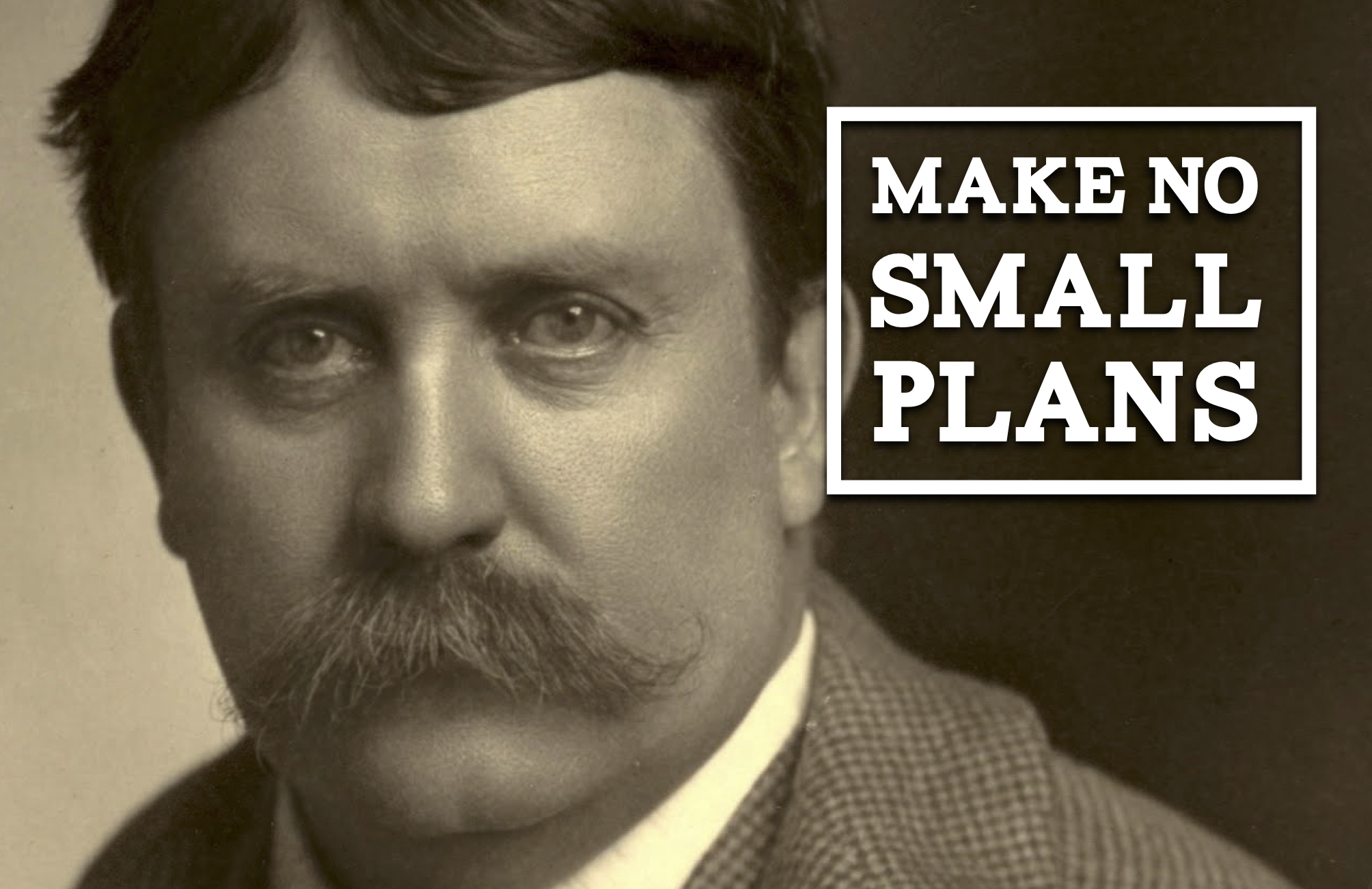
For the Coming Year, “Make No Small Plans”

Daniel Burnham was a well-known and accomplished 19th-century architect. Among other things, he was famous for designing the Flatiron building in New York City, and the buildings for the World’s Fair held in Chicago in 1893 (his work on that project is described in detail in the excellent The Devil in the White City).

As evidenced by his impressive accomplishments, Burnham was a dreamer (you don’t accomplish as much as he did without being one). The following Burnham quotation, which I love, reflects that quality:

“Make no small plans. They have no magic to stir humanity’s blood and probably themselves will not be realized. Make big plans; aim high in hope and work…. Remember that our sons and daughters are going to do things that will stagger us. Let your watchword be order and your beacon, beauty. Think big.”

(Quoted in Almost Christian, by Kenda Creasy Dean, p. 192)

Another year has passed, and it is time to look ahead to 2014. As you make plans and resolutions for the new year, and Christians, as you reflect on your role in God’s Kingdom, make no small plans. Aim high in hope and work. Think big!

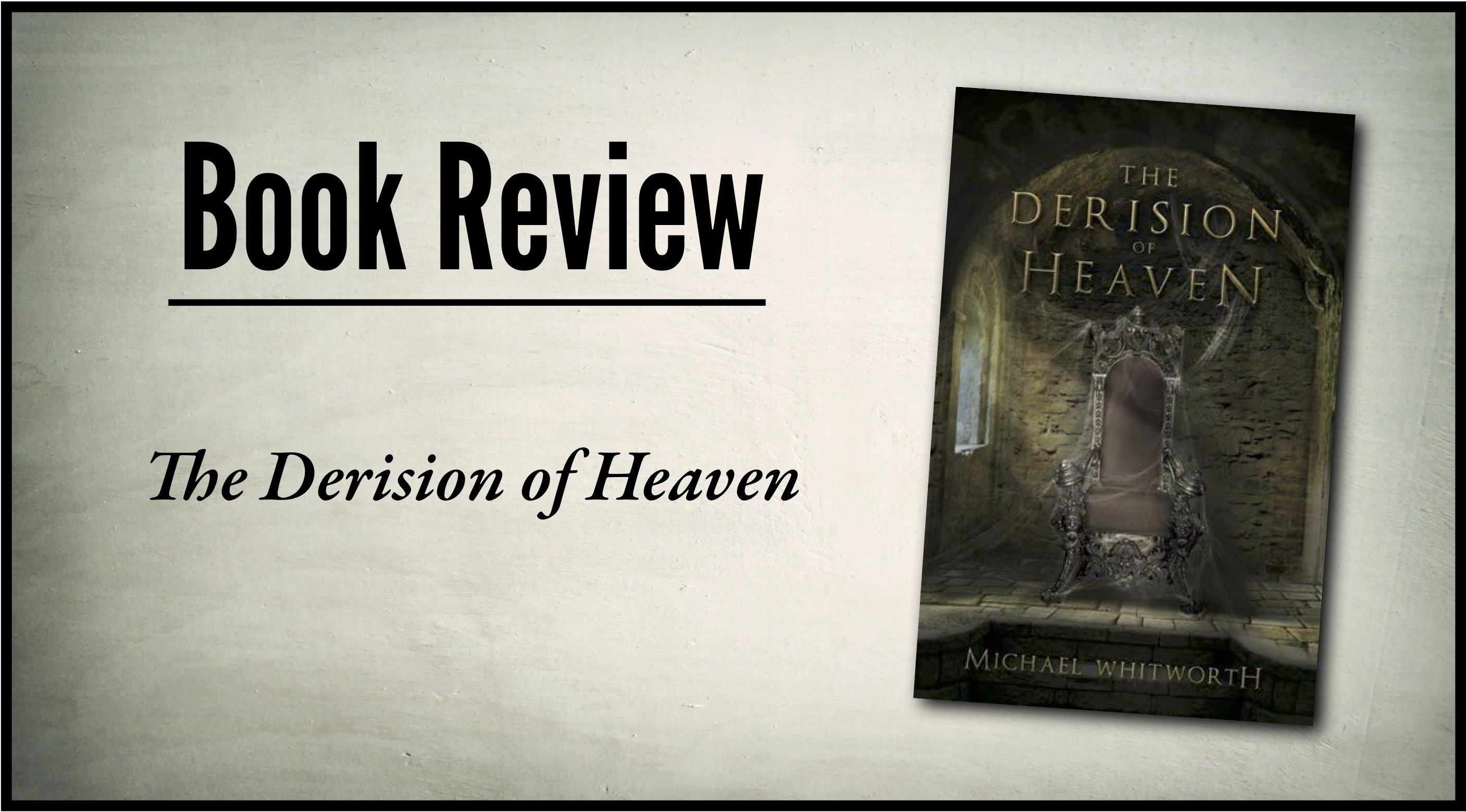
Book Review: The Derision of Heaven

I am a little behind on posting this because I had a very busy week last week, but I just wanted to share The Derision of Heaven by Michael Whitworth. I had previously read and reviewed The Epic of God, Whitworth’s book on Genesis, and since I enjoyed that book so much, I made sure to check out The Derision of Heaven, which focuses on the Book of Daniel.

If anything, I think I liked Derision even more than Epic. Part of this may have been because I read it in paperback rather than a digital version (I am old school when it comes to reading), but it was a really good book, and possessed the same tandem of qualities that made its predecessor such a joy to read as well: a balance between style and substance. By that, I mean that the book is very readable while still being very well-researched.

Before I get into the good stuff (sharing my favorite quotations), let me just add one point. The Book of Daniel is 12 chapters long. The first six chapters consist of relatively straightforward historical narrative, while the last six are filled with wild apocalyptic prophecy. Based on those last six chapters, all sorts of people have predicted all sorts of things, usually with little success. One of the things I appreciated most about this book was the author’s humility in interpreting these difficult passages while still covering them thoroughly and repeatedly emphasizing their main theme: God is at work behind the scenes, and is in control of the universe.

Now, on to the quotations (with my comments in brackets):

“As long as God lives and reigns, his people have hope. Christians should never fear the state; the book of Daniel assures us God has numbered the days of every wicked leader who wields power irresponsibly.” (6)

“Whether in times of disaster or disorientation, we can navigate turbulent waters, not by being the strongest, savviest, or most obnoxious, but by being faithful to God and bringing him glory as Daniel did.” (25)

“Being a light in the darkness doesn’t require our being a burr under the saddle.” (27)

“To pretend that our own political leaders hold office by the will of the people and not also by the will of God is to foolishly assume that these two things are mutually exclusive. They are not.” (38)

“Our personal talents and abilities matter less than our humble willingness to be used by God for his glory.” (39)

“Empires and superpowers rise and fall at God’s will. It’s this realization that causes me to be quite concerned about those Christians who seem prouder to be an American than a member of the church, God’s eternal kingdom, one that cannot be shaken…it’s not a sin to be a patriot unless patriotism becomes your idol. I wonder if some Christians aren’t bigger fans of the Constitution than the gospel.” (48-49) [I agree with his concern and frustration. Many who claim to be Christians take to social media with more passion over some political issue than they ever show on behalf of Christ. Sad but true.]

“Our attitude and behavior when under trial is a powerful testimony to the glory and love of God.” (65)

“In God’s way of working, progress and success often occur so slowly that they are unobservable.” (98)

“I want you to appreciate the tension that exists between “God can” and “God will.” We live our lives within that tension. We know God can do something about our suffering, but will he? In this tense area of in-between is where Satan thrives. In this soil, he plants seeds of doubt in our hearts and nurtures them until they have borne the ugly fruit of indignation, rebellion, and death. But there is something we can place in that gap to frustrate Satan’s schemes—not faith in God’s deliverance, for he does not always do so, but confidence that God will do what’s ultimately best for us. God always does whatever will bring him glory, and God glorifying himself is what is ultimately best for us.” (111) [This is such an important idea, I think, that I gave it its own post. The sooner we can understand and embrace this tension, the better it will be for our spiritual maturity and our own peace of mind.]

“You and I would be better off if we spent less time worrying about gun control, runaway deficit spending, and where/how long the president spends his vacation. We would be better served worrying less about how Liberals, Conservatives, Muslims, Atheists, or others not like us are destroying America. Instead, how would things be different if we confessed daily that Jesus, even now, held dominion over all the earth? What would it look like if we spent more time urging people to willingly kneel before King Jesus now before being compelled to do so on the final day? What would it look like if more Christians spent less time griping about earthly empires destined for history’s trash heap, and celebrated instead Jesus’ indestructible and eternal kingdom?” (132) [This is kind of a soapbox, but a much needed one. I completely agree with him.]

“In the dark days that lie ahead, let us resolve to fight God’s way, not the world’s way.” (185)

 Hopefully, these quotations give you a taste of the book, and make you want to get a copy to read yourself. It would be an invaluable resource for anyone preparing to teach or preach on Daniel, but also beneficial for personal Bible study as well.

The Tension Between “God Can” and “God Will”

I’m currently reading The Derision of Heaven, which is a guide to the Book of Daniel written by Michael Whitworth. It has been a great read so far and I plan on writing a review of it when I’m finished, but I came upon this quotation that was so good that I wanted to go ahead and share it:

“I want you to appreciate the tension that exists between “God can” and “God will.” We live our lives within that tension. We know God can do something about our suffering, but will he? In this tense area of in-between is where Satan thrives. In this soil, he plants seeds of doubt in our hearts and nurtures them until they have borne the ugly fruit of indignation, rebellion, and death. But there is something we can place in that gap to frustrate Satan’s schemes—not faith in God’s deliverance, for he does not always do so, but confidence that God will do what’s ultimately best for us. God always does whatever will bring him glory, and God glorifying himself is what is ultimately best for us.”

(The Derision of Heaven, 111)

Chris Wright on Salt and Light

I love this quotation from Christopher J. H. Wright’s, The Mission of God’s People:

“If a piece of meat goes rotten, it’s no use blaming the meat. That’s what happens when meat is left out on its own. The question to ask is, Where is the salt? If a house goes dark at night, it’s no use blaming the house. That’s what happens when the sun goes down. The question to ask is, Where is the light? If society becomes more corrupt and dark, it’s no use blaming society. That’s what fallen human nature does, left unchecked and unchallenged. The question to ask is, Where are the Christians?”

Good words to reflect on, I think.

« Older posts Newer posts »

© 2026 The Doc File

Theme by Anders Noren — Up ↑