The online journal of Luke Dockery

Category: Quotations (Page 8 of 17)

Book Review: Fit for the Pulpit

I recently finished reading Fit For The Pulpit: The Preacher & His Challenges, a book written for preachers, by several preachers, and edited by Chris McCurley.

As the title would indicate, this little volume (138 pages of actual text) focuses on different challenges faced by preachers, and offers guidance and advice on how to deal with each. The topics of time management, relationships, discouragement, stress, criticism, family, finances, sin, attitude, laziness, and the “core” of the preacher are covered.

Technically, I am not a “preacher,” but I am a minister who preaches on occasion, and virtually all of this material applied to me in some way. I have read a lot of books on ministry of one sort or another, and while I wouldn’t consider this to be a great book (more on that below), it is still a good book, and fits in well alongside other books on ministry.

I’ll share three gentle criticisms of this book that I had, and then share some good quotations.

First, the book is an anthology, with ten different ministers writing the eleven chapters. I’m sure the idea was to get the voices and perspectives of several different experienced preachers on the various topics which were covered, but honestly, the cumulative effect for me was that the writing was somewhat choppy and disjointed. Some chapters are better than others in large part because some writers were better than others. Also, one particular biblical story regarding Elijah was used as an illustration in three different chapters, which seemed pretty repetitive. I don’t think this would happen with one author.

Secondly, there is a very practical chapter on the preacher and his family which provides some valuable suggestions and insights on how a preacher can care for and be the spiritual leader of his family. This was definitely a needed chapter: there are a lot of good, well-meaning men who have devoted their lives to ministry but who forgot to devote much of anything to their families and as a result, have a variety of tragic issues to deal with (divorce, faithless children, addiction, etc.). What I disliked about this chapter was that I thought it too easily glossed over the inherent tension between our devotion to Jesus and our devotion to our families. Jesus said some tough things about the importance of our families relative to Him, and part of the true difficulty of being a minister is identifying those things which are “just” work and should therefore be a lower priority than our families, and those things which are directly tied to our answer to the call of Christ and therefore are of the utmost importance. Certainly not everything in ministry should come before our families, but I think the clear biblical teaching is that some things should. Unfortunately, this chapter didn’t address this crucial topic.

Finally, on a book about preaching, I wish there would have been a chapter devoted directly to the practice of Bible study and putting a sermon together. Look, preachers do a lot of things and wear a lot of hats in their jobs, but none of them compares to the public proclamation of God’s word. Unfortunately, we have gotten to the point where too often, the preacher is so busy with other things that he has to squeeze in his sermon preparation into a couple hours at the end of the week, which is just not enough. Even worse, the ready availability of hundreds or thousands of free sermons online has made it easy for some preachers to frequently skip Bible study altogether. This is a real problem, and though the importance of preaching and Bible study was mentioned multiple times throughout the book, a good chapter explicitly focused on the centrality of preaching and the task of sermon preparation would have been a good feature.

Here are some of the good quotations from the book [with my comments added in brackets]:

“The local preacher’s primary responsibility is to preaching; therefore, he must give the proper amount of time and attention to study of God’d Word.” (p.13) [As you can surmise by my statements above, I am in full agreement with this quotation. I just wish it would have been fleshed out more in a full chapter devoted to sermon preparation.]

“Time management must include the ability to say “No!” to some things…Many things are important, but not everything is a priority or a must.” (p.20) [This is a ministry lesson I am still learning!]

“…In establishing a long stay with a church, the preacher should also choose his battles carefully. Every issue that arises in ministry is not worth “going to the mat” for.” (p.51)

“[Preachers] live with the realization that everyone who accomplishes anything worthwhile will face criticism.” (p.60)

“We are rich in our country, and we were not blessed to increase our comfort, but to bless others.” (p.85)

“Watching for Satan starts with knowing our personal weaknesses.” (p.97)

“We can seek to restore New Testament Christianity in our worship, our leadership structures, or in any other category. But if we don’t have love, we have no legitimate claim to be the “of Christ” designation on our church signs.” (p.107) [It would probably benefit me, and you too, to read this statement every day of our lives.]

Despite the criticisms I mentioned above, Fit For The Pulpit is a good book with helpful, practical advice. I would recommend it to other ministers, but also to church members, who would do well to get a better idea of “what the preacher does all week” and the challenges he faces.

N.T. Wright on the Myth of Progress

I am currently reading through N.T. Wright’s Surprised By Hope: Rethinking Heaven, the Resurrection, and the Mission of the Church. It has been an enjoyable and challenging read thus far, and I wanted to share one quotation that stuck out to me the other day.

Wright was speaking against the “myth of progress,” the once-popular (and still popular in some circles) idea that with human advances in technology, education, etc., the world is gradually becoming a better and better place leading to some sort of utopia:

“Only in the Christian story itself—certainly not in the secular stories of modernity—do we find any sense that the problems of the world are solved not by a straightforward upward movement into the light but by the creator God going down into the dark to rescue humankind and the world from its plight.”

(p.87)

This is a primary message of Scripture (though people still miss it sometimes): things are messed up, and we are not capable of fixing them. God has to come and rescue us from our plight.

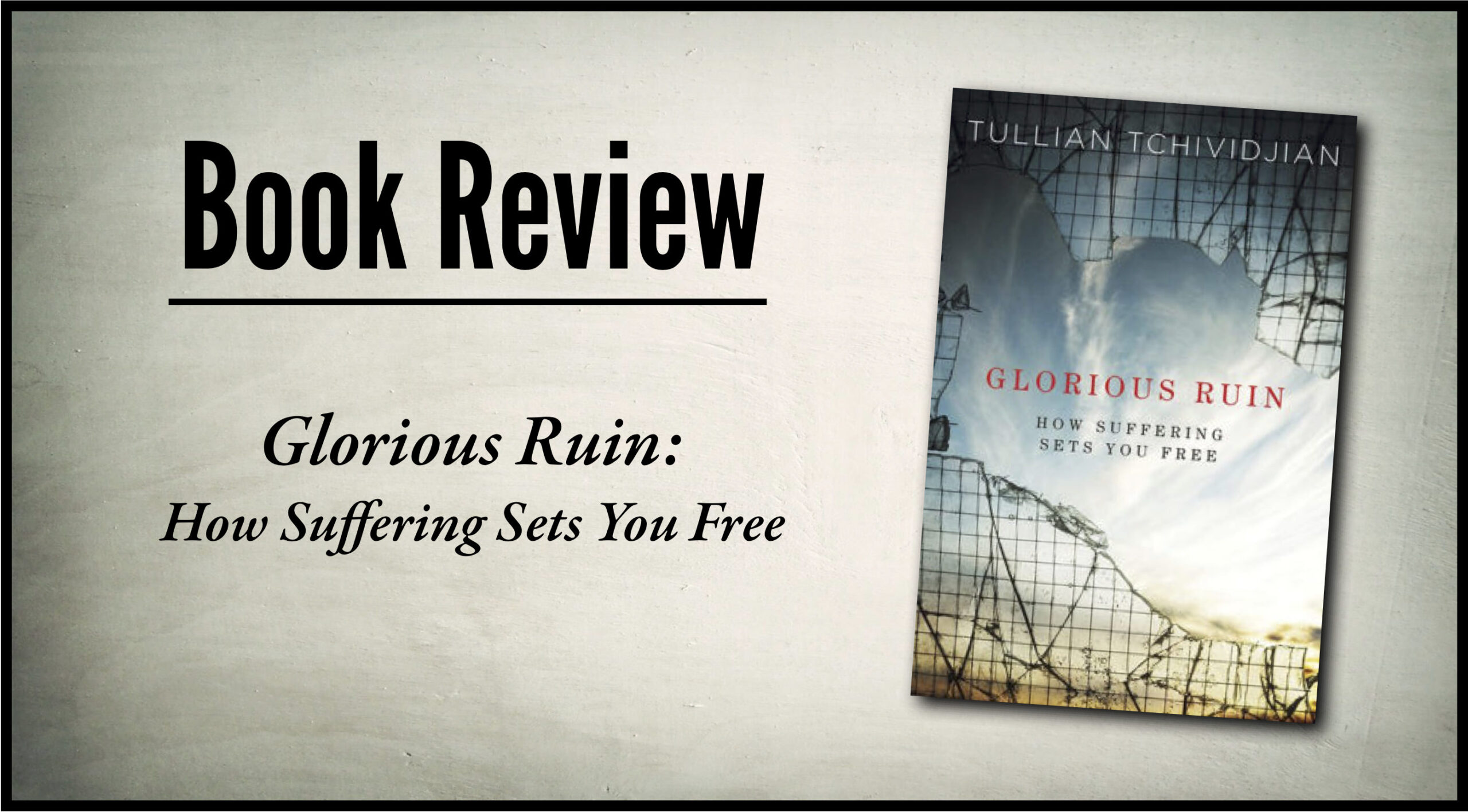
Book Review: Glorious Ruin

At the very end of last year, I read Tullian Tchividjian’s Glorious Ruin: How Suffering Sets You Free. The topic of suffering  has been on my mind a lot over the last year or so, and I was interested in seeing what Tchividjian (who is Billy Graham’s son-in-law, by the way) had to say.

In many ways, this was a challenging read for me that pushed my thinking, but I thought it was helpful. Again and again, Tchividjian (type that name five times fast!) argues that the answer to suffering is not stoicism or seeking some silver lining; rather it leaves us broken and therefore more open to meeting Jesus.

And here are some of my favorite quotations from the book [with my comments added in brackets]:

“The required cheerfulness that characterizes many of our churches produces a suffocating environment of pat, religious answers to the painful, complex questions that riddle the lives of hurting people.” (p.7) [Of all places, people should feel safe to share their hurts at church!]

“…This side of heaven, suffering often points to a deeper reality, an indicator of both personal and cosmic discord.” (p.8) [I think suffering is the only wake-up call that some people ever hear.]

“So what would a God who was present in suffering look like? First and foremost, He would be a God who suffers Himself. Maybe even dies. A God who meets people in their suffering, rather than on the other side of it. Pain might even be one of His primary avenues for reaching people.” (p.11)

“…The gospel is not ultimately a defense from pain and suffering; rather, it is the message of God’s rescue through pain.” (p.21)

“While God does indeed use the suffering in our lives, He is interested in much more than improvements in your personality or circumstantial happiness. He is interested in saving you.” (p.44)

“Contrary to popular belief, Christianity is not about good people getting better. If anything, it is about bad people coping with their failure to be good.” (p.51)

“The gospel is not a means to an end, it is an end in itself.” (p.52)

“When the bottom falls out of our lives, we don’t necessarily find it comforting when people try to cheer us up. No matter how well intended, such overtures create pressure that adds to our distress. Not only are we suffering, but we now feel bad about how we make those around us feel or, at least, about the disconnect between where they would like us to be and where we actually are.” (p.82) [From a pastoral perspective, this is huge: ministers (and anyone, really) need to take it easy on always trying to cheer up those who are suffering. Sometimes, we just need to let them grieve.]

“There’s nothing like suffering to remind us how not in control we actually are, how little power we ultimately have, and how much we ultimately need God. In other words, suffering reveals to us the things that ultimately matter, which also happen to be the warp and woof of Christianity: who we are and who God is.” (p.96) [Yes, absolutely.]

“The Lord mercifully put to death Job’s final idol—the idol of explanation. God liberated Job from the prison of Why. He liberated Job from himself. It was a glorious ruin.” (p.103)

“Brokenness precedes usefulness. It just does. Who reaches out to parents who have lost children to drunken driving accidents? Other parents who have lost children to drunken driving accidents. When we go through something painful and when God breaks us, it makes us both more useful to others and more willing to be used.” (p.120) [I am firmly convinced that we become better witnesses for God when we have suffering in our pasts.]

“Suffering…has a way of liberating us from the petty concerns and worries that bog down our everyday existence.” (p.121)

“Perhaps the only solace you can draw from suffering is that you begin to see that we were truly made for another world.” (p.132)

“And yet, our hope does not ultimately lie in our present liberation. There is no guarantee that we will experience relief from pain. I wish I could say there was. This life may feel like one long, painful death. All you can do is hang on, and sometimes you can’t even do that. Fortunately, the good news of the gospel is not an admonition to hang on to God with all your strength and willpower and you’ll be okay. The good news of the gospel is not some gnostic encouragement to view your suffering in the right way, or understand the theology of the cross more deeply. No, the good news is that God is hanging on to you. He’s not waiting for you to save yourself or mature into someone who no longer needs Him. He will not let you go, come what may. Jesus will never, ever leave you or forsake you.” (p.138) [He brings it all home here; this was really powerful to me.]

Sadly, we live in a fallen world, and as a result of that, suffering is all around us. Because of this, it is easy to find books on how to deal with suffering, or how to grow or improve yourself through suffering. What sets Glorious Ruin apart is that it suggests that, ultimately, suffering leads us to God, not a better version of ourselves.

The Problem(s) With Worry

I’m in the process of reading Fit For The Pulpit: The Preacher & His Challenges, which covers several topics that preachers deal with in ministry (time, stress, criticism, family, etc.). I may or may not write a review when I finish the book, but I wanted to go ahead and share some really good words on worry (emphasis is mine):

“1. Worry is irreverent. It fails to recognize that God is still on his throne and works in the lives of his children (cf. Rom. 8:28).

2. Worry is irresponsible. It wastes energy and burdens us so that we cannot be engaged in constructive and creative problem solving.

3. Worry is irrelevant. It cannot change anything. It has been estimated that 50% of the things we worry about never happen, that 30% are about the past which we cannot change, that 12% are too petty to affect the future, and that just 8% legitimately deserve our concern.”

(p.48)

In addition to the characteristics of worry mentioned above, for me worrying is also easy, which is why I found these reminders to be so helpful.

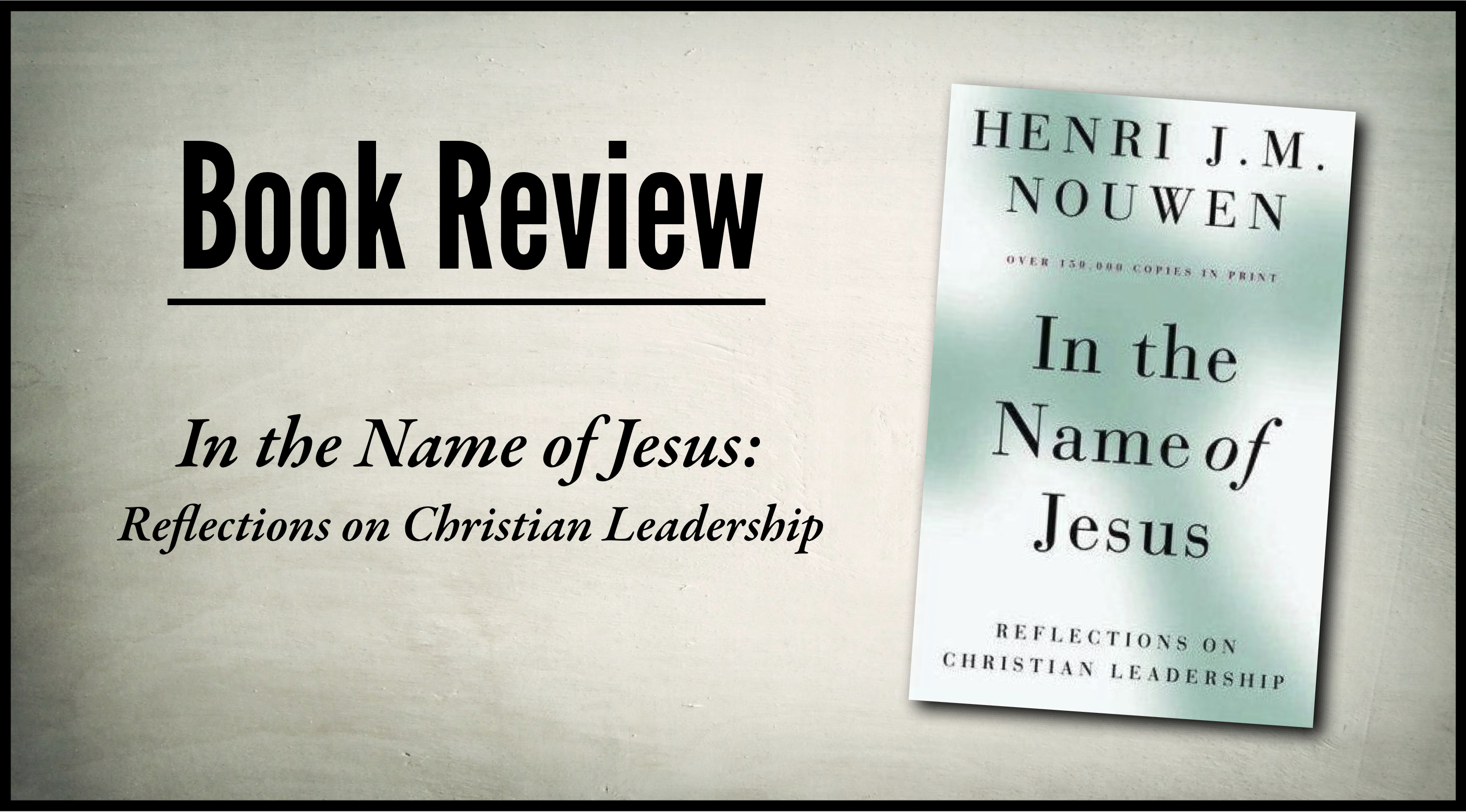
Book Review: In the Name of Jesus

Last month I posted my reading list for 2013, and in the comment section an old college friend recommended In The Name of Jesus: Reflections on Christian Leadership by Henri Nouwen. I was interested, because (a) it was on leadership, and (b) Nouwen, a Catholic priest, was a well-known writer whom I had never read before.

Furthermore, I was interested to read what he had to say because of what I assumed would be an interesting perspective. Nouwen was a respected professor at Notre Dame, Yale, and Harvard, but he chose to leave that behind to live and work with developmentally disabled people.

And I was correct—he did have an interesting perspective. In the Name of Jesus offers some radical views on Christian leadership, and by that, I mean that it takes seriously the things that Jesus says in Scripture.

Here are some quotations [my comments in brackets]:

“I am deeply convinced that the Christian leader of the future is called to be completely irrelevant and to stand in this world with nothing to offer but his or her own vulnerable self. That is the way Jesus came to reveal God’s love. The great message that we have to carry, as ministers of God’s word and followers of Jesus, is that God loves us not because of what we do or accomplish, but because God has created and redeemed us in love and has chosen us to proclaim that love as the true source of all human life.” (p. 18) [The message of irrelevance is hard to hear in our success-driven society. But to the degree that we emphasize and prop up our successes, how much do we alienate ourselves from the downtrodden who are most in need of God’s Good News?]

“Indeed, whenever we minister together, it is easier for people to recognize that we do not come in our own name, but in the name of the Lord Jesus who sent us.” (p. 36)

“We are not the healers, we are not the reconcilers, we are not the givers of life. We are sinful, broken, vulnerable people who need as much care as anyone we care for. The mystery of ministry is that we have been chosen to make our own limited and very conditional love the gateway for the unlimited and unconditional love of God.” (p. 37) [I love that—“the mystery of ministry.” As someone who is very aware of my own faults, I have certainly been struck by that irony before.]

“The way of the Christian leader is not the way of upward mobility in which our world has invested so much, but the way of downward mobility ending on the cross.” (p. 50) [Wow. Gut check.]

“Powerlessness and humility in the spiritual life do not refer to people who have no spine and who let everyone else make decisions for them. They refer to people who are so deeply in love with Jesus that they are ready to follow him wherever he guides them, always trusting that, with him, they will find life and find it abundantly.” (p. 50) [This is a helpful perspective: the Christian is not called to be listless or apathetic, but so trusting in God that we can appear to be unconcerned at times.]

“The task of future Christian leaders is not to make a little contribution to the solution of the pains and tribulations of their time, but to identify and announce the ways in which Jesus is leading God’s people out of slavery, through the desert to a new land of freedom.” (p. 54)

This was an easy read (only about 80 pages including a delightful personal story that was woven throughout the book), but it was also very challenging. There are a lot of leadership books out there, but not many of them follow the model of our Leader, who emptied Himself and became lowly on our behalf.

« Older posts Newer posts »

© 2026 The Doc File

Theme by Anders Noren — Up ↑