The online journal of Luke Dockery

Category: Books (Page 2 of 27)

Origin Story featured in The Christian Chronicle

Back in March, I wrote about the release of Origin Story: Churches of Christ and the Restoration Movement. This book, which I co-authored with my good friend Jared Pack, is, as far as I know unique in that is seeks to present a history of Churches of Christ specifically geared towards teenagers. Published by Deeper Youth Ministry, the book has sold pretty well and received some good reviews, but I was pleasantly surprised when The Christian Chronicle reviewed it in a recent issue.

The reviewer, Zack Martin, is an instructor of historical theology and dean of students at Heritage Christian University in Florence, Alabama, and had several kind things to say:

[Dockery and Pack] are honest about how unity and restoration are in tension with one another in the life of a Christian; however, that should never stop one from seeking to live in balance with these two biblical ideas.

Due to the struggle between the two ideas, the Restoration Movement has consistently favored one over the other throughout its history. The results have not always been pretty, but the authors do not shy away from the unpleasant aspects of the movement, such as the presence of controversial figures or issues like segregation.

Also important is the book’s examination of the Restoration Movement within the broader context of church history. Churches of Christ will often start in the first century and then skip to 19th century America. But this book reminds the reader that historical events and movements do not happen in a vacuum.

This book is written and designed with young people in mind. But it can also be used for an adult Bible class or personal study for adults who want to learn more about their spiritual heritage and identity.

I am very thankful for Dockery and Pack and for this project. I hope that our fellowship supports this work not only because it is presented in an entertaining format, but also because it will help reshape Churches of Christ in the way of the true restoration plea.

I am thankful for the kind review, and the broader exposure given to the book. For the record, I don’t make a penny off any of these book sales; my motivation is simply to see more churches and students within Churches of Christ learn something about our history in the Restoration Movement, and appreciate the value of the restoration plea: the desire to bring about unity among God’s people by adhering to the clear teachings of Jesus and the apostles and the practices of the early church.

You can order the book from Amazon here, or read the full review at The Christian Chronicle here.

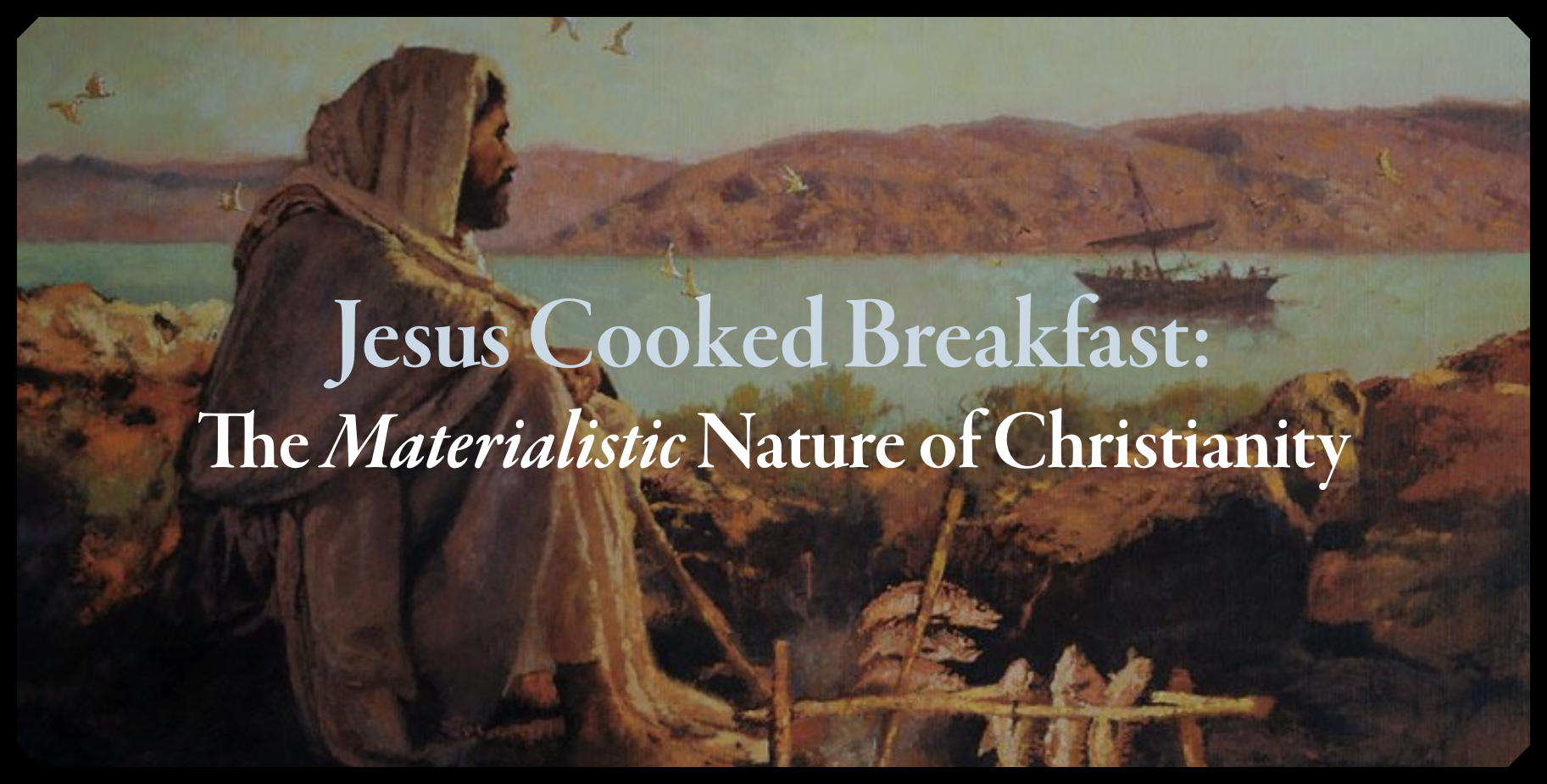
Jesus Cooked Breakfast: The Materialistic Nature of Christianity

This is the third and final post in a short series based on a rereading of Tim Keller’s The Prodigal God. Although I liked the book well enough the first time, I found it to be particularly insightful the second time I read it; you can read the previous posts, “The Elder Brother We Need” and “Exiled from Home.”


Something that I have observed frequently in my life as a Christian is the elevation of “spiritual” things in a way that trivializes things that are material. This seemed normal and right to me for a long time, until I became a better student of theology and Christian history and realized that attempts to downplay “physical” and “material” things as unimportant are actually echoes of ancient Christian heresies like gnosticism or reflect influence from Greek platonism rather than being a genuine representation of the historic Christian faith, which emphasizes the goodness of creation and God’s intention to redeem it.

One of the things I loved about The Prodigal God was Keller’s section, “Salvation Is Material.”[1] In this section, he makes a brief but strong case for the material nature of Christianity. In fact, Keller claims that Christianity is perhaps the most materialistic of the world’s faiths. Here he does not mean materialism in the sense of being focused on wealth and possessions, but rather that the Christian faith values what is created and tangible.

Keller begins with the significance of meals in the Christian faith, and then traces God’s love for the material world through the biblical narrative (words in bold reflect my own emphasis):

A meal is a very physical experience. Jesus left a meal, the Lord’s Supper, to be remembered by, and the final goal of history is a meal, the wedding supper of the Lamb (Revelation 19). The resurrected Christ ate with his disciples when he met with them (Luke 24:42–43; John 21:9). What does it all mean? It is a sign that, for Jesus, this material world matters.

The book of Genesis tells us that when God made this world he looked upon the physical creation and called it “good.” He loves and cares for the material world. The fact of Jesus’s resurrection and the promise of a new heavens and new earth show clearly that he still cares for it. This world is not simply a theater for individual conversion narratives, to be discarded at the end when we all go to heaven. No, the ultimate purpose of Jesus is not only individual salvation and pardon for sins but also the renewal of this world, the end of disease, poverty, injustice, violence, suffering, and death. The climax of history is not a higher form of disembodied consciousness but a feast. God made the world with all its colors, tastes, lights, sounds, with all its life-forms living in interdependent systems. It is now marred, stained, and broken, and he will not rest until he has put it right.

Distinct from other world religions and philosophies, ministry of Jesus emphasized his care and concern for what happened to people in this material existence:

If the material world were only an allusion, as Eastern philosophy says, or only a temporary copy of the real, ideal world, as Plato says, then what happens in this world or in this life would be unimportant. All that would matter would be issues of soul or spirit. However, Jesus was not simply saved “in spirit” but was resurrected in body. God has made both soul and body and is going to redeem both soul and body. Everything about the ministry of Jesus demonstrated this fact. Jesus not only preached the world, but also healed the sick, fed the hungry, and cared for the needs of the poor.

In Matthew 25, Jesus describes Judgment Day. Many will stand there and call him “Lord,” but Jesus says, stunningly, that if they had not been serving the hungry, the refugee, the sick, and the prisoner, then they hadn’t been serving him (Matthew 25:34–40). This is no contradiction to what we have heard from Jesus in the Parable of the Prodigal Son. He is not saying that only the social workers get into heaven. Rather, he is saying that the inevitable sign that yo know you are a sinner saved by sheer, costly grace is a sensitive social conscience and a life poured out in deeds of service to the poor. Younger brothers are too selfish and elder brothers too self-righteous to care for the poor. 

I love what Keller says about the miracles of Jesus: rather than somehow overwhelming natural law and the way things are supposed to work, they were actually revelations of the way things are supposed to work—a restoration of the way God designed things from the beginning. And indeed, Jesus reveals a determination to deal with the broken aspects of life on earth, and his followers should have a similar determination:

Christianity, therefore, is perhaps the most materialistic of the world’s faiths. Jesus’s miracles were not so much violations of the natural order, but a restoration of the natural order. God did not create a world with blindness, leprosy, hunger, and death in it. Jesus’s miracles were signs that someday all these corruptions of his creation would be abolished. Christians therefore can talk of saving the soul and of building social systems that deliver safe streets and warm homes in the same sentence. With integrity.

Jesus hates suffering, injustice, evil, and death so much, he came and experienced it to defeat it and, someday, to wipe the world clean of it. Knowing all this, Christians cannot be passive about hunger, sickness, and injustice. Karl Marx and others have charged that religion is “the opiate of the masses.” That is, it is a sedative that makes people passive toward injustice, because there will be “pie in the sky bye and bye.” That may be true of some religions that teach people that this material world is unimportant or illusory. Christianity, however, teaches that God hates the suffering and oppression  of this material world so much, he was willing to get involved in it and to fight against it. Properly understood, Christianity is by no means the opiate of the people. It’s more like the smelling salts. 

The Christian faith, as revealed and embodied in Jesus of Nazareth, doesn’t pretend that suffering doesn’t matter or that it doesn’t exist. Rather, it helps wake us up to the reality of the brokenness of the world in which we live, and stirs us to action as representatives of a different sort of world where evil will be defeated and suffering will be no more.[2]

Tim Keller: Properly understood, Christianity is by no means the opiate of the people. It’s more like the smelling salts. Share on X

[1] The quoted portions are from Timothy Keller, The Prodigal God: Recovering the Heart of the Christian Faith (New York: Dutton, 2008), 110-13.

[2] In The Silver Chair in the Chronicles of Narnia, Puddleglum sticks his foot into the fire, and the suffering he experiences breaks the enchantment of evil that has overshadowed he and his companions. I believe C.S. Lewis was making a similar point to Keller, that suffering through a Christian lens “wakes us up” to the reality of the brokenness of our world.

Exiled from Home

This is the second in a short series of posts based on a rereading of Tim Keller’s The Prodigal God. As I mentioned in the first post, although I liked the book the first time I read it, I suspect that I wasn’t quite at the place in life to fully appreciate it and I enjoyed it much more the second time around.


In The Prodigal God, Keller describes how all of us can identify with the younger brother. This doesn’t mean that we have dramatic departures from home, characterized by reckless, sinful living in the far country. Indeed, I personally don’t identify with this aspect of the younger son; it has always been the elder brother that strikes a little too close to home for me.

But there is another sense that we are like the younger brother: we feel like we are away from home, and there is a yearning that nothing quite seems to meet. Indeed, this element of being exiled from home is a key feature of the biblical narrative:[1]

We are all exiles, always longing for home. We are always traveling, never arriving. The houses and families we actually inhabit are only inns along the way, but they aren’t home. Home continues to evade us.

Why would “home” be so powerful and yet so elusive for us? The answer can be found as we examine one of the most pervasive themes of the Bible. The experience we have been describing is the trace in our souls of this larger story.

In the beginning of the book of Genesis we learn the reason why all people feel like exiles, like we aren’t really home. We are told there that we were created to live in the garden of God. That was the world we were built for, a place in which there was no parting from love, no decay or disease. It was all these things because it was life before the face of God, in his presence. There we were to adore and serve his infinite majesty, and to know, enjoy, and reflect his infinite beauty. That was our original home, the true country we were made for.

However, the Bible teaches that, as in Jesus’s parable, God was the “father” of that home and we chafed under his authority. We wanted to live without God’s interference, and so we turned away, became alienated from him, and lost our home for the same reason the younger brother lost his. The result was exile.

So, this is another element of tragedy that comes from the story of rebellion and fall in the Garden of Eden. In addition to the devastating effects of sin, the feeling of being exiled from home becomes a defining characteristic of our lives. Like the younger son, we rebel against our father, and like the younger son, we suffer from homelessness as a result.

The Bible says that we have been wandering as spiritual exiles ever since. That is, we have been living in a world that no longer fits our deepest longings. Though we long for bodies that “run and are not weary,” we have become subject to diseases, aging, and death. Though we need love that lasts, all our relationships are subject to the inevitable entropy of time, and they crumble in our hands. Even people who stay true to us die and leave us, or we die and leave them. Though we long to make a difference in the world through our work, we experience endless frustration. We never fully realize our hopes and dreams. We may work hard to re-create the home that we have lost, but, says the Bible, it only exists in the presence of the heavenly father from which we have fled.

Here, Keller comes to the crux of our existential crisis: we have been living in a world that no longer fits our deepest longings. Keller mentions three aspects of this:

  1. The physical decay of our bodies, ultimately resulting in death
  2. The disintegration of our valued relationships
  3. The ultimate futility of our desire to leave a legacy or make a difference in the world

This is straight out of the book of Ecclesiastes: the hebel or vanity of life.

This is an element of The Prodigal of God that resonates much more deeply as I read this now than when I was in my mid-20s. I am aware of the physical decay of my body and the overall fragility of life. I am not as fast as I used to be, I have to work harder to be strong, I get injured more easily, and it takes longer to recover. I am too keenly aware of people whose lives are snuffed out at a young age through accident, illness, or tragedy, and I have witnessed more and more people that I care about pass away.

In my mid-20s, my friendships seemed so healthy and even “old friendships” seemed very recent, but since then I have seen how they are “subject to the inevitable entropy of time.” I have witnessed the dissolution of the marriages of couples that I have loved, and the ending of many of my friendships—sometimes abruptly through events I don’t even understand, sometimes through a change in lifestyle and values, and sometimes just the slow fade caused by geographical distance. And, as Keller points out, even the very best and most faithful relationships end in death (theirs or ours).

In my mid-20s, it seemed like my whole life was ahead of me, and I had plenty of time to make my mark on the world (whatever that would look like). Now, I am days away from my 42nd birthday, decidedly middle-aged, and keenly aware that I am not going to find lasting significance in my work or accomplishments and that I will be forgotten shortly after I die (echoes of Ecclesiastes again). I am incapable of accomplishing everything I want to, regardless of how hard I work.

And these are universal feelings: 

This theme is played out again and again in the Bible. After Adam and Eve’s exile from the ultimate home, their son Cain was forced to restlessly wander the earth because he murdered his brother Abel. Later Jacob cheated his father and brother and fled into exile for years. After that, Jacob’s son Joseph and his family were taken from their homeland into Egypt because of a famine. There the Israelites were enslaved until, under Moses, they returned to their ancestral home. Centuries after this, David, before he became king, lived as a hunted fugitive. Finally the whole nation of Israel was exiled again, taken captive to Babylon by King Nebuchadnezzar.

It is no coincidence that story after story contains the pattern of exile. The message of the Bible is that the human race is a band of exiles trying to come home. The parable of the prodigal son is about every one of us.

Now, all of this sounds depressing, but none of this should drive us to despair. It should, however, help us “come to our senses” (Luke 15.17), realize how good things are with our Father, and come home to Him!

Or, in the words of C.S. Lewis: “If we find ourselves with a desire that nothing in this world can satisfy, the most probable explanation is that we were made for another world.”[2] These longings that we have are not inappropriate or outrageous, but we will not find them here.

So, the Christian is like the prodigal son: there is an uneasy realization that we are exiles far from home, and we are trying to get home to our Father (and the Elder Brother that we need). And one glorious day, we will be exiled no longer.


[1] The quoted portions are from Timothy Keller, The Prodigal God: Recovering the Heart of the Christian Faith (New York: Dutton, 2008), 95-98.

[2] C.S. Lewis, Mere Christianity (San Francisco: HarperOne, 2001), 136-37.

The Elder Brother We Need

Rereading books is such an interesting enterprise for me. Multiple times, I have been surprised at how much more I appreciate a book the second time I read it, and that is certainly the case with Timothy Keller’s The Prodigal God. I first read this book over 15 years ago when I was still a new minister, and back then, I thought it had some good things to say but wasn’t overly impressed. I reread it earlier this year, and several things have changed significantly since I first read it, including that I am now a father, I have been in the trenches of ministry for nearly two decades, I have developed a deep appreciation for the ministry and wisdom of Tim Keller, and I have developed a keen awareness of my own sinfulness. Taken together, this means that The Prodigal God struck me differently the second time through—I loved it.


In The Prodigal God, Keller uses Jesus’s famous parable of the Prodigal Son as a lens to examine the heart of the Christian gospel. It is a short book—less than 150 pages—and can easily be read in a few hours, but it is packed with wisdom and insight. I’d like to write a few short posts to focus on some of the ideas that struck me most.

In popular tellings of the Prodigal Son, much of the attention is given to the younger son, who demands his share of his father’s inheritance, moves off to a far country, squanders everything he has, and then returns home to his father when he is destitute. When he returns, his father welcomes him back and throws a party for him, and this element of the story emphasizes key aspects of the gospel story—our sinfulness and lack of gratitude, and the love, generosity, mercy, and forgiveness of God.

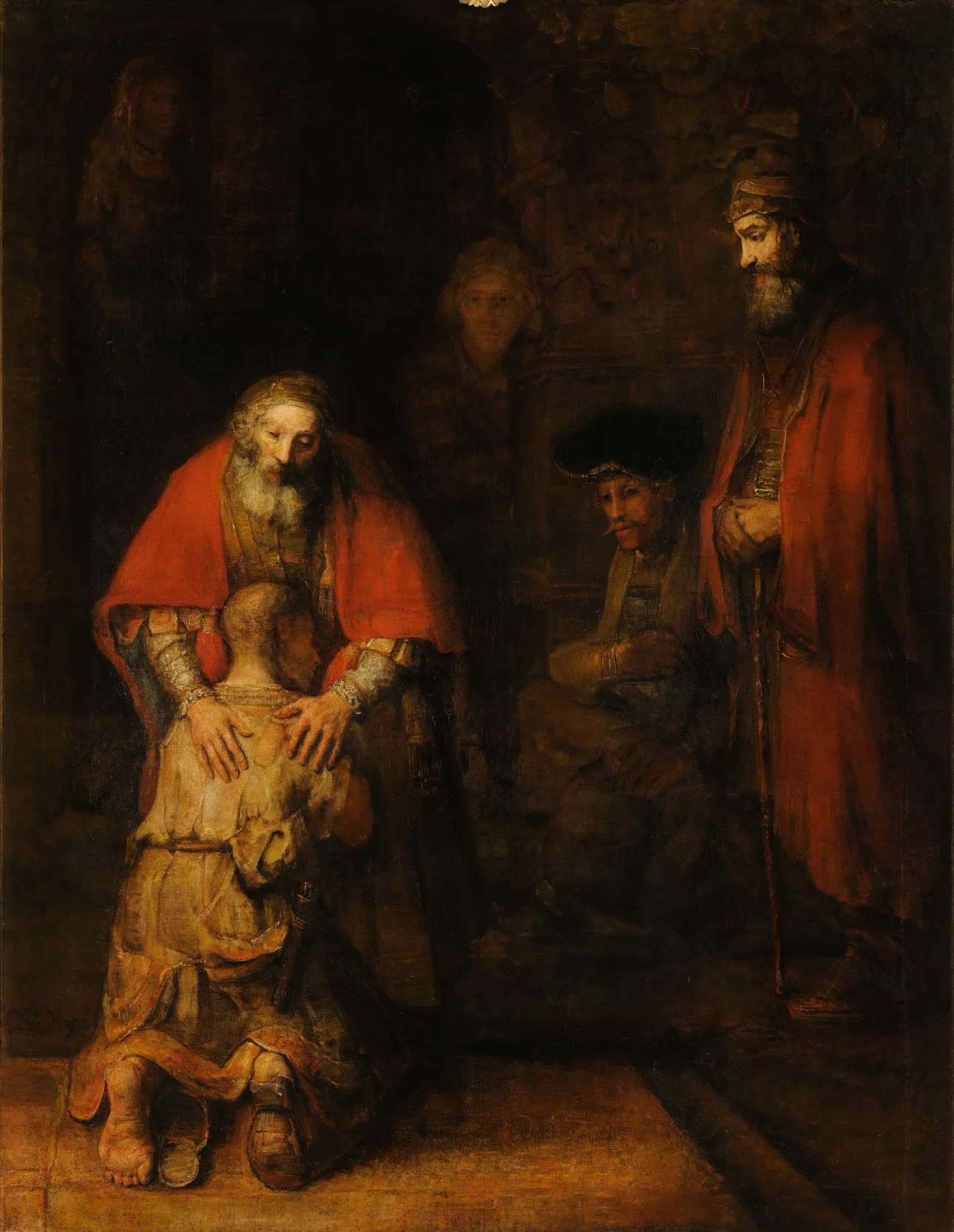
All of this is important, but of course, in Jesus’s telling of the story, there are two sons, and they are both important if we are to understand the nature of humanity and the truth of the gospel. There is also an elder brother who stays at home dutifully working for his father, and who is embittered when his younger brother returns and is celebrated by his dad. If the younger brother represents the “tax collectors and sinners” that Jesus spent so much time with, the elder brother represents the Pharisees and religious leaders who were dutiful but hard-hearted and misunderstood the nature of God.

From Keller:

By putting a flawed elder brother in the story, Jesus is inviting us to imagine and yearn for a true one.

And we have him. Think of the kind of brother we need. We need one who does not just go to the next country to find us but who will come all the way from heaven to earth. We need one who is willing to pay not just a finite amount of money, but, at the infinite cost of his own life to bring us into God’s family, for our debt is so much greater. Either as elder brothers or as younger brothers we have rebelled against the father. We deserve alienation, isolation, and rejection. The point of the parable is that forgiveness always involves a price—someone has to pay. There was no way for the younger brother to return to the family uniless the older brother bore the cost himself. Our true elder brother paid our debt, on the cross, in our place.

There Jesus was stripped naked of his robe and dignity so that we could be clothed with a dignity and standing we don’t deserve. On the cross Jesus was treated as an outcast so that we could be brought into God’s family freely by grace. There Jesus drank the cup of eternal justice so that we might have the cup of the Father’s joy.  There was no other way for the heavenly Father to bring us in, except at the expense of our true elder brother.[1]

Jesus is the elder brother we so desperately need: He goes to great lengths to pursue us, assumes our debt Himself, and celebrates our return.


[1] Timothy Keller, The Prodigal God: Recovering the Heart of the Christian Faith (New York: Dutton, 2008), 84-85.


The image above is from Rembrandt’s 1669 masterpiece, “The Return of the Prodigal Son.” The elder brother stands on the right, literally and figuratively looking down on his younger brother.

The Model for Every Christian Preacher

What does the model Christian preacher look like? That question likely prompts various responses from different people. Some perhaps think of a polished communicator who is pleasing to listen to. Others might prefer someone with theological depth who delves into the biblical text in profound or novel ways. Some might yearn for nostalgia—a certain type of preaching that they miss from a bygone era. And still others might look for someone who is entertaining, who tells funny jokes and keeps our attention. 

With a little more reflection, we might say that, obviously, Jesus is the model Christian preacher. After all, Jesus is the model of all of Christian life, we are His disciples, and we seek to become like Him. No sermon has ever been as brilliant or powerful as the Sermon on the Mount, so this is obviously the correct answer, right?

What I wrote in the previous paragraph is true, but there is a really crucial way in which we cannot emulate Jesus when it comes to preaching—Jesus Himself is the focus of Christian preaching, the Son of God who, following His resurrection and ascension has been enthroned as the King of the universe, and has the ultimate authority to interpret to teach, command, and judge. 

On the contrary, when I preach, it is not myself that should be the focus, and the only authority that I have is that which is derived from God’s revealed word. In that sense, the model Christian preacher is not Jesus, but John the Baptist. 

As Fleming Rutledge writes in Advent: The Once & Future Coming of Jesus Christ (emphasis mine):

All four New Testament Evangelists agree: there is no good news, no gospel of Jesus Christ, without John the Baptist. John’s whole life was lived with but one purpose; he was born, a man of destiny, to declare the imminent arrival of the coming Messiah. This voice crying in the wilderness, this “lantern which shone in front of the Son of God,” is extraordinary in many ways, but most of all for the single-mindedness with which he pursued his mission even to death, for John the Baptist feared no man, not even Herod the king, and no woman either, not even Herod’s wife, who in the end arranged to have his head cut off. But let us take note: this firebrand who recognized no superior was utterly submissive before the One whose coming he lived and died to illuminate. “John said to them, ‘One is coming who is mightier than I, and I am not fit to untie the thong of his sandal.’” (Luke 3:15-16).

To be the witness, to point away from himself to Jesus Christ—this is the destiny of John, and in these things, he is a model for every Christian preacher.[1]

The model Christian preacher, regardless of style, appearance, or skill, is one who draws the audience’s attention away from himself and instead points directly to Jesus Christ. And this is the challenge for all of us who have the privilege and the burden to preach—people should walk away from our sermons not reflecting upon our wit, brilliance, or skill, but upon Jesus Christ and Him crucified (cf. 1 Corinthians 2.1-2).

The model Christian preacher, regardless of style, appearance, or skill, is one who draws the audience’s attention away from himself and instead points directly to Jesus Christ. Share on X

[1] Fleming Rutledge, Advent: The Once and Future Coming of Jesus Christ (Grand Rapids: Eerdmans, 2018), 276.

« Older posts Newer posts »

© 2026 The Doc File

Theme by Anders Noren — Up ↑