The online journal of Luke Dockery

Category: Reading (Page 8 of 33)

Saltless Christians

In Matthew 5.13, early in the Sermon on the Mount, Jesus says,

“You are the salt of the earth, but if salt has lost its taste, how shall its saltiness be restored? It is no longer good for anything except to be thrown out and trampled under people’s feet.”

This is obviously a well-known passage, but what struck me about it this time is just how absurd the metaphor Jesus uses is and how harsh the implication of that metaphor is.

First, the absurdity: can you imagine sitting down at a restaurant with a plate of bland food and reaching for the salt only to discover that the salt had lost its flavor and was itself completely tasteless? Of course not: salt is inherently salty; it can’t be anything else. In the same way, it is absurd for someone to claim to be a Christian, and yet not “taste” anything like Christ. A saltless Christian should be an oxymoron.

And the harshness: did you catch what Jesus said about salt that had lost its taste? He said it was worthless and ought to be thrown out. So while it is absurd to have someone who claims to be a Christian but fails to exhibit the character of Christ, if that absurdity actually happens (and it does, all the time), then those “Christians” are worthless—“no longer good for anything.” Ouch.

It is very tempting for me to soften the words I just typed, but I’m not going to, because Jesus certainly didn’t soften them in the Sermon on the Mount. These words, which come right at the beginning of that sermon, are serious and weighty, and they provide sobering reminders for those of us who claim to be disciples of Jesus: (a) it is absurd for us to call ourselves Christians and then fail to resemble Him in our lives, and (b) if we do that, we are “no longer good for anything.”

According to Jesus, it is absurd for us to call ourselves Christians and then fail to resemble Him in our lives, and if we do that, we are “no longer good for anything” (Matthew 5.13). Share on X

In this loose series of Scripture Reflections, I am sharing brief thoughts spurred on by my Bible reading this year. By way of reminder, my goal for these brief posts is two-fold:

(1) To remark on aspects of the biblical text that I find to be of interest that the reader may or may not have thought about previously.

(2) When possible, to point ahead to the work and person of Jesus Christ. I believe the Bible is a unified story that points to Jesus, which means that He is frequently alluded to or foreshadowed in some way throughout the biblical canon.

The Poison of Revenge and The Count of Monte Cristo

Alexandre Dumas’s The Count of Monte Cristo is one of my favorite books. Dumas, a French author, is better known for writing The Three Musketeers, which, although more famous and perhaps more exciting than Monte Cristo, isn’t, in my opinion, written as well and isn’t nearly as thoughtful of a book.

The plot of The Count of Monte Cristo is incredibly intricate, but in short, it is about how the life of a young sailor named Edmond Dantes is ruined by a conspiracy of four men who each have something against him (one man is jealous of his position on the ship, another is jealous because he likes Dantes’ girlfriend, another is threatened by the knowledge that Dantes possesses, etc.). Dantes is sent to prison, where, through extraordinary measures, he manages to figure out the plot that had brought about his downfall and also discovers the secret location of a treasure of unimaginable value. Ultimately, Dantes escapes from prison, claims the treasure, and now, with untold wealth at his disposal and taking on the mysterious persona of the Count of Monte Cristo, vows to bring vengeance upon those who wronged him.


The Count possesses a near godlike ability to bring his schemes and plans to fruition, and he begins to take down his enemies one by one. However, despite his success, the Count gradually realizes that he takes no real pleasure in the downfall of his enemies and that no amount of vengeance can bring back the life he once had. Ultimately, he realizes that the best course of action is to let go of his obsession for revenge and move on with his life.

Many of us struggle to learn the same lesson—as tempting as revenge seems to be, it doesn’t deliver what it promises and ultimately leaves us worse off than before.

We live in a world of revenge; it’s something we see all the time. We’ve seen the stories of road rage on the news where drivers get upset because another car cuts them off and so they respond by ramming into the car. In the midst of a political season, we see politicians constantly escalate the level of personal attacks they make against one another, each determined to have the last (and most vicious) word. The phenomenon of “cancel culture” that has become so prevalent in society is, ultimately, a posture of revenge. Even in church, you’ll find one Christian who is offended by another, and in response, refuses to ever work with that person again or gossips about them behind their back.

Here’s the problem with all of that, though: the Bible repeatedly affirms that vengeance should have no place in the Christian’s life and that vengeance, instead, belongs to God. First, some famous words from Jesus on vengeance from Matthew 5.38-42:

“You have heard that it was said, ‘An eye for an eye and a tooth for a tooth.’ But I say to you, Do not resist the one who is evil. But if anyone slaps you on the right cheek, turn to him the other also. And if anyone would sue you and take your tunic, let him have your cloak as well. And if anyone forces you to go one mile, go with him two miles. Give to the one who begs from you, and do not refuse the one who would borrow from you.”

Not surprisingly, the Apostle Paul has a very similar take in Romans 12.17-21:

“Repay no one evil for evil, but give thought to do what is honorable in the sight of all. If possible, so far as it depends on you, live peaceably with all. Beloved, never avenge yourselves, but leave it to the wrath of God, for it is written, ‘Vengeance is mine, I will repay, says the Lord.’ To the contrary, ‘if your enemy is hungry, feed him; if he is thirsty, give him something to drink; for by so doing you will heap burning coals on his head.’ Do not be overcome by evil, but overcome evil with good.”

It has been said that holding a grudge is like drinking poison yourself and hoping that the other person gets sick. It’s also true for revenge (which is an outgrowth of holding a grudge against someone). If you have a grudge against someone and are tempted to look for vengeance, let it go. Revenge won’t make your life better, and it won’t make you happy, but it will damage you spiritually. In the words of Paul, “Do not be overcome by evil, but overcome evil with good.”

If you have a grudge against someone and are tempted to look for vengeance, let it go. Revenge won’t make your life better, and it won’t make you happy, but it will damage you spiritually. Share on X

2021 Harding University Lectureship Recap

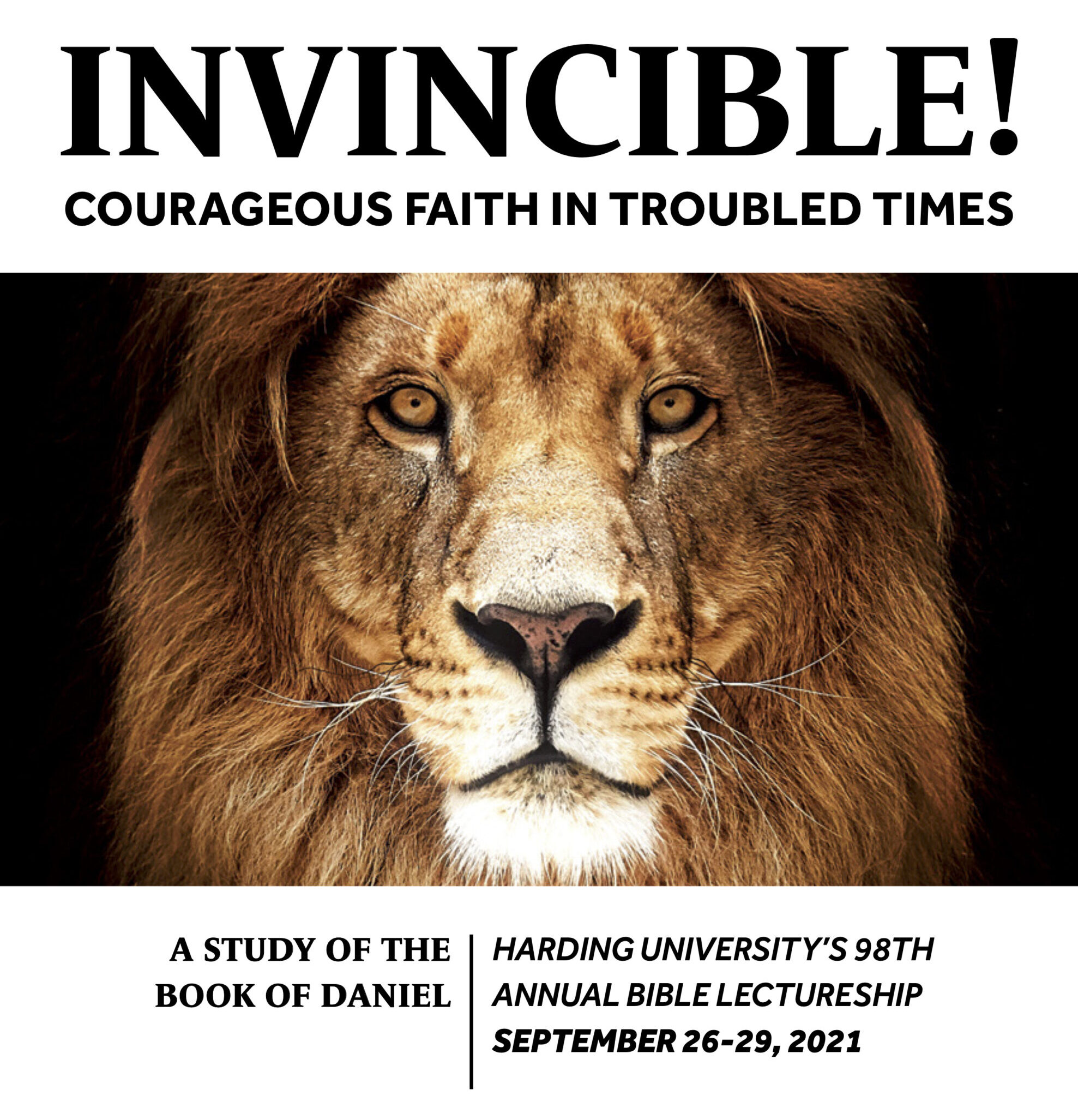
Harding University’s 98th annual Bible Lectureship was a couple of weeks ago, at the end of September. I always enjoy going to Lectureship and was bummed when it had to be canceled in 2020 due to COVID-19*. I have also developed the practice of providing a quick recap of Lectureship and the different presentations I got to attend. The theme for this year was Invincible! Courageous Faith in Troubled Times, with Daniel being the theme book.

I was privileged to attend several good lectures and classes, and here is a brief recap of what I went to, along with some takeaway quotes:

Invincible: God’s Eternal Kingdom, David Shannon: David is the President of Freed-Hardeman University, and kicked off Lectureship with this keynote on Sunday night. His emphasis was on Daniel 7, the depravity of earthly kingdoms, and the superiority of the kingdom of the Son of Man.

“The only way to overcome Satan is to belong to a kingdom with power greater than his.”

In Your Dreams, Nebuchadnezzar: There Is A God in Heaven!, Sammie Berry: Sammie is a long-time preacher at Dallas West Church of Christ, and focused on Daniel 2 and the interpretation of Nebuchadnezzar’s dream. Daniel and his friends had received the very best Babylonian training, but that had proven insufficient to decipher Nebuchadnezzar’s dream. Instead, Daniel went to his friends and asked them to pray that the God of Heaven would reveal the interpretation.

“God is in control and His children can thrive in a toxic culture.”

T.B. Larimore and Christian Identity: Respecting Conscience, United By Love, Nathan Guy: Nathan is an alumnus and the current headmaster of Mars Hill Bible School, which has historical ties to Larimore, the popular and influential second-generation Restoration Movement teacher and preacher. Larimore was known for his devotion to peace and unity, and Guy described him as a man of the Book, a man of peace, and a man who left minor matters alone.

“No word of bitterness shall ever fall from my lips, even in self-defense. I shall certainly never retaliate.”

(Larimore)

A Supernatural Cast of Characters, Dan Oden: Dr. Oden teaches Old Testament at Harding, and was one of my professors at Harding School of Theology. His lecture focused on some of the supernatural figures in the book of Daniel and tracked points of comparison with Divine Council motifs from the Ancient Near East. I thought he did an excellent job in making a challenging and scholarly topic accessible and compelling for his audience.

“When we put our faith in God, the Cloud-Rider, we become Sons of God.”

In the University of Babylon: Daring to Be Different, David Hunzicker: David serves as one of the ministers at the North Boulevard Church of Christ in Murfreesboro, TN. I had never heard him before, but his was perhaps my favorite of all the lectures I heard. He focused on the clash between the kingdom of Babylon and the kingdom of God, and for those of us who belong to the latter, offered the following encouragements: (1) If you have been stunned silent by Babylon, speak up; (2) If you have developed bitterness toward Babylon, look up; (3) If you have compromised to Babylon, stand up.

 “Seize every opportunity to show where your true loyalty lies.”

History in His Story: Biography and Archaeology of the Life of Jesus, Kevin Burr: This lecture was technically off-schedule, but was another of my favorite presentations. Kevin is the Minister of Discipleship at the Kings Crossing Church of Christ in Corpus Christi and also received his Ph.D. from Asbury Seminary where he wrote a dissertation combining the fields of historiography and Jesus studies. This presentation reflected on the gospels as Greco-Roman biographies and applied some of the historian’s tools of the trade to the New Testament.

“If an author is generally reliable in areas we can check them, it is reasonable to infer they are generally reliable where we can’t.”

In the Fiery Furnace: Demonstrating Courage Under Fire, Phil Brookman: Phil preaches for the Memorial Road Church of Christ in OKC, and I always enjoy hearing him. He focused on the story of Shadrach, Meshach, and Abednego, and the idea of resistance: this is not a story of how to avoid death, but how to live life: when we practice resistance, we are fully alive.

“For Christians, resistance is vital; without it, we become weak and ineffective.”

Courageous Faith in the Face of Persecution (Parts 1-2), Mani Pagidipalli: Mani was a classmate of mine at HST, and is a remarkable individual, who serves as both a medical surgeon and preacher. He gave a moving presentation of the persecution of Christians in India.

“If you feel like you are living under Nebuchadnezzar, be like Daniel. No whining, no complaining, no “woe is me”, no “it’s not fair”. Just a willingness to be God’s servant wherever and whenever to whomever.”

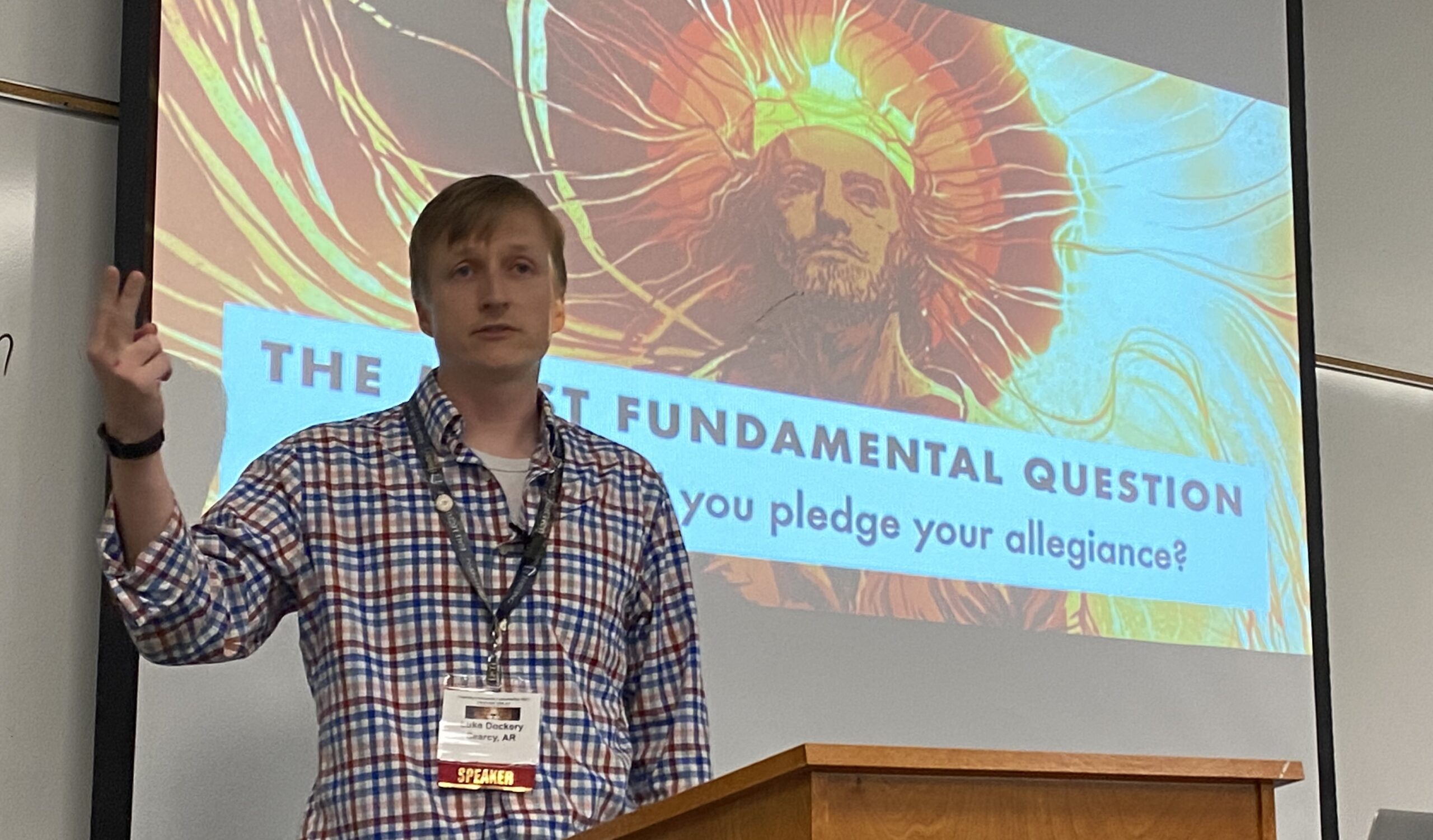
Pledging Allegiance: Unpacking Images of Authority in the Books of Daniel and Revelation, Part 1, Alan Howell and Garrett Best: Alan is the Missionary in Residence at Harding, and Garrett preaches for the Oliver Creek Church of Christ in the Memphis area and just recently wrote his dissertation on the book of Revelation. This was a really neat presentation that combined biblical studies with missiology. The basic thesis was that proper interpretation of symbols of authority is important for navigating both our cultural settings and the contours of Scripture. Garrett examined symbols of power in the book of Revelation, and Alan talked about symbols of power in Mozambique and interpreting Revelation for that context.

“Revelation takes imperial propaganda, subverts it, and reorients it to Jesus.”

Arkansas College: “A Sacrifice to the Fierce Spirit of War and Destruction”, Allen Diles: Allen teaches church history at Harding, and did a really fine job with this presentation. I have done research on Robert Graham and the creation of Arkansas College, so this was of special interest to me. Diles provided a helpful review of things I had studied a few years ago, but also taught me a good bit of new information about the college (my focus was more on Graham than the school itself). Ultimately, the story of Arkansas College is a tale of tragedy, as a really promising and prestigious school was destroyed in the flames of the Civil War.

“Winds of secession began to swirl, and Arkansas College was not exempt from the storm.”

The Handwriting on the Wall: God is Not Mocked!, Jason Darden: Jason teaches Bible at Harding, preaches at the West Pleasure Church of Christ, and is someone I always enjoy hearing. He focused on the story of Belshazzar, who mocks God by using sacred vessels taken from the Jerusalem temple by Nebuchadnezzar (likely his grandfather) for a wild party. But God is not mocked, and will not have His vessels misused.

“Belshazzar had to have known [the story of Nebuchadnezzar’s humbling]. But he learned nothing!”

Written in the Book: God Gives a Hope Beyond the Grave, Jeff Jenkins: I have known of Jeff for several years in his work as the preacher of the Lewisville Church of Christ in the Dallas area as well as The Jenkins Institute, but this was my first opportunity to hear him preach. This keynote didn’t interact with the text from Daniel as much as I would have hoped, but it was an excellent message on the importance of biblical hope in difficult times. Jeff emphasized that biblical hope is tied to the appearing of Christ: His first appearing brought grace, and His second appearing will bring glory (Titus 2.11-14).

“Biblical hope is not wishful thinking.”

The Coddling of the Christian Mind, Bob Turner: Bob preaches for the Church of Christ at White Station in Memphis, and formerly worked in the library at Harding School of Theology. I always love to listen to Bob; he is a great thinker, and an outstanding cultural exegete. In this lecture, Bob talked about the well-known The Coddling of the American Mind, and applied the lessons therein to Christian faith by refuting three popular myths: (1) What doesn’t kill you makes you weaker, (2) Always trust your feelings, (3) Life is a battle between good people and evil people.

“If you demonize people who are just like you, what are you going to do with people who are different?”

The Biggies: Teaching the Essentials of the Christian Faith, Scott Adair: Scott teaches in the Bible department at Harding, and this class was a representation of the major project that he has been working on for the last few years. Scott shows how the practice of baptism encapsulates the core doctrines of the Christian faith: (1) Jesus Christ is Lord, Son of God; (2) A Belief in One God, who is Father, Son, and Spirit; (3) The Death and Resurrection of Jesus; (4) The Church as the Assembly of the Saints; (5) Forgiveness of Sins; (6) The Gift of the Holy Spirit; (7) Resurrection of the Dead. I love Scott’s work in this area, teach it regularly to my teenagers, and believe it can be an invaluable tool to help us discern whether or not a church conflict is related to a foundational matter.

“The New Testament is a compilation of apostolic documents written primarily to remind churches or individuals of the gospel they received, to establish them further in the gospel, and to hold them accountable to the ethical demands of the gospel.”

As He Had Done Before: Persisting in Prayer, Bruce McLarty: Lectureship ended with a bang, as Dr. McLarty returned to Harding for the first time since he was retired as Harding’s President last fall. He received a standing ovation and predictably did a wonderful job emphasizing Daniel’s long life of persistent faithfulness while living in exile. Daniel’s story gives us a wider perspective that reveals God’s faithfulness to the Hebrew exiles, and Bruce finished with a stirring declaration of God’s faithfulness to us today, despite whatever difficulties and challenges we may face.

“Daniel’s strategy was not to change Babylon or Persia; it was to not let Babylon or Persia change him.”

As always, Lectureship was a blessing for me, and it was especially nice to be able to attend again after the necessary cancellation last year. I would highly recommend taking part in this next year if you are able!


I was honored to have the opportunity to present this year as well, as part of the youth ministry track. My lecture was entitled, Allegiance to the King: Single-minded Devotion in a World of Divided Loyalties, and focused on the faith of American teenagers (and adults), Hananiah, Mishael, and Azariah, and some important ideas from Matthew Bates’s Salvation By Allegiance Alone. I will likely share more of that content at some later time, but it was studying for this year’s presentation was a great blessing to me, and I am glad to have done it.

*Technically, it wasn’t canceled and was still offered online in a scaled-back, modified fashion. But really, it was canceled.


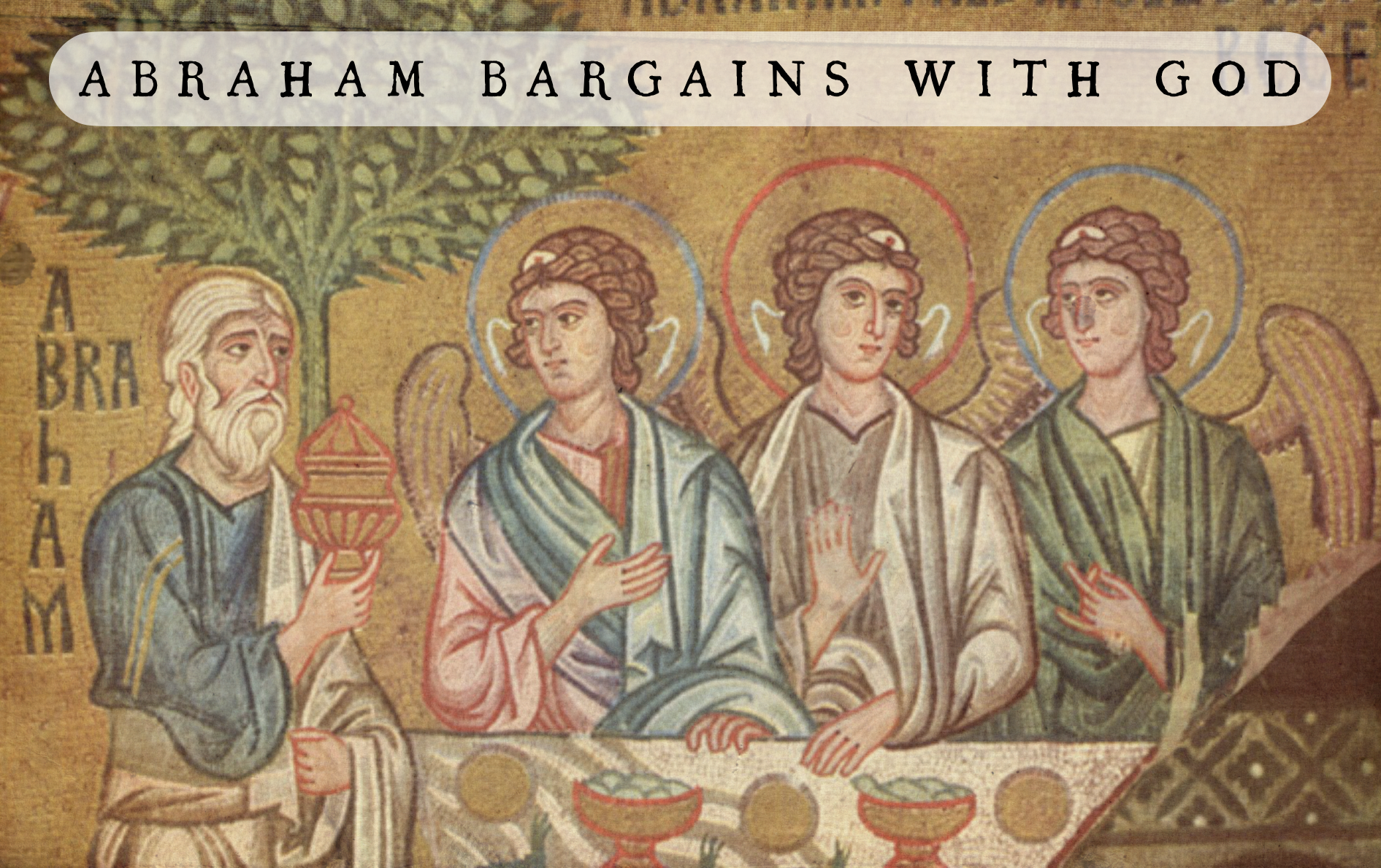
Abraham Bargains With God

The end of Genesis 18 contains an interesting interaction between Abraham and God: after Abraham learns that God intends to destroy the wicked city of Sodom, he decides to intercede for Sodom, asking the LORD, “Will you indeed sweep away the righteous with the wicked?”, implying that there are some righteous people in Sodom who don’t deserve to be destroyed with the rest of the city.

And so, a bargaining process begins (my paraphrase of Genesis 18.24-32):

Abraham: God, will you destroy Sodom if there are 50 righteous people in it?

God: If there are 50, I will spare the city.

Abraham: Hmm, it’s not my place to tell you how to do things, but what if there are 45 righteous people? Five can’t make much of a difference, right?

God: If there are 45, I will spare the city.

Abraham: What about 40?

God: If there are 40, I will spare the city.

Abraham: Don’t be angry with me for haggling, God, but what if there are 30 righteous people?

God: If there are 30, I will spare the city.

Abraham: Be patient with me: what about 20?

God: If there are 20, I will spare the city.

Abraham: OK, let me ask one more time: what if there are 10 righteous people?

God: If there are 10 righteous, I will spare the city.

And at that point, the haggling comes to an end.

This episode is interesting to me for at least three reasons.

First, it is interesting to me that in Genesis 18.23, Abraham seems to mildly reprove God for being willing to destroy an entire city that might contain righteous people, and yet, it seems that Abraham’s mercy was exhausted before God’s was. At least, Abraham quit asking to lower the bar for how many righteous people would save the city. Would God have been willing to spare the city if five righteous people were found? Or three? Or one person? We don’t know, because Abraham quit asking before God quit agreeing. It’s a helpful reminder to me that God is always more merciful than I am.

Related to the first point, the things we ask of God have the potential to change His plans. Depending on where you are on the spectrum of how God’s sovereignty works this is a debatable point, but a straightforward reading of the text certainly indicates that Abraham’s requests were influencing God’s plans regarding the destruction of Sodom. And again, it seems possible that Abraham could have continued to bargain with God until He relented from destroying the city altogether. So this is helpful as well, because it brings about a certain degree of resolve in my life: if the deep desires of my heart are denied to me, it won’t be because I am not asking God for them.

And finally, I’m left to wonder: why is it that we assume that God grows impatient with our repeated requests of Him? Abraham certainly assumed and feared God’s impatience: four times he apologized or asked for patience in some way. I think we often do the same thing. But over and over again God tells us to come to Him in prayer, and in the New Testament, Jesus praises the persistence of a widow and uses her as an example of how we should repeatedly come to the Father in prayer. So I am also reminded by this narrative that I should not project my impatience on God: he patiently (and eagerly) hears my repeated requests. 

I love this narrative episode, because it is so revealing of the nature of God: as Father, God is merciful toward His children, influenced by their desires, and wants to hear their requests. I am a father, and this totally makes sense to me when I think of my own children, but when I see these characteristics portrayed in the Creator of the universe, I am driven to my knees in praise and thanksgiving.

God is a Father: He is merciful toward His children, influenced by their desires, and wants to hear their requests. Share on X

In this loose series of Scripture Reflections, I am sharing brief thoughts spurred on by my Bible reading this year. By way of reminder, my goal for these brief posts is two-fold:
(1) To remark on aspects of the biblical text that I find to be of interest that the reader may or may not have thought about previously.

(2) When possible, to point ahead to the work and person of Jesus Christ. I believe the Bible is a unified story that points to Jesus, which means that He is frequently alluded to or foreshadowed in some way throughout the biblical canon.

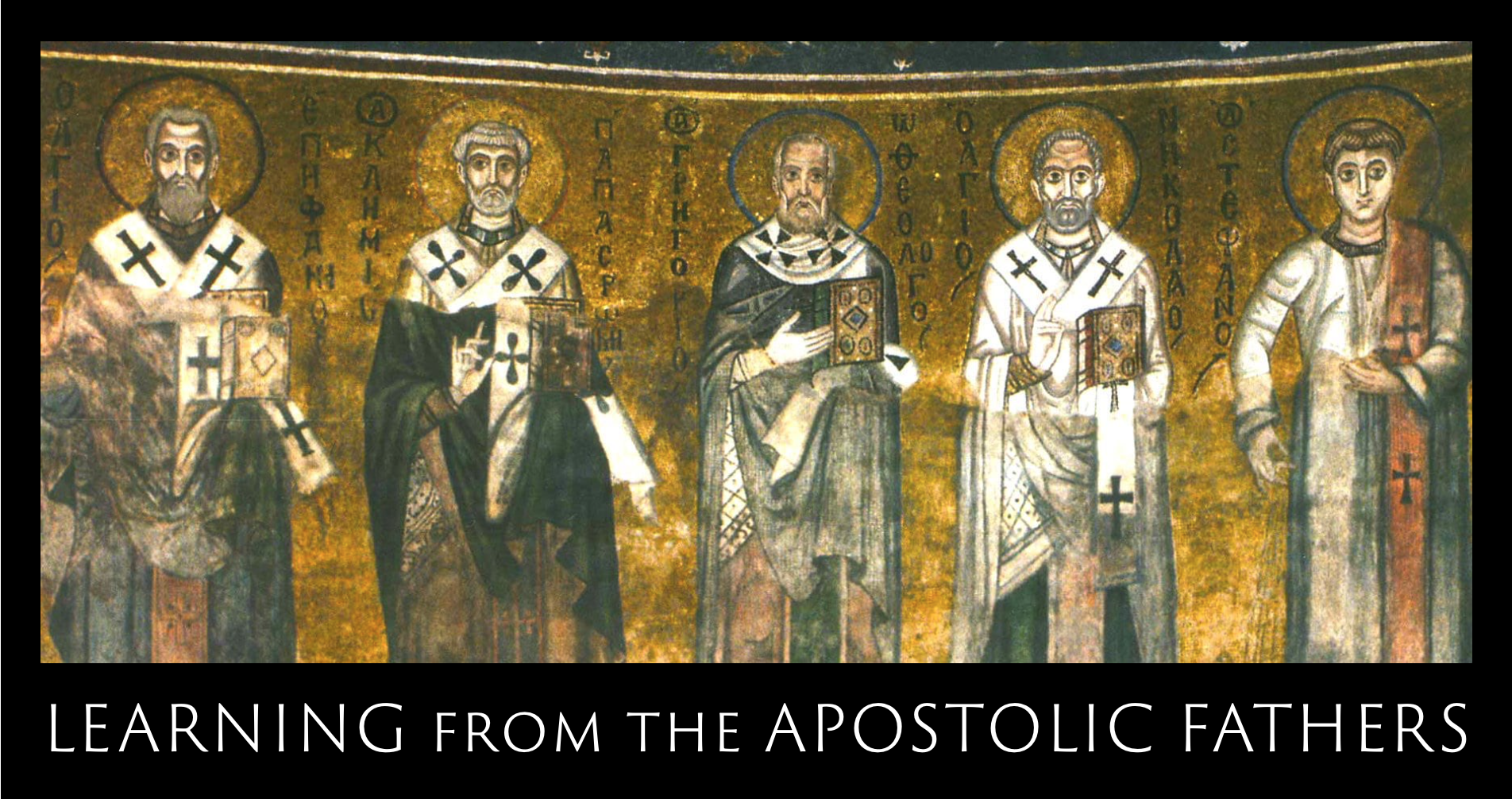
Learning from the Apostolic Fathers: Polycarp

As I wrote in the first post in this series, I have been reading through Michael W. Holmes’s edition of The Apostolic Fathers in English as part of my daily devotional readings. Generally speaking, the term “Apostolic Fathers” refers to early Christian theologians from the 1st and 2nd centuries AD, some of whom would have known some of the apostles personally and sought to pass on their teachings. More specifically, “Apostolic Fathers” is frequently used in reference to Clement of Rome, Ignatius of Antioch, and Polycarp of Smyrna. Today, I want to focus on Polycarp.


The Life and Letter of Polycarp

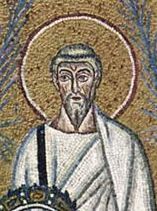
Polycarp of Smyrna

Polycarp served as the bishop of Smyrna in Asia Minor, and was the recipient of one of the letters of Ignatius of Antioch, his friend and mentor. Polycarp is one of the more notable figures of the early (post-apostolic) church,[1] and his fame stems from at least three streams:

  • His writing The Letter of Polycarp to the Philippians
  • His death as a martyr in AD 155-160, the details of which are shared in The Martyrdom of Polycarp
  • His status as a significant link in the chain of apostolic tradition: as a child, Polycarp knew John the Apostle in his old age, and, in turn, later in his own life knew Irenaeus of Lyons when the latter was a child

In The Letter of Polycarp to the Philippians, Polycarp relies heavily on both the Old Testament scriptures and also early Christian writings and emphasizes the strong connection between orthodoxy and orthopraxy: wrong beliefs inevitably lead to wrong behaviors, and wrong behaviors are evidence of wrong beliefs.[2]

In The Martyrdom of Polycarp (written by anonymous eyewitnesses) records the account of the pursuit, arrest, trial, and execution of Polycarp, who is martyred for his faith at the age of 86. The Martyrdom of Polycarp reveals the growing challenge that the church of the mid-second century faced for its proclamation that Jesus was Lord. Situated firmly in an empire that proclaimed that Caesar was Lord, the Christian proclamation could not be left unchallenged, and persecution and martyrdom was increasingly the fate who held to their confession of faith in Jesus.

Themes and Insights from Polycarp

The Importance of Right Beliefs: Polycarp clearly shows a strong reaction against gnostic teaching, and echoes words from 1 John. Indeed, he holds the incarnation, crucifixion, and resurrection of Jesus and His role as judge to be essential aspects of Christian faith.

“For everyone who does not confess that Jesus Christ has come in the flesh is antichrist; and whoever does not acknowledge the testimony of the cross is of the devil; and whoever twists the sayings of the Lord to suit his own sinful desires and claims that there is neither resurrection nor judgment—well, that person is the firstborn of Satan. Therefore let us leave behind the worthless speculation of the crowd and their false teachings and let us return to the word delivered to us from the beginning; let us be self-controlled with respect to prayer and persevere in fasting, earnestly asking the all-seeing God to lead us not into temptation, because, as the Lord said, ‘the spirit is indeed willing, but the flesh is weak.’”

(Polycarp, To the Philippians 7.1-2)

The Importance of Right Behaviors: A key theme of Polycarp’s letter is his discussion of righteousness, which the Philippians had apparently asked him about. Relying heavily on New Testament teaching, Polycarp addresses wives, widows, deacons, younger men, and elders, instructing each group to lead righteous lives. Living a righteous life that pleases God is very important:

“If we please him in this present world, we will receive the world to come as well, inasmuch as he promised that he will raise us from the dead and that if we prove to be citizens worthy of him, we will also reign with him—if, that is, we continue to believe.”

(Polycarp, To the Philippians 5.2b)

Willingness for Martyrdom: With Ignatius, we saw an eagerness for martyrdom that is startling to modern ears. With Polycarp, one does not sense the same degree of eagerness (Polycarp actually leaves the city and then changes location again to avoid the authorities who are searching for him), but he is certainly willing to die for his faith.

After he is caught and implored to swear an oath by Caesar to deny Christ in order to secure his release, Polycarp famously responds:

“For eighty-six years I have been His servant, and He has done me no wrong. How can I blaspheme my King who saved me?”

(Martyrdom of Polycarp 9.3b)

When the proconsul persists and threatens him with death by fire, Polycarp remains firm:

“You threaten with a fire that burns only briefly and after just a little while is extinguished, for you are ignorant of the fire of the coming judgment and eternal punishment, which is reserved for the ungodly. But why do you delay? Come, do what you wish.”

(Martyrdom of Polycarp 11.2b)

Polycarp is killed for his faith, and his martyrdom is “in accord with the pattern of the gospel of Christ” (19.1), as he followed the example of Jesus, an innocent who was killed unjustly. His last words are a prayer to God:

“O Lord God Almighty, Father of your beloved and blessed Son Jesus Christ, through whom we have received knowledge of you, the God of angels and powers and of all creation, and of the whole race of the righteous who live in your presence, I bless you because you have considered me worthy of this day and hour, so that I might receive a place among the number of the martyrs in the cup of your Christ, to the resurrection to eternal life, both of soul and of body, in the incorruptibility of the Holy Spirit.”

(Martyrdom of Polycarp 14.1b-2b)

Powerful hope inspires powerful courage.

Concluding Thoughts

The Letter of Polycarp to the Philippians is so heavily influenced by Scripture that large chunks of it are very familiar, and read like a cut-and-pasted pastiche of biblical teaching. It is a simple and edifying read. The Martyrdom of Polycarp is a compelling narrative that fills the reader with admiration for this elderly churchman who has clung to Christ all his life, and is determined to cling to Him in death as well.

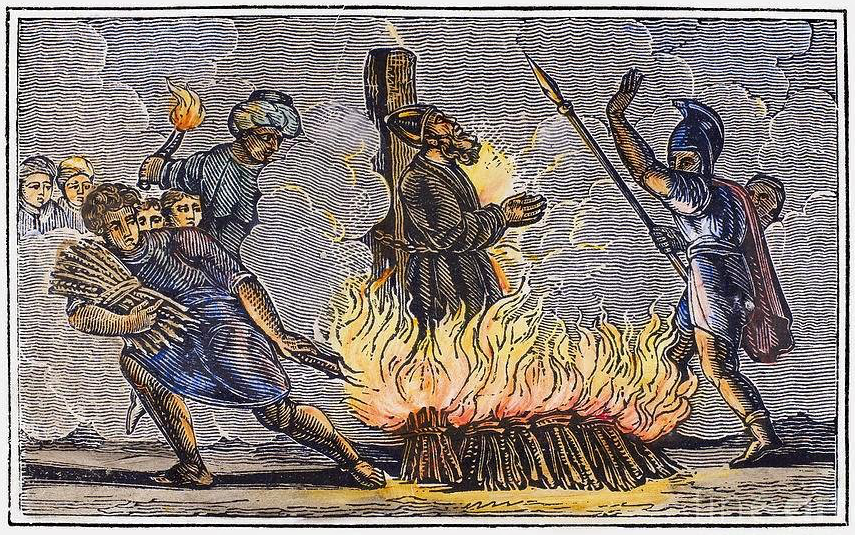
Polycarp is burned at the stake for refusing to forsake Jesus.


[1] Michael W. Holmes, ed., The Apostolic Fathers in English (Grand Rapids: Baker Academic, 2006): 130.

[2] Holmes, 132.

« Older posts Newer posts »

© 2026 The Doc File

Theme by Anders Noren — Up ↑