The online journal of Luke Dockery

Category: Youth Ministry (Page 4 of 24)

A Great Week of Youth Ministry

Last week was a great week of youth ministry for me—one of the best I have ever had. This post is a bit unusual, but because I want to remember this week, I am chronicalling it here.

I have mentioned before that I am fairly task-oriented when it comes to ministry (or life in general). I usually have a long to-do list each day and can easily feel unproductive if I have not crossed off as many items as I intended to. But as important as some tasks can be, ministry is ultimately about people, and it is a blessing when you can connect with and serve people in a meaningful way. This was a week full of meaningful connections.

On Monday, I got to hear my Youth Ministry Apprentice, Dylan Holland, speak in chapel at Harding. He did an outstanding job, and I was really proud of him. In May, Dylan will graduate from HU, complete his two-year apprenticeship, and begin work as a full-time youth minister in Texas. It has been a joy and honor to mentor him over the last couple of years, and I am excited about what he will accomplish.

That evening, I taught my youth ministry class at Harding. I have 53 students in that class, though only a handful of them plan to go into youth ministry. Teaching this class has been a blessing to me for several reasons over the last few years, but one of them is that it gives me the opportunity to connect with a group of students who I otherwise wouldn’t come into contact with. On Monday night, we were in the middle of a unit emphasizing the spiritual life of the youth minister as the single most important element of youth ministry, and in that context I got to share the gospel of the kingship of Jesus Christ and how we as disciples respond to that good news with allegiance.

On Tuesday, I met with a former youth group student who now in college is thinking about what she wants to do with her life and whether or not she should change her major. It was wonderful to hear her talk about her interests and see (from my perspective) how God is growing her and working in her life, and hopefully help her process some of the decisions she is trying to make.

On Wednesday, I got to be with one of my students at his grandmother’s funeral. We hugged and walked through a cemetery together. It was a less joyful experience than the others in this list, but not less meaningful or important.

Later that day, I got to meet with another former youth group student who is now in college. We got to catch up, I got to hear about good things in her life as well as struggles, and we got to pray together.

Wednesday evening, I got to teach a room full of my students about the victory of Yahweh over Pharaoh and the gods of Egypt, and His rescue of the Israelites from slavery. After Bible study, I met with our mission team to begin to make plans for the mission trip we will take this summer. This will become an incredibly tight-knit group, and we will pull together and wear ourselves out in ministry together.

On Thursday, I got to meet with my current Youth Ministry Apprentice and a future Summer Youth Intern for a time where we talk about Scripture and life together. This regular practice has become a meaningful and formative spiritual habit for me over the last couple of years.

That evening, I got to go with my son to support a couple of my students who are on the Harding Academy Robotics team, when they revealed their competition robot for the season.

On Friday, I received a surprise visit from TK Geter, a former Youth Ministry Apprentice who is now doing youth ministry in Illinois. It was great to hear him talk about his new job with its successes and struggles, and see him apply the gifts that God has given him and the skills that he has developed in service to God’s kingdom.

That afternoon, I left with our youth group to CHRISTeens youth conference. This was one of the best youth group trips I have ever been on. Everyone who signed up to go actually went—we had no last-minute cancellations or sign-up attempts—and youth ministry veterans can tell you how impossible even this is! The conference itself was good and the behavior problems were minimal, but more important was simply the opportunity I had to connect with students.

Because our group was too big to fit into our bus, I drove my car as well. For each leg of the journey, I would draw out the names of 3-4 students, and those students who were selected would rotate into my car for that leg. By the end of the trip when we returned on Saturday night, it worked out that I had every student ride with me, and I had the opportunity to engage each student in both frivolous and meaningful conversation (which never would have happened on the bus). It was such a gift to be able to connect with them in this way.

In the process of all these interactions, I completed a fair amount of tasks too. But I have already forgotten the tasks; the relationships will endure. This is the core of youth ministry, and I am blessed and thankful to be called to do it.
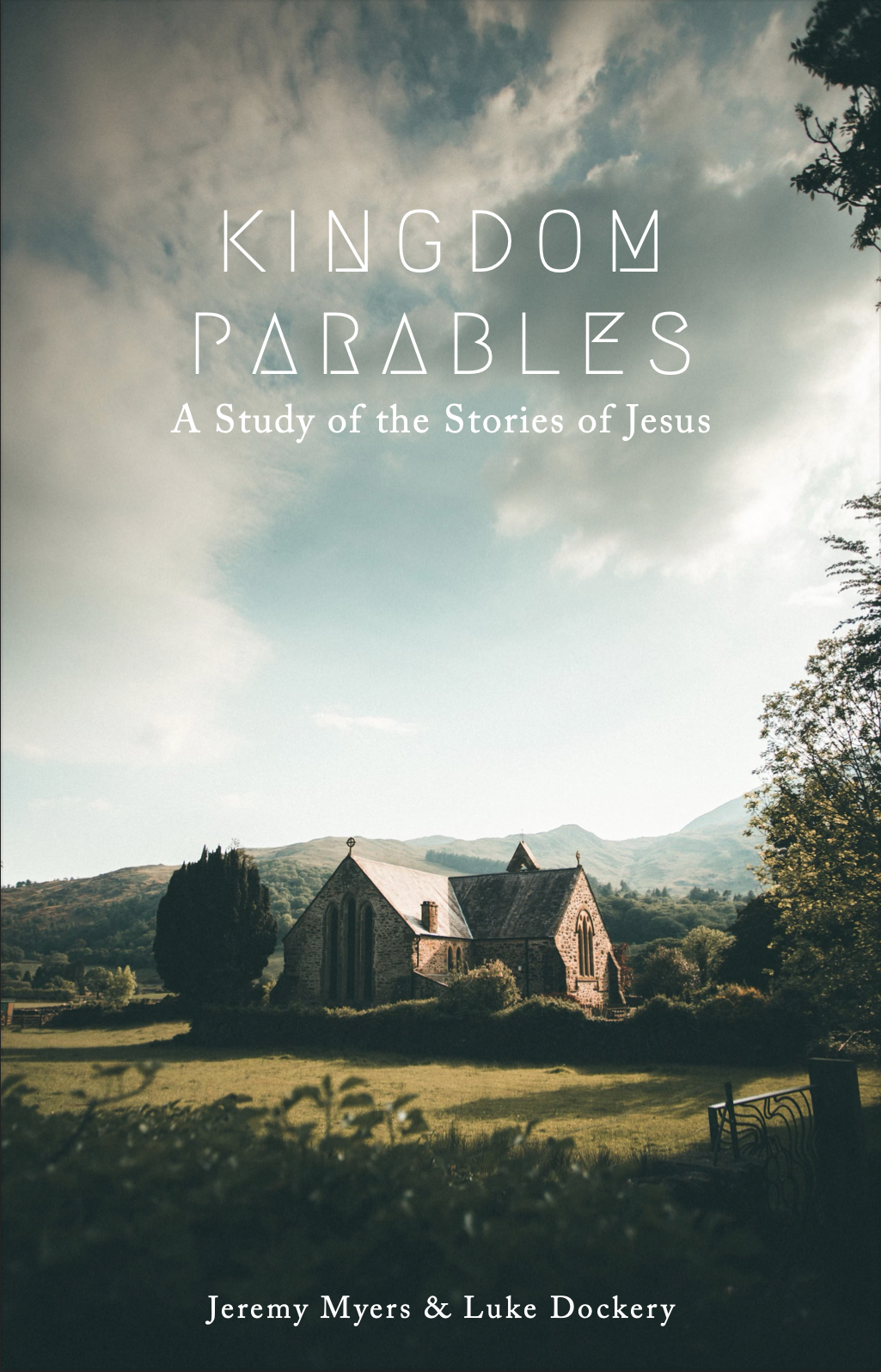
Kingdom Parables: A Study of the Stories of Jesus

I am excited to announce that I have a new book out—Kingdom Parables: A Study of the Stories of Jesus. This is the latest in the Deeper Youth Ministry Bible Study series, and is available for purchase in paperback on Amazon, or digitally on the Deeper Youth Ministry website.

This was a fun project to work on, partially because the parables of Jesus are incredibly interesting to study, and also because I wrote it with my good friend Jeremy Myers. Jeremy and I have worked together with Deeper Youth Ministry for several years and he now directs the annual Deeper Youth Conference, but this is the first time we wrote a book together. It was truly a collaborative project, and I was proud of the end result.

From the back of the book:

The parables of Jesus are beloved by many, but are not always well understood. It is commonly believed that Jesus taught with simple stories in order to make it easy for His audience to understand, but while the stories do tend to be simple, the parables of Jesus are often anything but easy. In fact, Scripture repeatedly records the confusion of Jesus’s audience when He teaches in parables, and even relates Jesus explaining that He speaks in parables specifically because He knows some of His audience won’t be able to hear and understand them.

Kingdom Parables guides students through a close study of Jesus’s parables, not with an expectation that they will be easy to understand, but that they will offer important teaching about the kingdom of God and how God expects citizens of His kingdom to live.

If you work with or teach teenagers, I hope you will give it a look—there are 18 lessons in total, including introductory and summary lessons.

Purchase the Book

Paperback: Amazon $12.99

Digital: Deeper Youth Ministry $10

2023 Blog Review

I like to end the year by looking back and reviewing my year of blogging here at The Doc File (Here are some previous reviews from 2022, 2021, 2020, 2019, 2018, 2016, 2015, and 2012).

Overview

There were a lot of topics that I intended to write about in 2023, but time got away from me and I wrote less than I hoped. Nevertheless, I wrote 30 posts this past year, which is more than I managed in 2022 (20) or 2021 (28). Baby steps in the right direction still count as progress, I guess.

Top Posts

By traffic totals, here are my most-read posts during 2023:

  1. Jesus, Christmas, and Hanukkah, December 18, 2015
  2. Raising Up Ministers: Six Unhelpful Trends in Churches of Christ, March 2, 2023
  3. A New Heaven & A New Earth Series, April 29, 2020
  4. A New Heaven & A New Earth: What the Bible Teaches about Eternity, April 9, 2020
  5. Youth Ministry & Gen Z,, May 16, 2023
  6. Reading in 2022, January 3, 2023
  7. Church Is Good for Your Kids, August 23, 2023
  8. Reading and Walking in 2022, January 6, 2023
  9. Forty., August 2, 2023
  10. A New Heaven & A New Earth Part 2: Distractions, April 16, 2020

Six of the top posts from 2023 were actually written this year, and it is always good to see new content get some traction:

  • Raising Up Ministers: Six Unhelpful Trends in Churches of Christ reflected on the minister shortage within Churches of Christ. This topic has been written about and discussed a lot (too much?), but one aspect of the conversation that I hadn’t seen emphasized as much was the raising up of young people to go into ministry. I am confident that we are not doing this as well as we once did, and I offered several reasons for why that is.
  • Youth Ministry & Gen Z looked at some research from the Barna Group that describes characteristics of Gen Z students (the generational cohort that is currently present in our youth groups). The basic premise here is that the better we understand these students, the better we can minister to them. Broadly speaking, Gen Z students have several challenging characteristics that clash with Christianity, but they also resonate with Christianity in important ways.
  • I have developed certain traditions of posts that I write each year, and these have developed somewhat of a following over time. Reading in 2022 and Reading and Walking in 2022 were both popular (the 2023 versions are right around the corner!).
  • Church Is Good for Your Kids is a brief post that reflected on research that indicates that, well, church is good for your kids! As one author states, “There is a growing body of evidence that regular religious practice is measurably good for the health, happiness, and pro-social behavior of our kids.”[1]
  • Forty. I had a milestone birthday in 2023, which naturally prompted me to some reflection.

At the same time, part of the reason for preserving over 15 years of posts on this site is for people to be able to go back and read things they missed, and I am always gratified when older posts are read by new people. The series I wrote in 2020 on renewed eschatology continues to get a lot of views, but I was blown away by the response to Jesus, Christmas, and Hanukkah. This is a post I actually wrote about eight years ago, but I shared it again this year and it got a surprising amount of attention.

Blog Series

In 2023, I completed one series and contributed multiple times to another, ongoing one:

The Beatitudes: Kingdom Character: This nine-part series was a close look at the Beatitudes in the Sermon on the Mount, which is Jesus’s description of what it looks like to be a citizen in His kingdom.

Studying the Sermon on the Mount in detail was transformative for me several years ago, and it is always beneficial for me to come back and reflect on Jesus’s teaching here. This series was not very popular and didn’t have a wide readership. This was disappointing to me, but I think is also reflective of the time in which we live: living according to the Sermon on the Mount isn’t very exciting for most people.

Scripture Reflections: I added five more posts to this ongoing series in 2023 (The Poor You Always Have with You, Three Gardens, Known to Them in the Breaking of the Bread, “Your Labor Is Not in Vain”, and “He Remembers that We Are Dust”) bringing the total to 20 posts. I plan to continue adding to this indefinitely.


So, that was The Doc File in 2023! It is my plan to continue writing in this space in 2024 (hopefully more often, but I never know what the new year will bring). It has become a formative spiritual discipline for me to process my thoughts here over the years, and as many readers have told me, it is helpful to you too! I am honored and humbled by those sorts of comments, and am thankful for your readership and support!


[1] Rebecca McLaughlin, 10 Questions Every Teen Should Ask (and Answer) about Christianity (Wheaton, IL: Crossway, 2021), 14.

A Final Week at Harding School of Theology

Back in October, I was blessed to be able to spend a week on the campus of Harding School of Theology in Memphis, where I audited a week-long intensive course, “Christian Formation of Children.” This was a great blessing to me for multiple reasons.

First, I was a student there from 2010-2018 (yes, I know it was a long time) before receiving my MDiv, and it was an incredibly formative place for me (more on that below). Second, I got to spend the week with my wife Caroline, who was enrolled in the same class as a credit student. In all my time as a student at HST, I always left my wife at home with the kids while I would go to Memphis for intensive course weeks, and I felt like I finally got to share this part of my life with her. We sat next to each other in class during the day, ate at all my favorite Memphis restaurants, did homework in the library, and walked through the neighborhoods around campus together. Third, it seems quite possible that this will be my last opportunity to spend any significant time on the HST campus in Memphis, with the announcement that HST will be moving to Searcy in Fall 2024. Finally, it was a great class!

Much has been written and said about HST moving from Memphis to Searcy, and I’m not sure I have anything of significance to add to that conversation. I remain personally unconvinced that this move is what is best for the school, but I also acknowledge that I am not an insider in this discussion and that there are many factors and variables of which I am probably unaware. I do know that, in a climate where seminaries associated with Churches of Christ are closing (see Austin Graduate Seminary and Oklahoma Christian Graduate School of Theology), I am grateful that HST is not closing its doors, and I am confident that God will continue to use the school to bless churches and train ministers in its new location.


As I mentioned above, HST was a deeply formative place for me. I went to Harding University for undergrad and had a wonderful experience there. I met Caroline there as many lifelong friends. It was at Harding that I developed my deep love for ultimate frisbee, and also where I began to make my faith my own. I learned a lot of things in various classes, but I would also say that I didn’t make deep connections with faculty members or older mentors (largely my own fault). I entered and graduated HU with very little idea of what I wanted to do in life.

Harding School of Theology was different. I began there later in life (I was 27), and had already been in youth ministry for a few years. Honestly, I began my degree because I was seeking credentials so I could teach at the college level someday. My plan was to get in and get out as soon as possible and move on to the next thing. That is not at all what happened, but I got so much more in the bargain:

  • I have very fond memories of my intensive course weeks in Memphis, which were some of the most challenging weeks of my life, but also some of the best weeks of my life. There I met a new set of lifelong friends, and many of these were friends who were similarly “in the trenches” of ministry and knew about its challenges, but also its value. Somewhere along the way, I largely forgot about the dream of teaching, and developed my love for congregational ministry. More specifically, it was work for classes at HST that led to the youth ministry-related research that would ultimately change my life in profound ways.
  • There, I met a set of mentors who would pour into me both in and out of the classroom. They would push me academically, spiritually, and theologically, but always in ways that were respectful and affirming to my faith. I have written before about the idea of “deconstruction,” which is a very slippery concept, but it would be fair to say that HST significantly contributed to the deconstruction of my faith in the healthiest sense: it became my own, mature faith.
  • When I began at HST, Caroline and I were still relatively newlyweds and weren’t parents yet. Life would get real for us soon after, though. My HST community would mourn a miscarriage with us, celebrate the birth of our first daughter, and then pray faithfully for her and us as we learned that she had a rare genetic condition and began the life-altering journey of being parents to a precious daughter with special needs.

As I was reflecting on my time at Harding School of Theology, I realized that, through all of what I mentioned above, HST gave me the twin gifts of humility and confidence. That may seem like a strange pair, but they actually fit together quite well. Regarding humility, my graduate school training helped me to understand how little I really knew and convinced me of the need to be a lifelong learner. Regarding confidence, my time at HST helped me to develop a really solid foundation of biblical, theological, and ministerial skills. I didn’t know everything, but there were some things I did know, really important things that I could build my life around. And even though I’m never going to master Scripture or ministry, I developed skills to study Scripture well and do ministry faithfully. Humility and confidence are wonderful gifts that I received and which I have tried to use faithfully in service of God’s Kingdom, and I can confidently say that I wouldn’t still be in ministry without my training at HST.

For all these reasons and more, the HST campus in Memphis is hallowed grounds for me. It was a great blessing, albeit a bittersweet one, to spend a week there with my wife whose sacrifices made it possible for me to attend graduate school in the first place, and who has been my partner in ministry and in all things.


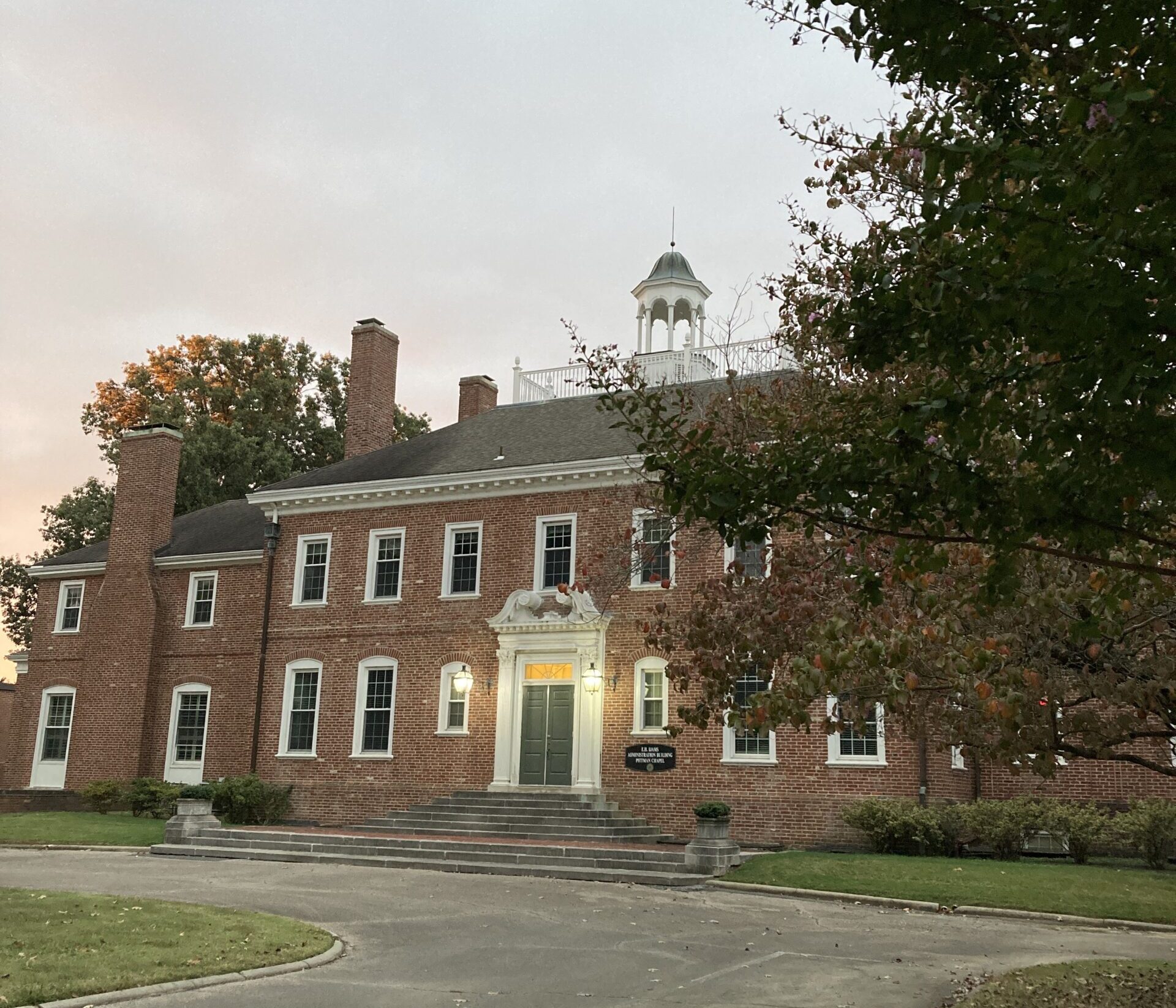
The HST Mansion serves as the administration building of the school and is also where chapel is held. I took this photo after one of my early morning walks before class. October was a beautiful time to be in Memphis.

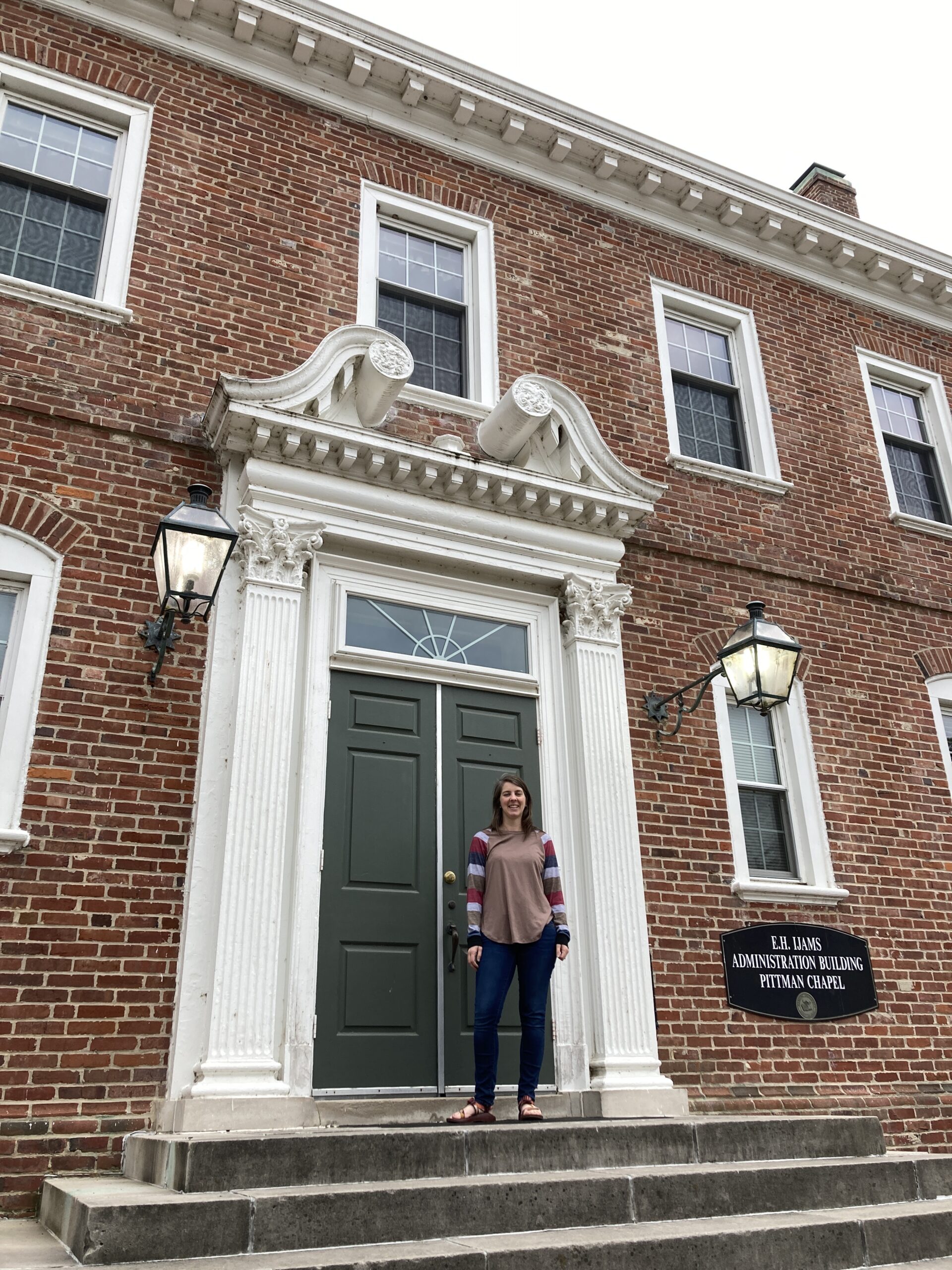
My very favorite person in one of my very favorite places!

Church is Good for Your Kids

I recently finished reading Rebecca McLaughlin’s 10 Questions Every Teen Should Ask (and Answer) about Christianity. I thought it was a great book, an I plan to use it in our youth ministry moving forward. I may write a review at a later date.

For now though, I just wanted to briefly discuss a provocative point that McLaughlin makes early in the book. In our increasingly secular society, it has become popular in some circles to argue that religion is actually bad for us. Parents who take their kids to church are brainwashing their kids, encouraging them to be bigots, and setting them up for a lifetime of therapy (or so the argument goes). This would be a compelling argument for any loving parent to consider…except that it isn’t true. As McLaughlin points out:

“There is a growing body of evidence that regular religious practice is measurably good for the health, happiness, and pro-social behavior of our kids.”[1]


Here is some of the specific evidence:[2]

  • Children raised in religious environments were better protected from depression, drugs, and risky sexual behaviors.
  • Those who attended religious services regularly were 12% less likely to have high depressive symptoms and 33% less likely to use illegal drugs.
  • Those who prayed or meditated frequently were 30% less likely to be sexually active at a young age and 40% less likely to have an STD.
  • Children with a religious upbringing were also more likely to go on to have higher levels of happiness, a sense of purpose, volunteering, and forgiveness of others.

Now, none of this proves that belief in God is correct or that Christianity is true, but it should give us serious pause about buying into popular cultural narratives about the harmfulness of religion. McLaughlin quotes therapist Erika Komisar as follows:

“As a therapist, I’m often asked to explain why depression and anxiety are so common among children and adolescents. One of the most important explanations—and perhaps the most neglected—is declining interest in religion.”[3]

Komisar evens goes further, provocatively advising parents that if they don’t believe in God, they should fake it for the sake of their children! I certainly wouldn’t encourage parents to lie to their kids, but for those parents who are believers but question the value of regular religious practice, or perhaps are wondering about the whispers (or sometimes, loud shouts) they hear from culture at large, take courage: church is good for your kids![4]


[1] Rebecca McLaughlin, 10 Questions Every Teen Should Ask (and Answer) about Christianity (Wheaton, IL: Crossway, 2021), 14. To be clear, the research supports the benefits of religious practice for kids. This includes kids who grow up going to mosque or synagogue, not just those who grow up in Christian homes and attend church. But the research certainly applies to church as well, and that is obviously my context, as well as being the target for most of the disdain in our current cultural moment.

[2] McLaughlin, 14.

[3] McLaughlin, 15. Of course, that’s not to say that there are not many faithful religious people who still struggle with depression and anxiety. Religion is not a cure-all. McLaughlin’s point, and what the research states, is that it helps.

[4] It would be prudent to point out here that not just any church is good for your kids. The infamous Westboro Baptist Church, for example, isn’t good for anyone. So, yes, generally speaking, church is good for your kids! But find a church that seeks to teach what Scripture teaches and encourages you to love God and other people.

« Older posts Newer posts »

© 2026 The Doc File

Theme by Anders Noren — Up ↑