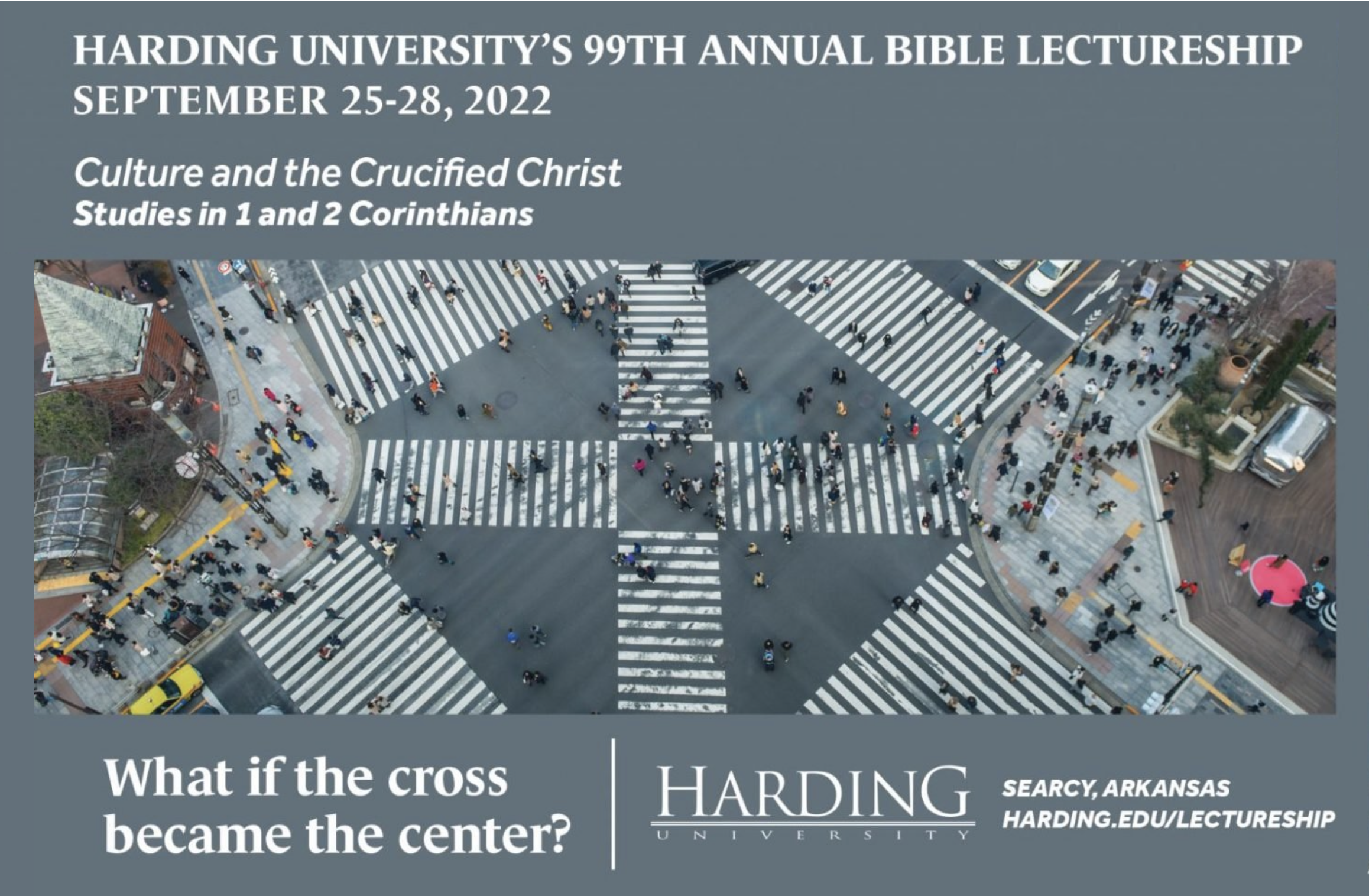
Harding University’s 99th annual Bible Lectureship was a couple of weeks ago, at the end of September. I always enjoy going to Lectureship, and have developed the practice of providing a quick recap of Lectureship and the different presentations I got to attend. The theme for this year was Culture and the Crucified Christ: Studies in 1 and 2 Corinthians.
I was privileged to attend several good lectures and classes, and here is a brief recap of what I went to, along with some takeaway quotes:
United In Mind and Purpose (1 Corinthians 1.10-17), Mike Williams: Mike is the new president of Harding, and kicked off Lectureship with this keynote on Sunday night. He focused on Paul’s correction of the factionalism of the church in Corinth, and reflected on how, in many ways, we live in a society that is primed for fragmentation. As the church, we must do better. (I agree!)
“If love and unity reveal God’s presence, does division reveal His absence?”
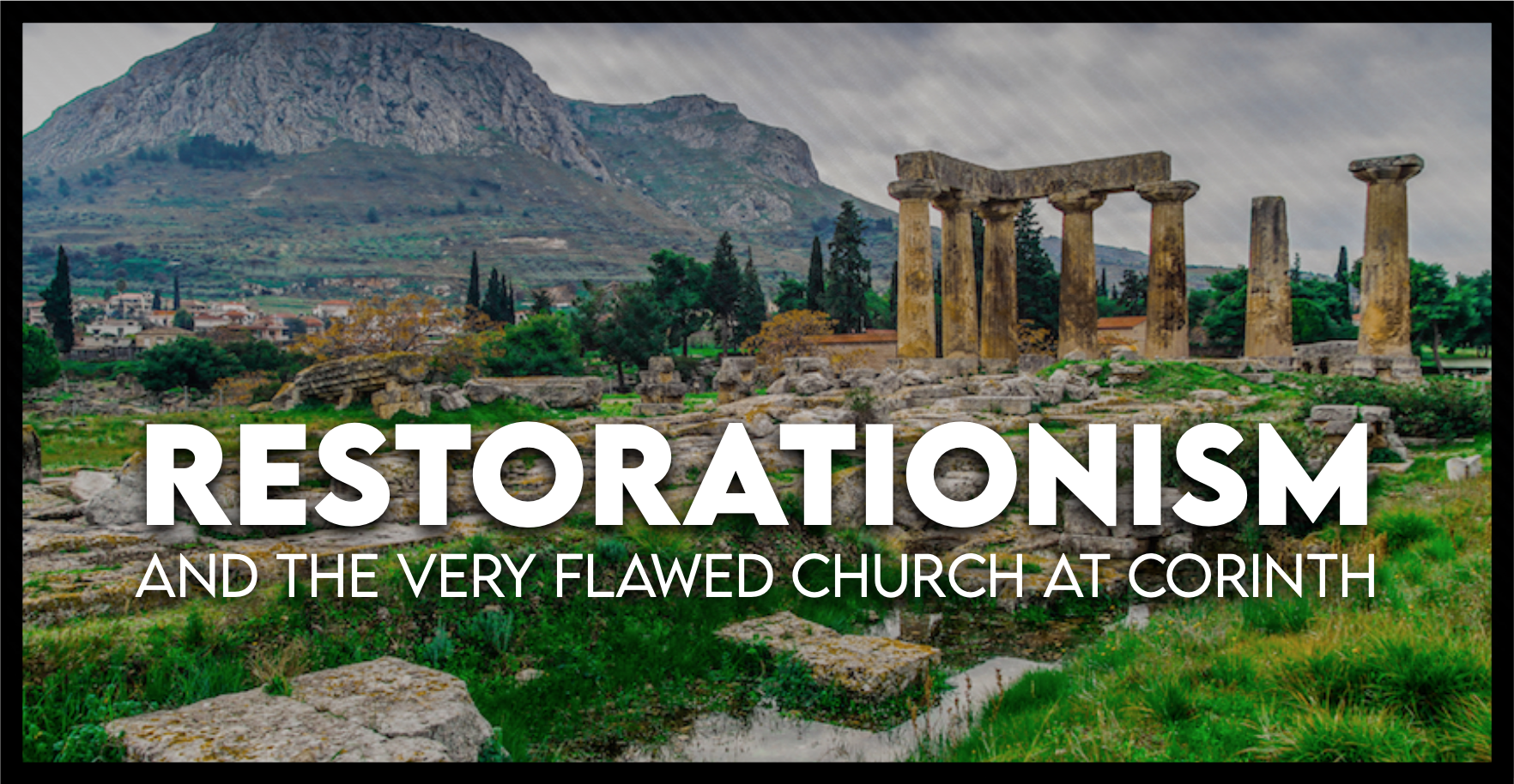
Corinth and Vicinity, Dale Manor: Dr. Manor is a treasure—a classically-trained archaeologist with a wealth of information about the ancient world, and I try to catch one of his lectures each year. He gave a good overview of the geographic/topographic background of Corinth, and how it helps us to understand some of the content of the Corinthian correspondence. This was fascinating if you are interested in history, culture, or archaeology, and, as always, Dr. Manor spoke to an overflowing room.
“Paul appropriated commercial, cultural, and political contexts to teach.”
Paul’s Use of the Old Testament in 1-2 Corinthians, Kevin Youngblood: Dr. Youngblood teaches Bible at Harding, is a top-notch biblical scholar, and always has great material. This was a particularly insightful lecture, as he established how direct quotations, allusions, and echoes from the Old Testament are woven throughout 1 Corinthians. He shared the following “Big Picture Implications”, which I thought were worth repeating here:
- Apostolic authority does not render Old Testament authority unnecessary or redundant.
- The church is reliving Israel’s experience and is therefore vulnerable to Israel’s mistakes.
- The Christ event and the ongoing ministry of the church are the culmination of prophetic vision.
- Creational principles outlined in Genesis are universal and enduring.
- Not every Old Testament reference Paul makes is intended to be a formal interpretation of the text (rhetorical use of Scripture).
“We are saved by faith; we are also lost by faith. A pattern of unbelief prevents us from entering the Promised Land.”
Discipleship in a Secular Age: Toward Missional Community, Greg McKinzie: Greg is a former missionary, an adjunct professor at Lipscomb University, and the editor of Missio Dei journal. Greg is a brilliant guy, and I wish he could have had a bit more time. He was engaging some difficult material (the philosophical work of Charles Taylor), and he just didn’t have enough time to say everyone he wanted to say. Still, he had some valuable things to say, including the following statement (which, to me, was sobering):
“Discipleship talk is increasing in proportion to the decline of the American church…with little effect.”
Washed, Sanctified, Justified (1 Corinthians 6.9-20), Leonardo Gilbert: Leonardo serves as the minister of the Sheldon Heights Church of Christ in Chicago, and this was my first opportunity to get to hear him. He gave a rousing message emphasizing the importance of our witness as Christians, the necessity of realizing that there is a spiritual war waging all around us, and the encouragement that comes from remembering that the Spirit of God Himself resides within us.
“Being a Christian is like getting into a boxing ring. Sometimes you’re going to get hit. But the fight is fixed.”
Becoming a Spiritual People: Discipleship for Unity (1 Corinthians 3.1-6), Kevin Burr: Kevin is the Minister of Discipleship at the Kings Crossing Church of Christ in Corpus Christi, and also one of my best friends. In his session, he look at the factionalism that was present in Corinth and Paul’s teaching on the diversity of God’s gifts leading to the unity and health of the Body of Christ. His practical suggestions for developing unity in our churches:
- Recognize our God-given gifts in each other.
- Put our God-given gifts to work.
- Value our God-given gifts.
“If we belittle others because their gifts look different than ours, we have failed the test of unity.”
Your Body is God’s Temple: Sexual Ethics (1 Corinthians 6.12-20), Keith Stanglin: Keith is a former professor at Harding and Austin Graduate School, and currently serves as the director of the Center For Christian Studies. In this session, he examined sexual ethics in Scripture through the teaching of Jesus, and then Paul in 1 Corinthians 5-7.
“Jesus relied on the Bible [for His views on sexual ethics] and evidences moral rigor regarding sex.”
God and the Founding Fathers, Jared Dockery: It was cool to go to a lecture taught by my brother, who is a history professor at Harding. This was a really interesting class to me, because we looked at the positions of several Founding Fathers—Patrick Henry, Roger Sherman, Benjamin Franklin, Thomas Jefferson, John Adams, and George Washington—on several topics—belief in God, Christ’s divinity, providence, and the civic benefit of religion. I thought it was a helpful and nuanced presentation on a challenging and contentious subject.
“The Founders were clearly not trying to establish a rigidly secular society.”
All Things to All People (1 Corinthians 9.19-23), Monte Cox: Dr. Cox is the Dean of the College of Bible and Ministry, and is always one of my favorite speakers. He delivered the Tuesday evening keynote, and did a good job providing an overview of 1 Corinthians 6-10, showing how the idea of rights is woven throughout that section: Paul repeatedly tells the Corinthian Christians that their rights are not the only issue to be considered.
“Too many of us have been preoccupied for too long with defending our rights instead of relinquishing our rights for the sake of the gospel.”
We Do Not Lose Heart: Longevity in Ministry, Jim Martin: Dr. Martin is the Vice President of Harding School of Theology, and also one of the most encouraging people I know. He offered a lot of really practical wisdom in this session related to things that can cause ministers to lose their way, as well as common characteristics of long-term ministers.
“Do I desire to be married to a church, or just date a church? Marriages are hard—you are committed for good and bad times, and you open yourself up for pain.”
Helping Your Church Stay on Mission, Steve Cloer: After preaching for several years in Ft. Worth, Steve is now in Memphis, where he teaches at Harding School of Theology and directs the Doctor of Ministry program there. Steve started with a discussion of Acts 6, where a legitimate issue that needed addressing ran the risk of distracting the apostles from their mission. The church runs into all sorts of issues and barriers today that can be a distraction as well. How can the church stay on mission?
- Solid preaching on the mission of God.
- Spend significant time in the neighborhood, which provides a motivation and an entry-point for mission.
- Tell stories about what God is doing among us.
“Churches are going to focus on something. The leader must help them focus on mission, becuase if they don’t, churches are going to focus on all sorts of things.”
Head Coverings and Headship in 1 Corinthians 11, Rick Oster: Dr. Oster was one of my favorite professors at HST, and he had a packed house as he addressed a challenging and controversial passage in 1 Corinthians. Oster’s scholarly work is in New Testament text and especially the historical backgrounds of the text, and he presented his perspective that the Roman practice of having the person leading a religious ceremony (whether male or female) wear a veil lies behind Paul’s instructions in the first part of 1 Corinthians 11. The Corinthian church was continuing this practice, which would have been strange to those from other backgrounds (Jewish, Greek, North African, etc.), and Paul was concerned that it would confuse the Christians there about the biblical teaching of male headship. Oster’s interpretative take here is certainly not the only one, and I don’t believe he makes an airtight case, but he does make a plausible one (reconstructing the historical background of a one-sided conversation is always challenging).
“Paul is not concerned that both genders are prophesying; he is concerned that, visually, they are undermining the teaching of male headship.”
Men and Women in Church Leadership (1 Corinthians 14.26-40), Allen Black: Dr. Black was another of my favorite teachers at HST, and he continued the theme of handling a controversial text in front of a big crowd on Wednesday afternoon. I thought Dr. Black did a great job, talking about how we approach different texts that seem to be in tension with one another (like 1 Corinthians 11 where women are mentioned as praying and prophesying and 1 Corinthians 14 where women are told to keep silent), outlining various approaches to the disputed portions of 1 Corinthians 14.26-40, and presenting his own views. Perhaps the most edifying portion of his lecture for me was the way he talked about the views of John Mark Hicks, who he regards as a close friend, but disagrees with on this issue; this was a model of respectful and gracious disagreement.
“The ideal is self-sacrificial male leadership.”
Raised in Power (1 Corinthians 15.35-58), Jonathan Storment: Jonathan preaches at the Pleasant Valley Church of Christ in Little Rock, and is always a joy to listen to, as he is an engaging and thoughtful speaker. Storment talked about the Christian emphasis on the value of the body as part of God’s good creation, and emphasized the stark differences between the Secular Story and the Christian Story. Among some things that he said that I found really insightful:
- In our current (secular) society, both conservatives and liberals operate from a functionally atheist perspective. Conservatives say there is no God, so we must fight to preserve our way of life; liberals say there is no God, so no one can tell me what to do.
- At the roots of postmodernism are the philosophies of Marx, Freud, and Nietzsche, who were all deeply suspicious of love (i.e. the Christian value). For Marx, it was all about money, for Freud, it was all about sex, and for Nietzsche is was all about power.
“Beneath this [the Secular Story] is nothing but despair.”
“You don’t bury a Christian; you plant him.”
In addition to attending all of the lectures described above, I also had the opportunity to moderate a panel on discipleship in youth ministry, and contribute to another class on adult Bible class resources. I also taught my youth ministry college class one night, coached third base at my son’s baseball game another night, had a few meetings, and hosted two guests in my home. It was a busy week!
I was blessed to attend Lectureship this year, to see so many old friends, and to sit at the feet of so many great teachers (indeed, I have been blessed again going over my notes and typing up these short summaries). I would highly recommend taking part in this next year if you are able!
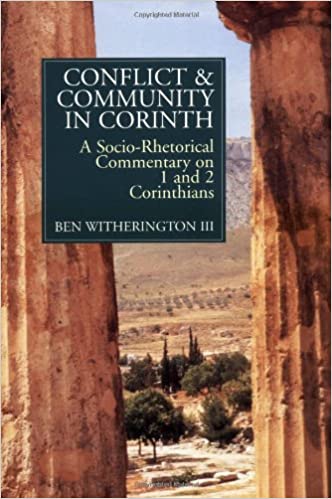 A few years ago, I had the opportunity to take a graduate school class on 1-2 Corinthians, and as part of that class, read several commentaries and lots of articles. One of my favorite reads was







