The online journal of Luke Dockery

Tag: Unity

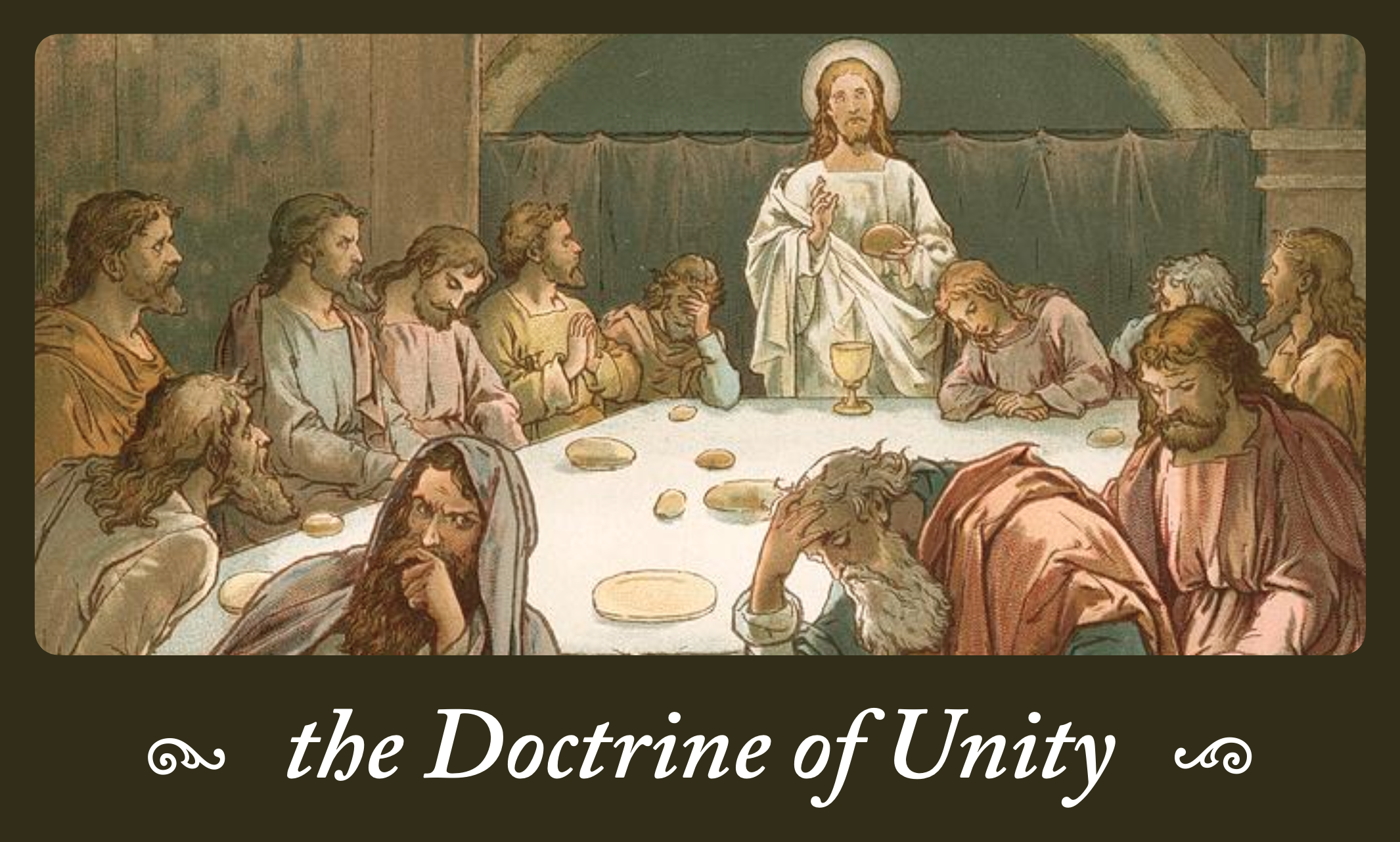
The Doctrine of Unity

The Gospel of John differs from the other gospels in various ways, but one significant difference is John’s inclusion of the extensive time Jesus spends with His disciples on the night of His betrayal and arrest. This section spans John 13-17, and includes Jesus washing the disciples’ feet, His impending betrayal and Peter’s denial, His promise of the coming of the Holy Spirit and the accompanying revelation that He will be leaving them soon, and a repeated emphasis on the importance of love.

Near the end of this section, Jesus also teaches on the subject of unity:

“I do not ask for these only, but also for those who will believe in Me through their word, that they may all be one, just as You, Father, are in Me, and I in You, that they also may be in Us, so that the world may believe that You have sent Me. The glory that You have given Me I have given to them, that they may be one even as We are one, I in them and You in Me, that they may become perfectly one, so that the world may know that You sent Me and loved them even as You loved Me.”

(John 17.20-23)

Here, near the end of the “High Priestly Prayer”, Jesus prays for unity among His followers. When you think about it, this places followers of Jesus in an interesting position: generally, we pray to God asking Him to answer our prayers; in this instance, it seems remarkable to me that we have the opportunity to answer His. 

Furthermore, the unity that Jesus prays for is not arbitrary—it is both formative and practical. It is formative in the sense that, when followers of Christ are unified, we reflect the very nature of the Triune God who exists in perfect unity while displaying diversity. In other words, practicing and displaying unity forms us into the likeness of God. Additionally, unity is practical in the sense that it leads the world to realize the truth of the identity of Jesus Himself.

I have spent my life in Churches of Christ, a group of autonomous congregations of believers that have historical ties to the American Restoration Movement of the 1800s. This movement sought to strip away man-made traditions and restore the Church that they read about in the pages of the New Testament.

The American Restoration Movement (also called the Stone-Campbell Movement) was, significantly, a unity movement. Although the restoration of the New Testament Church was seen as important in its own right, it was also viewed as a means of bringing unity to a fragmented world of Christian denominations: if Christ-followers of different varieties could all just agree to follow the beliefs and practices described in the New Testament, then the elusive unity among His disciples for which Jesus prayed could finally be achieved. To an extent, it worked, as thousands of people left their respective denominations and linked up with the new movement, wanting to be known only as Christians and recognizing only the authority of the Bible. Alas, the unity did not last. Restoration congregations began to divide in the late 19th century, and in 1906, the U.S. Census recognized a formal division between Churches of Christ and Disciples of Christ.

I am proud of the initial focus on unity among my spiritual ancestors, and saddened by the degree to which that strain of our religious DNA later weakened—in the 20th century, Churches of Christ split and divided over all sorts of doctrinal issues (real or imagined), and a passion for unity was not something for which we were generally known. This is really unfortunate, though, because the reality is that more than just a good idea or a noble goal, unity is a doctrine—it is a clear teaching of Jesus. It is one of the last things He emphasized to His disciples before He went to the cross, and He said that it should be one of their defining characteristics.

More than just a good idea or a noble goal, unity is a doctrine. Share on X

This doesn’t mean that we should ignore all other doctrines for the sake of unity, but I do think that doctrinal disagreements that lead us to break unity with other believers should be at least as clearly taught or as central as the doctrine of unity is.

To put it another way, I want to be obedient to the teachings of Jesus. However, if my desire to properly understand and follow the teachings of Jesus has led me, in practice, to minimize the importance of seeking unity with others who proclaim Jesus as Lord, then it is important for me to realize that I am not actually being obedient. Because unity is a doctrine.

Doctrinal disagreements that lead us to break unity with other Christians should be at least as clearly taught or as central as the doctrine of unity is. Share on X

In this loose series of Scripture Reflections, I am sharing brief thoughts spurred on by my Bible reading. By way of reminder, my goal for these brief posts is two-fold:

(1) To remark on aspects of the biblical text that I find to be of interest that the reader may or may not have thought about previously.

(2) When possible, to point to the work and person of Jesus Christ. I believe the Bible is a unified story that points to Jesus, which means that He is frequently alluded to or foreshadowed in some way throughout the biblical canon.
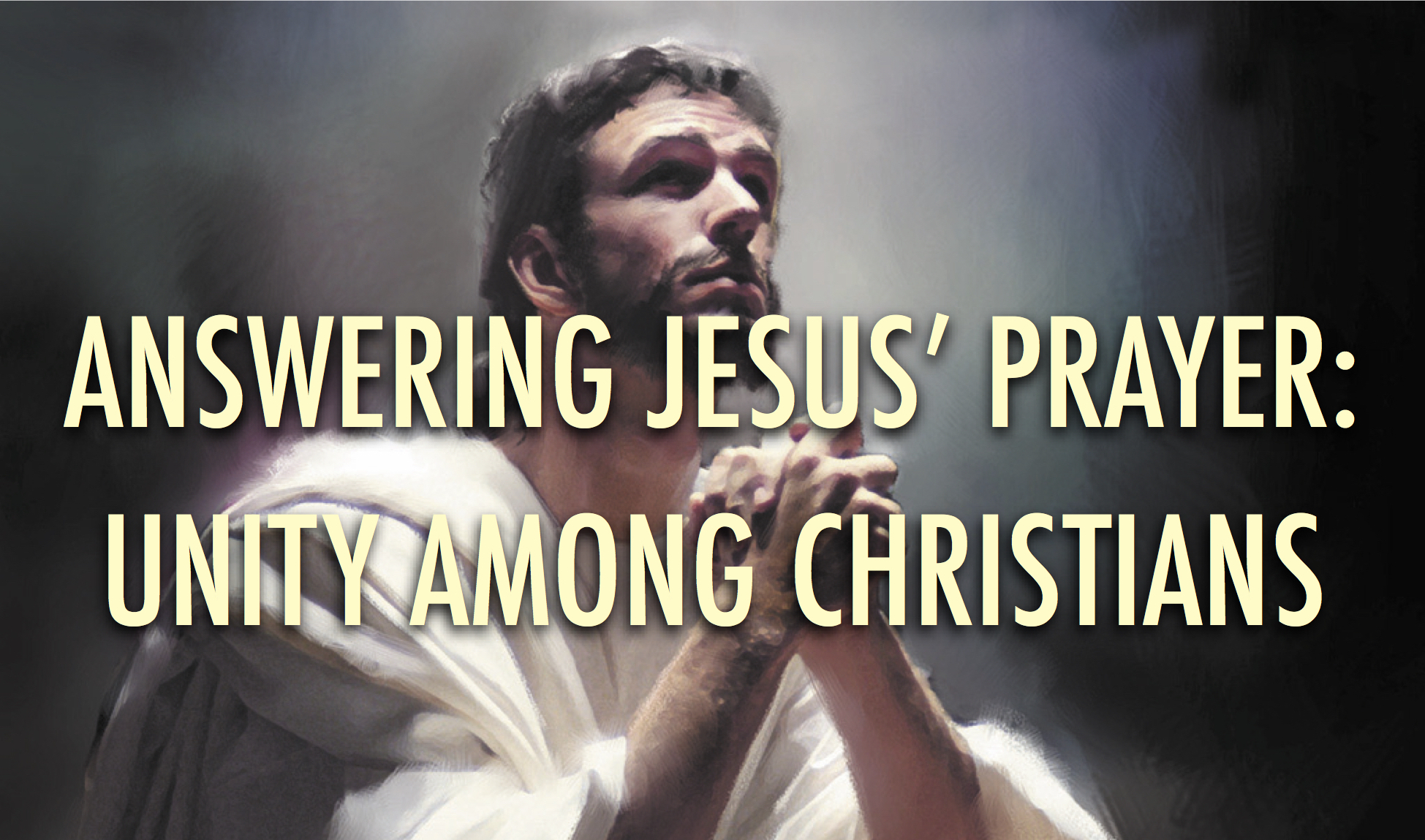

Answering Jesus’ Prayer: Unity Among Christians

When you write a blog that is primarily about ministry, biblical studies, and theology, you know from the beginning that you are really writing for a niche audience, as a lot of people are simply not interested in these topics. Today’s post perhaps may seem to be of even narrower focus, because I am going to address my own religious fellowship, but I would like to think that there are some worthy principles here whether you are a part of Churches of Christ or not.

In John 13-17, we have what is typically called the “Farewell Discourse” of Jesus. Knowing that He will soon be betrayed, arrested, and crucified, Jesus lays out some central teachings that He wants His disciples to hold onto after He is gone.

In one section in John 17, Jesus emphasizes the importance of unity among His followers, and prays to that effect:

“I do not ask for these only, but also for those who will believe in me through their word, that they may all be one, just as you, Father, are in me, and I in you, that they also may be in us, so that the world may believe that you have sent me. The glory that you have given me I have given to them, that they may be one even as we are one, I in them and you in me, that they may become perfectly one, so that the world may know that you sent me and loved them even as you loved me.”

(John 17.20-23)

It is worth pointing out that in this section, Jesus suggests that unity among His followers is a key ingredient in the world believing that Jesus is who He says He is. The reality is that there is considerable disunity in the world today among those who claim to be followers of Jesus, and that, in fact, this is one reason that many nonbelievers do not believe.

As I have written about many times in this space, I work and worship within the context of Churches of Christ, which have historical roots in the Stone-Campbell Restoration Movement of the early 1800s. I will not digress too far into history right now, but I will note that the Restoration Movement came about as a means to achieve unity amongst believers in Jesus, and that it sought to do so by emphasizing the beliefs and practices of the early church as revealed in the pages of the New Testament. I think this is a laudable effort, and it resonates strongly with me.

What saddens me deeply, though, is how little I see the desire for unity in my religious fellowship today. I dislike using labels, but for the sake of ease, from the most conservative branch of our fellowship, I see little desire for unity at all. I see a great amount of concern for doctrinal accuracy (which is important and praiseworthy), but virtually no concern at all for working for unity with those who disagree. The basic attitude seems to be, “We can have unity if you change everything you believe and agree with me.” This is a problem.

On the other hand, from the most progressive branch of our fellowship, I see a great desire for unity with believers of other religious fellowships* (sometimes with very little regard for the beliefs and practices of those groups), but at the same time, from those same people, I see little desire for unity with their own brothers and sisters who are more conservative. Instead, what I frequently witness (in online discussion groups and blogs, primarily) is a thinly veiled disdain and condescension toward people whom they consider to be too stupid or too ignorant to really understand what Christianity is all about. The basic attitude seems to be, “We can have unity if you become more enlightened like me and shed your backward and childish beliefs.” This, too, is a problem.

As I have written before, I find myself somewhere in the middle: frustrated and uncomfortable with both extremes, and increasingly, feeling isolated from both. At times, it feels like a very lonely place to be.

But here is the deal: if Jesus prayed for unity among His followers, it must be pretty important, right? At many times and in many ways, we want God to answer our prayers; it seems remarkable to me that, here, we have the opportunity to answer His. Could it be any more clear that this is something we should give greater attention to?

I am not claiming that this is an easy process, but it at least has to start with my own desire to carry out Jesus’ prayer, and in my own life, to seek unity with other believers with whom I disagree, whether they are theologically to my right or to my left.


*I keep using the word “fellowship” to tacitly acknowledge the debate that continues to rage within Churches of Christ about whether or not “we” are a denomination, or simply the church that belongs to Christ. I do not intend to wade into that debate here; I will just acknowledge that “we” do a lot of things that look and sound very denominational, but that at the same time, most of “us” do not desire to be a man-made denomination, and are simply wanting to be the church we read about in the Bible.

Unity and Extremism

I live, work, and worship within the fellowship of Churches of Christ. Many of the readers of my blog do as well, though some do not. This post is primarily for those who do, but perhaps there will be something of use for those who do not.

Recently, it has (again) become apparent to me how strained (fractured?) that fellowship is. I should be clear up front that I am not writing this post in response to one specific event. Rather, it has been prompted by many things: in events I have witnessed, discussions I have had, and blog posts I have read, it seems evident to me that there are many within our fellowship—on both the right and the left—who are ready to throw up their hands and have nothing to do with those with whom they disagree. And that makes me sad…and thoughtful.

And as I was thinking, it became clear to me that there are two facts about me, two determinations about myself that I wanted to affirm.

First, I am determined to be biblical in my views. I do not claim any of the terms which people frequently use to label themselves. I do not desire to be conservative. I do not desire to be liberal. I do not desire to be traditional. I do not desire to be progressive. I really, really desire to be biblical though. I bet that means that sometimes I’ll hold views that some might consider to be “conservative”, and sometimes I’ll hold views that might be thought of as “liberal”. But my standard will always be what Scripture teaches, not what a labeled position is.

Secondly, in my relationship to my brothers and sisters in Christ, I do not desire to camp out on an extreme somewhere; I am determined to be a centrist. This position of moderation is not made out of apathy, but out of passion: it seems to me that it is only from the center that unity can occur; only from the center can I reach out to those on either side of me and try to understand and love them. In religious (and secular) history, the dangers of extremism have been seen time and time again, and I think the Bible teaches the importance of balance in our lives in many places and in many different ways (see, for example, Ecclesiastes 7.16-18; Luke 2.52; Matthew 23.23, etc.).

Of course, that second determination will still be governed by the first: I’ll make decisions based on the teachings of Scripture rather than what the “centrist” position would be, but a substantial amount of the time, I think those two ideals line up very well.

Unity is a messy thing. A lot of times, it involves compromise, and it means we don’t always get what we want. But I think it’s important to God that His children strive for unity, and so it should be important to us as well. But I don’t think it can be achieved through extremism—from either side.

Unity and Restoration in Churches of Christ Part 1: A Historical Primer

Churches of Christ, of which I am a part, are a group of autonomous congregations of believers which have historical ties to the American Restoration Movement of the 1800s. This movement, led primarily by men such as Alexander Campbell and Barton W. Stone (and thus sometimes called “The Stone-Campbell Movement”), sought to strip away man-made traditions and restore the Church which they read about in the pages of the New Testament.

Although the restoration of the New Testament church was seen as important in its own right, it was also viewed as a means of bringing unity to a fragmented world of denominationalism:[1] if Christ-followers of different varieties could all just agree to follow the beliefs and practices described in the New Testament, then the elusive unity among His disciples which Jesus prayed for could finally be achieved. To an extent, it worked, as thousands of people left their respective denominations and linked up with the new movement, wanting to be known only as Christians and recognizing only the authority of the Bible.

Sadly, this unity did not last. Restoration congregations began to divide in the late 19th century, and in 1906, the U.S. Census recognized a formal division between Churches of Christ and Disciples of Christ. It has long been held that the primary causes for this division stemmed from disagreements over missionary societies and instrumental music in worship, but in Reviving the Ancient Faith: The Story of Churches of Christ in America, author Richard Hughes makes the argument that these issues were merely symptoms of a greater problem, and that the seeds of division were actually sown decades before, and can be traced to the thoughts and perspectives of Alexander Campbell himself.[2]

According to Hughes, Campbell’s twin goals of unity and restoration[3] were, in many ways, mutually exclusive. To illustrate:

  • If Person A places a great deal of importance on unity, he will be more likely to overlook the fact that Person B does not completely agree with and follow the teachings and practices of the New Testament. Unity is upheld, but restoration is diminished.
  • On the other hand, if Person A places a great deal of importance on restoration, the fact that Person B does not completely agree with and follow the teachings and practices of the New Testament will be a major issue that will prevent full fellowship. Here, restoration is upheld but unity is diminished.

Hughes argues that Campbell’s failure to fully think through the implications of unity and restoration enabled him to always cling to both goals despite any inherent tension between the two, but that his followers inevitably divided into hostile groups which focused on one of those concerns to the neglect of the other.[4] Ultimately, those who held up unity as being of primary importance became the Disciples of Christ following the split of 1906, while Churches of Christ maintained a primary focus on restoration.

Hughes’ perspective is interesting and I think it does hold some merit, but I think he takes it too far. Certainly there is an element of tension between the ideals of unity and restoration, but to say that the two are mutually exclusive and that Alexander Campbell sowed the seeds of division because he was incapable of grasping this idea seems to place great limitations on Campbell’s universally-renowned intellect.

What seems more likely is that Campbell’s subtle understanding of the connection between unity and restoration was not adequately disseminated to the majority of the people he influenced. Not understanding how the two ideas could be reconciled, his followers later tended to group around one or the other, as Hughes rightly suggested. And it wasn’t a problem which was limited to the late 19th and early 20th centuries—many people today still struggle to reconcile the concepts of unity and restoration.

But I do believe that such a reconciliation is possible, and can be clearly seen through the example of J.N. Armstrong, the first President of Harding College, who lived roughly 100 years after Campbell. More on that in the next post.


[1] A note on ”denominationalism”: there is a strong historical perspective in the Restoration Movement that laments the disunity in Christendom as evidenced by the countless denominational groups that exist. Churches of Christ aim to be undenominational in the sense that they seek to be nothing more (or less) than the New Testament Church, and because of this, members will sometimes react strongly to the notion that the Church of Christ is “just another denomination.” Of course, regardless of intention, to denominate literally means “to name”, and at least in that sense Churches of Christ are a denomination, as they have persistently and somewhat rigidly applied that specific name to themselves. From that perspective, it is hard for anyone unfamiliar with their core beliefs and goals to think of the Church of Christ as anything other than “just another denomination.” I wish more of us understood this.
[2] Richard T. Hughes, Reviving the Ancient Faith: The Story of the Churches of Christ in America (Grand Rapids: William B. Eerdmans Publishing Company, 1996), 22-26.
[3] To be more accurate, Hughes, 45, suggests that unity and restoration, while important, were not Campbell’s primary concern. Rather, as a postmillenialist, “Campbell’s ultimate concern was for the kingdom of God, the millennium on earth. In Campbell’s mind, unity was merely a means to the millennial dawn, and restoration a basis for unity.”
[4] Hughes, 46.

© 2026 The Doc File

Theme by Anders Noren — Up ↑