The online journal of Luke Dockery

Category: Bible Study (Page 20 of 40)

A New Heaven & A New Earth: What the Bible Teaches about Eternity

Introduction

A major part of the hope that we have as Christians—a hope that gives us motivation to live faithfully—is that we trust that God will raise us from the dead and that we will live with Him for eternity. 

This should give us peace, confidence, purpose, and boldness.

But there are different ways of viewing what this eternity with God, this paradise, will look like. In fact, an entire branch of Christian theology called eschatology is devoted to the study of eternity and the end times.[1] I’d like to spend several blog posts talking about eschatology, and looking at what the Bible says about it. 

I want to warn you up front: this will be a very challenging study for some. The view that I am going to propose in this series of posts I will refer to as renewed eschatology or NHNE.[2] I believe this to be the biblical view, but it is not what I would call the typical view of eternity that most American Christians hold.

Before we get any further, I want to quickly give you two different perspectives to help frame what we are going to be talking about in this series. These are two different views of what the Bible is about and what our future looks like.

The first view, which I will call the spiritual heaven perspective, says that we live in a world that was created good but became tainted after Adam and Eve’s sin in the Garden. Things are bad and broken and we are lost in our sin.

The Good News is that Jesus came to die for our sin and save us, so that when we die, we can forever leave this broken world (which is bound for fiery destruction) and enjoy a spiritual existence with God forever in heaven. The people that reject God will spend eternity in hell.
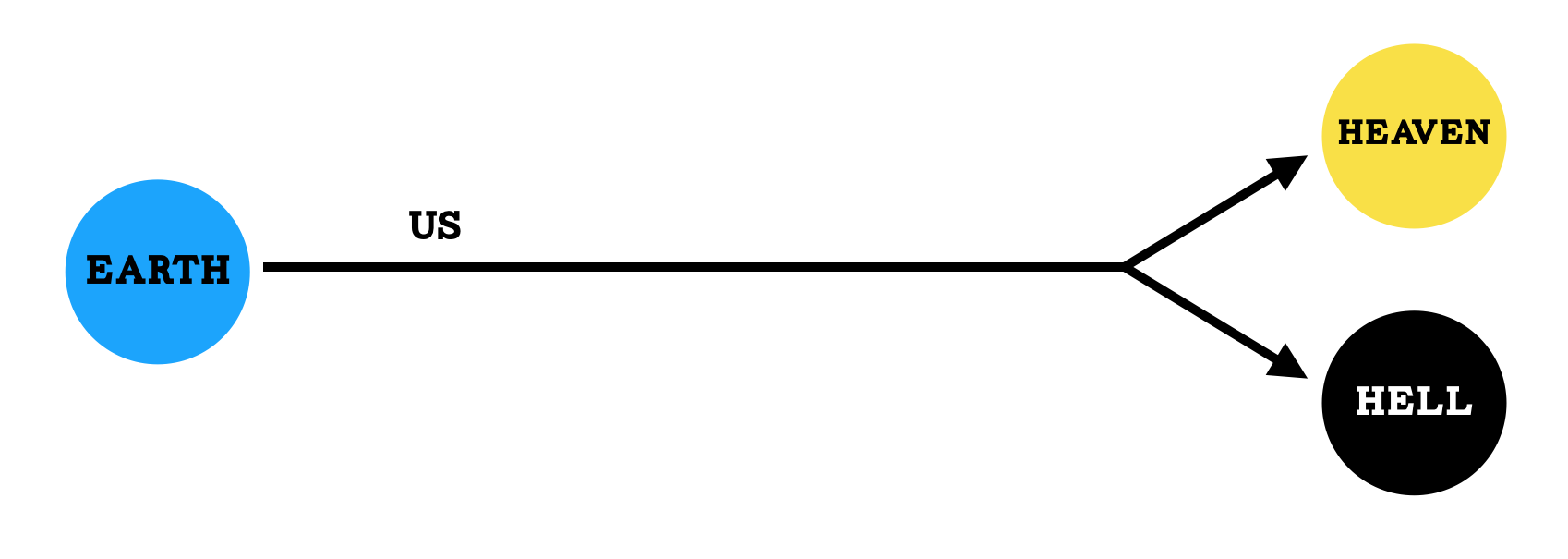
In the meantime, we are basically running out the clock, doing our best to survive in a broken world, waiting for Jesus to come rescue us, and hopefully, trying to help other people to be rescued as well. You might think of the Titanic going down: as Christians, we are in the lifeboats, going around trying to save people from drowning…but the ship is going down.


I think this is what much of the non-Christian world believes that Christians believe,[3] and furthermore, I think it actually is what many Christians believe. I believed it myself for a long time. In many ways, it is the traditional Christian perspective.[4]

The problem is, I don’t think the Bible actually teaches this. It certainly teaches parts of it: heaven and hell are real, judgment is real, Jesus came to save us, etc.—but the overall presentation of this view is not, in my opinion, what the Bible teaches.

(Some of you are thinking that I am nuts, and at this point, that is okay.)

The second view, the renewed earth perspective, also says that this world was created good as the dwelling place of people. Earth parallels heaven, the dwelling place of God (Genesis 1.1), and at the beginning, these two realms overlapped: God was able to dwell with people and walked in the Garden with them. But we sinned. The earth became tainted. Our close relationship with God was destroyed. Our sin separates us from God, forcing the close union of heaven and earth to be driven apart. Things are bad and broken, and we are lost in our sin. And more than that: our accumulated sin multiplies and continues to defile the earth—there is a sense in which we have created hell on earth with our cumulative rebellion against God.

The Good News is that God is not content to leave things this way. Jesus came to reconcile all of creation to Himself, including humanity, and to specifically confront the problem of sin. Through His death and resurrection, Jesus has brought about a new order of things, or as Paul says, “new creation.” One day Jesus will return and sin, Satan, and death will be fully defeated, the entire cosmos will be made over into a “New Heaven and New Earth”—a unified whole—and God will dwell with His people forever, while those who reject Him will be separated from Him forever.[5]
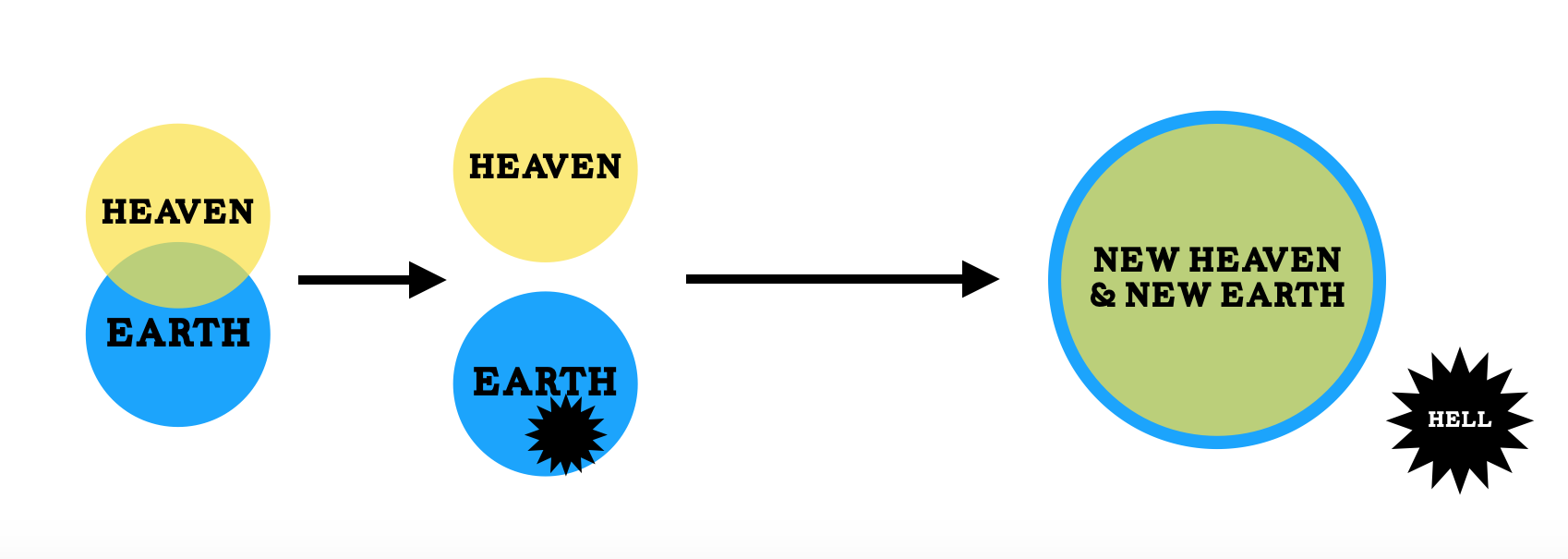
In the meantime, rather than running out the clock, waiting to be rescued, or even frantically rowing around in our lifeboat picking up survivors while the world sinks around us, we are actively involved as citizens of God’s kingdom and agents of new creation in taking back the world that rightly belongs to God and inviting others to join us in that project. We do this by living according to the principles that Jesus lays out for His followers, and seeking to counteract the effects of sin in our world.

Now, these two views share a lot of terms and concepts, but when you look at them as a whole, they are two very different perspectives on the story the Bible is telling, and what eternity will look like.

Background of this Study

Over the last couple of years, I have seen more and more discussions about eschatology in the Christian blogosphere and in various Facebook groups, and, honestly, I have been concerned at times by the tone I have witnessed in some of those discussions (where those who hold to renewed eschatology are written off as false teachers or heretics) as well as the general level of ignorance (where some who have sought to refute the NHNE perspective reveal that they don’t actually understand it at all). Perhaps this series of posts will add something constructive to those conversations, but really, I did not write all of this material in response to the recent interest that I have observed about this topic.

Actually, this topic is one that I have been personally wrestling with for about ten years. When I first heard the renewed earth perspective, I was in graduate school and, well, I thought it was crazy. I had several immediate objections based on some specific passages of Scripture, and I wondered if my professor had ever read them! But, as it turned out, my teacher had read the Bible (more thoughtfully than I had), and had answers to my objections.

Time passed and I continued to read and study, and this idea of God redeeming and renewing all of creation at the return of Jesus continued to pop up over and over. I realized that a lot of respected biblical scholars held to this view, and I also came to realize that this wasn’t a “new” interpretation, but actually a very old one, and one that had also been held by my ancestors in the Restoration Movement. I gradually came to think, “This isn’t so crazy…I can see it either way.”[6]

Later, I began to study some of the specific passages that I used to think refuted the renewed earth view, but I realized that when I studied them in context and did the linguistic and historical legwork, they actually seemed to argue against the spiritual heaven (“traditional”) view rather than for it. I grudgingly thought, “Well, this renewed eschatology view seems more biblically accurate to me, but I’m not sure it really matters that much.”

Eventually, at the church where I worked, we started this project called The Story of the Bible. This was a long Bible survey study for our adult Bible classes using videos from The Bible Project as a companion resource. As I had never done before, I sat down and studied the Bible, writing dozens of lessons (and editing dozens more) about different biblical books and drawing main ideas from them. When we started that project, I had zero intention of teaching a different view on eternity (or really, emphasizing anything related to eternity) but as we studied, this idea of God redeeming all of creation just hit us over and over again…because this is what the Story of the Bible is about.

As we went through this study in our adult classes, it became clear to me that our church leadership needed to discuss eschatology (and specifically, the renewed earth perspective) more, so I went to our Elders and they agreed. We had a great study together for several weeks and wrestled with a lot of Scripture and talked back and forth and challenged one another. By the end of the study, they no longer thought I was crazy (I think a couple of them did when we started!), and they wanted me to teach an adult Bible class specifically on renewed eschatology. And that class is the source of the material you are reading now.

Goals for this Series

I believe that Scripture teaches that when Jesus returns, the cosmos will be renewed and redeemed and that the faithful will live with God eternally in a New Heaven and a New Earth. If, at the end of this series, you agree with me—great! But that is not my primary goal for this series.

Instead, here are my goals:

First, I want to look at what the Bible teaches about eternity with an open mind. This will be very difficult for some, and I get that—this material was very challenging for me when I was first exposed to it. I am stubborn and I give up the positions I hold with great reluctance; as I mentioned previously, I have been wrestling with this for ten years. 

Ultimately, I don’t ask that you agree with me, but I do ask that you have an open mind and honestly consider what we discuss. Read the biblical passages that are mentioned. Look at the extra material I link to that lays out certain arguments in greater detail. If you want to respond to something that I say (and I welcome that!), make arguments based on Scripture, not on tradition. Ultimately, what I am going to present in this series of posts is correct or incorrect based on whether or not it lines up with what the Bible teaches. With that in mind, counter-arguments to what I am presenting that start with, “I always thought…” or “I’ve always heard that…” aren’t the best.

Second, I want to provide an opportunity for us to challenge ourselves. Some of the ideas that we’re going to discuss will be challenging. It will require looking at certain passages very carefully and learning some things about Greek, about history, and about textual criticism.

From my perspective, we have decades and decades of confusion and misinterpretations that we have to peel back to see what the Bible teaches on this subject, and that is going to require hard work. I will do my best to make everything as understandable as possible, but I am sure that I will not be as clear sometimes as I would like to be. Having said that, if you feel like some of this material is difficult, that’s okay, because it is supposed to be.

I’m not sure where we got the idea that we can become mature Christians by never challenging ourselves to dig deeper into God’s word, but it’s not true. 

Finally, at the end of this study, I want us to respect one another regardless of which conclusion we come to. I think this is an important topic, and at the end of all this, I will explain why I think it matters, but ultimately, understanding how eternity works is not necessary for you to enjoy it. Getting this right or wrong is not a “salvation issue” (I dislike that terminology), although I would argue that you will appreciate and anticipate your salvation more if you hold to the view that I am going to teach in this series.

I mentioned earlier that I have witnessed some unfortunate conversations over the last couple of years where people who hold to renewed eschatology are branded as false teachers. I would find that to be laughable if writing someone off as a false teacher was not such a serious act—one that Scripture doesn’t take lightly. Suffice it to say, if at the end of all this you arrive at a different conclusion than I do, I will still respect you for it; I hope you can reciprocate that feeling.

What does the Bible teach about eternity? I hope you’ll join us as we seek to answer that question.


[1]The Greek word εσχατος means “last”, so literally, “eschatology” refers to the study of the last things.

[2]Short for “New Heavens and New Earth.” Throughout this series, I will use “NHNE”, “New Heavens and New Earth”, “renewed eschatology”, and “renewed earth” interchangeably. 

[3]I think many non-Christians also fundamentally misunderstand the notion of God’s grace, and think Christians believe that we get to heaven by being “good enough”. To be fair, many Christians misunderstand this as well!

[4]I really hesitate to concede the term “traditional” to refer to this view, because as we will see later, the alternative view—renewed eschatology—has a long and storied place in the historical Christian tradition. But nevertheless, the spiritual heaven perspective has been the dominant view among evangelical and fundamentalist churches (and certainly churches of Christ as well) for as long as any of us have been alive.

[5]Much of the language in this description is drawn from Timothy Mackie and Jonathan Collins, When Heaven Meets Earth: A 12-Part Biblical Study on Heaven (Portland: The Bible Project, 2017). This resource is available for download on The Bible Project website here.

[6]I will have a post later focusing specifically on this, but as many readers of this blog know, I am deeply interested in the history of the Stone-Campbell Restoration Movement, and seeing that many of my spiritual forebears believed in renewed eschatology was very significant to me.
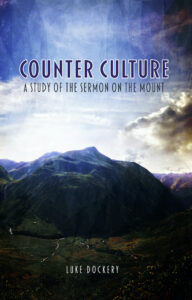
Counter Culture: A Study of the Sermon on the Mount

Purchase the Book


Paperback: 
Directly from me $10; Amazon $11.99

Digital: Deeper Youth Ministry $10

Despite being one of the most beloved sections in all of Scripture, the Sermon on the Mount is also one of the most neglected and ignored sections, because in it, Jesus calls His disciples to live in ways that are completely at odds with the way the world operates.

In the Sermon on the Mount, Jesus lays out a vision for how His followers should live and what life in His Kingdom is all about. Counter Culture makes Jesus’ Kingdom vision accessible to students—explaining the historical context and applying the teaching to modern-day life—while in no way minimizing the challenge that Jesus gives.

Although this book was written specifically as an aid to teaching the Sermon on the Mount to junior high and high school students, it is also useful for personal Bible study, and the depth of the material makes it a great resource for adult Bible classes.

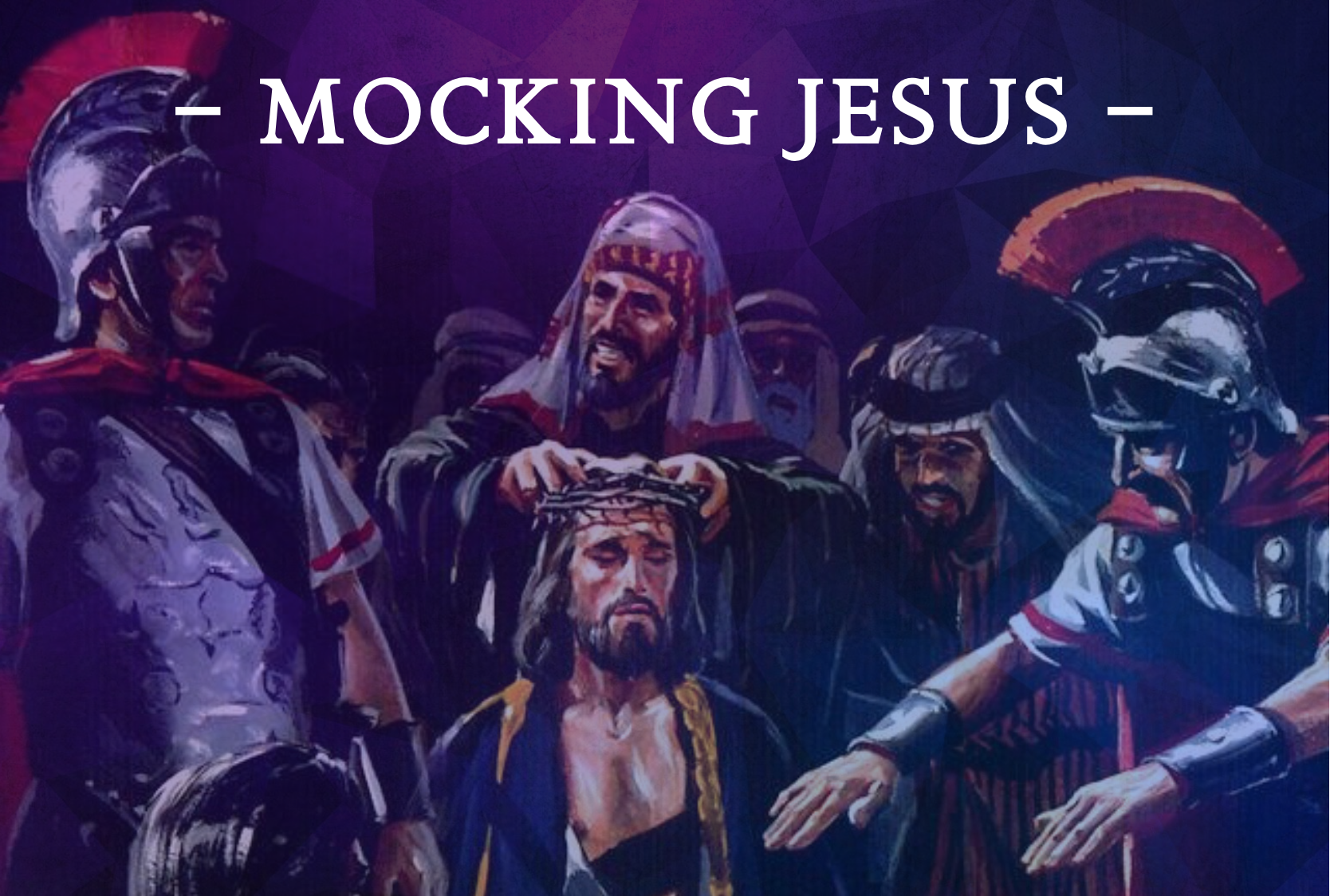
Mocking Jesus

In Mark 15, in the narrative of the crucifixion of Christ, there is the following description of the Roman soldiers mocking Jesus:

And the soldiers led him away inside the palace (that is, the governor’s headquarters), and they called together the whole battalion. And they clothed him in a purple cloak, and twisting together a crown of thorns, they put it on him. And they began to salute him, “Hail, King of the Jews!” And they were striking his head with a reed and spitting on him and kneeling down in homage to him. And when they had mocked him, they stripped him of the purple cloak and put his own clothes on him. And they led him out to crucify him.

(Mark 15.16-20)

When I read these words and let my imagination drift back to that scene, one clear emotion springs to the surface of my thoughts: anger! I am outraged at the way my Savior is openly mocked by sinners for whom He is about to die! How dare these lowly soldiers make fun of God’s Son and spit in the face of the Creator of the universe? If they had any idea Who this was they were dealing with, surely they would not treat Him with such contempt!

But then, I begin to wonder…

The favorite title for Jesus in the early church was Lord (2 Corinthians 4.5). This was a title of ownership. The master of a slave or the owner of a vineyard was called Lord. It was also a title of authority. Army commanders and judges were called Lord. It was the official title of the Roman Emperor. All laws, edicts, and decrees were signed Lord Caesar.

Out of this background, we begin to understand what early Christians were saying when they spoke of Jesus as Lord. They meant that He was the absolute owner of their lives: He was the One who had the right to decide what they would be, what they would do, and where they would go. They meant that He was the final authority over every thought, emotion, and action of life. Above all, they meant that He was the King of Kings to whom they gave their highest loyalty and obedience.

That is what it means to call Jesus Lord.

Returning to the story from Mark 15, I am outraged when I read of these soldiers openly mocking Jesus. But then I wonder: do we mock Jesus any less than the Roman soldiers did when we call Him Lord but then comfortably ignore any demands He makes of our lives?

Jesus: “Why do you call me ‘Lord, Lord,’ and not do what I tell you?” (Luke 6.46)

Do we mock Jesus any less than the Roman soldiers did when we call Him “Lord” but then comfortably ignore any demands He makes of our lives? Share on X

In this loose series of Scripture Reflections, I am sharing brief thoughts spurred on by my Bible reading this year. By way of reminder, my goal for these brief posts is two-fold:

(1) To remark on aspects of the biblical text that I find to be of interest that the reader may or may not have thought about previously.

(2) When possible, to point ahead to the work and person of Jesus Christ. I believe the Bible is a unified story that points to Jesus, which means that He is frequently alluded to or foreshadowed in some way throughout the biblical canon.

Are You Like Jesus’ Enemies?

If you are familiar at all with the life and ministry of Jesus, you know that He encountered opposition from various groups. In Mark’s gospel, the controversy surrounding the ministry of Jesus begins very early. In chapter 2, Jesus is criticized in the following circumstances:

  • In 2.1-12, Jesus receives criticism from some scribes when He forgives the sins of a paralyzed man after healing Him.
  • In 2.13-17, the “scribes of the Pharisees” criticize Jesus for having table fellowship with tax collectors and sinners. This occurs after Jesus calls Levi/Matthew to follow Him and then goes to eat at his house.
  • In 2.18-22, Jesus seems to receive a mild criticism because He and His disciples are not fasting, while John’s disciples and the disciples of the Pharisees do.
  • In 2.23-28, the Pharisees again criticize Jesus, this time because His disciples were plucking heads of grain on the Sabbath day.

These events provide the immediate context for Mark 3.1-6, which is the passage that I want to look at a little more closely:

“Again He entered the synagogue, and a man was there with a withered hand. And they watched Jesus, to see whether He would heal him on the Sabbath, so that they might accuse Him. And He said to the man with the withered hand, “Come here.” And He said to them, “Is it lawful on the Sabbath to do good or to do harm, to save life or to kill?” But they were silent. And He looked around at them with anger, grieved at their hardness of heart, and said to the man, “Stretch out your hand.” He stretched it out, and his hand was restored. The Pharisees went out and immediately held counsel with the Herodians against Him, how to destroy Him.”

Although there are several aspects of this account that we could focus on, I particularly want to look at a couple of characteristics of Jesus’ enemies, characteristics that I think a lot of people—even those who are supposed to live as citizens of God’s kingdom—continue to exhibit today.

First, watching people and waiting for them to mess up is a characteristic of Jesus’ enemies. The text says in verse Mark 3.2 that the Pharisees “watched Jesus, to see whether He would heal him on the Sabbath, so that they might accuse Him.”

The Pharisees watched Jesus carefully, not to glean wisdom from His teaching, or to be awed by the miracles He performed, or touched by the compassion He showed, but to catch Him in some alleged mistake that would provide grounds for accusation.

Unfortunately, I have known people like that…

  • People who miss the main thrust of a 30-minute sermon because they focused in on one statement that they disagreed with or one Bible verse that was incorrectly cited.
  • People who come to Bible class not to learn or to grow as a part of the body or to be transformed by Scripture, but instead to correct the teacher every time they hear something they disagree with.
  • People who ignore the constant, tireless, loving care of the shepherds of their congregation and instead look for missteps or questionable decisions so they can loudly voice their criticism.

Watching people just so we can catch them doing something we don’t like in order to criticize them is not a characteristic of Jesus, nor of those who would be His followers. It is a graceless way of approaching life, where we feel justified in neglecting all of the good things a person does in order to focus in on their faults. It is what the enemies of Jesus did.

Second, making immediate plans to punish or pronounce judgment upon others is a characteristic of Jesus’ enemies. Mark 3.6 states that “the Pharisees went out and immediately held counsel with the Herodians against Him, how to destroy Him.”

If you are very familiar with the Gospel of Mark, you know that “immediately” is a key word. Mark is a gospel of action, and people are portrayed as quickly moving from one thing to another. In this instance, the clear implication is that the Pharisees take no time to absorb what Jesus is trying to teach; rather, without reflection, they rush headlong into a meeting with another group that is opposed to Jesus to begin making plans on how to bring Him down.

Although we should not be waiting and watching for people to mess up (see above), the reality is that people will mess up from time to time, or they might say something that we disagree with. When that occurs, the solution is not to go flying off the handle, enslaved to the demands of our emotional responses in the moment. Sure, there are times when someone says or does something that is so incorrect or inappropriate that it must be dealt with immediately, but not everything is a big deal.

A better course of action is to address the situation after our emotions have cooled and after we have had time for reflection, study, and prayer. And when we do that, many times we realize that it wasn’t such a big deal after all.

Without a doubt, our 24-hour news cycle-documented and social media-dominated society provides an environment where people can always be looking for the mistakes of others and can immediately condemn them. On top of that, it is an election season, which always seems to reveal that many of us think we can respond to political figures however we want to regardless of the fact that we claim to be disciples of Jesus, and that claim should have a major impact on our behavior. But let us be aware that when we take part in those practices, we look more like the enemies of Jesus than we do our Savior.

Reading in 2019

Regular readers of The Doc File know that I keep track of what I read each year, and that I enjoy chronicling that here on the blog and offering some reflections about my favorite reads from the previous year.

Without further ado, here is my list from 2019:

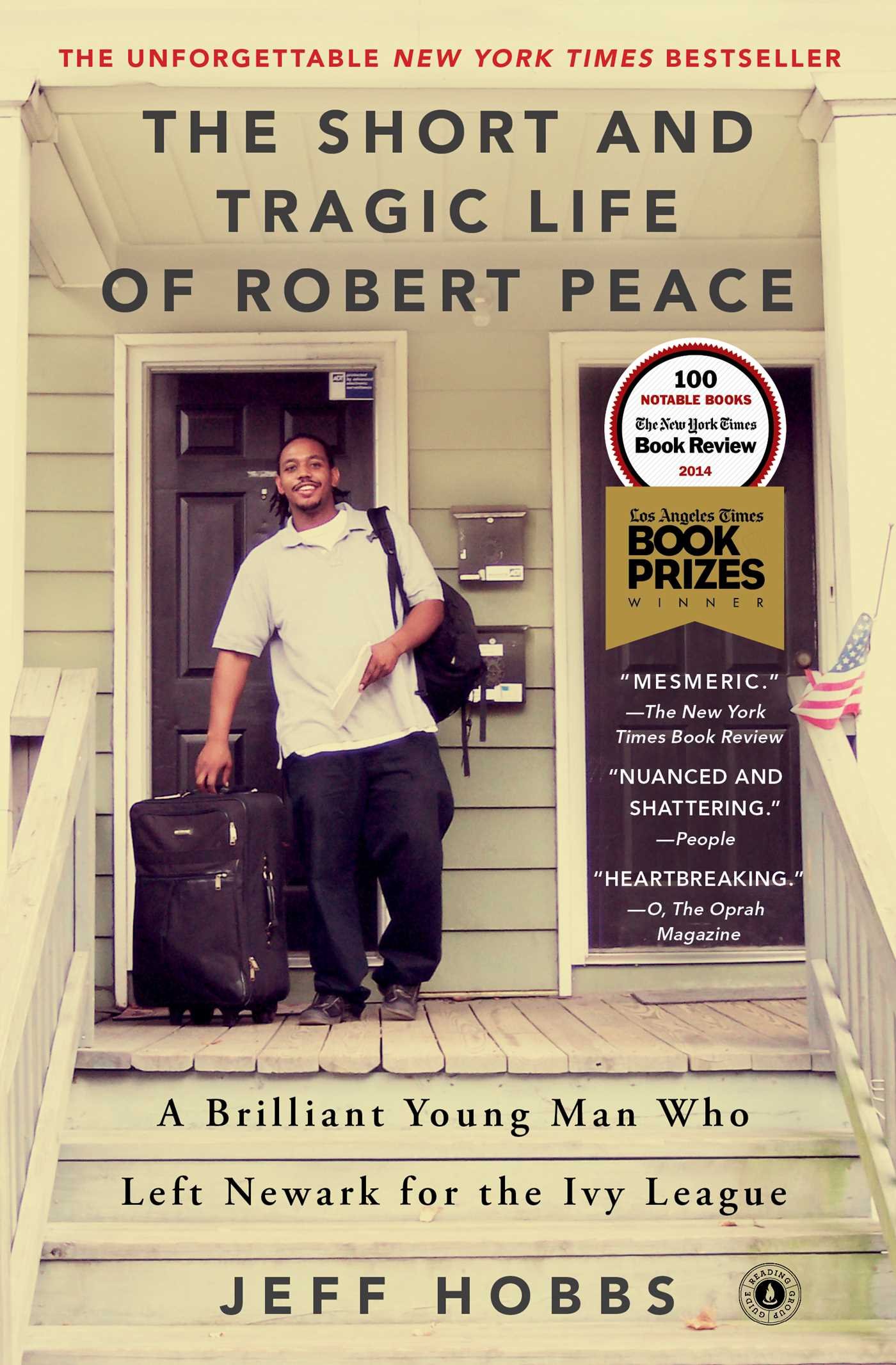
  1. The Short and Tragic Life of Robert Peace, by Jeff Hobbs
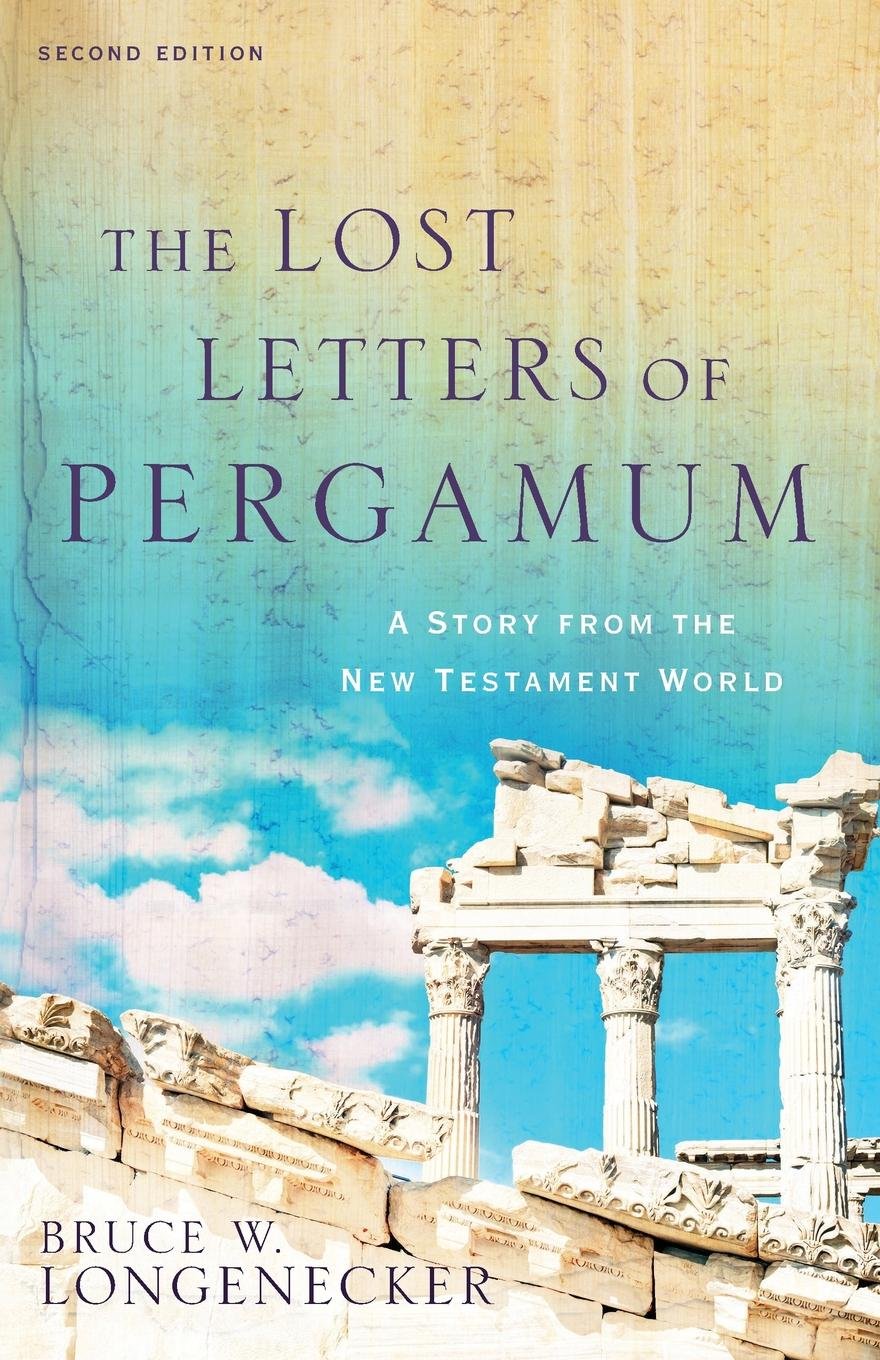
  2. The Lost Letters of Pergamum: A Story From the New Testament World, by Bruce W. Longenecker
  3. Enter the Water, Come to the Table: Baptism and the Lord’s Supper in Scripture’s Story of New Creation, by John Mark Hicks
  4. Success Sparklers: A Treasury of Quips, Quotes and Sparkling Sayings for the Positive Person, compiled by Ivy Conner
  5. The Honorary Consul, by Graham Greene
  6. Small Group Strategies: Ideas & Activities for Developing Spiritual Growth in your Students, by Laurie Polich and Charley Scandlyn
  7. Walking Away From Idolatry, by Wes McAdams
  8. The Abolition of Man, by C.S. Lewis
  9. Amazing Grace: William Wilberforce and the Heroic Campaign to End Slavery, by Eric Metaxas
  10. The Hidden Harbor Mystery, by Franklin W. Dixon
  11. Between Shades of Gray, by Ruta Sepetys
  12. My Brother Sam is Dead, by James Lincoln Collier and Christopher Collier
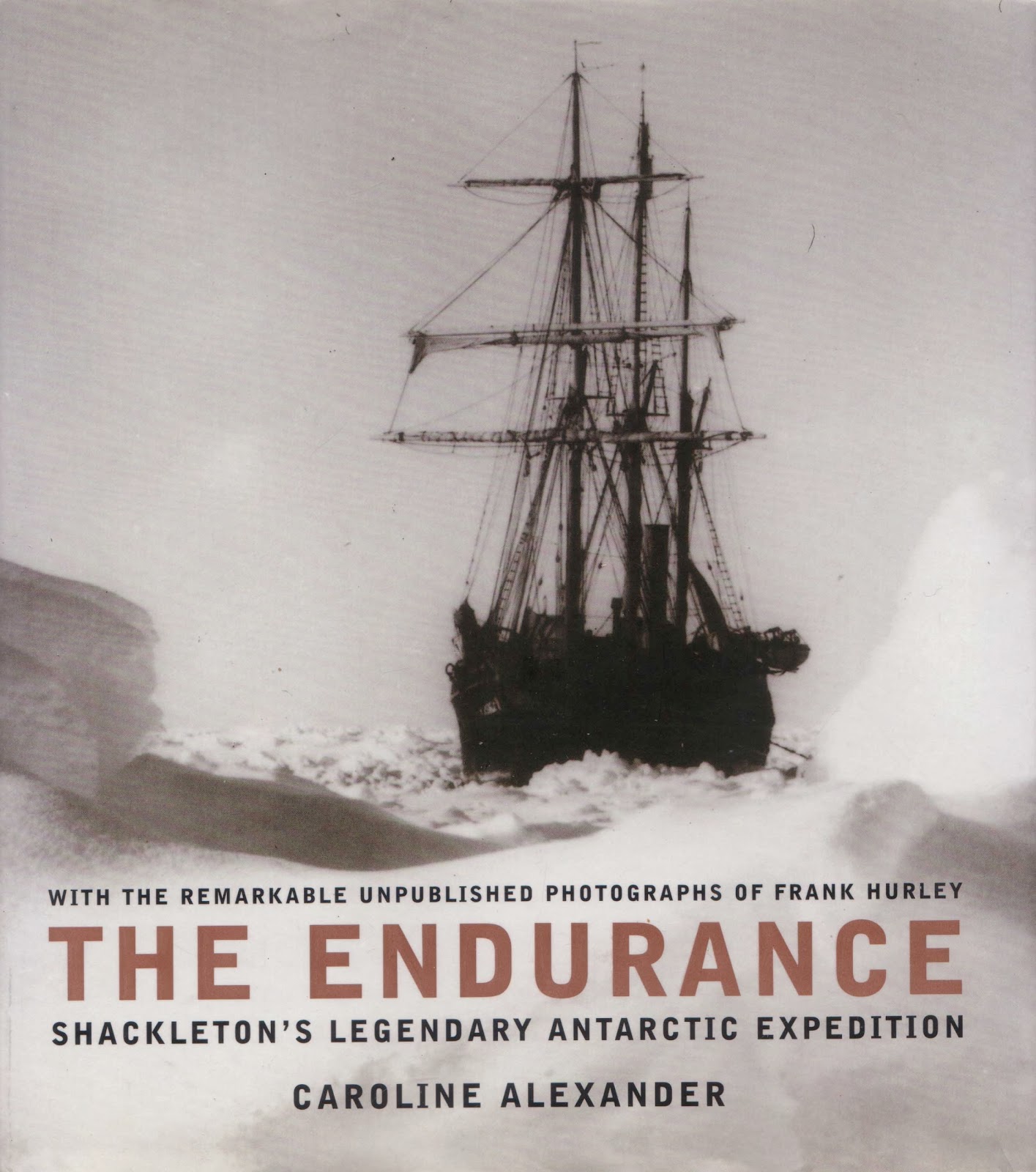
  13. The Endurance: Shackleton’s Legendary Antarctic Expedition, by Caroline Alexander
  14. Selected Stories of O. Henry, Introduction and Notes by Victoria Blake*
  15. The Nightingale, by Kristin Hannah
  16. Beyond Atonement: Recovering the Full Meaning of the Cross, by N.T. Wright, Gregory Boyd, and Ruth Padilla DeBorst
  17. The Glory of Their Times: The Story of the Early Days of Baseball Told by the Men Who Played It, by Lawrence S. Ritter
  18. God, Guys, and Girls, by Derry Prenkert
  19. Sabbath Resistance: Saying No to the Culture of Now, by Walter Brueggemann
  20. Christians in the Age of Outrage: How to Bring our Best When the World is at Its Worst, by Ed Stetzer
  21. How To Lose a Kingdom in 400 Years, by Michael Whitworth
  22. The Book Thief, by Markus Zusak
  23. The Cross & the Prodigal: Luke 15 Through the Eyes of Middle Eastern Peasants, by Kenneth E. Bailey
  24. Rich Dad Poor Dad, by Robert Kiyosaki
  25. I Am A Church Member, by Thom S. Rainer
  26. The Five Books of Moses: A Translation with Commentary, by Robert Alter
  27. That’s Why We Sing: Reclaiming the Wonder of Congregational Singing, by Darryl Tippens
  28. Fire Upon the Earth: The Story of the Christian Church, by Norman F. Langford
  29. The Other Wes Moore: One Name, Two Fates, by Wes Moore
  30. Family Worship, by Donald S. Whitney
  31. The Shepherd’s Ring, by Whit Jordan
  32. The Yellow Feather Mystery, by Franklin W. Dixon
  33. The Clue in the Embers, by Franklin W. Dixon
  34. Murder at Wrigley Field, by Troy Soos
  35. Visions of Restoration: The History of Churches of Christ, by John Young
  36. New Day: Restoring the Revolutionary Mission of Christ’s Church, by David M. Young
  37. Gorky Park, Martin Cruz Smith
  38. The Greenest Island, by Paul Theroux
  39. Disrupting for Good: Using Passion and Persistence to Create Lasting Change, by Chris Field
  40. The Secret Agent on Flight 101, by Franklin W. Dixon
  41. Jesus for President, by Shane Claiborne and Chris Haw
  42. Discipeshift: Five Steps That Help Your Church to Make Disciples Who Make Disciples, by Jim Putnam & Bobby Harrington with Robert Coleman
  43. Faith Unraveled: How A Girl Who Knew All the Answers Learned to Ask Questions, by Rachel Held Evans
  44. Practical Wisdom for Youth Ministry: The Not-So-Simple Truths That Matter, by David Fraze
  45. 12 Rules For Life: An Antidote to Chaos, by Jordan B. Peterson
  46. The Fourfold Gospel, by J.W. McGarvey and Philip Y. Pendleton
  47. Prayer, In Practice, by J.L. Gerhardt
  48. It’s All Too Much: An Easy Plan for Living a Richer Life with Less Stuff, by Peter Walsh
  49. Learning to Speak God from Scratch: Why Sacred Words Are Vanishing—and How We Can Revive Them, by Jonathan Merritt
  50. D2: Becoming A Devoted Follower of Christ, by Phil McKinney II
  51. The New Jim Crow: Mass Incarceration in the Age of Colorblindness, by Michelle Alexander
  52. One Loaf and One Cup: A Scriptural and Historical Survey, by Clinton De France

A few observations before I talk about my favorite books of the year:

  • My reading total decreased from 54 books in 2018 to 52 in 2019. I was pleased with this number considering that we moved in the middle of the year, my life was crazy busy preparing for that move and adjusting to it, and my reading time was (probably) somewhat less.
  • For the last several years, I have been between 48-54 books per year. This really seems to be my sweet spot.
  • This was my first full year removed from grad school, so I wondered how that would affect my reading. I still read a lot, with a decent amount of reading still geared toward faith, ministry, discipleship, biblical studies, etc.
  • I enjoyed my reading this past year. There were some books I didn’t love, but really, no major disappointments.

I want to share my Top 10 books for the year, but before I do so, I wanted to offer some brief thoughts on a few books that didn’t make my Top 10, but I still wanted to comment on:

  • The Glory of Their Times: The Story of the Early Days of Baseball Told by the Men Who Played It, by Lawrence S. Ritter: this was a great book of memories of baseball players from the early 1900s. As a huge fan of Ken Burns’ documentary Baseball, I was delighted to recognize that this book was a major primary source for many of the quotations for that series.
  • Family Worship, by Donald S. Whitney: This was a very short, yet very convicting, read. Christan parents, we really don’t have a good excuse for not having regular worship or devotional time at home with our families. If you want motivation, guidance, or conviction related to this, read this book.
  • The Shepherd’s Ring, by Whit Jordan: This was a novel for children written by a friend, and I loved it. It is currently unpublished, and I read an early draft. I can’t wait to hold the real thing in my hands and tell you about it.
  • Gorky Park, Martin Cruz Smith: This is one of my all-time favorite books. I read it frequently. It doesn’t make my Top 10 list because that feels like cheating. Otherwise, it would be there almost every year.
  • Faith Unraveled: How A Girl Who Knew All the Answers Learned to Ask Questions, by Rachel Held Evans: RHE was just a couple years older than me, and tragically died from an illness earlier in 2019. I am not really the audience for this book, but I listened to the audio version (read by the author) and am so glad I did. I disagree with Evans on a variety of issues, but she is incredibly likable and it is clear that she genuinely loved God and other people, and wanted to remove barriers that prevented people from knowing the God she loved so much. It was good for me to read.

Regarding my Top 10 books for the year, here are some brief thoughts on those (presented in order of when I read them, not ranked 1-10):

The Short and Tragic Life of Robert Peace, by Jeff Hobbs: This was a fascinating and tragic true story of a man who grew up in the rough neighborhoods of Newark but managed to find his way out and graduate with honors from Yale, only to end up back in his former neighborhood where he ultimately was murdered in a drug-related crime. This story was well-written and gripping, and also filled with impending dread, as you knew from the title that it would not end well. Memoirs are not the best way to analyze complex social issues, but this book did provide for thoughtful reflection on racial issues (which, between this book, The Other Wes Moore, and The New Jim Crow {described below}, was a repeated focus for me in 2019).

The Lost Letters of Pergamum: A Story From the New Testament World, by Bruce W. Longenecker: Longenecker, a well-known biblical scholar who specializes in the origins of Christianity, writes this epistolary novel that consists of a series of letters between several characters, including Luke the Evangelist. What results is a moving story that helps to illuminate the New Testament world including aspects such as honor-shame culture, patronage, the nature of letter writing, and Roman persecution. It took a little bit for me to get into it, but by the end, I absolutely loved it.

The Endurance: Shackleton’s Legendary Antarctic Expedition, by Caroline Alexander: This was a fascinating account of Shackleton’s Antarctic Expedition complete with penetrating character studies and amazing photographs. This is simply an incredible, unbelievable tale. I really didn’t know what to expect going in, but I thoroughly enjoyed it.

The Nightingale, by Kristin Hannah: I have discovered that I love reading fiction set in WWII, and this is a good example of this. This novel tells the story of two sisters living in Nazi-occupied France, and the very different ways they seek to survive and resist during a very difficult time.

The Five Books of Moses: A Translation with Commentary, by Robert Alter: Alter is a world-renowned expert on the Hebrew Bible who gives special attention to its literary features. This is his own translation along with commentary, which I used for my daily Bible reading early in the year. I don’t know Hebrew well enough to evaluate how great his translation is, but it was certainly readable, and I found his commentary to be frequently insightful.

New Day: Restoring the Revolutionary Mission of Christ’s Church, by David M. Young: I mentioned this book, and Young, in my recap of this past year’s Harding Lectureship, where I heard him speak three times. The short version of the book is that Churches of Christ (and really, churches across the spectrum) are declining in the United States, and the solution to this problem is to get serious about prayer, making disciples, and planting churches. If you have come to suspect that church should be about more than a social gathering, worship wars, and a consumeristic buffet of programs catering to the whims of members, this book is for you (wow, that was a little preachy!).

Disrupting for Good: Using Passion and Persistence to Create Lasting Change, by Chris Field: I did not have high expectations for this book, but I really liked it. Basically, it is a book about how to bring about culture change: you have to find a problem that really bothers you, and then attack it with creativity and perseverance. Most of the book is a series of inspiring vignettes of people who did exactly that. This was a really encouraging book for me.

Practical Wisdom for Youth Ministry: The Not-So-Simple Truths That Matter, by David Fraze: I already reviewed this book here on the blog, so I don’t feel the need to say much here, other than the fact that this is now one of my favorite youth ministry books (I read a lot of them), and I plan on using it from now on with all of my youth ministry interns.

12 Rules For Life: An Antidote to Chaos, by Jordan B. Peterson: Although I have friends who are big fans of Peterson, I was not a fan, and actually began to read this book with a great deal of skepticism. Peterson’s breadth of knowledge is so vast that I found it difficult to evaluate at times (Is this brilliant? Is this nonsense?). At other times, when he crossed into areas I could better evaluate, I was blown away: his handling of the biblical text, especially the Book of Genesis, was very impressive (he is a little shakier on the teachings of Jesus—on a very deep level, I don’t think Peterson knows what to do with Him). Ultimately, what I would say is that each of Peterson’s rules range from helpful to profound, even if I don’t fully agree with all of the reasoning he uses to arrive at them. I “read” this book in audio format, and will likely reread it, soon.

The New Jim Crow: Mass Incarceration in the Age of Colorblindness, by Michelle Alexander: This is not a fun read. On the contrary, it was devastating. Alexander has two basic arguments in the book: (1) the American criminal justice system disproportionately punishes people of color (specifically through the War on Drugs), relegating a large chunk of African American society to being residents of an “undercaste”, and (2) this has been done intentionally. Although I don’t believe she established her second argument (to be fair, I don’t want to believe it), her first point seems absolutely clear to me. For those who do not understand (or worse, deny) the reality of systemic racism, this is a great book to read.

That was my reading for 2019. For comparison’s sake if you are interested, you can see my reading lists from previous years:

As always, I have a bunch of books lined out to read in 2020, and can’t wait to get into them.

What are some of the best books you read this past year?

*Books that I did not read in their entirety, but read significant portions of.

« Older posts Newer posts »

© 2026 The Doc File

Theme by Anders Noren — Up ↑