The online journal of Luke Dockery

Category: Bible Study (Page 7 of 40)

Kingdom Parables: A Study of the Stories of Jesus

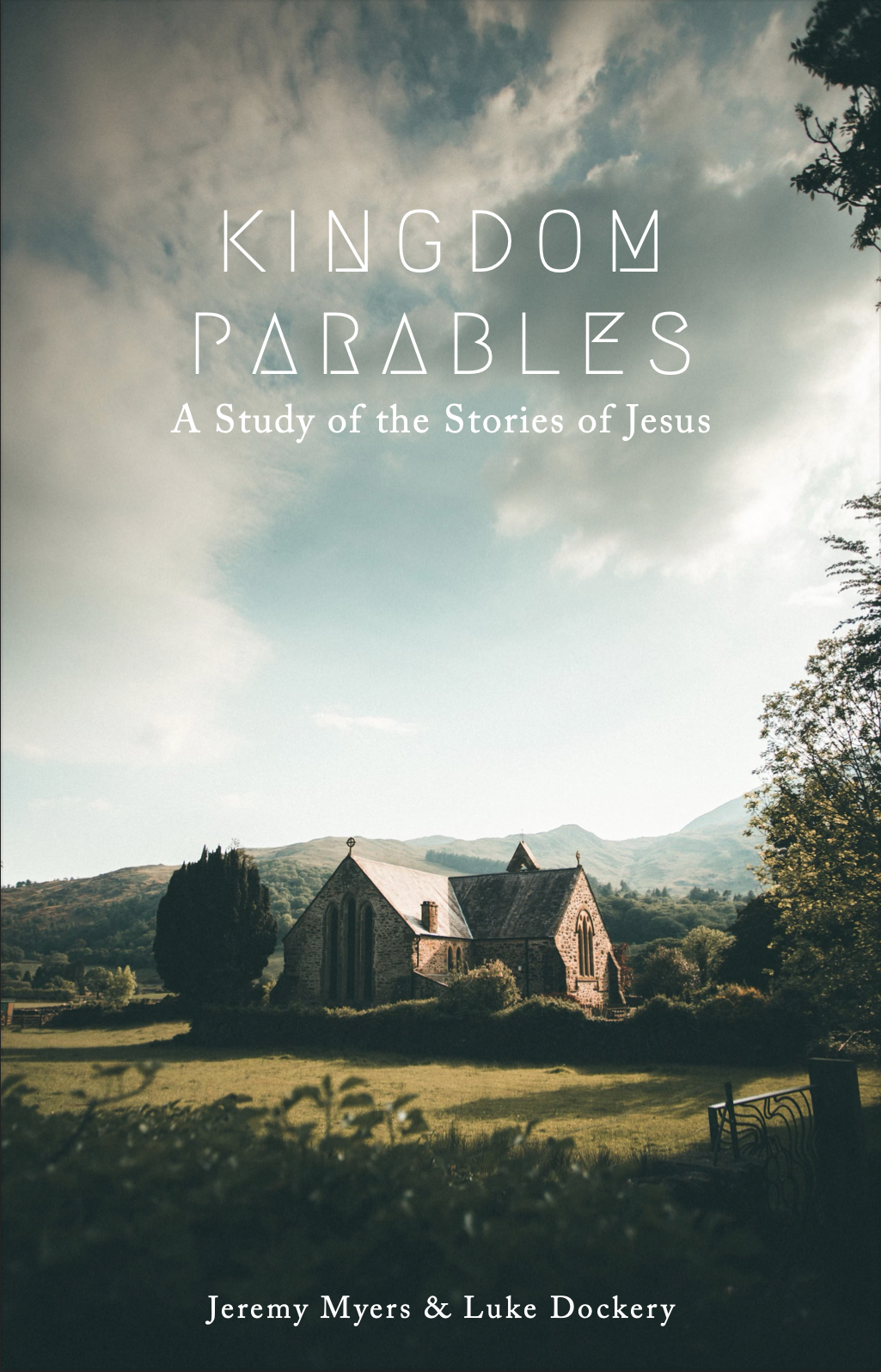
I am excited to announce that I have a new book out—Kingdom Parables: A Study of the Stories of Jesus. This is the latest in the Deeper Youth Ministry Bible Study series, and is available for purchase in paperback on Amazon, or digitally on the Deeper Youth Ministry website.

This was a fun project to work on, partially because the parables of Jesus are incredibly interesting to study, and also because I wrote it with my good friend Jeremy Myers. Jeremy and I have worked together with Deeper Youth Ministry for several years and he now directs the annual Deeper Youth Conference, but this is the first time we wrote a book together. It was truly a collaborative project, and I was proud of the end result.

From the back of the book:

The parables of Jesus are beloved by many, but are not always well understood. It is commonly believed that Jesus taught with simple stories in order to make it easy for His audience to understand, but while the stories do tend to be simple, the parables of Jesus are often anything but easy. In fact, Scripture repeatedly records the confusion of Jesus’s audience when He teaches in parables, and even relates Jesus explaining that He speaks in parables specifically because He knows some of His audience won’t be able to hear and understand them.

Kingdom Parables guides students through a close study of Jesus’s parables, not with an expectation that they will be easy to understand, but that they will offer important teaching about the kingdom of God and how God expects citizens of His kingdom to live.

If you work with or teach teenagers, I hope you will give it a look—there are 18 lessons in total, including introductory and summary lessons.

Purchase the Book

Paperback: Amazon $12.99

Digital: Deeper Youth Ministry $10

2023 Blog Review

I like to end the year by looking back and reviewing my year of blogging here at The Doc File (Here are some previous reviews from 2022, 2021, 2020, 2019, 2018, 2016, 2015, and 2012).

Overview

There were a lot of topics that I intended to write about in 2023, but time got away from me and I wrote less than I hoped. Nevertheless, I wrote 30 posts this past year, which is more than I managed in 2022 (20) or 2021 (28). Baby steps in the right direction still count as progress, I guess.

Top Posts

By traffic totals, here are my most-read posts during 2023:

  1. Jesus, Christmas, and Hanukkah, December 18, 2015
  2. Raising Up Ministers: Six Unhelpful Trends in Churches of Christ, March 2, 2023
  3. A New Heaven & A New Earth Series, April 29, 2020
  4. A New Heaven & A New Earth: What the Bible Teaches about Eternity, April 9, 2020
  5. Youth Ministry & Gen Z,, May 16, 2023
  6. Reading in 2022, January 3, 2023
  7. Church Is Good for Your Kids, August 23, 2023
  8. Reading and Walking in 2022, January 6, 2023
  9. Forty., August 2, 2023
  10. A New Heaven & A New Earth Part 2: Distractions, April 16, 2020

Six of the top posts from 2023 were actually written this year, and it is always good to see new content get some traction:

  • Raising Up Ministers: Six Unhelpful Trends in Churches of Christ reflected on the minister shortage within Churches of Christ. This topic has been written about and discussed a lot (too much?), but one aspect of the conversation that I hadn’t seen emphasized as much was the raising up of young people to go into ministry. I am confident that we are not doing this as well as we once did, and I offered several reasons for why that is.
  • Youth Ministry & Gen Z looked at some research from the Barna Group that describes characteristics of Gen Z students (the generational cohort that is currently present in our youth groups). The basic premise here is that the better we understand these students, the better we can minister to them. Broadly speaking, Gen Z students have several challenging characteristics that clash with Christianity, but they also resonate with Christianity in important ways.
  • I have developed certain traditions of posts that I write each year, and these have developed somewhat of a following over time. Reading in 2022 and Reading and Walking in 2022 were both popular (the 2023 versions are right around the corner!).
  • Church Is Good for Your Kids is a brief post that reflected on research that indicates that, well, church is good for your kids! As one author states, “There is a growing body of evidence that regular religious practice is measurably good for the health, happiness, and pro-social behavior of our kids.”[1]
  • Forty. I had a milestone birthday in 2023, which naturally prompted me to some reflection.

At the same time, part of the reason for preserving over 15 years of posts on this site is for people to be able to go back and read things they missed, and I am always gratified when older posts are read by new people. The series I wrote in 2020 on renewed eschatology continues to get a lot of views, but I was blown away by the response to Jesus, Christmas, and Hanukkah. This is a post I actually wrote about eight years ago, but I shared it again this year and it got a surprising amount of attention.

Blog Series

In 2023, I completed one series and contributed multiple times to another, ongoing one:

The Beatitudes: Kingdom Character: This nine-part series was a close look at the Beatitudes in the Sermon on the Mount, which is Jesus’s description of what it looks like to be a citizen in His kingdom.

Studying the Sermon on the Mount in detail was transformative for me several years ago, and it is always beneficial for me to come back and reflect on Jesus’s teaching here. This series was not very popular and didn’t have a wide readership. This was disappointing to me, but I think is also reflective of the time in which we live: living according to the Sermon on the Mount isn’t very exciting for most people.

Scripture Reflections: I added five more posts to this ongoing series in 2023 (The Poor You Always Have with You, Three Gardens, Known to Them in the Breaking of the Bread, “Your Labor Is Not in Vain”, and “He Remembers that We Are Dust”) bringing the total to 20 posts. I plan to continue adding to this indefinitely.


So, that was The Doc File in 2023! It is my plan to continue writing in this space in 2024 (hopefully more often, but I never know what the new year will bring). It has become a formative spiritual discipline for me to process my thoughts here over the years, and as many readers have told me, it is helpful to you too! I am honored and humbled by those sorts of comments, and am thankful for your readership and support!


[1] Rebecca McLaughlin, 10 Questions Every Teen Should Ask (and Answer) about Christianity (Wheaton, IL: Crossway, 2021), 14.

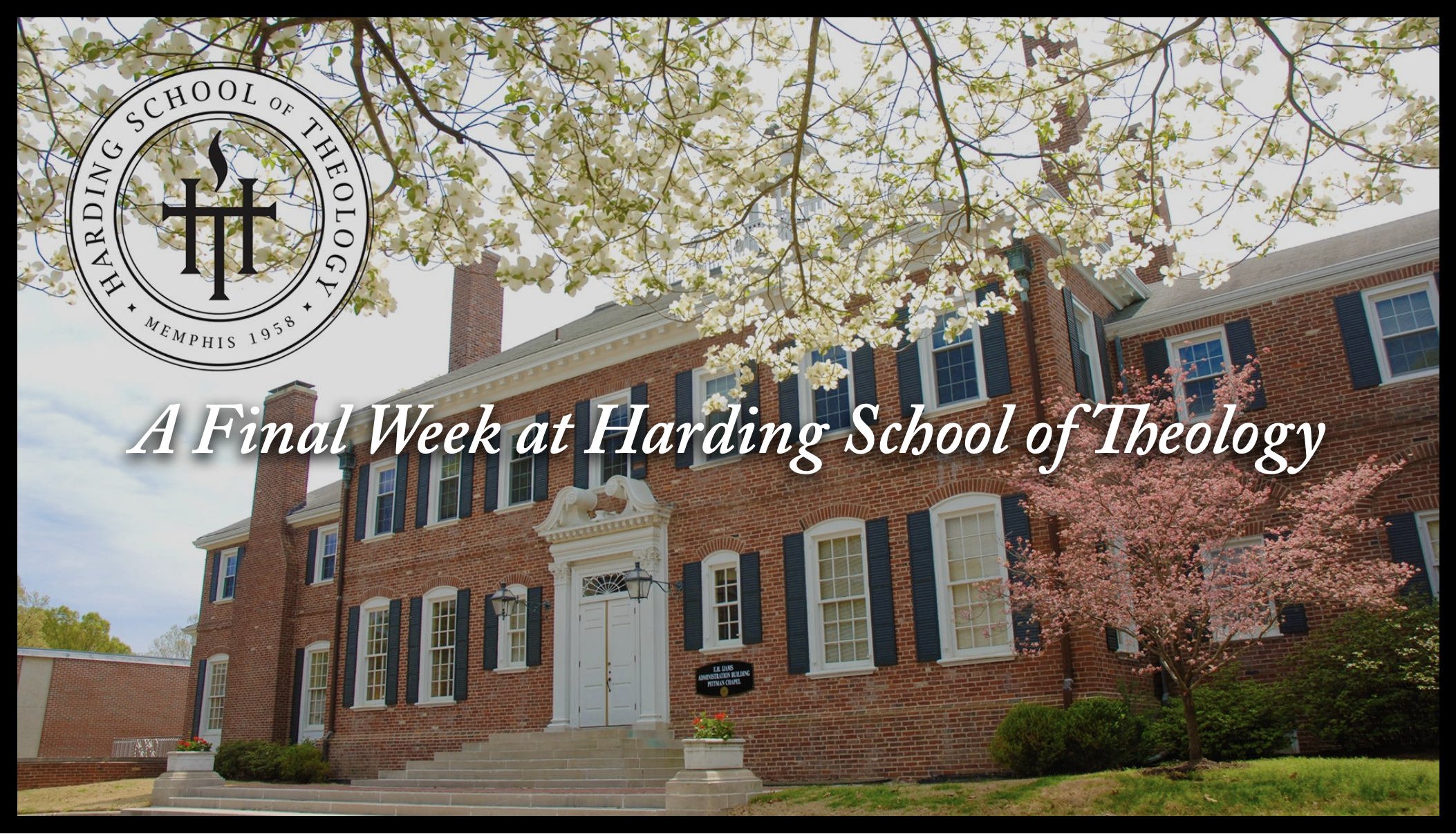
A Final Week at Harding School of Theology

Back in October, I was blessed to be able to spend a week on the campus of Harding School of Theology in Memphis, where I audited a week-long intensive course, “Christian Formation of Children.” This was a great blessing to me for multiple reasons.

First, I was a student there from 2010-2018 (yes, I know it was a long time) before receiving my MDiv, and it was an incredibly formative place for me (more on that below). Second, I got to spend the week with my wife Caroline, who was enrolled in the same class as a credit student. In all my time as a student at HST, I always left my wife at home with the kids while I would go to Memphis for intensive course weeks, and I felt like I finally got to share this part of my life with her. We sat next to each other in class during the day, ate at all my favorite Memphis restaurants, did homework in the library, and walked through the neighborhoods around campus together. Third, it seems quite possible that this will be my last opportunity to spend any significant time on the HST campus in Memphis, with the announcement that HST will be moving to Searcy in Fall 2024. Finally, it was a great class!

Much has been written and said about HST moving from Memphis to Searcy, and I’m not sure I have anything of significance to add to that conversation. I remain personally unconvinced that this move is what is best for the school, but I also acknowledge that I am not an insider in this discussion and that there are many factors and variables of which I am probably unaware. I do know that, in a climate where seminaries associated with Churches of Christ are closing (see Austin Graduate Seminary and Oklahoma Christian Graduate School of Theology), I am grateful that HST is not closing its doors, and I am confident that God will continue to use the school to bless churches and train ministers in its new location.


As I mentioned above, HST was a deeply formative place for me. I went to Harding University for undergrad and had a wonderful experience there. I met Caroline there as many lifelong friends. It was at Harding that I developed my deep love for ultimate frisbee, and also where I began to make my faith my own. I learned a lot of things in various classes, but I would also say that I didn’t make deep connections with faculty members or older mentors (largely my own fault). I entered and graduated HU with very little idea of what I wanted to do in life.

Harding School of Theology was different. I began there later in life (I was 27), and had already been in youth ministry for a few years. Honestly, I began my degree because I was seeking credentials so I could teach at the college level someday. My plan was to get in and get out as soon as possible and move on to the next thing. That is not at all what happened, but I got so much more in the bargain:

  • I have very fond memories of my intensive course weeks in Memphis, which were some of the most challenging weeks of my life, but also some of the best weeks of my life. There I met a new set of lifelong friends, and many of these were friends who were similarly “in the trenches” of ministry and knew about its challenges, but also its value. Somewhere along the way, I largely forgot about the dream of teaching, and developed my love for congregational ministry. More specifically, it was work for classes at HST that led to the youth ministry-related research that would ultimately change my life in profound ways.
  • There, I met a set of mentors who would pour into me both in and out of the classroom. They would push me academically, spiritually, and theologically, but always in ways that were respectful and affirming to my faith. I have written before about the idea of “deconstruction,” which is a very slippery concept, but it would be fair to say that HST significantly contributed to the deconstruction of my faith in the healthiest sense: it became my own, mature faith.
  • When I began at HST, Caroline and I were still relatively newlyweds and weren’t parents yet. Life would get real for us soon after, though. My HST community would mourn a miscarriage with us, celebrate the birth of our first daughter, and then pray faithfully for her and us as we learned that she had a rare genetic condition and began the life-altering journey of being parents to a precious daughter with special needs.

As I was reflecting on my time at Harding School of Theology, I realized that, through all of what I mentioned above, HST gave me the twin gifts of humility and confidence. That may seem like a strange pair, but they actually fit together quite well. Regarding humility, my graduate school training helped me to understand how little I really knew and convinced me of the need to be a lifelong learner. Regarding confidence, my time at HST helped me to develop a really solid foundation of biblical, theological, and ministerial skills. I didn’t know everything, but there were some things I did know, really important things that I could build my life around. And even though I’m never going to master Scripture or ministry, I developed skills to study Scripture well and do ministry faithfully. Humility and confidence are wonderful gifts that I received and which I have tried to use faithfully in service of God’s Kingdom, and I can confidently say that I wouldn’t still be in ministry without my training at HST.

For all these reasons and more, the HST campus in Memphis is hallowed grounds for me. It was a great blessing, albeit a bittersweet one, to spend a week there with my wife whose sacrifices made it possible for me to attend graduate school in the first place, and who has been my partner in ministry and in all things.


The HST Mansion serves as the administration building of the school and is also where chapel is held. I took this photo after one of my early morning walks before class. October was a beautiful time to be in Memphis.

My very favorite person in one of my very favorite places!

“He Remembers that We Are Dust”

Psalm 103 is one of my favorites. It speaks forcefully of God’s mercy and steadfast love:

8 The LORD is merciful and gracious,
slow to anger and abounding in steadfast love.
9 He will not always chide,
nor will he keep his anger forever.
10 He does not deal with us according to our sins,
nor repay us according to our iniquities.
11 For as high as the heavens are above the earth,
so great is his steadfast love toward those who fear him;
12 as far as the east is from the west,
so far does he remove our transgressions from us.
13 As a father shows compassion to his children,
so the LORD shows compassion to those who fear him.
14 For he knows our frame;
he remembers that we are dust.
15 As for man, his days are like grass;
he flourishes like a flower of the field;
16 for the wind passes over it, and it is gone,
and its place knows it no more.
17 But the steadfast love of the LORD is from everlasting to everlasting on those who fear him,
and his righteousness to children’s children,
18 to those who keep his covenant
and remember to do his commandments.
19 The LORD has established his throne in the heavens,
and his kingdom rules over all.
(Psalm 103.8-19)

Fundamental to God’s nature is His mercy and grace. This is stated in Psalm 103.8 and is repeated in some form multiple times throughout the Old Testament (cf. Exodus 34.6; Numbers 14.18; Nehemiah 9.31; Psalm 86.15; Joel 2.13; Jonah 4.2). Because of His nature, God does not deal with us according to our sins, but instead removes them far from us: as far as the East is from the West.

This is beautiful and profound, but there is more. In addition to God’s inherent predisposition toward mercy and forgiveness, the Psalmist also tells us this in v. 14:

14 For he knows our frame;
he remembers that we are dust.

(Psalm 103.14)

God, as our Creator, knows us intimately. He remembers that we are dust.

In one sense, this has a literal meaning. Genesis 2.7 speaks of Yahweh forming “the man of dust from the ground” and breathing into his nostrils the breath of life. Later on, after the humans fail at the Tree of Knowledge of Good and Evil, as part of the curse that God pronounces, He tells Adam, “For you are dust, and to dust you shall return” (Genesis 3.19b).

We are formed of the same stuff as the rest of creation, and when we die, our bodies wither away and eventually decompose into dust.

But there is surely a metaphorical meaning here as well: God remembers our inherent frailty. While humankind is created in God’s image (Genesis 1.26-27) and given the significant vocation of bearing the divine image in creation, we are, ultimately, dusty creatures: we fall short and fail to live up to the potential that God has placed within us.

God knows this well. He knows, better than anyone, that we are “just human”, and it motivates His compassion and mercy toward us.

God knows we are dust. He knows, better than anyone, that we are “just human”, and it motivates His compassion and mercy toward us. Share on X

The reality is that ever since our original Dusty Ancestors, the sons and daughters of men have failed in the vocation that has been given to us, fallen victim to the siren call of sin, and found ourselves in desperate need of God’s compassion and mercy. And this, of course, is why God Himself became dust, and the Son of Man embodied human existence. Finally, there was one who, while still dust, perfectly bore the divine image, lived a sinless life, and effected God’s gracious desire to remove our sins as far as the East is from the West through His crucifixion and victory over death.

I am routinely frustrated that I am dust, both literally and metaphorically. But thanks to these words from Scripture, I can take comfort: God knows this about me better than I know it myself. When I fall short, He understands and personally makes up for my deficit.

God knows that I am dust, and when I fall short, He understands and personally makes up for my deficit. Share on X

In this loose series of Scripture Reflections, I am sharing brief thoughts spurred on by my Bible reading. By way of reminder, my goal for these brief posts is two-fold:

(1) To remark on aspects of the biblical text that I find to be of interest that the reader may or may not have thought about previously.

(2) When possible, to point to the work and person of Jesus Christ. I believe the Bible is a unified story that points to Jesus, which means that He is frequently alluded to or foreshadowed in some way throughout the biblical canon.

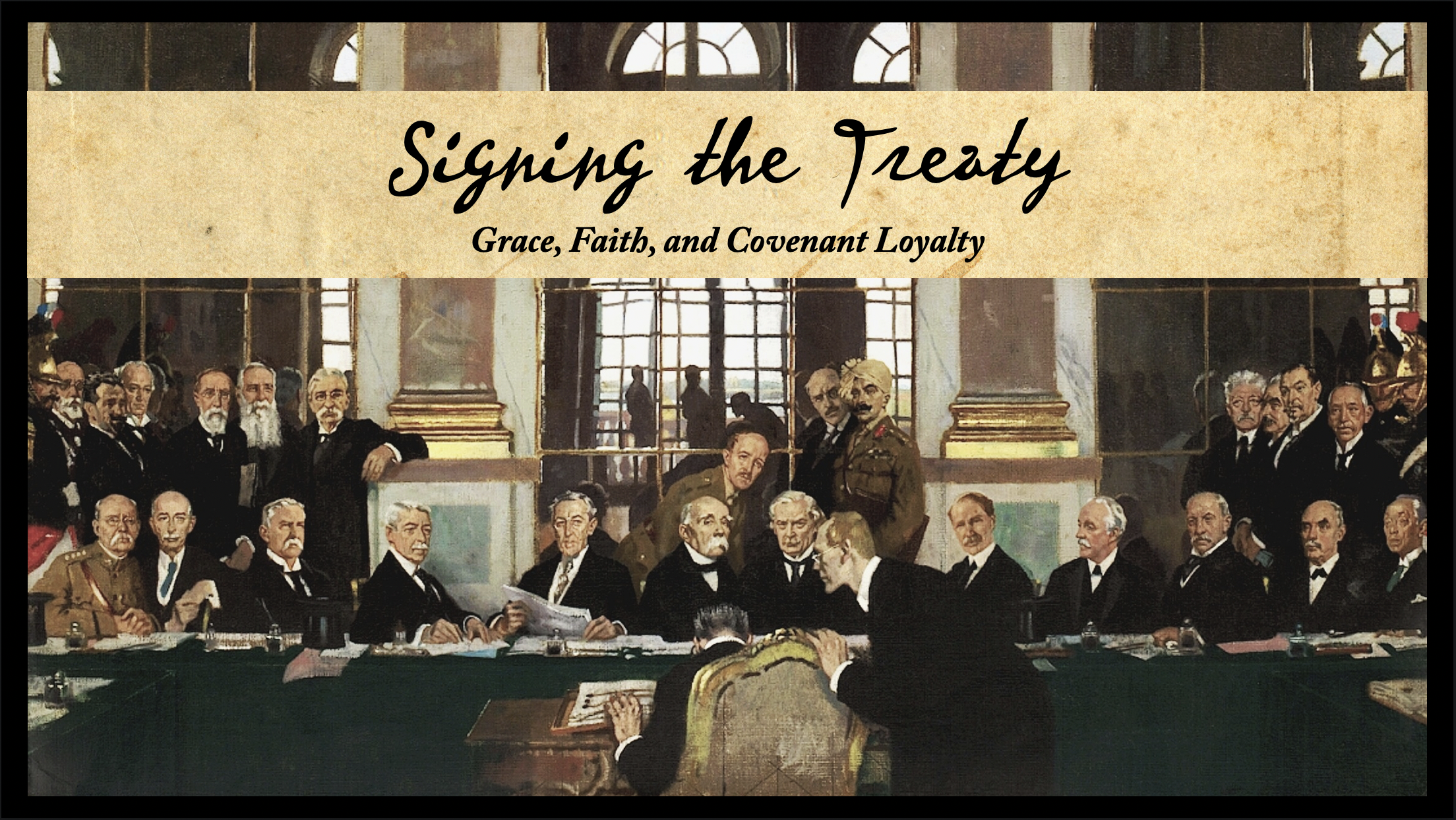
Signing the Treaty: Grace, Faith, and Covenant Loyalty

Introduction

Conflict and disagreement are inevitable consequences of humans being in close contact with one another, and a result of that is that we have developed a variety of ways to “make up” after we have had some sort of quarrel or falling out.

Occasionally, I’ll get into some sort of fight with my seven-year old son. Sometimes, this is because he is in trouble for something; sometimes, it is because he is in trouble but I am also in trouble because I haven’t handled the situation well because I have lost my temper or spoken to him too sharply. And we’ll say sorry, but it’s still a little tense…and then I’ll ask him, “Do you want to go play Legos?” We run upstairs, play Legos together, and make amends in the process.

After European settlers began to spend time with Native Americans, they became aware of the practice of “burying the hatchet,” where warring indigenous groups would literally put away or bury their weapons as an indication of peace. “Bury the hatchet” remains an English idiom that means “to make peace.”[1] We also have the expression “kiss and make up,” which conveys a similar sort of idea. I’ve never actually seen little kids told or forced to kiss each other, but I’ve absolutely seen kids told to hug each other or shake hands after a fight.

In his classic book, Peace Child, missionary Don Richardson shares a make-up custom from remote New Guinea. When neighboring villages were at war, the way to guarantee peace was through the “peace child”. The different villages would swap infants and raise them as their own. As long as these adopted children were taken care of, the peace between the two villages was secure.[2]

All of these different examples of making up after a fight or disagreement are, in a loose sense, a form of peace treaty, or we might even say “covenant.” These two words, broadly defined, are actually synonyms: a treaty or a covenant is an agreement between two parties, where each party commits to certain things. 

I want to look at some different examples of covenants or treaties throughout history, to help us better understand the way that God approaches us relationally, and how He expects us to respond.


Suzerain/Vassal Treaties

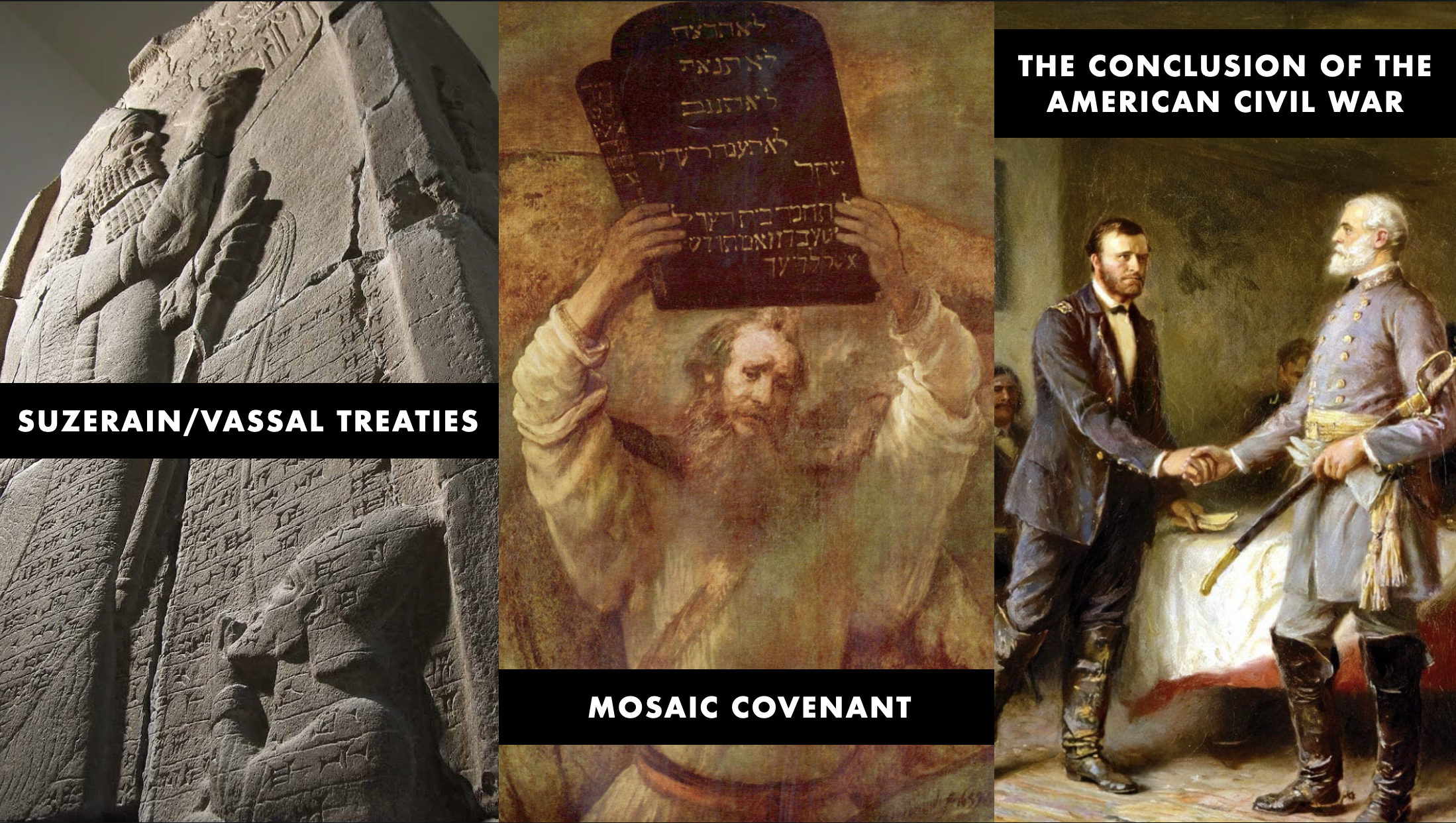
The first type of treaty comes from the Ancient Near East, in the Hittite Empire (modern day Turkey), and is called a Suzerain/Vassal treaty.[3] Basically, this is a treaty or covenant between unequal partners: you have a stronger king or nation (the Suzerain) that would establish a covenant or treaty with a weaker king or nation (the Vassal). 

Each party would have certain requirements they had to keep in order to remain faithful to the treaty:

  • The two parties would keep their own national borders and remain separate nations, but would become military allies. One would come to the aid of the other when needed. Specifically, since the suzerain was more powerful, this provided great security and military protection for the vassal state.
  • In return, the vassal owed the suzerain financial tribute and loyalty—vassals could only have one suzerain (ancient records reveal that the suzerain was often referred to as “lord” or “father”). For a vassal to take another suzerain would be treasonous.
  • Suzerains, on the other hand, would often have treaties with multiple vassals; if one vassal had an issue with another, they would bring it to the suzerain to resolve (This is similar to what happens when a brother and sister are having a fight; they complain to Mom and Dad in hopes of a resolution.).

Mosaic Covenant

Many people have never heard of a Suzerain/Vassal Treaty before, but are likely familiar with one if they have spent much time reading the Hebrew Bible/Old Testament: The Mosaic Covenant or the Law of Moses.

Basically, after Yahweh, the God of Abraham, Isaac, and Jacob calls Moses from the burning bush and rescues the Israelites out of Egypt (10 Plagues, Parting of the Red Sea, etc.), He calls Moses up to Mount Sinai in order to establish a covenant with the Israelites: He will be their God, and they will be His people.

And the way He structures the covenant closely matches as Suzerain/Vassal Treaty. This is not surprising—God comes near to humans in ways that we can understand (indeed, that is what the incarnation of Jesus is about!), and so it makes sense that when God wanted to establish a relationship with the nation of Israel, He does so in a way that they understood: as the much more powerful party (the Suzerain) He makes an agreement with them in a way that would be familiar to them:

  • The covenant begins by introducing Yahweh as the suzerain: “I am Yahweh your God.” He then reminds them of their previous relationship, how He had rescued them from slavery in Egypt.
  • Then, there are the requirements for the covenant—what it means for Yahweh to be their God and for Israel to be His people.
  • There are provisions made for keeping the record of the treaty safe and reading it regularly to remind people of their obligations.
  • Yahweh calls heaven and earth as witnesses to the covenant, and then there is an extensive list of blessings that will come from covenant faithfulness, and curses that will come if the people are unfaithful.

All of these are classic characteristics of suzerain/vassal treaties.

In rescuing Israel from Egypt and “signing a treaty” with them, Yahweh proclaimed Himself as their Lord and Father, and He required their loyalty in return. Yahweh would protect them and give them land, and in return, they were required to be loyal and obedient to Him. This meant that they would worship no other gods, and also that they would act in certain ways to demonstrate their loyalty and obedience to Him (for example, by loving their neighbors and taking care of the poor in their midst).

God offered this covenant out of His grace—He was the powerful party and had no obligation, but chose to offer a treaty. The loyal obedience of the people was required in response to the treaty. 

The Conclusion of the American Civil War

The American Civil War, fought between 1861-1865, was awful. It was a bloody four-year conflict that claimed the lives of over 600,000 Americans, more than any other war. It was a war that divided the United States and pitted former countrymen against one another; states, towns, and even families were sometimes divided. 

Even though it ended over 150 years ago, it is a conflict that left deep wounds and long scars, some of which have still not fully healed. 

Interestingly, at the end of that conflict, there was no peace treaty that was signed, but there was a formal cessation of hostilities when General Robert E. Lee of the Army of Northern Virginia surrendered to General U.S. Grant, the commander of the Union Army at Appomattox, Courthouse on April 9, 1865.

There were still some similarities to treaties we have talked about, however:

  • There was clearly a stronger and a weaker party—at that point, the Union Army was considerably superior to the Confederate Army, which is what led to the surrender in the first place.
  • Also, certain provisions were granted to the surrendering soldiers: they were allowed to return home, to the land that they owned, and even allowed to keep their horses so they could use them to farm.
  • In return, though, the defeated Confederate soldiers had to be loyal to the suzerain nation: they had to vow not to take up arms against the Government of the United States. Later, before former Confederate soldiers were allowed to vote, they had to take oaths of loyalty to the United States.
Have You Signed Your Treaty?

So far, we have focused on trying to get a clear picture of what a treaty or covenant basically is, in order to set up this question: have you signed your treaty?

That may seem like a strange question, but consider:

(1) Scripture teaches—in multiple places—that in our sin, we are enemies of God:

21 Once you were alienated from God and were enemies in your minds because of your evil behavior.

(Colossians 1.21)

8 But God demonstrates his own love for us in this: While we were still sinners, Christ died for us. 9 Since we have now been justified by his blood, how much more shall we be saved from God’s wrath through him! 10 For if, while we were God’s enemies, we were reconciled to him through the death of his Son, how much more, having been reconciled, shall we be saved through his life!

(Romans 5.8-10)

1 What causes fights and quarrels among you? Don’t they come from your desires that battle within you? 2 You desire but do not have, so you kill. You covet but you cannot get what you want, so you quarrel and fight. You do not have because you do not ask God. 3 When you ask, you do not receive, because you ask with wrong motives, that you may spend what you get on your pleasures. 4 You adulterous people, don’t you know that friendship with the world means enmity against God? Therefore, anyone who chooses to be a friend of the world becomes an enemy of God.

(James 4.1-4)

The idea here is that our sin places us in opposition to God. In a sense, if we commit sin, that puts us at war with God. 

(2) But this is not what God wants: He wants peace and reconciliation, and in His grace, He offers us terms of peace…a treaty…a covenant. 

  • As in the suzerain/vassal treaty, our treaty with God is clearly not between two equal parties. God is far, far greater than we are. 
  • As in the suzerain/vassal treaty, God extends terms of peace to others as well: He wants all people to be saved and to be at peace with Him.
  • As in the suzerain/vassal treaty, God is our Lord and Father, but He must be the only one—it would be treasonous to have any other Lord.
  • As in the Mosaic covenant, God offers us peace based on what He has already done for us: while we were still sinners, Jesus died for us. God has already gone to great lengths to make peace possible. 
  • As in the Mosaic covenant, God offers the treaty to us based on His grace, not based on anything we have done. But once we have signed the treaty with Him and entered His covenant, He expects us to be faithful to the covenant.
  • As in the conclusion to the American Civil War, we must surrender; we must lay down our arms and cease being enemies of God. We must pledge our loyalty to Him.

(3) God offers us a covenant, a peace treaty, a way to have our sin removed and to no longer be His enemy, and instead to become His servant—loyal subjects of our Lord and Father, our Suzerain King. 

That covenant or peace treaty is offered in God’s grace and is made possible by the death of Jesus on the cross. And we respond to that offer of covenant, we sign the treaty with faith. Faith is a pretty common word, especially in church, but I have become convinced that the English word faith is not a very helpful word when it comes to translating the Greek word in our Bibles that often gets translated as “faith”. Usually when people hear the word “faith”, they either think of something like blind faith—wildly believing something based on little evidence, or they think of something that is exclusively or primarily going on inside your brain (like, mentally saying “yes” to something). In the Bible, however, the Greek word pistis/πιστις means something else: it’s more like fidelity, or loyalty, or faithfulness, or allegiance.[4]

Think in terms of other covenants we have discussed earlier, and how important loyalty and/or allegiance are—suzerain/vassal treaties, the Mosaic Covenant, the conclusion of the American Civil War—all of these require the act of loyalty. 

So, how do we respond to God’s offer of a peace treaty? With “faith”, where faith means allegiance. And that involves multiple aspects:

  • Certainly, allegiance involves mental assent. We do have to believe and understand some basic things about who God is and what He has done for us through Jesus.
  • Allegiance also involves a public proclamation of loyalty. Christians publicly proclaim our allegiance to Jesus by confessing Him as Lord, and are being baptized as an expression of that allegiance.
  • And allegiance also involves embodied loyalty, which just means that we must live out what we claim to believe. It’s not enough to just agree in your head that Jesus is Lord or to say it publicly; we have to live as loyal citizens of our King. Remember, we cannot have more than one Lord and King—if someone were to look at your life, would they see you as a loyal subject of King Jesus, or would they assume that you were a part of the kingdom of the world?

Conclusion

Here is a reminder of our situation: on our own, we are trapped by our own sin, and we are enemies of God. But that’s not what God wants, and He has gone to extraordinary lengths to make peace with us. Through the death and resurrection of the Son, God stands before us, offering an olive branch, a peace treaty…but it’s up to us to sign it:

  • Do you know and believe the Gospel? Do you believe that Jesus the king preexisted with the Father, took on human flesh, fulfilling God’s promises to David, died for sins in accordance with the Scriptures, was buried, was raised on the third day in accordance with the Scriptures, appeared to many, is seated at the right hand of God as Lord, and will come again to judge?
  • Have you publicly proclaimed your loyalty? Have you confessed Jesus as Lord and been baptized, having your sins washed away, and ending your enemy status?
  • Are you living out your loyalty every day, showing by the things that you do and (and don’t do!) who your Lord is, and where your loyalty lies?

God stands before us with an offer of peace, but we must accept it!


[1] See https://en.wikipedia.org/wiki/Burying_the_hatchet

[2] Don Richardson, Peace Child: An Unbelievable Story of Primitive Jungle Treachery (Glendale, CA: G/L Regal Books, 1974).

[3] See Russ Meek, “The Suzerain Vassal Treaty (Covenant) in the Old Testament”, https://russmeek.com/2020/10/the-suzerain-vassal-treaty-covenant-in-the-old-testament/; Brian Keith Hudson, “The Suzerain/Vassal Covenants”, https://www.ancient-hebrew.org/culture/suzerain-vassal-covenants.htm

[4] For more on “faith” as “allegiance” and the three-part response of mental assent, public proclamation, and embodied loyalty, see Matthew Bates, Salvation By Allegiance Alone: Rethinking Faith, Works, and the Gospel of Jesus the King (Grand Rapids: Baker Academic, 2017).
« Older posts Newer posts »

© 2026 The Doc File

Theme by Anders Noren — Up ↑