
The online journal of Luke Dockery

Category: Bible Study (Page 8 of 40)

Blessed Are Those Who Are Persecuted

As discussed in the introductory post of this series, Jesus’s Beatitudes in the Sermon on the Mount are basically a description of what a good life really looks like from God’s perspective. Jesus redefines what blessedness is, and provides an alternative set of values for His followers, those who desire to be a part of His alternative community. Here are the Beatitudes we have discussed thus far:


Blessed Are Those Who Are Persecuted

“Blessed are those who are persecuted for righteousness’ sake, for theirs is the kingdom of heaven. Blessed are you when others revile you and persecute you and utter all kinds of evil against you falsely on My account. Rejoice and be glad, for your reward is great in heaven, for so they persecuted the prophets who were before you.”

(Matthew 5.10-12)

The last two beatitudes are closely related, so we will discuss them together, and this will conclude our study of the Beatitudes. Both say that God’s favor rests upon those who are persecuted on account of Jesus.

These verses do not indicate that disciples of Jesus are to have a persecution complex, always imagining that people are mistreating us. Neither are we to go looking for persecution by behaving in ways that are over the top or offensive.[1] However, if in the course of living as disciples of Jesus (by exhibiting the characteristics we have been talking about) we are persecuted or mistreated, Jesus says that we are blessed in this.

It might seem strange for us to think that simply by living the way Jesus calls us to, we could face persecution. But it is important to remember that the values of Jesus’s kingdom are completely at odds with the values of the world, and when we seek to live according to kingdom values, it threatens the way the world works. This was true for Jesus, who was ultimately killed by the collaboration of Jewish and Roman leaders who were in power and were threatened by Him, and also for His disciples, many of whom were martyred for their faith.[2]

Honestly, for those of us who are Americans, we don’t have a very good understanding of what it means to be persecuted for our faith because we live in a country that provides us with a great deal of religious freedom—you have likely heard someone pray before, “God, we thank You that we are able to worship without fear of persecution.” However, in the early days of Christianity, Christians were often cast out of society, beaten, imprisoned, and even killed because of their faith, and this is still the reality for many Christians in the world today.

One of the most famous of the early Christian martyrs was Polycarp, who was an elder of the church in Smyrna. Because of his faith, he was taken before the Roman authorities and given the choice to make a sacrifice to Caesar as a god or to die. Polycarp’s response is famous:

“Eighty and six years have I served Christ, and He has done me no wrong. How can I blaspheme my King who saved me?”

Based on his refusal to worship the emperor, Polycarp was brought to be burned at the stake. In his last words, he said,

“O Lord God Almighty, the Father of Thy well-beloved and ever-blessed Son, by whom we have received the knowledge of Thee…I thank Thee that Thou hast graciously thought me worthy of this day and of this hour.”

Polycarp is an example of someone living as a citizen of God’s kingdom.[3]

The Martyrdom of Polycarp

Of course, that is not our experience in the United States, and sometimes, I think we have become too attached to our persecution-free environment. To be clear, I enjoy the religious freedom that I have as a U.S. citizen and am not eager for a day when I am persecuted for my faith, but sometimes I feel that Christians are overly concerned and fearful about the possibility of us losing our religious freedoms and facing persecution. We need to remember that Jesus calls those who suffer for His sake “blessed” because they will be rewarded in eternity, and that eternal reward empowers us to endure suffering in the present.[4]

Sometimes Christians are overly concerned about the possibility of losing religious freedom and facing persecution. We need to remember that Jesus calls those who suffer for His sake “blessed”. Share on X

A Final Word

The characteristics that Jesus describes as blessed in the Beatitudes are shocking to us because these values are so misaligned with the values of our own society. They would have been shocking to Jesus’s original audience as well. Often, people will describe Jesus’s kingdom as being “Upside-Down”, because it is so at odds with the kingdoms of this world. But really, from the proper perspective, it is our world as it is that is truly Upside-Down; Jesus came to set it to rights, to turn what is Upside-Down, Rightside-Up.

When disciples of Jesus are characterized by the values described in the Beatitudes, we join Jesus in setting the world to rights.

When disciples of Jesus are characterized by the values described in the Beatitudes, we join Jesus in setting the world to rights. Share on X
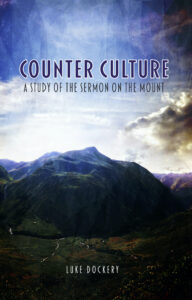
If you enjoyed this post, you might enjoy my book on the Sermon on the Mount, Counter Culture: A Study of the Sermon on the Mount. 

Although this book was written specifically as an aid to teaching the Sermon on the Mount to junior high and high school students, it is also useful for personal Bible study, and the depth of the material makes it a great resource for adult Bible classes.


[1] Albert Barnes, Matthew and Mark, Notes on the New Testament (Grand Rapids, MI: Baker Book House, 1949), 46.

[2] Warren Carter, “Power and Identities: The Contexts of Matthew’s Sermon on the Mount,” in Preaching the Sermon on the Mount: The World It Imagines, ed. David Fleer and Dave Bland (St. Louis: Chalice Press, 2007), 20.

[3] William Barclay, The Gospel of Matthew Volume 1, The Daily Study Bible (Philadelphia, Westminster Press, 1956), 111.

[4] Larry Chouinard, Matthew, The College Press NIV Commentary (Joplin, MO, College Press, 1997), 100.

2023 Harding University Lectureship Recap

Harding University’s 100th annual Bible Lectureship was a couple of weeks ago, at the end of September. I always enjoy going to Lectureship, and have developed the practice of providing a quick recap of Lectureship and the different presentations I got to attend. The theme for this year was Inspired Purpose: Everyone Mature in Christ, and Colossians was the biblical book under study.

I was privileged to attend several good lectures and classes, and here is a brief recap of what I went to, along with some takeaway quotes:

Inspiration of our Purpose (Colossians 1.15-20), Jason Darden: Jason teaches Bible at Harding, and kicked off Lectureship with this Sunday night keynote. He focused on the Christ poem/hymn in Colossians 1 and talked about the “Jesus +” heresy of the Colossians Christians: the idea that Jesus Himself wasn’t enough, and that some additional element(s) was/were needed. Darden’s key takeaways were: (1) Imitate the faith of those you admire, (2) Cultivate your unique gifts through practice, (3) Duplicate your faith in Christ through mentorship.

Neller Preaching Workshop, Kevin Burr and Matt Love: I don’t normally go to the preaching workshop, but this year, the two speakers were two of my friends, so I caught four of the six sessions. Kevin (who has a PhD in New Testament) did a great job basically giving a verbal commentary on the book of Colossians, from which I took a ton of notes. Matt (who is getting his PhD in Preaching) spoke on the craft of preaching, and spoke about the preacher as Bard/Poet, Sage, and Tutor. Kevin and Matt were both excellent.

“We’re losing our churches at the expense of cool sermons.”

A Freed African to Free Africa: Alexander Cross and the Liberian Mission, Shawn Daggett: Shawn teaches missions at Harding, and shared the story of Alexander Cross, the first missionary from Churches of Christ to Africa. He himself was a freed slave, and had his freedom purchased by a southern congregation in order to enable mission work to the African nation of Liberia (Daggett was clear that this wasn’t done from entirely pure motives, but nevertheless: “These were people of the time who were seeking to change the times.”). Cross actually contracted malaria after reaching Africa and died soon after, but that doesn’t change the value of a sacrificial life offered in service to God.

“God counts success by faithfulness; not by numbers.”

Practicality in Youth Ministry, Garison Money and Erin Faurie: Garison and Erin are two of the associate youth ministers at the College Church of Christ here in Searcy. Garison shared some practical tips for youth ministry. I have been a youth minister for a long time, but these were still helpful reminders for me: (1) Get your parents on board, (2) Be involved, (3) Go deeper, (4) Get connected with the church and (5) Have fun. Erin spoke about why we need women involved in youth ministry (whether in official, paid roles or not), and offered three important reasons for this: (1) Women need women, (2) It’s empowering for students to see women in ministry, and (3) It promotes a Titus 2 mentality (where older women are instructed to teach those who are younger). I appreciate both Garison and Erin and enjoy working with them, and found these to be valuable reminders.

J.N. Armstrong: First Take Hold of My Heart, Monte Cox: With this being Harding’s 100th Lectureship, Dr. Monte Cox, the Dean of the College of Bible and Ministry, did a series of lectures on some important figures from Harding’s history. I went to his Monday presentation on J.N. Armstrong, Harding’s first president. Armstrong is a figure for whom I have a great deal of respect, and Monte shared eight striking characteristics about him: (1) He displayed a deep trust in God, (2) He deeply valued God’s grace, (3) He was a man of humble generosity, (4) His commitment to undenominational Christianity, (5)The pursuit of truth that leave room for honest disagreement, (6) The priesthood of all believers, (7) His conviction about kingdom-first priorities, and (8) His focus on the heart. I really enjoyed this presentation, and my admiration for Armstrong only increased!

Inspired by the Cross (Colossians 2.13-15), Steve Cloer: Steve teaches at Harding School of Theology and directs the Doctor of Ministry program there, and is one of my favorite preachers. His Monday night keynote was amazing, and focused on how the Colossian Christians felt weak, fearful, and overwhelmed, which led them to look for something in addition to Jesus to deal with their circumstances. Steve did a particularly good job of explaining the ideas of the “certificate of debt” and “triumphed in power” in Colossians 2 and expertly applied the Colossian situation to our context.

“Sin is not just a verb we need forgiveness for; it is a dominion we need freedom from.”

“Christ is everything and He can handle whatever makes us week, what we are fearful about, and whatever overwhelms us.”

Captive through Philosophy and Empty Deception—Spiritual Not Religious (Colossians 2.8), Steve Cloer: In this class, Steve addressed the mysterious “Colossian Heresy”, and applied that to the current context and the growing number of people who are interested in spirituality, but who want to do so outside of the institution of the church. He shared helpful (and hopeful!) data that breaks down the not religious crowd into four groups: (1) “I love Jesus, but not the church” people, (2) “Nothing in particulars”, (3) Atheists, and (4) Agnostics. What’s interesting is that atheists and agnostics, while very resistant to evangelism/faith, also only comprise 12% of the population, and that percentage isn’t growing. In an increasingly post-Christian society, it is the first two groups that are growing, and these folks are much more open to conversations about Jesus.

Why Disciple-Making Matters, Why Disciple-Making Now?, Eight Principles That Are Working There…and Will Work Here As Well, Paul Huyghbaert: This was a three-part disciple-making seminar that was excellent. I learned a lot and took a ton of notes. Huyghbaert presented a convicting and devastating critique of the current state of the American church, which is almost exclusively attractional, and is, overall, not growing either in terms of numbers or maturity. He then shared common characteristics of disciple-making movements, which are currently happening only in the Global South. These presentations left me with much to consider.

“The model embraced by the majority of North American churches produces shallow, surface-level believers.”

“The North American church spends, on average, $1.5 million per baptism.”

“What you celebrate is what is replicated.”

Multicultural Ministry—No Distinction between Greek and Jew (Colossians 3.11), Bob Turner and Juan Meza: Bob and Juan work at the Church of Christ at White Station in Memphis, which is making very intentional efforts to be a multicultural church. I didn’t take a lot of notes in this session because they largely shared stories, but it was encouraging to hear about their efforts to very seriously follow the “Gospel-centered mandate to be a multicultural church.”

Unmistakable Marks of Christlike Maturity (Colossians 4.2-6), Brian Mashburn: Mashburn wrapped up the lectureship with this Wednesday night keynote, providing somewhat of a summary of the whole lectureship and book of Colossians, and talking about what Christian maturity looks like. He also offered a pointed critique of some expressions of the Restoration plea, emphasizing that the goal is not to look like some mythically perfect first-century church, but to look like Jesus. Although I thought this was presented in somewhat of a strawman fashion, this is still a good reminder.


In addition to attending all of the lectures described above, I also had the opportunity to speak at the Harding School of Theology Luncheon on Wednesday. It was an honor to get to speak to such a large audience filled with so many of my mentors, former professors, fellow colleagues, and good friends. It was also a poignant event, as the gathering came on the heels of the announcement that HST will be moving from Memphis to Harding’s main campus in Searcy next fall.

I was blessed to attend Lectureship this year, to see so many old friends, and to sit at the feet of so many great teachers (indeed, I have been blessed again going over my notes and typing up these short summaries). I would highly recommend taking part in this next year if you are able!

The Beatitudes: Blessed Are the Peacemakers

As discussed in the introductory post of this series, Jesus’s Beatitudes in the Sermon on the Mount are basically a description of what a good life really looks like from God’s perspective. Jesus redefines what blessedness is, and provides an alternative set of values for His followers, those who desire to be a part of His alternative community. Here are the Beatitudes we have discussed thus far:


Blessed Are the Peacemakers

“Blessed are the peacemakers, for they shall be called sons of God.”

(Matthew 5.9)

Jesus says that God’s favor rests upon those who make peace.

God cares deeply about peace.

“Peace” is something that is talked about a lot, but it is important for us to realize that this word is used to convey different ideas at times, and we need to make sure that we have a clear picture of what Jesus is talking about in this context.

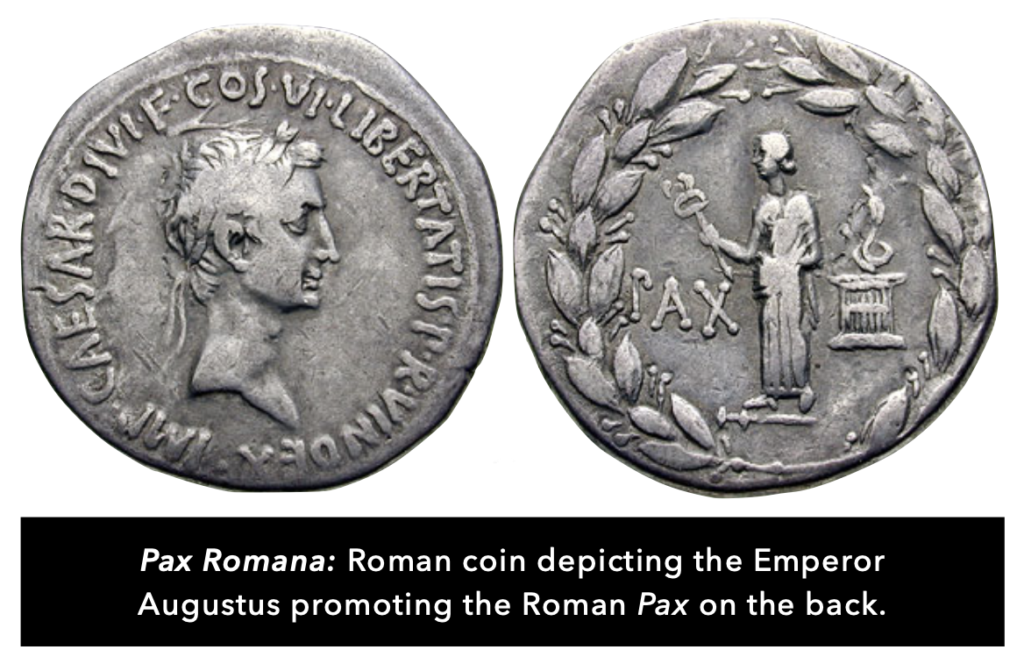
During the time that Jesus lived, peace was greatly emphasized, because the Roman Empire was enjoying the Pax Romana, or “Roman Peace.” The Pax Romana lasted for several decades and was a time of stability and prosperity in the Empire in which there was relative peace and no major wars. This peace came at a high price, however, as it was made possible only through brutal military conquest, the forced subjugation of conquered peoples, and the confiscation of their land.[1]

Of course, this is not the kind of peace that Jesus is talking about. Jesus does not call for His followers to make peace through military might. Furthermore, in the Bible, “peace” is not simply the absence of war; peace suggests wholeness and well-being, and healthy and just relationships with one another.[2] Related to that, biblical peace—wholeness, justice, healthy relationships—does not come from pretending problems don’t exist. Jesus is the Prince of Peace, and He came to make reconciliation with God possible, but He didn’t gloss over the reality of sin; He confronted people with it, and was killed as a result.

Peace-making is not pretending that problems don’t exist. Share on X

A good modern-day example is Rosa Parks, who in 1955 refused to give up her bus seat to a white passenger. That act had far-reaching consequences (Parks was arrested, and it was a key early event in the American Civil Rights Movement), and some people called her a troublemaker because she didn’t just do what she was told to “keep the peace.” But peace doesn’t come from pretending that there is no problem. As long as African-Americans were forced to sit at the back of busses or give up their seats to white people, true peace was not possible. Refusing to give up a seat on the bus was actually a part of peacemaking because it was an effort to bring about wholeness and justice in society.

Jesus wants His followers to be people who actively work to make peace in their relationships and in their communities. Of course, we should try to get along with others and we should not go around trying to stir up strife for the fun of it, but we do need to be people who work to bring about real reconciliation in situations where people are at disharmony with one another.[3]

Jesus wants His followers to be people who actively work to make peace in their relationships and in their communities. Share on X

Peacemakers are called children of God because they are like God. After all, God’s supreme mission is to bring about reconciliation in the world. As William Barclay says, “The man who divides men is doing the devil’s work; the man who unites men is doing God’s work.”[4]


If you enjoyed this post, you might enjoy my book on the Sermon on the Mount, Counter Culture: A Study of the Sermon on the Mount. 

Although this book was written specifically as an aid to teaching the Sermon on the Mount to junior high and high school students, it is also useful for personal Bible study, and the depth of the material makes it a great resource for adult Bible classes.


[1] Warren Carter, “Power and Identities: The Contexts of Matthew’s Sermon on the Mount,” in Preaching the Sermon on the Mount: The World It Imagines, ed. David Fleer and Dave Bland (St. Louis: Chalice Press, 2007), 21.

[2] William Barclay, The Gospel of Matthew Volume 1, The Daily Study Bible (Philadelphia, Westminster Press, 1956), 103: “In the Bible peace means not only freedom from all trouble; it means enjoyment of all good.”

[3] Albert Barnes, Matthew and Mark, Notes on the New Testament (Grand Rapids, MI: Baker Book House, 1949), 45.

[4] Barclay, 105.

The Beatitudes: Blessed Are the Pure in Heart

As discussed in the introductory post of this series, Jesus’s Beatitudes in the Sermon on the Mount are basically a description of what a good life really looks like from God’s perspective. Jesus redefines what blessedness is, and provides an alternative set of values for His followers, those who desire to be a part of His alternative community. Here are the Beatitudes we have discussed thus far:


Blessed Are the Pure in Heart

“Blessed are the pure in heart, for they shall see God.”

(Matthew 5.8)

In the sixth Beatitude, Jesus addresses those who are “pure in heart.” Often when we see terms like this in Scripture, we assume it is talking about something like moral perfection. This phrase does not suggest someone who is sinless, but rather, refers to those who act with loyalty, integrity, and from pure motives.[1] Psalm 24 talks about the man with a pure heart being someone who does not devote himself to what is false and does not swear deceitfully. A person who is pure in heart is someone whose entire life, “public and private, is transparent before God and men. Their very heart—including their thoughts and motives—is pure, unmixed with anything devious.”[2]

Being “pure in heart” doesn’t refer to moral perfection, but to those who act with loyalty, integrity, and from pure motives. Share on X

Have you ever known someone who was supposedly your friend, but you weren’t sure that you could really trust them? Or maybe someone who did something nice for you, but you weren’t sure that you could trust their motives because perhaps they were doing it in order to get something in return? This is the opposite of being “pure in heart.” The reality is that being pure in heart is not a common trait in today’s world; there are not that many people that we would describe without hesitation as having loyalty, integrity, and pure motives.

To help us get a better picture of what it looks like to be pure in heart, it might help to think of children with special needs.[3] My daughter Kinsley has a genetic condition that causes her to have a lot of disabilities, and it can be easy to focus on the negatives of her condition. At the same time, she is also “disabled” from being deceitful, dishonest, or acting from impure motives: if she is happy, or if she loves you, she’ll show you that. If she’s upset about something, she’ll let you know. She won’t secretly or deviously do anything, because that’s simply not in her nature. The label “disabled” gets applied to her frequently, but when it comes to being pure in heart, she is much more able than her father is! This is not to suggest, of course, that only people with disabilities can be pure in heart, but rather that children with special needs help us to see the purity and single-mindedness that Jesus talks about.

From experience, we know that when we act in a double-minded way, are manipulative, or behave deceitfully, misery tends to follow. On the other hand, those who are pure in heart are blessed, and Jesus says that such people will see God. This is not meant to imply some sort of visionary experience, but rather, is another way of stating that the kingdom of heaven belongs to people such as this.[4]


If you enjoyed this post, you might enjoy my book on the Sermon on the Mount, Counter Culture: A Study of the Sermon on the Mount. 

Although this book was written specifically as an aid to teaching the Sermon on the Mount to junior high and high school students, it is also useful for personal Bible study, and the depth of the material makes it a great resource for adult Bible classes.


[1] Larry Chouinard, Matthew, The College Press NIV Commentary (Joplin, MO, College Press, 1997), 99. See also Jack P. Lewis, The Gospel According to Matthew, Part I, The Living Word Commentary (Austin, TX: Sweet Publishing, 1976), 82; Herschel H. Hobbs, An Exposition of the Gospel of Matthew (Grand Rapids, Baker Book House, 1965), 61.

[2] John R.W. Stott, Christian Counter-Culture: The Message of the Sermon on the Mount (Downers Grove, IL, InterVarsity Press, 1978), 49.

[3] Chris Seidman and Joshua Graves, Heaven on Earth: Realizing the Good Life Now (Nashville, TN, Abingdon Press, 2012), 81-85.

[4] Francis Wright Beare, The Gospel According to Matthew: A Commentary (Oxford: Basil Blackwell, 1981), 133.

The Doc File Updates

I haven’t been able to write as much in this space over the last few weeks as I’d like to (summer youth ministry grind), but I have been working to update content here on The Doc File in other, less obvious, ways:

  • There is now a Books page in the navigation bar at the top of the site, where you easily read short descriptions of the books I have written in one place, along with links to purchase them.
  • If you are a podcast person, there is also an Interviews page where you can listen to some guest appearances I have made on several podcasts, talking about biblical interpretation, youth ministry, and other projects.
  • I’ve also updated the Free Resources page with several Lord’s Supper meditations that can be used for leading the congregation in preparation for taking communion, or for private reflection. I hope to add more of these as time goes on.

As always, thanks for your reading and support!

« Older posts Newer posts »

© 2026 The Doc File

Theme by Anders Noren — Up ↑