
As discussed in the introductory post of this series, Jesus’s Beatitudes in the Sermon on the Mount are basically a description of what a good life really looks like from God’s perspective. Jesus redefines what blessedness is, and provides an alternative set of values for His followers, those who desire to be a part of His alternative community. Here are the Beatitudes we have discussed thus far:
- Blessed Are the Poor in Spirit
- Blessed Are Those Who Mourn
- Blessed Are the Meek
- Blessed Are Those Who Hunger and Thirst for Righteousness
- Blessed Are the Merciful
Blessed Are the Pure in Heart
“Blessed are the pure in heart, for they shall see God.”
(Matthew 5.8)
In the sixth Beatitude, Jesus addresses those who are “pure in heart.” Often when we see terms like this in Scripture, we assume it is talking about something like moral perfection. This phrase does not suggest someone who is sinless, but rather, refers to those who act with loyalty, integrity, and from pure motives.[1] Psalm 24 talks about the man with a pure heart being someone who does not devote himself to what is false and does not swear deceitfully. A person who is pure in heart is someone whose entire life, “public and private, is transparent before God and men. Their very heart—including their thoughts and motives—is pure, unmixed with anything devious.”[2]
Being “pure in heart” doesn’t refer to moral perfection, but to those who act with loyalty, integrity, and from pure motives. Share on XHave you ever known someone who was supposedly your friend, but you weren’t sure that you could really trust them? Or maybe someone who did something nice for you, but you weren’t sure that you could trust their motives because perhaps they were doing it in order to get something in return? This is the opposite of being “pure in heart.” The reality is that being pure in heart is not a common trait in today’s world; there are not that many people that we would describe without hesitation as having loyalty, integrity, and pure motives.
To help us get a better picture of what it looks like to be pure in heart, it might help to think of children with special needs.[3] My daughter Kinsley has a genetic condition that causes her to have a lot of disabilities, and it can be easy to focus on the negatives of her condition. At the same time, she is also “disabled” from being deceitful, dishonest, or acting from impure motives: if she is happy, or if she loves you, she’ll show you that. If she’s upset about something, she’ll let you know. She won’t secretly or deviously do anything, because that’s simply not in her nature. The label “disabled” gets applied to her frequently, but when it comes to being pure in heart, she is much more able than her father is! This is not to suggest, of course, that only people with disabilities can be pure in heart, but rather that children with special needs help us to see the purity and single-mindedness that Jesus talks about.
From experience, we know that when we act in a double-minded way, are manipulative, or behave deceitfully, misery tends to follow. On the other hand, those who are pure in heart are blessed, and Jesus says that such people will see God. This is not meant to imply some sort of visionary experience, but rather, is another way of stating that the kingdom of heaven belongs to people such as this.[4]
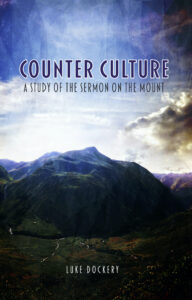 If you enjoyed this post, you might enjoy my book on the Sermon on the Mount, Counter Culture: A Study of the Sermon on the Mount.
Although this book was written specifically as an aid to teaching the Sermon on the Mount to junior high and high school students, it is also useful for personal Bible study, and the depth of the material makes it a great resource for adult Bible classes.
[1] Larry Chouinard, Matthew, The College Press NIV Commentary (Joplin, MO, College Press, 1997), 99. See also Jack P. Lewis, The Gospel According to Matthew, Part I, The Living Word Commentary (Austin, TX: Sweet Publishing, 1976), 82; Herschel H. Hobbs, An Exposition of the Gospel of Matthew (Grand Rapids, Baker Book House, 1965), 61.
[2] John R.W. Stott, Christian Counter-Culture: The Message of the Sermon on the Mount (Downers Grove, IL, InterVarsity Press, 1978), 49.
[3] Chris Seidman and Joshua Graves, Heaven on Earth: Realizing the Good Life Now (Nashville, TN, Abingdon Press, 2012), 81-85.
[4] Francis Wright Beare, The Gospel According to Matthew: A Commentary (Oxford: Basil Blackwell, 1981), 133.

 In this loose series of







