The online journal of Luke Dockery

Category: Youth Ministry (Page 8 of 24)

Reimagining the Birth of Jesus

The birth of Jesus is one of those Bible stories that has been told and retold so often and in so many forms that I think we often fail to pay close attention to what the Bible actually teaches. Indeed, there are actually two accounts of the birth of Jesus (one in Matthew and the other in Luke), and while the two can be combined to give us a fuller picture of what occurred, they also have their own unique points of emphases. For example, the Gospel of Luke emphasizes the different ways that Zechariah and Mary responded when Gabriel appeared to them to inform them about the miraculous births they would soon experience.

Although it is a good thing that this story has seeped into our collective consciousness, there are certainly downsides to letting our understanding of biblical reality be informed primarily by children’s pageants, nativity scenes, and sentimental Christmas cards: we can miss what the Bible actually teaches, along with some of the full implications of those teachings.

That’s one of the things I love about this illustration by Everett Patterson. It is a creative reimagining of the nativity story, recast in modern times, and I think it is both beautiful and brilliant.

Image Credit: Everett Patterson

I used this image in a recent Bible class, having my students first read the birth narratives in Matthew and Luke, and then view the image and seek to interpret it in light of what they had read, and highlight all of the biblical allusions that they observed.

For me, this biggest takeaway is this: with 2,000 years of hindsight, I think it is so easy for us to think of the pregnant Mary and her betrothed  Joseph, seeking a place for Jesus to be born and to think to ourselves, “I would totally let them come into my house so the Savior could be born in comfort.” But what about this: young, poor, brown-skinned people from out of town, unmarried, with the teenage girl very obviously pregnant? If you were to pull up to the convenience store in this image, how likely would you be to invite these folks into your home?

Suddenly, this becomes an uncomfortable story rather than a sentimental one: we are made aware of the messiness of the birth of the Messiah as it is re-contextualized with modern, complicated notions of poverty, immigration, and teenage pregnancy. And I love that, because it is much more faithful to the biblical reality: the birth of Jesus was messy, in all sorts of ways. It’s really not the source material for children’s pageants.

How many biblical allusions or hidden signs can you find in the picture above? Here is a list that we came up with in class (you may want to stop and look first before reading the “spoilers” below):

  • Dave’s City = Bethlehem, the City of David
  • No Vacancy = No room at the Inn (although the “Inn” was likely a guest room)
  • New Man ger = manger
  • Weisman Cigarettes = the magi
  • Good News candy bar = gospel
  • Starr Beer = the star that guided the shepherds and magi
  • Dove = the Holy Spirit at Jesus’ baptism
  • Joseph and Mary both have “halos” around their heads
  • Joseph calls around looking for a place to stay
  • Elect Herod Antipas = a reference to the evil ruler who will seek Baby Jesus’s life
  • Jose = Joseph’s name
  • Mary on the horse = the journey from Nazareth to Bethlehem
  • Nazareth high school = Mary is young and from out of town
  • Word and Flesh graffiti = the Word became flesh and dwelt among us (John 1.14)
  • Zeke 34.15-16 = Ezekiel 34.15-16, which talks about God shepherding His people
  • Shepherd Watches = the shepherds watching their flocks
  • Glad Tide = Gabriel to Mary, “I bring you glad tidings of great joy”
  • The plant = Isaiah 53.1-2, which speaks of the Messiah as a growing tender shoot
  • Save M = the partially obscured sign behind Mary’s head suggests “Ave Maria”
  • Gloria on the telephone box pole

There are a few we may have missed or that I am unsure about (Out of Order on the horse? Fre HBO?), but the list above shows how thoughtful this piece of artwork is. I am thankful for it, and the way it encourages us to think again about the rough edges of the birth of Jesus of Nazareth and gives a fresh perspective on the young parents who accepted a challenging calling from the Father and proved faithful in stewarding His Son.

A Quick Trip to Big Sky Country

A couple of weeks ago, I had the privilege of traveling to Montana to speak about Youth In Family Ministry at the Great Falls Church of Christ. The Great Falls church is a wonderful group of people, and Caroline and I enjoyed our time with them greatly.

I had never been to Montana before, and the day before the seminar began, my friend and gracious host, Scott Laird, drove us 2.5 hours to visit Glacier National Park, which was simply a wondrous experience.


This was just along the side of the road on the way to Glacier. Big Sky country was breathtaking.

Where I come from, having cows get out is an alarming occurrence, but they roam freely in parts of Montana. These three forced us to stop, and allowed for a great picture.

Beautiful views like this were commonplace in Glacier National Park. It was quite overwhelming.

In driving through the park, we actually found ourselves on both sides of the Rocky Mountains. On the Eastern side, most of the leaves had fallen, but on the Western side, we enjoyed beautiful fall colors.

I was struck by the beauty of the red rocks in this stream.

It was a chilly morning; you can see the icicles set against the stark peak in the background.

The hike up to Hidden Lake was worth it for this incredible view.

The drive through the park featured beautiful shaded roads with great views.

I loved this beautiful reflective pool with the landscape behind it.

We walked through an ancient cedar-hemlock forest, which contained some of the tallest trees I have ever seen.

Great Falls was “discovered” by the Lewis and Clark expedition, and is so named because of the series of waterfalls located nearby. This is Rainbow Falls, which is named for obvious reasons.

This beautiful green pool is actually Giant Springs, located just outside of Great Falls. It produces 156 million gallons of water per day; the disturbances in the water represent places where the water is bubbling up out of the ground.

Getting to see bighorn sheep was super cool. They were clearly used to humans, and we were able to get pretty close.

This bridge, in addition to being picturesque on its own, was also featured in The Untouchables.


We were awed, repeatedly, by the wonder of God’s creation, and am so glad that I was able to make this trip. We were also very fortunate to make the trip when we did, as the very next day after we drove through the park, parts of the drive were closed for the season due to ice on the roads.

If you ever have the opportunity to visit Montana or Glacier National Park specifically, I highly recommend it!

2021 Harding University Lectureship Recap

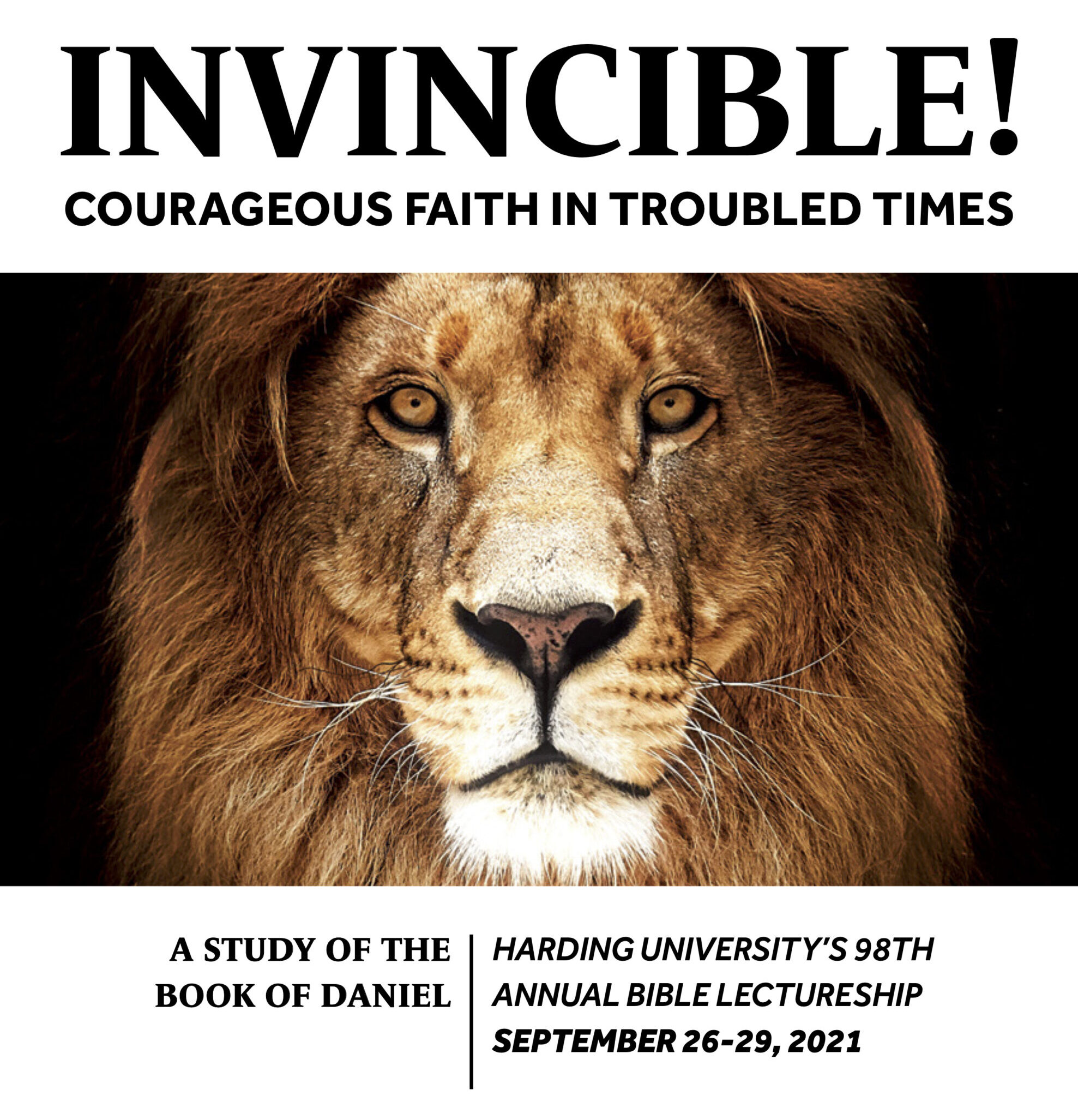
Harding University’s 98th annual Bible Lectureship was a couple of weeks ago, at the end of September. I always enjoy going to Lectureship and was bummed when it had to be canceled in 2020 due to COVID-19*. I have also developed the practice of providing a quick recap of Lectureship and the different presentations I got to attend. The theme for this year was Invincible! Courageous Faith in Troubled Times, with Daniel being the theme book.

I was privileged to attend several good lectures and classes, and here is a brief recap of what I went to, along with some takeaway quotes:

Invincible: God’s Eternal Kingdom, David Shannon: David is the President of Freed-Hardeman University, and kicked off Lectureship with this keynote on Sunday night. His emphasis was on Daniel 7, the depravity of earthly kingdoms, and the superiority of the kingdom of the Son of Man.

“The only way to overcome Satan is to belong to a kingdom with power greater than his.”

In Your Dreams, Nebuchadnezzar: There Is A God in Heaven!, Sammie Berry: Sammie is a long-time preacher at Dallas West Church of Christ, and focused on Daniel 2 and the interpretation of Nebuchadnezzar’s dream. Daniel and his friends had received the very best Babylonian training, but that had proven insufficient to decipher Nebuchadnezzar’s dream. Instead, Daniel went to his friends and asked them to pray that the God of Heaven would reveal the interpretation.

“God is in control and His children can thrive in a toxic culture.”

T.B. Larimore and Christian Identity: Respecting Conscience, United By Love, Nathan Guy: Nathan is an alumnus and the current headmaster of Mars Hill Bible School, which has historical ties to Larimore, the popular and influential second-generation Restoration Movement teacher and preacher. Larimore was known for his devotion to peace and unity, and Guy described him as a man of the Book, a man of peace, and a man who left minor matters alone.

“No word of bitterness shall ever fall from my lips, even in self-defense. I shall certainly never retaliate.”

(Larimore)

A Supernatural Cast of Characters, Dan Oden: Dr. Oden teaches Old Testament at Harding, and was one of my professors at Harding School of Theology. His lecture focused on some of the supernatural figures in the book of Daniel and tracked points of comparison with Divine Council motifs from the Ancient Near East. I thought he did an excellent job in making a challenging and scholarly topic accessible and compelling for his audience.

“When we put our faith in God, the Cloud-Rider, we become Sons of God.”

In the University of Babylon: Daring to Be Different, David Hunzicker: David serves as one of the ministers at the North Boulevard Church of Christ in Murfreesboro, TN. I had never heard him before, but his was perhaps my favorite of all the lectures I heard. He focused on the clash between the kingdom of Babylon and the kingdom of God, and for those of us who belong to the latter, offered the following encouragements: (1) If you have been stunned silent by Babylon, speak up; (2) If you have developed bitterness toward Babylon, look up; (3) If you have compromised to Babylon, stand up.

 “Seize every opportunity to show where your true loyalty lies.”

History in His Story: Biography and Archaeology of the Life of Jesus, Kevin Burr: This lecture was technically off-schedule, but was another of my favorite presentations. Kevin is the Minister of Discipleship at the Kings Crossing Church of Christ in Corpus Christi and also received his Ph.D. from Asbury Seminary where he wrote a dissertation combining the fields of historiography and Jesus studies. This presentation reflected on the gospels as Greco-Roman biographies and applied some of the historian’s tools of the trade to the New Testament.

“If an author is generally reliable in areas we can check them, it is reasonable to infer they are generally reliable where we can’t.”

In the Fiery Furnace: Demonstrating Courage Under Fire, Phil Brookman: Phil preaches for the Memorial Road Church of Christ in OKC, and I always enjoy hearing him. He focused on the story of Shadrach, Meshach, and Abednego, and the idea of resistance: this is not a story of how to avoid death, but how to live life: when we practice resistance, we are fully alive.

“For Christians, resistance is vital; without it, we become weak and ineffective.”

Courageous Faith in the Face of Persecution (Parts 1-2), Mani Pagidipalli: Mani was a classmate of mine at HST, and is a remarkable individual, who serves as both a medical surgeon and preacher. He gave a moving presentation of the persecution of Christians in India.

“If you feel like you are living under Nebuchadnezzar, be like Daniel. No whining, no complaining, no “woe is me”, no “it’s not fair”. Just a willingness to be God’s servant wherever and whenever to whomever.”

Pledging Allegiance: Unpacking Images of Authority in the Books of Daniel and Revelation, Part 1, Alan Howell and Garrett Best: Alan is the Missionary in Residence at Harding, and Garrett preaches for the Oliver Creek Church of Christ in the Memphis area and just recently wrote his dissertation on the book of Revelation. This was a really neat presentation that combined biblical studies with missiology. The basic thesis was that proper interpretation of symbols of authority is important for navigating both our cultural settings and the contours of Scripture. Garrett examined symbols of power in the book of Revelation, and Alan talked about symbols of power in Mozambique and interpreting Revelation for that context.

“Revelation takes imperial propaganda, subverts it, and reorients it to Jesus.”

Arkansas College: “A Sacrifice to the Fierce Spirit of War and Destruction”, Allen Diles: Allen teaches church history at Harding, and did a really fine job with this presentation. I have done research on Robert Graham and the creation of Arkansas College, so this was of special interest to me. Diles provided a helpful review of things I had studied a few years ago, but also taught me a good bit of new information about the college (my focus was more on Graham than the school itself). Ultimately, the story of Arkansas College is a tale of tragedy, as a really promising and prestigious school was destroyed in the flames of the Civil War.

“Winds of secession began to swirl, and Arkansas College was not exempt from the storm.”

The Handwriting on the Wall: God is Not Mocked!, Jason Darden: Jason teaches Bible at Harding, preaches at the West Pleasure Church of Christ, and is someone I always enjoy hearing. He focused on the story of Belshazzar, who mocks God by using sacred vessels taken from the Jerusalem temple by Nebuchadnezzar (likely his grandfather) for a wild party. But God is not mocked, and will not have His vessels misused.

“Belshazzar had to have known [the story of Nebuchadnezzar’s humbling]. But he learned nothing!”

Written in the Book: God Gives a Hope Beyond the Grave, Jeff Jenkins: I have known of Jeff for several years in his work as the preacher of the Lewisville Church of Christ in the Dallas area as well as The Jenkins Institute, but this was my first opportunity to hear him preach. This keynote didn’t interact with the text from Daniel as much as I would have hoped, but it was an excellent message on the importance of biblical hope in difficult times. Jeff emphasized that biblical hope is tied to the appearing of Christ: His first appearing brought grace, and His second appearing will bring glory (Titus 2.11-14).

“Biblical hope is not wishful thinking.”

The Coddling of the Christian Mind, Bob Turner: Bob preaches for the Church of Christ at White Station in Memphis, and formerly worked in the library at Harding School of Theology. I always love to listen to Bob; he is a great thinker, and an outstanding cultural exegete. In this lecture, Bob talked about the well-known The Coddling of the American Mind, and applied the lessons therein to Christian faith by refuting three popular myths: (1) What doesn’t kill you makes you weaker, (2) Always trust your feelings, (3) Life is a battle between good people and evil people.

“If you demonize people who are just like you, what are you going to do with people who are different?”

The Biggies: Teaching the Essentials of the Christian Faith, Scott Adair: Scott teaches in the Bible department at Harding, and this class was a representation of the major project that he has been working on for the last few years. Scott shows how the practice of baptism encapsulates the core doctrines of the Christian faith: (1) Jesus Christ is Lord, Son of God; (2) A Belief in One God, who is Father, Son, and Spirit; (3) The Death and Resurrection of Jesus; (4) The Church as the Assembly of the Saints; (5) Forgiveness of Sins; (6) The Gift of the Holy Spirit; (7) Resurrection of the Dead. I love Scott’s work in this area, teach it regularly to my teenagers, and believe it can be an invaluable tool to help us discern whether or not a church conflict is related to a foundational matter.

“The New Testament is a compilation of apostolic documents written primarily to remind churches or individuals of the gospel they received, to establish them further in the gospel, and to hold them accountable to the ethical demands of the gospel.”

As He Had Done Before: Persisting in Prayer, Bruce McLarty: Lectureship ended with a bang, as Dr. McLarty returned to Harding for the first time since he was retired as Harding’s President last fall. He received a standing ovation and predictably did a wonderful job emphasizing Daniel’s long life of persistent faithfulness while living in exile. Daniel’s story gives us a wider perspective that reveals God’s faithfulness to the Hebrew exiles, and Bruce finished with a stirring declaration of God’s faithfulness to us today, despite whatever difficulties and challenges we may face.

“Daniel’s strategy was not to change Babylon or Persia; it was to not let Babylon or Persia change him.”

As always, Lectureship was a blessing for me, and it was especially nice to be able to attend again after the necessary cancellation last year. I would highly recommend taking part in this next year if you are able!


I was honored to have the opportunity to present this year as well, as part of the youth ministry track. My lecture was entitled, Allegiance to the King: Single-minded Devotion in a World of Divided Loyalties, and focused on the faith of American teenagers (and adults), Hananiah, Mishael, and Azariah, and some important ideas from Matthew Bates’s Salvation By Allegiance Alone. I will likely share more of that content at some later time, but it was studying for this year’s presentation was a great blessing to me, and I am glad to have done it.
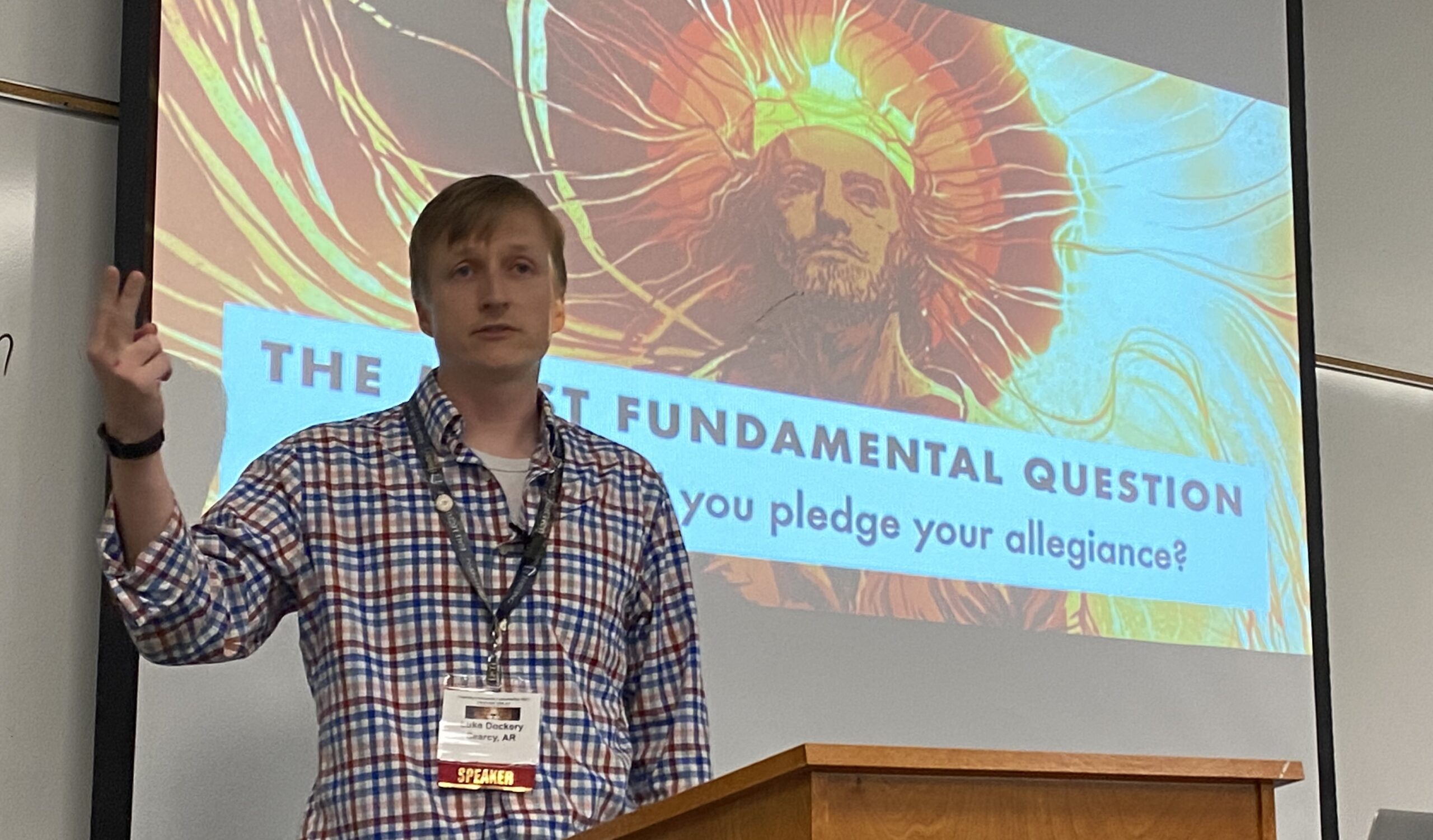

*Technically, it wasn’t canceled and was still offered online in a scaled-back, modified fashion. But really, it was canceled.

Church Camp Baptisms and Mountaintop Christianity

Note: this post is a little more disjointed than much of what I write, but it accurately reflects the way in which I have been wrestling with this topic back-and-forth for some time.

Church camp is a significant part of the yearly youth ministry calendar, and a pretty standard feature of church camp (at least in my experience) are camp baptisms. The next statement I make may be jarring to some of you, and I want to clearly state that if you were baptized at church camp and had your sins washed away and hold to that moment as the time when you committed your life to Jesus, that is great, and I applaud you. Having said that, here comes the (perhaps) jarring statement: I am not a huge fan of camp baptisms.

There are several reasons for this:

  1. Camp baptisms usually happen away from the presence of the camper’s parents, and since parents are the primary spiritual influencers of their children, not having them present for such a major step is not ideal.
  2. Camp is an emotionally-charged environment, and it can be easy to get caught up in the camp experience and make a decision that no longer seems so pressing or important a few weeks later when camp is over and the emotional experience has faded.
  3. Many times camp baptisms happen in clusters: several kids from one cabin or one friend group will all decide to get baptized together or within a couple of days of one another and the question arises: do these students really want to give their lives to Christ, or are they just doing what all of their friends are doing?
  4. The purely pragmatic reason: personal experience shows that a lot of time these baptisms don’t really “stick” in the sense that they are often false starts that don’t lead to a life of faithfulness (probably because of some combination of reasons 1-3).

At this point, youth ministry veterans are likely reflecting on these reasons and nodding in agreement—they have seen it all before, too many times to count!

Having acknowledged all this, I now want to push back against what I have just said.


A few years ago, I was talking to a young man (out of college, in his 20s) who was questioning his baptism largely for the reasons mentioned above. He did it at church camp when he was young and he didn’t know a lot at the time—what if he was just caught up in the emotions of the moment and decided to get baptized because other people were?

And, of course, these are some of my own concerns.


Churches of Christ are spiritual descendants of the Stone-Campbell Restoration Movement, a primitivist, back-to-the-Bible movement whose aim was to bring about unity among followers of Jesus by simply trying to be the church that we read about in the Bible. At the same time, that Movement developed in a specific time and place, and was certainly influenced by that historical context. For the sake of this post, that influence can be seen in at least two ways.

First, it was a movement that prized logic and reason. Intellectually and philosophically, the early leaders of the Stone-Campbell Movement were greatly influenced by the Enlightenment. This doesn’t mean that they universally condemned emotion, but rationality and clear thinking were highly valued.

Second, as a product of the American frontier, the Stone-Campbell Movement also valued the rugged individualism that was so characteristic of American society. People were free to read the Bible and interpret it for themselves, and should base their beliefs on Scripture rather than the teachings of some priest or state church.

Against such a backdrop, is it any wonder that I am immediately suspicious of decisions to follow Jesus that seem to be largely influenced by emotion and the influence of what other people are doing?


My favorite thing about my spiritual heritage is that the Stone-Campbell Movement is, fundamentally, a back-to-the-Bible movement, so as I was talking to my friend who was questioning his own baptism, I immediately thought of Scripture, and specifically, the Book of Acts, where we have so many accounts of people giving their lives to following Jesus.

One of the prime examples is in Acts 2, where Peter preaches to a large crowd on Pentecost, basically telling them that the Jesus they had crucified was the Messiah and Son of God, and that He had been raised from the dead and was sitting at the right hand of God:

37 Now when they heard this they were cut to the heart, and said to Peter and the rest of the apostles, “Brothers, what shall we do?” 38 And Peter said to them, “Repent and be baptized every one of you in the name of Jesus Christ for the forgiveness of your sins, and you will receive the gift of the Holy Spirit. 39 For the promise is for you and for your children and for all who are far off, everyone whom the Lord our God calls to himself.” 40 And with many other words he bore witness and continued to exhort them, saying, “Save yourselves from this crooked generation.” 41 So those who received his word were baptized, and there were added that day about three thousand souls.

(Acts 2.37-41)

Two details pertaining to our present conversation that jump out of this text: (1) Peter’s audience was cut to the heart, and (2) 3,000 responded and were baptized. In other words, in this biblical example of conversion, those who made the decision to be baptized were clearly influenced by emotion and almost certainly by the example of others as well.


The issue of church camp baptisms is clearly tied to what might generally be referred to as “Mountaintop Christianity”, the idea that we have mountaintop experiences—intense, emotional events where we encounter God in a powerful way.

Traditionally, youth ministry has largely been structured around mountaintop experiences and scheduling these sorts of events—mission trips, youth rallies, spiritual retreats, and, yes, church camp—throughout the year. The idea is to provide meaningful spiritual experiences and hope that they will contribute to lifelong discipleship. For example, just last week, I spent a week camping, hiking, and climbing a literal mountain with some of my students. It was a wonderful week characterized by deepened relationships with one another and with God.

The problem, of course, is that you cannot live on the mountain. At some point, you have to come back down to real life, and just like the fading glory of Moses’s face after he spent time with God on Sinai, over time, the spiritual clarity and closeness experienced at church camp or on the mission trip begins to fade. Students are left to limp along until their next spiritual fix at the next mountaintop experience—unless, of course, they have graduated and had their last such experience. It seems likely to me that this is another reason that teens struggle with faithfulness after high school.


So what should we do? The experience you get on the mountaintop clearly isn’t sustainable; should we eliminate such emotional experiences altogether? When kids want to get baptized at church camp, should we prevent them from doing so?

I don’t think so.

Let’s remember, God is the Originator of the mountaintop experience! His encounters with Moses left him fundamentally changed. In the New Testament, Peter, James, and John were blown away by their own mountaintop experience when Jesus was transfigured before them.

And perhaps most fundamentally of all, God mandated mountaintop experiences in the communal life and yearly rhythms of the people of Israel with the pilgrimage feasts of Passover, Pentecost, and Tabernacles. Three times per year, they were to travel to Jerusalem; you think traveling with thousands of your fellow Israelites to visit the Temple in Jerusalem and commemorate great events in your national history would constitute a mountaintop experience? Would it stir up your spiritual devotion and strengthen your identity as part of God’s people? Surely it would.

But, when you returned home, would the feeling fade away after a while? Would it be difficult to go back to normal life?


So, what are we to make of all this? Sometimes, church camp baptisms seem to be decisions made on the spur of the moment, driven by emotion and the influence of others. All too often, the conviction behind the decision fades away once camp is over. And yet, we undoubtedly have biblical conversion accounts driven by emotion and the influence of others.

Similarly, a spiritual diet of mountaintop binges offset by long periods of famine seems to be unsustainable and, likely, spiritually damaging. And yet, we see the principle of spiritual highs in Scripture, even established by God Himself.

I am not sure what to make of it all, but here are a few ideas:

  1. We should emphasize discipleship over conversion. I truly believe that a large part of our struggle is that we have focused too much on converting people and not enough on discipling them. Conversion may occur in hyper-emotional mountaintop experiences, but discipleship occurs every day, on the mountains, in the valleys, and in the monotony of the plateaus as well. In the example of 3,000 being baptized on the Day of Pentecost (Acts 2.41), that mountaintop experience was followed by the habitual practices of teaching, fellowship, the breaking of bread, praising God, and prayers (Acts 2.42, 46-47). These are practices of discipleship. When I talk to young people who are considering baptism, increasingly, I focus on the cost of discipleship and the demands of following Jesus long term, after the water has dried and the emotions have faded.
  2. We don’t want to manipulate people, but we should seek to minister to the whole person, including the emotions. In other words, I don’t believe that we should always be carefully crafting events and experiences in order to trigger an emotional response, but neither should we ignore the emotional aspect of people or dismiss it as irrelevant. God created us as whole persons, emotions included.
  3. We should rejoice when people are influenced for good by the community of faith. When you stop to think about it, this is kind of a no-brainer. As parents, we want our kids to be surrounded by good influences who will point them to Jesus. As a dad, minister, and Christian in general, I am very mindful of the influence I have on others and want to point them to Jesus. Of course I don’t want to coerce people into becoming followers of Jesus, but I absolutely want to influence others in that direction. When that occurs, it should be cause for rejoicing, not for questioning the motives of the convert.
  4. We shouldn’t eliminate the mountains in life, but should use those experiences to enlighten the valleys. Spiritual mountaintop experiences are not the problem; indeed, as we saw, they are biblical. The problem is the expectation that all of life will be a mountaintop. Rather than eliminate these experiences, we should embrace them, but we should also prepare students for the times when things are not as easy or inspiring. The spiritual truths and spiritual vibrancy that we learn and experience on the mountain can give us clarity for the more difficult times in life.
  5. We should provide mountaintop experiences for adults too. If going from a regular diet of mountaintop experiences in youth group to never having them as adults is jarring (it is), but mountaintop experiences themselves are biblical and beneficial (they are), then the solution isn’t to get rid of them; it is to include them in adult life as well. One of the great personal blessings of youth ministry is that, as an adult, I still regularly get to participate in things like this. Whether it is participating in church-wide retreats, mission trips, attending lectureships, or volunteering to serve at a summer camp, these experiences provide needed spiritual encouragement for adults just as they do with teenagers.

Jesus Loves the Little Children

I am a youth minister, and the central task of my ministry is helping young people develop a mature faith in Jesus Christ that will last throughout their lives. The Bible has a lot to say about that, and over and over teaches that two groups—the physical family and the faith family—share the responsibility for passing faith to the next generation. The Bible also talks about Jesus interacting with children, and I think those interactions also provide some theological foundations for the way we should treat young people in our families and in our churches.

The gospel writers go out of their way to tell a similar story time and time again.[1] People bring their children to Jesus so that He can bless them. The disciples assume that kids are beneath the notice of a great rabbi, and so they try to turn them away. Jesus, however, rebukes the apostles, and uses the situation as a teaching opportunity.

There are a few principles that we can glean from these situations:

Children are really important to Jesus. In ancient cultures, children (especially sons) were valued as heirs, but generally speaking, they were not valued as individuals until they reached adulthood. The apostles thought that Jesus was too busy to be bothered by children, but Jesus turned that thinking on its head by stopping whatever He was doing and receiving the kids who were brought to Him. Clearly, Jesus thought that children were important and of great value.

The kingdom of heaven belongs to children. Repeatedly, Jesus makes the point that His disciples must become like little children in order to enter His kingdom. Just as children are vulnerable and trustingly dependent on their parents, so we as disciples of Jesus Christ need to acknowledge our ultimate helplessness and totally depend on our Heavenly Father. This is an especially counter-cultural message for those of us who live in a society that holds up self-sufficiency and independence as virtues to be emulated.[2] Instead of these values, Jesus says that citizens of the Kingdom should rely entirely upon the King.

Treating children well is connected to treating Jesus well. As mentioned above, children did not occupy an enviable position in ancient cultures. They were the least important and least powerful members of their communities. Repeatedly, though, Jesus emphasizes the upside-down values of His kingdom, where those who give up their lives for His sake are saved, and those who humbly serve and welcome the weak and powerless are considered to be great. Furthermore, Jesus goes on to say that to welcome people like this, including children, is the same as welcoming Him and His Father.

These principles should cause us to pause and ask ourselves some important questions:

Do we treat our children like they are important to us? In a society in which youth is idolized and parents often live vicariously through the athletic accomplishments of their kids, this may seem like a ludicrous question at first, but hear me out. As parents, are we willing to interrupt our busy schedules, stop what we are doing, and deliberately focus on passing faith onto our kids? As churches, are we willing to alter the things we are doing in order to build lasting faith in our kids, even if it is harder and less efficient than entirely outsourcing their spiritual training to a youth minister?

Do we include our children in God’s kingdom? It is common to hear well-meaning Christians talk about young people as the “church of tomorrow”. I understand what is meant by that statement, and certainly we do want our children to be active leaders in the church of tomorrow. At the same time, I think it reveals some faulty thinking, because a key part of building faith in young people is for them to be active in the life of the church now. Do we enable and encourage our kids to be active in the worship, service, training, and fellowship of God’s kingdom now, while they are young, or do we make them wait until they are adults before we include them?

Do we enable and encourage our kids to be active in the worship, service, training, and fellowship of God’s kingdom *now*, while they are young, or do we make them wait until they are adults before we include them? Share on X

Are we treating Jesus well by treating His children well? No one likes to be accused of not treating their children well. Having said that, if, as a physical family or as a faith family, we are engaged in practices that make it less likely that our kids will develop a lifelong faith, can we really claim to be treating our children well? And based on the words of Jesus Himself, if we aren’t treating our children well, what does that suggest about how we are treating Him?

Based on the words of Jesus Himself, if we aren’t treating our children well, what does that suggest about how we are treating Him? Share on X

I think all of these questions bring us to the idea of stewardship. God has entrusted us—both in our physical families and in our church families—with His children. We tend to think of them as ours, but truly, ultimately, they are His. “Our” children belong to God. Jesus’ interactions with children in Scripture and the questions above call us to reflect upon our roles as stewards: how are we taking care of God’s kids?


[1] See Matthew 18.1-6; 19.13-15; Mark 9.35-37; 10.13-16; Luke 9.46-48; 18.15-17.

[2] Stephen W. Dixon, “What’s So Special About Children? A Reconsideration of the Use Made of Scriptures such as Matthew 18:1-5 in Advocating the Importance of Children for the Church,” Journal of Childhood and Religion 5, no. 1 (January 2014): 28, 33.

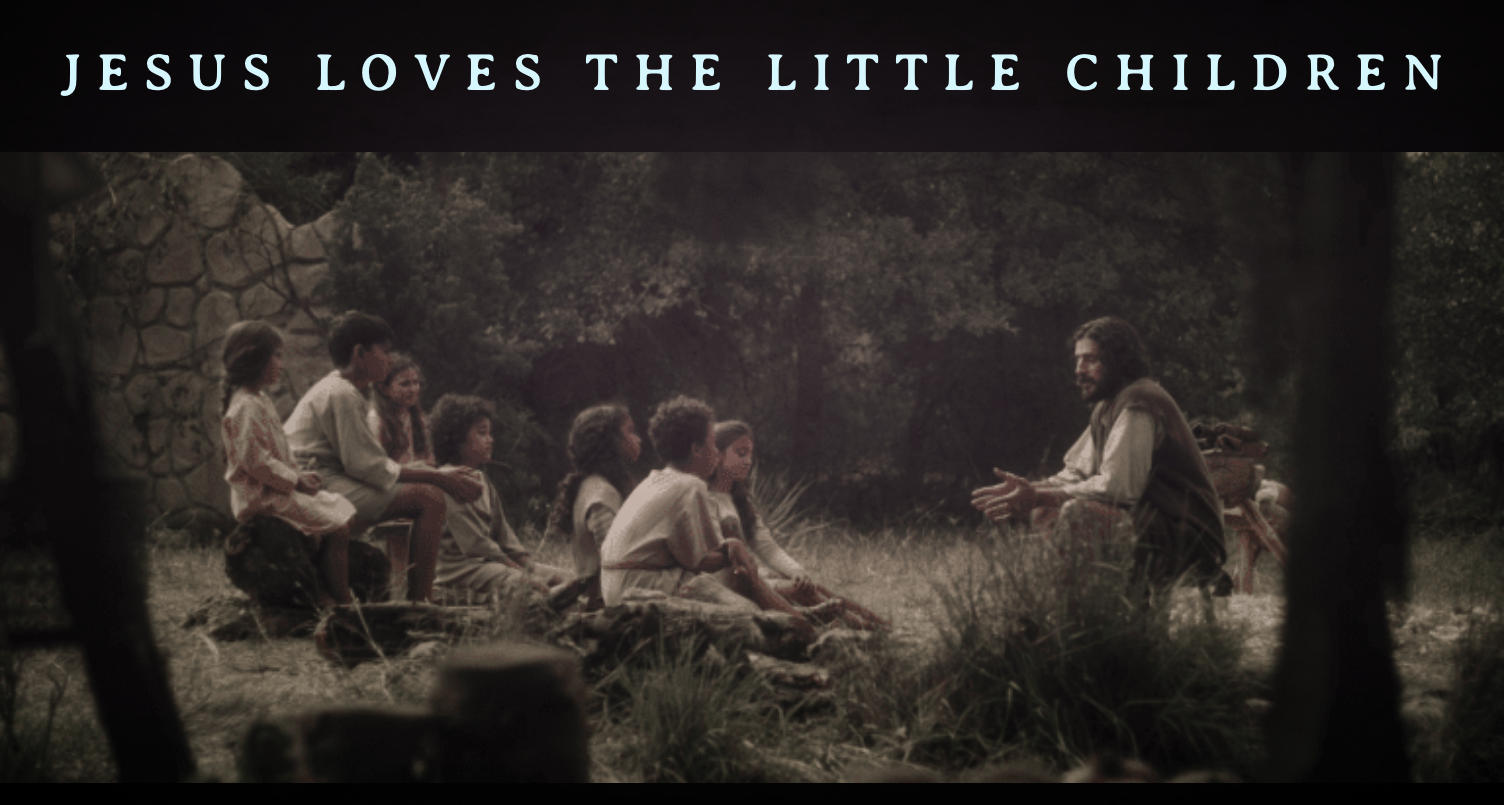
The image above comes from Season One, Episode Three of The Chosen, “Jesus Loves the Little Children”. It is a beautiful episode which, I believe, does an excellent job of conveying the special concern that Jesus had for children and the attention he paid to them.

« Older posts Newer posts »

© 2026 The Doc File

Theme by Anders Noren — Up ↑