The birth of Jesus is one of those Bible stories that has been told and retold so often and in so many forms that I think we often fail to pay close attention to what the Bible actually teaches. Indeed, there are actually two accounts of the birth of Jesus (one in Matthew and the other in Luke), and while the two can be combined to give us a fuller picture of what occurred, they also have their own unique points of emphases. For example, the Gospel of Luke emphasizes the different ways that Zechariah and Mary responded when Gabriel appeared to them to inform them about the miraculous births they would soon experience.
Although it is a good thing that this story has seeped into our collective consciousness, there are certainly downsides to letting our understanding of biblical reality be informed primarily by children’s pageants, nativity scenes, and sentimental Christmas cards: we can miss what the Bible actually teaches, along with some of the full implications of those teachings.
That’s one of the things I love about this illustration by Everett Patterson. It is a creative reimagining of the nativity story, recast in modern times, and I think it is both beautiful and brilliant.
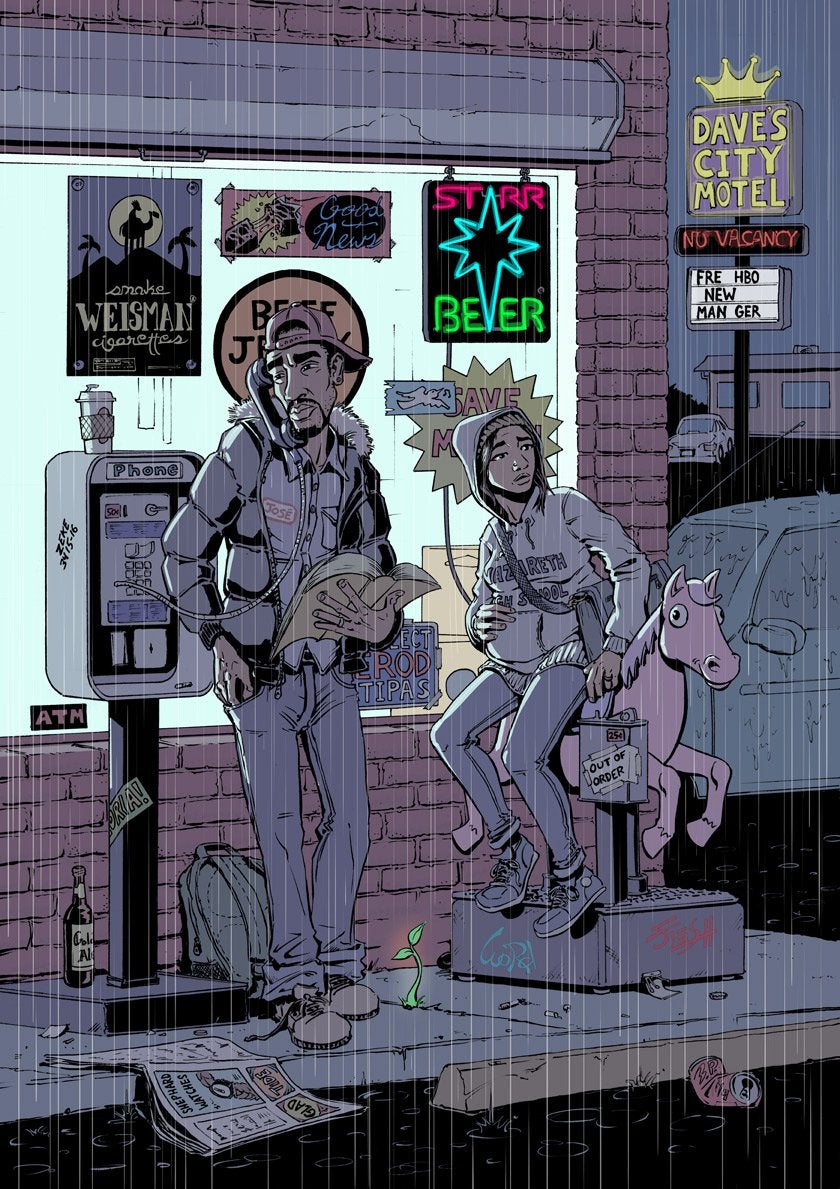
Image Credit: Everett Patterson
I used this image in a recent Bible class, having my students first read the birth narratives in Matthew and Luke, and then view the image and seek to interpret it in light of what they had read, and highlight all of the biblical allusions that they observed.
For me, this biggest takeaway is this: with 2,000 years of hindsight, I think it is so easy for us to think of the pregnant Mary and her betrothed Joseph, seeking a place for Jesus to be born and to think to ourselves, “I would totally let them come into my house so the Savior could be born in comfort.” But what about this: young, poor, brown-skinned people from out of town, unmarried, with the teenage girl very obviously pregnant? If you were to pull up to the convenience store in this image, how likely would you be to invite these folks into your home?
Suddenly, this becomes an uncomfortable story rather than a sentimental one: we are made aware of the messiness of the birth of the Messiah as it is re-contextualized with modern, complicated notions of poverty, immigration, and teenage pregnancy. And I love that, because it is much more faithful to the biblical reality: the birth of Jesus was messy, in all sorts of ways. It’s really not the source material for children’s pageants.
How many biblical allusions or hidden signs can you find in the picture above? Here is a list that we came up with in class (you may want to stop and look first before reading the “spoilers” below):
- Dave’s City = Bethlehem, the City of David
- No Vacancy = No room at the Inn (although the “Inn” was likely a guest room)
- New Man ger = manger
- Weisman Cigarettes = the magi
- Good News candy bar = gospel
- Starr Beer = the star that guided the shepherds and magi
- Dove = the Holy Spirit at Jesus’ baptism
- Joseph and Mary both have “halos” around their heads
- Joseph calls around looking for a place to stay
- Elect Herod Antipas = a reference to the evil ruler who will seek Baby Jesus’s life
- Jose = Joseph’s name
- Mary on the horse = the journey from Nazareth to Bethlehem
- Nazareth high school = Mary is young and from out of town
- Word and Flesh graffiti = the Word became flesh and dwelt among us (John 1.14)
- Zeke 34.15-16 = Ezekiel 34.15-16, which talks about God shepherding His people
- Shepherd Watches = the shepherds watching their flocks
- Glad Tide = Gabriel to Mary, “I bring you glad tidings of great joy”
- The plant = Isaiah 53.1-2, which speaks of the Messiah as a growing tender shoot
- Save M = the partially obscured sign behind Mary’s head suggests “Ave Maria”
- Gloria on the telephone box pole
There are a few we may have missed or that I am unsure about (Out of Order on the horse? Fre HBO?), but the list above shows how thoughtful this piece of artwork is. I am thankful for it, and the way it encourages us to think again about the rough edges of the birth of Jesus of Nazareth and gives a fresh perspective on the young parents who accepted a challenging calling from the Father and proved faithful in stewarding His Son.







