The online journal of Luke Dockery

Tag: Churches of Christ (Page 1 of 7)

2025 Blog Review

I think reflection is a healthy practice, and I like to end each year by looking back and reviewing my year of blogging here at The Doc File (Here are some previous reviews from 2024, 2023, 2022, 2021, 2020, 2019, 2018, 2016, 2015, and 2012).

Overview

In 2024 I only wrote 19 times, and a goal for this past year was to write more frequently. I will end 2025 with 29 posts, which is hardly setting any sort of world records, but it does reflect an increase of over 50% from last year.

Top Posts

By traffic totals, here are my most-read posts during 2025 (posts in bold were actually written this year):

  1. So You Want to Hire a Youth Minister, August 18, 2025
  2. Where Do Churches of Christ Come From? Teaching Restoration Movement History…to Teenagers, February 11, 2025
  3. A New Heaven & A New Earth Series, April 29, 2020
  4. 2025 Harding University Lectureship Recap, December 1, 2025
  5. The Department of Government Efficiency…and The Parable of the Weeds, February 26, 2025
  6. Ecclesiastes on Independence Day, July 4, 2023
  7. A New Heaven & A New Earth: What the Bible Teaches about Eternity, April 9, 2020
  8. Reading in 2024, January 3, 2025
  9. The Mutual Admiration of Alexander Campbell and Barton W. Stone, February 14, 2017
  10. “He Loved Them to the End”, August 6, 2021

Five of the top posts from 2025 were actually written this year, and it is always good to see new content get some traction:

At the same time, part of the reason for preserving almost 20 years of posts on this site is for people to be able to go back and read things they missed, and I am always gratified when older posts are read by new people. The series I wrote in 2020 on renewed eschatology continues to get a lot of views (taking two of the top ten spots). I also shared a couple of old posts around Valentine’s Day (The Mutual Admiration of Alexander Campbell and Barton W. Stone) and the 4th of July (Ecclesiastes on Independence Day) that attracted a lot of readers.

Blog Series

In 2025, I contributed to one ongoing Blog Series, completed a new mini-series, and began a new ongoing project. I added four more posts to the Scripture Reflections series:

This brings the series to a total to 30 posts. I plan to continue adding to this indefinitely, and suspect that it will eventually turn into a book project.
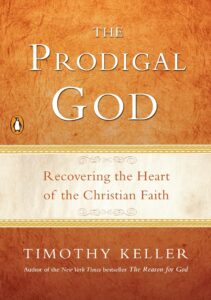
This past year I re-read Tim Keller’s modern classic, The Prodigal God. Though it wasn’t my intention to do so before reading the book, I was so struck by aspects of it that I ended up writing a brief, three-part series to emphasize some key ideas:

Finally, just this month I embarked on a new series that I anticipate continuing in future years. Christmas Carol Theology takes a closer look at some seasonal favorites and examines how they can help us to better understand the nature of God and/or what it means to follow Him. This year I wrote three posts for that series:


So, that was The Doc File in 2025! I always enjoy writing in this space, and it has become a formative spiritual discipline for me to process my thoughts here over the years. Lord willing, I hope to continue to do so for a long time. As always, I am thankful for your readership and support!

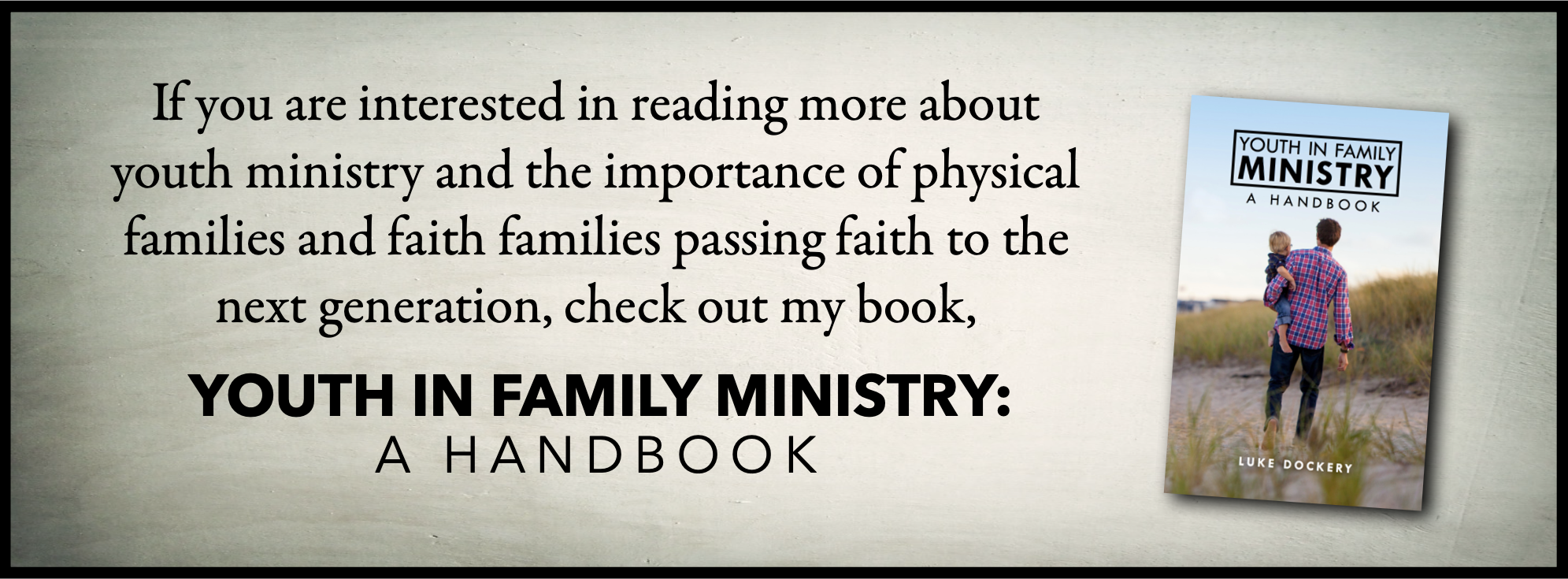
So You Want to Hire a Youth Minister…

(About the picture: no, we don’t all look like this!)

On a fairly regular basis, I will have a church reach out to me to say something like this: “We are looking for a youth minister…I don’t suppose you would be interested? If not, is there someone good you can point us to or send our way?”

I tend to have several of these interactions because there are lots of churches looking for youth ministers, I have been a youth minister for a long time so there is an assumption that I am aware of potential candidates, and a lot of people know that I teach youth ministry at the college level and actively work to train youth ministry apprentices. Unfortunately, I usually don’t have great news for them. The reality is that there are more churches looking for youth ministers than there are youth ministers looking for churches. Our Christian colleges are seeking to train ministers and greatly incentivize students to study Bible and ministry, but there simply aren’t enough students to meet the demand. In my own case, in the six years I have been at my current position, I have mentored six young men who have all landed youth ministry jobs—the demand is so high that the last two accepted jobs months before they had graduated and finished with their apprenticeships!

In such a landscape, it is hard to find good candidates. The traditional approach of posting your job to some sort of listing service and then critically sifting through a stack of resumes to find the perfect fit isn’t likely to work anymore. I have witnessed even large, 1000+ member flagship congregations with impressive histories and reputations wait a year to find someone to fill their open positions. It is even harder for churches that are looking for a youth minister with significant experience—most of the youth ministry veterans I know are either well established at their churches and not interested in leaving, are transitioning to another kind of ministry, or are getting out of ministry altogether.


All of this may sound discouraging, but it’s important for churches to have a realistic understanding of the current landscape. Hiring a youth minister is not easy, but it is important, and it is a process that should be bathed in prayer. With all of that in mind, here are four strategies for churches in need of a youth minister:

(1) Keep the Youth Minister You Already Have

This may sound like a cop-out, and honestly it doesn’t apply to churches that already have a vacancy, but there is an important truth here that needs to be heard both by those looking to hire someone new and others who may be less than enthused with what they have and might wonder if the grass is greener elsewhere. There are exceptions to this, but churches tend to not have a great track record in how they treat ministers, and it is even worse for youth ministers, who tend to be younger, less experienced, and get paid less. There was a time when churches could burn through ministers confident that they could easily find the next guy to come along. That is not the case anymore.

If you have a youth minister who is struggling in various ways but is a loyal disciple of Jesus who loves kids, do everything you can to hold onto him. Provide him with mentoring or opportunities for further education to help him work on his weak areas. Encourage him by affirming the things he does well. Make sure to show that he is appreciated by paying him well (vacation, retirement, and insurance are parts of a compensation package too!). It is much easier to invest in the youth minister you already have and help him improve than to run him off and roll the dice on a new hire.

(2) Find Someone Good and Lure Them Away

So, I don’t feel great about this, because it kind of sounds like I am encouraging stealing good ministers from sister congregations! Certainly, that doesn’t seem like a very kingdom-minded approach. That’s not quite what I mean, though. Basically, this is where you try to use personal contacts of people in your congregation to reach out to youth ministers they know and respect who they think would do a good job and might have some incentive to move.

Perhaps it is not that they are unhappy in their current location, but maybe a move to your congregation would bring them closer to family, provide better opportunities for their own family, or give them the ability to grow and multiply their ministries. It is always risky to leave one successful ministry to go to another, but if there are some personal connections in place already, it can make the leap of faith more manageable.

(3) Alter Your Expectations

Look, everyone wants to find someone with good experience who is already married, has a couple of kids, and a wife who is eager to serve in 17 church ministries. But the reality is there aren’t many people like that out there who are looking, and if they are, everyone will be trying to hire them! Chances are that if you are a smaller church (100-200 people), you’re facing a youth ministry rebuild, or you have a track record of burning through youth ministers quickly, you are not the congregation they are going to choose.

Instead, be prepared to change your expectations somewhat. After all, the very best youth ministers in the world had to start somewhere, without experience. Jesus and Paul were not married, but most would argue that they did some decent ministry work in their day! Rather than setting your sights on an established “All-Star,” seek a younger minister who is eager to learn and grow into the role. A minister like this would need mentoring, perhaps additional schooling, and would need to be shown a great deal of patience, but the payoff can be huge![1]

It can be hard for a congregation that seems to be doing well and considers itself to be successful to accept the reality that they might have to “settle” for an inexperienced rookie, but again, the landscape is not what it once was. The good news is that especially if you are willing to hire someone younger, you can align your minister search with college graduation cycles and potentially hire someone before they graduate. Depending on how close they are geographically, they might even be able to come and do some events with your church and youth group between now and the time they graduate.[2]

(4) Raise Up Someone from within Your Congregation

Is there someone at your church that has a gifting or interest in working with teenagers? Affirm the giftedness you see within them (a key part of a calling to ministry is the testimony and affirmation of fellow believers), encourage them to consider the position, and provide them with the training they need to do the job. This could be on a part-time basis, but for the right person, it might represent a full career transition. I have known multiple people who have done this successfully. An advantage to this is that you potentially get the maturity that you are looking for, and someone who already knows the culture of the congregation and fits well within it (which is a major element of successful ministry). All they need is more focused biblical and youth ministry training, and that is readily available.

For the record, I think our churches in general need to start shifting toward this mindset of actively identifying people of character and passion within the congregation to raise up as ministers (whether preachers, youth ministers, children’s ministers, etc.) and equip them to do so. As mentioned above, our colleges simply cannot produce enough trained graduates to meet the great need on their own.

Hiring a youth minister is challenging in the best of circumstances, and these aren’t the best of circumstances. It requires patience, resilience, and a great deal of prayer. But if I found myself as a church leader or part of a search committee at a church that was looking, these are the strategies I would adopt.


[1] I’m biased because this was my own story. I’ll always be grateful to the Farmington Church of Christ, which took a chance on a young, untrained minister without experience and provided me space and grace to grow, and supported me going back to school for additional training.

[2] My last apprentice was hired last spring by a church even though he won’t graduate until this coming December. So, the church is having to wait several months for him, but he was able to work there over summer break. By the time he starts in January, he will already have had a full three-month stint working with the church and leading the youth group under his belt.

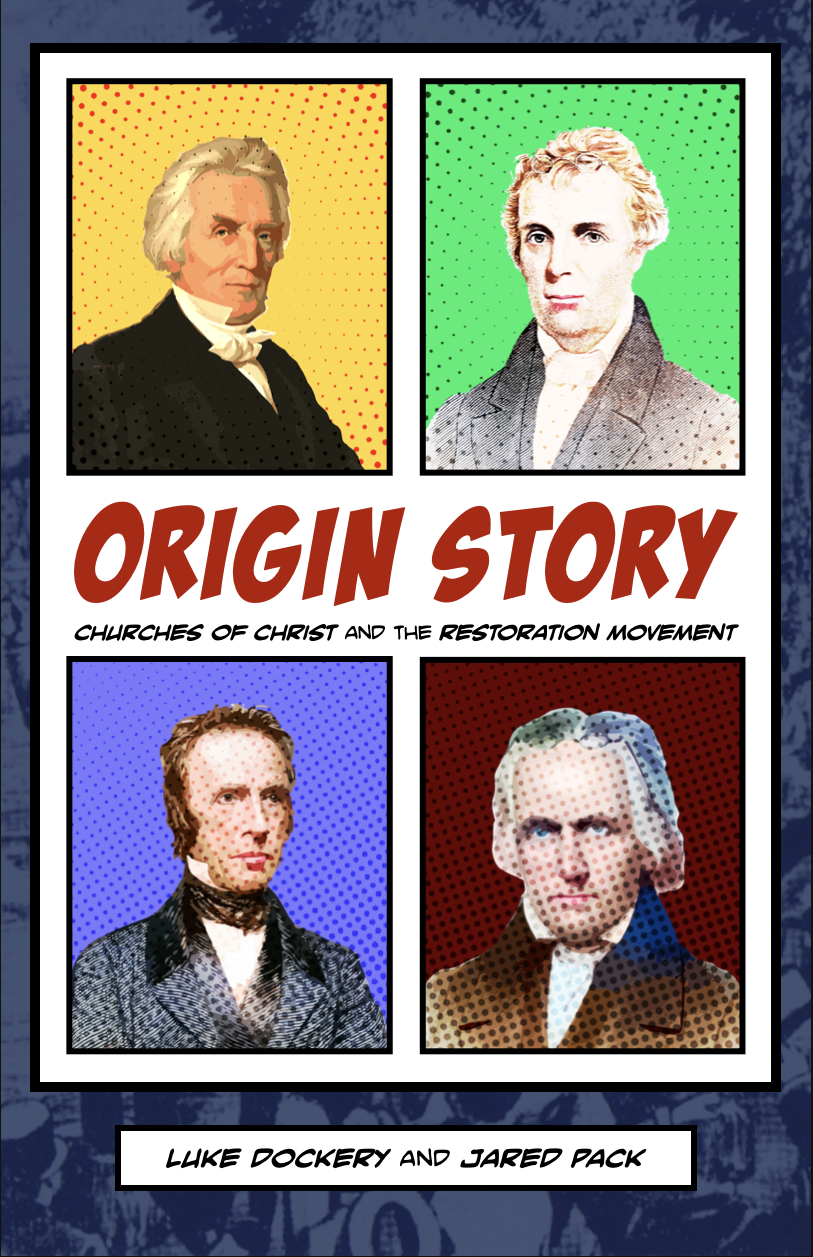
Origin Story: Churches of Christ and the Restoration Movement

I wrote a while back that I had taught a series of lessons to the students in my youth group regarding the Stone-Campbell Restoration Movement and how it affects our heritage and identity in Churches of Christ. I am pleased to announce that this study has now been compiled and formatted as a book that is now available in print and digitally. I won’t go into detail here why I think a study like this is need (I did that in the previous post), but I do want to say a couple of things and share some more detail about the book, before concluding with the summary information from the back cover.

First, this is a special project to me because it was done in conjunction with my good friend Jared Pack, and in many ways represents our friendship and the fruitful years of ministry we shared together. Jared is a historian by training and serves as Associate Professor of History and Chair of the History Department at York University in York, NE. I am a youth minister by trade and am decidedly not a trained historian, but I am an amateur enthusiast of Restoration History. Early in our friendship, Jared and I discovered a similar interest in the Restoration Movement and how it affects us today, and we co-taught a class together with our young adults group at the Farmington Church of Christ. Later, after I had moved to work with my current congregation, Jared taught the class again and added and expanded it. When I taught the material to my own students last year, I refined it further.

What all of that means is that this current product truly represents our combined work over a decade. Jared and I work so well together and think so similarly in many ways that with much of this book, at this point we are not sure who wrote which part! In many ways, this book is a perfect representation of and tribute to our friendship.

Second, this was a challenging project because I really was trying to push my creativity. Sadly, most teenagers do not find history to be an enthralling subject, and so I worked hard to make these lessons engaging. One way I sought to do this was by providing relevant discussion questions throughout the lessons to break up the lecture portions, but also, as the title suggests, I tried to tap into the notion of the origin story, a motif that has become very well understood in our society over the last twenty years with the proliferation of various movie franchises that center characters with remarkable abilities and comparing backstories (think MCU, the Harry Potter series, Star Wars, etc.). With this idea being central, Origin Story very much has the feeling of a comic book, completed with AI-generated images of the authors as superheroes!


Here is the Table of Contents, to give you an idea of the layout of the series:

Series Introduction

(1) Why Study the Restoration Movement?

(2) Background: Early Church to Reformation

(3) Background: European and American Influences

(4) The Big Four

(5) Unity and Division

(6) Churches of Christ after the Split

(7) Restoration Movement Slogans and Theology

(8) The Restoration Plea and Legacy

Appendix A: A Brief Overview of Calvinism

Appendix B: A Brief Overview of Millennialism


Purchase the Book

Paperback: Amazon $12.99

Digital: Deeper Youth Ministry $10


You can see the cover below, as well as some sample pages to give you a feel for the book (including the silly image of me as a superhero!).


From the back of the book:

Origin stories provide the background narrative that explains why characters are the way they are. When you know a character’s origin story, you also know important things about their feelings and motivations for why they do what they do. Churches of Christ have historical roots in the Stone-Campbell Restoration Movement, but teens in Churches of Christ tend to be largely ignorant about any of this history. This is a problem, because in a real sense, if we don’t know our history, we don’t know who we are.

The early Restoration leaders desired to bring about unity among God’s people by adhering to the clear teachings of Jesus and the apostles and the practices of the early church. In a world of bitter division and incredibly shaky notions of truth, that is a compelling idea, and one that is worth communicating to teenagers.

Origin Story is an eight-lesson series written specifically for teens.

“Teaching Restoration Movement history is tricky business, especially in church contexts. How best can we communicate the ups and downs, the successes and shortcomings, of our religious predecessors in a way that deepens rather than destroys faith? A lack of accessible educational resources for young Christians only compounds the problem. Fortunately, Luke Dockery and Jared Pack demonstrate both ministerial concern and scholarly acumen in this short volume which will help anchor the youth of the Churches of Christ more fully in their religious heritage and, even more importantly, point them back to the cross.”

—John Young, Associate Professor in the Turner School of Theology at Amridge University and historian of the Stone-Campbell Movement

Where Do Churches of Christ Come From? Teaching Restoration Movement History…to Teenagers

As regular readers of The Doc File likely know, I serve as a youth minister at the Cloverdale Church of Christ in Searcy, Arkansas. That reality is reflected quite often in this space, as I write frequently about youth ministry and also about the Stone-Campbell Restoration Movement, a Christian movement that emerged in the Second Great Awakening and in which Churches of Christ are historically rooted.

A major part of my job as a youth minister is teaching.[1] I get to teach teenagers dozens and dozens of times each year, and I put a lot of work and effort into developing a comprehensive curriculum map that plans out what students will study over their six years in our youth ministry, hoping to instill in them a clear understanding of Jesus Christ, a solid grasp of the biblical narrative and canon, an awareness of Christian theology and doctrine, and a Christian perspective on a variety of relevant topical issues. If that sounds like a challenging task, it’s because it is!

One topic that I have had on my curriculum map for the last couple of years but had not taught yet was an overview of Restoration history. It has been my experience that members of Churches of Christ are, generally, woefully ignorant of our history. And that’s the adults—teens are even less aware. This is really problematic, though, because in a real sense, if we don’t know our history, we don’t know who we are.


One of the best action movie franchises of my young adulthood was the Jason Bourne series. The first film in the series, The Bourne Identity, begins when the titular character is fished out of the Mediterranean Sea with gunshot wounds and a bad case of amnesia. Because Jason Bourne has lost his memory, in a real sense he has no identity, and the whole premise of the series is that Bourne is trying to piece together his past in order to figure out who he really is.

In Churches of Christ, the situation that we find ourselves in may not be as dramatic as Jason Bourne’s, but it is still an identity crisis of sorts. What are the identifying characteristics of Churches of Christ? Increasingly, that is a difficult question to answer as beliefs and practices vary widely across the theological spectrum of our churches in a way that was uncommon just a few decades ago. And I think it is directly tied to our general ignorance of our own history. That ignorance is likely caused by several factors, but a major one is competing ideologies that exist across the spectrum of Churches of Christ.


It is generally accepted that, from a sociological perspective, Churches of Christ largely shifted from a sect to a denomination during the latter half of the 20th century (something I write about more here).[2] However, this analysis describes a broad general phenomenon; the reality is that there are a great number of people in Churches of Christ who are distinctly sectarian in their thinking and many others who are thoroughly denominational (and, hopefully, many who are neither, but that is a subject for a different post).

For more sectarian circles within Churches of Christ, the assumption is that we represent the one true church, possessing some sort of unbroken line tracing all the way back to AD 30. Historical studies that show our very direct ties to a 19th-century movement obviously complicate this narrative, and so there is some degree of incentive for ignoring our history. On the other hand, for more ecumenical circles within Churches of Christ, the assumption is often that one church is just as valid as another, with differences coming down largely to personal preference (this is the denominational mindset). For many with this perspective, studies about our specific historical background fall somewhere between “unnecessary” and “embarrassing.”

In other words, if you view Churches of Christ from a sectarian or denominational lens, Restoration History isn’t likely to be a topic of central study.[3] And, sure enough, it hasn’t been for most of our people.

But what if there were another way to look at things? Is it possible to avoid being sectarian or denominational in our outlook? Well, that question is actually at the heart of the Restoration Plea—the driving force behind the Stone-Campbell Movement. That plea was a desire to bring about unity among God’s people by adhering to the clear teachings of Jesus and the apostles and the practices of the early church. And in a world of bitter division and incredibly shaky notions of truth, I think that’s still a compelling idea, and one that is worth communicating to teenagers.

A sectarian mindset would say that Churches of Christ have the market cornered on truth; we are the true Christians, all other churches are in error. A denominational mindset would say different churches are just different flavors of the same basic thing and it all comes down to personal preference; one church is just as good as another. But I reject those as the only two options. Looking at our history, it’s clear that we haven’t always gotten it right and that we have made some pretty big missteps. At the same time, we have gotten some really important things right and have made some significant contributions to the global understanding of what following Jesus looks like.

Reflective of the Restoration Plea, I would suggest that this is a better lens: neither sectarian nor denominational, we seek to be Christians only who deliberately follow the clear teachings of Scripture while maintaining an instinctive desire for unity with other believers whenever possible. These two impulses must remain at the center of our identity as we live as disciples of Jesus in the modern world. If anything, this is the lesson of the Restoration Movement. Our history shows us that men like Alexander Campbell and Barton W. Stone, men who devoted their lives to studying God’s word and living it out to the best of their abilities, could be united while not agreeing about everything because they believed they had gotten right the things that mattered most. In an age of unfriending, blocking, and muting people who don’t agree with us on every single issue, this approach to equally pursuing both truth and unity is perhaps more important than ever, and as members of Churches of Christ, it should be part of our DNA.

Neither sectarian nor denominational, we seek to be Christians only who deliberately follow the clear teachings of Scripture while maintaining an instinctive desire for unity with other believers whenever possible. Share on X

I believe this is a sustainable identity worth passing onto the next generation, and it is an identity that we really only get from historical study.

The series I ended up teaching to my teens was called “Origin Story,” and had a sort of superhero/comic book vibe.


[1] In fact, I consider teaching to be one of the six “Essential Elements of Effective Youth Ministry.”

[2] In religious studies, a sect is a religious organization that insists that it—and it alone—constitutes the entirety of the kingdom of God. Typically, a sect stands in judgment both on other religious organizations and on the larger culture in which it exists. On the other hand, a denomination in the American context is a church that recognizes it is only a part of the universal body of Christ. A denomination has typically made its peace with the dominant culture in which it exists. These definitions come from Richard T. Hughes, Reviving the Ancient Faith: The Story of Churches of Christ in America (Abilene, TX: ACU Press, 1996), xii-xiii.

[3] Because, again, from a sectarian perspective, Restoration History isn’t “our” history; “our” history is found in the book of Acts. From a denominational perspective, “our” history is largely unimportant.

Lord’s Supper Meditations

The Lord’s Supper is a central act of Christian worship, calling to mind the redemptive death of Christ on the cross, and also anticipating His return, when believers will feast with Him again. One of my favorite things about the worship of Churches of Christ is that the Lord’s Supper is observed weekly, which was a practice of the early church.

While it is good to observe the Lord’s Supper regularly, doing so with such frequency can also make it formulaic, and many congregations employ the practice of having a short reading from Scripture or biblical message to help focus the minds of those who are about to partake.

On the Free Resources page of this site, I have now added a series of Lord’s Supper Meditations that I have offered in the past. Feel free to use these in your setting (whether publicly or privately) if they can be helpful to you. I hope to add more to this list as time goes on:

Discerning the Body (PDF): In 1 Corinthians 11, Paul seeks to correct the selfish way in which some of the Christians in Corinth are observing the Lord’s Supper by reminding them of its vertical and horizontal dimensions.


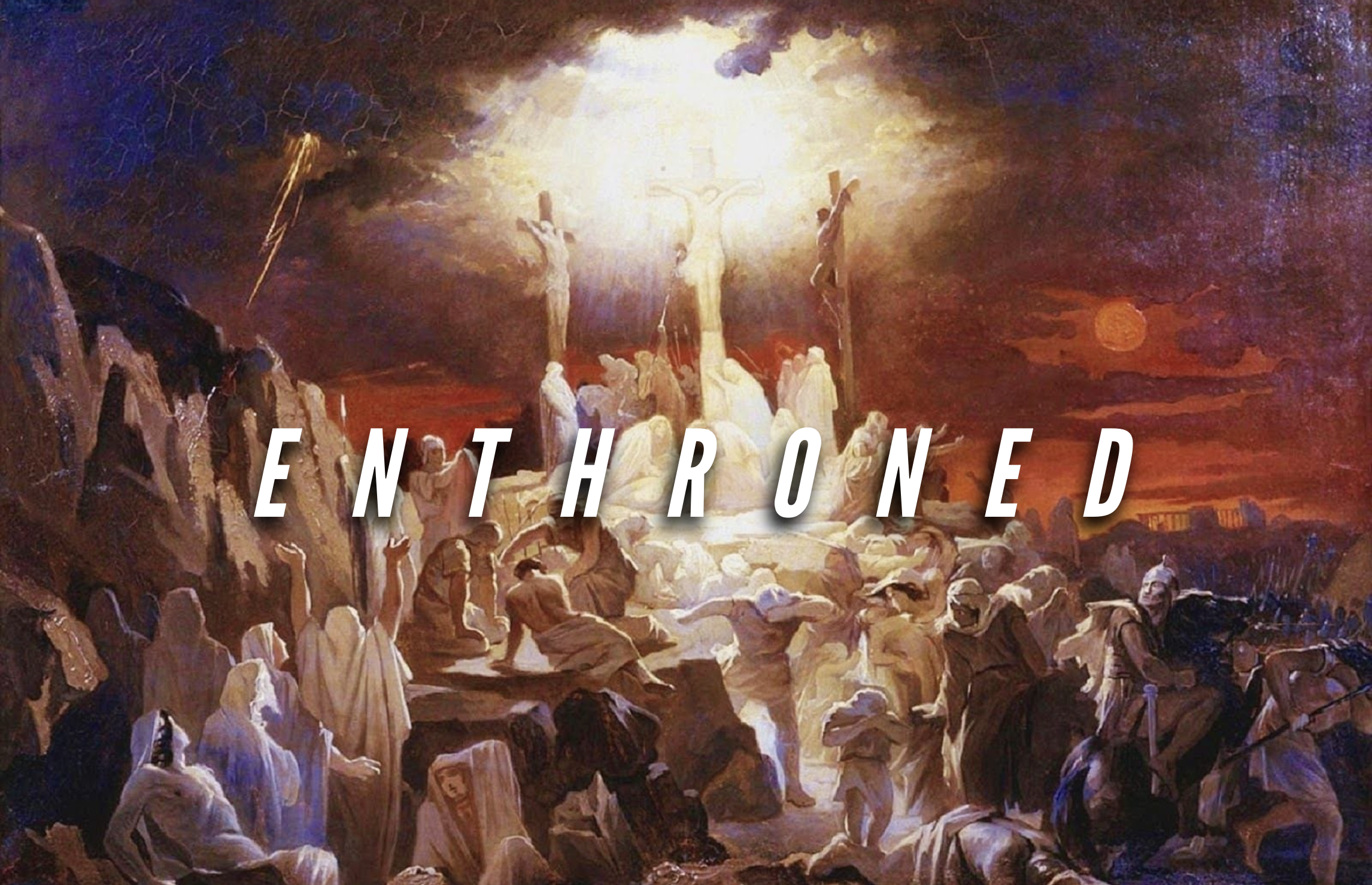
Enthroned (PDF): The crucifixion of Jesus was a subversive exaltation. The enthronement of the King of the Jews casts doubt upon the ways in which the world elevates and seeks to accumulate power.


God Provides the Sacrifice (PDF): The Binding of Isaac in Genesis 22 foreshadows another sort of offering, on another sort of altar. In both instances, it is God who provides the sacrifice, but the Son is not always spared.


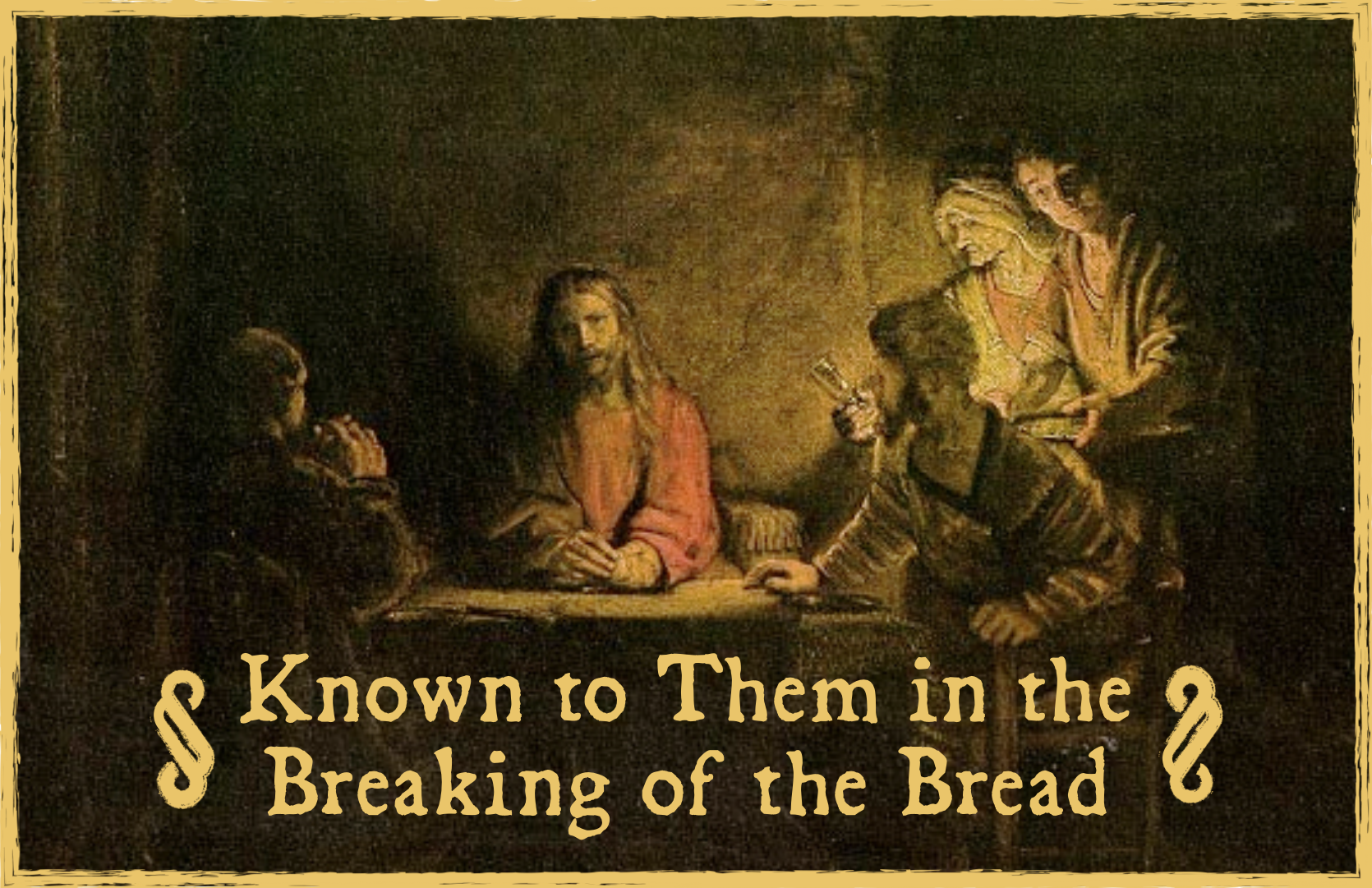
Known to Them in the Breaking of the Bread (PDF): For the disciples that Jesus met on the road to Emmaus following His resurrection, it was at the table that Jesus was made known to them. It is the same for us.


Reconciliation through the Cross (PDF): In a bitterly-divided world, the observance of the Lord’s Supper can seem impractical and disconnected. Really, though, nothing could be more needed or relevant.

« Older posts

© 2026 The Doc File

Theme by Anders Noren — Up ↑