The online journal of Luke Dockery

Tag: Polycarp

Blessed Are Those Who Are Persecuted

As discussed in the introductory post of this series, Jesus’s Beatitudes in the Sermon on the Mount are basically a description of what a good life really looks like from God’s perspective. Jesus redefines what blessedness is, and provides an alternative set of values for His followers, those who desire to be a part of His alternative community. Here are the Beatitudes we have discussed thus far:


Blessed Are Those Who Are Persecuted

“Blessed are those who are persecuted for righteousness’ sake, for theirs is the kingdom of heaven. Blessed are you when others revile you and persecute you and utter all kinds of evil against you falsely on My account. Rejoice and be glad, for your reward is great in heaven, for so they persecuted the prophets who were before you.”

(Matthew 5.10-12)

The last two beatitudes are closely related, so we will discuss them together, and this will conclude our study of the Beatitudes. Both say that God’s favor rests upon those who are persecuted on account of Jesus.

These verses do not indicate that disciples of Jesus are to have a persecution complex, always imagining that people are mistreating us. Neither are we to go looking for persecution by behaving in ways that are over the top or offensive.[1] However, if in the course of living as disciples of Jesus (by exhibiting the characteristics we have been talking about) we are persecuted or mistreated, Jesus says that we are blessed in this.

It might seem strange for us to think that simply by living the way Jesus calls us to, we could face persecution. But it is important to remember that the values of Jesus’s kingdom are completely at odds with the values of the world, and when we seek to live according to kingdom values, it threatens the way the world works. This was true for Jesus, who was ultimately killed by the collaboration of Jewish and Roman leaders who were in power and were threatened by Him, and also for His disciples, many of whom were martyred for their faith.[2]

Honestly, for those of us who are Americans, we don’t have a very good understanding of what it means to be persecuted for our faith because we live in a country that provides us with a great deal of religious freedom—you have likely heard someone pray before, “God, we thank You that we are able to worship without fear of persecution.” However, in the early days of Christianity, Christians were often cast out of society, beaten, imprisoned, and even killed because of their faith, and this is still the reality for many Christians in the world today.

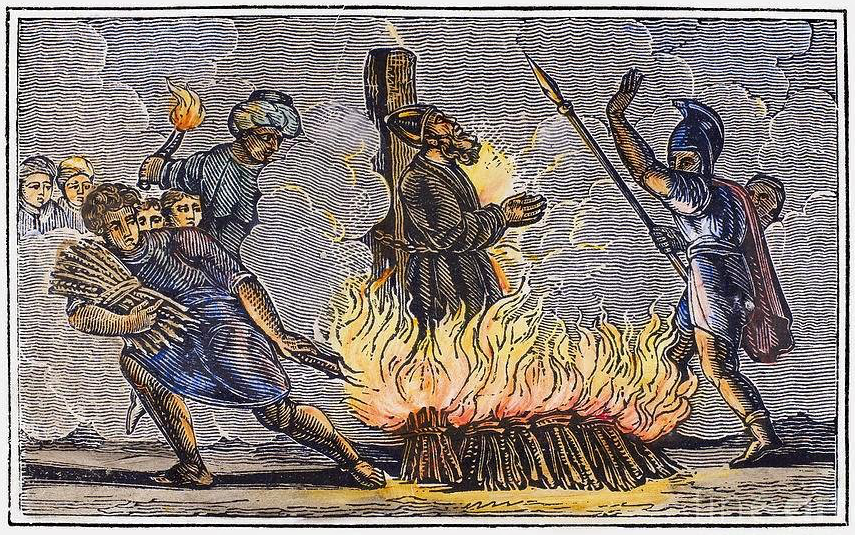
One of the most famous of the early Christian martyrs was Polycarp, who was an elder of the church in Smyrna. Because of his faith, he was taken before the Roman authorities and given the choice to make a sacrifice to Caesar as a god or to die. Polycarp’s response is famous:

“Eighty and six years have I served Christ, and He has done me no wrong. How can I blaspheme my King who saved me?”

Based on his refusal to worship the emperor, Polycarp was brought to be burned at the stake. In his last words, he said,

“O Lord God Almighty, the Father of Thy well-beloved and ever-blessed Son, by whom we have received the knowledge of Thee…I thank Thee that Thou hast graciously thought me worthy of this day and of this hour.”

Polycarp is an example of someone living as a citizen of God’s kingdom.[3]
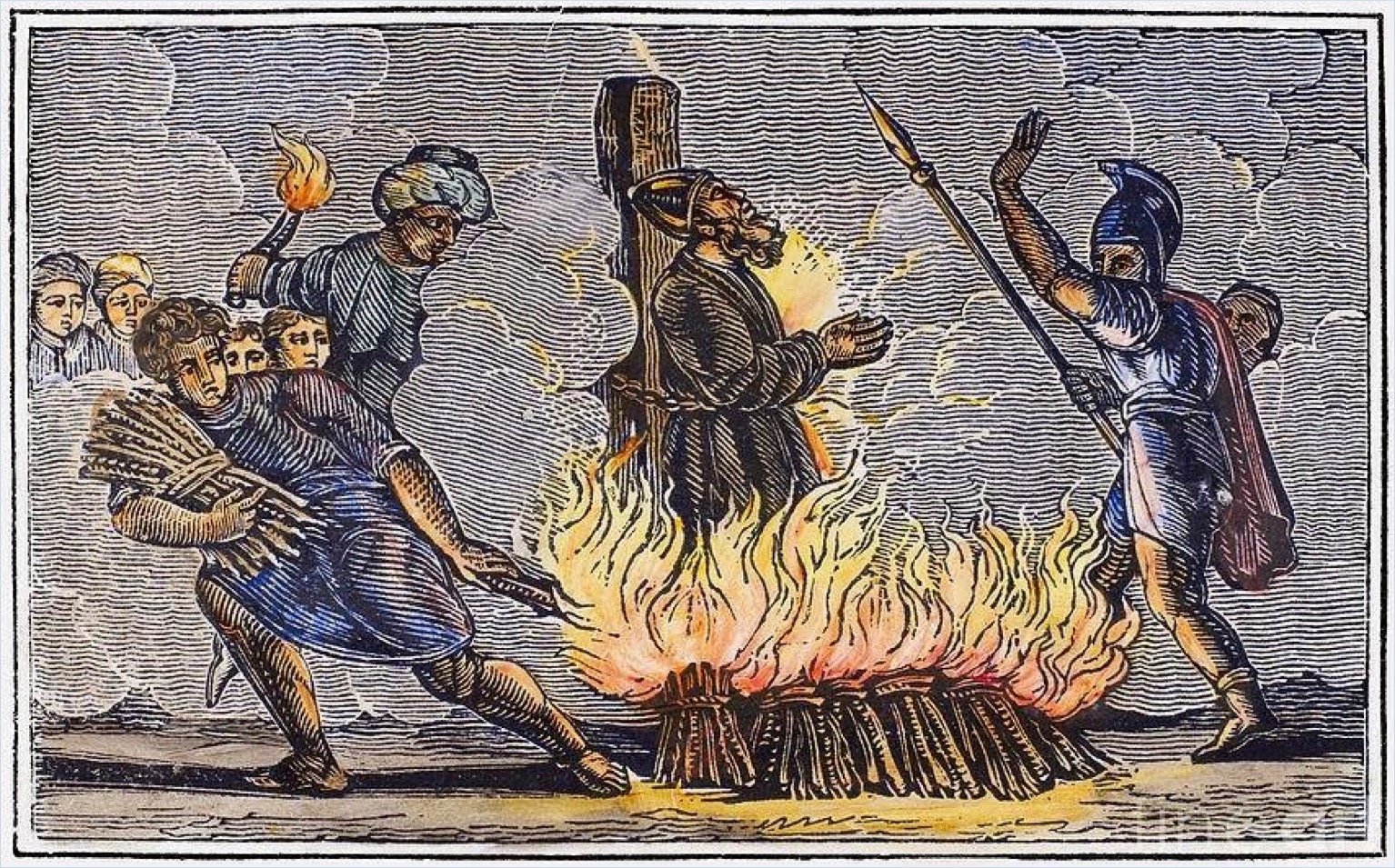
The Martyrdom of Polycarp

Of course, that is not our experience in the United States, and sometimes, I think we have become too attached to our persecution-free environment. To be clear, I enjoy the religious freedom that I have as a U.S. citizen and am not eager for a day when I am persecuted for my faith, but sometimes I feel that Christians are overly concerned and fearful about the possibility of us losing our religious freedoms and facing persecution. We need to remember that Jesus calls those who suffer for His sake “blessed” because they will be rewarded in eternity, and that eternal reward empowers us to endure suffering in the present.[4]

Sometimes Christians are overly concerned about the possibility of losing religious freedom and facing persecution. We need to remember that Jesus calls those who suffer for His sake “blessed”. Share on X

A Final Word

The characteristics that Jesus describes as blessed in the Beatitudes are shocking to us because these values are so misaligned with the values of our own society. They would have been shocking to Jesus’s original audience as well. Often, people will describe Jesus’s kingdom as being “Upside-Down”, because it is so at odds with the kingdoms of this world. But really, from the proper perspective, it is our world as it is that is truly Upside-Down; Jesus came to set it to rights, to turn what is Upside-Down, Rightside-Up.

When disciples of Jesus are characterized by the values described in the Beatitudes, we join Jesus in setting the world to rights.

When disciples of Jesus are characterized by the values described in the Beatitudes, we join Jesus in setting the world to rights. Share on X
If you enjoyed this post, you might enjoy my book on the Sermon on the Mount, Counter Culture: A Study of the Sermon on the Mount. 

Although this book was written specifically as an aid to teaching the Sermon on the Mount to junior high and high school students, it is also useful for personal Bible study, and the depth of the material makes it a great resource for adult Bible classes.


[1] Albert Barnes, Matthew and Mark, Notes on the New Testament (Grand Rapids, MI: Baker Book House, 1949), 46.

[2] Warren Carter, “Power and Identities: The Contexts of Matthew’s Sermon on the Mount,” in Preaching the Sermon on the Mount: The World It Imagines, ed. David Fleer and Dave Bland (St. Louis: Chalice Press, 2007), 20.

[3] William Barclay, The Gospel of Matthew Volume 1, The Daily Study Bible (Philadelphia, Westminster Press, 1956), 111.

[4] Larry Chouinard, Matthew, The College Press NIV Commentary (Joplin, MO, College Press, 1997), 100.
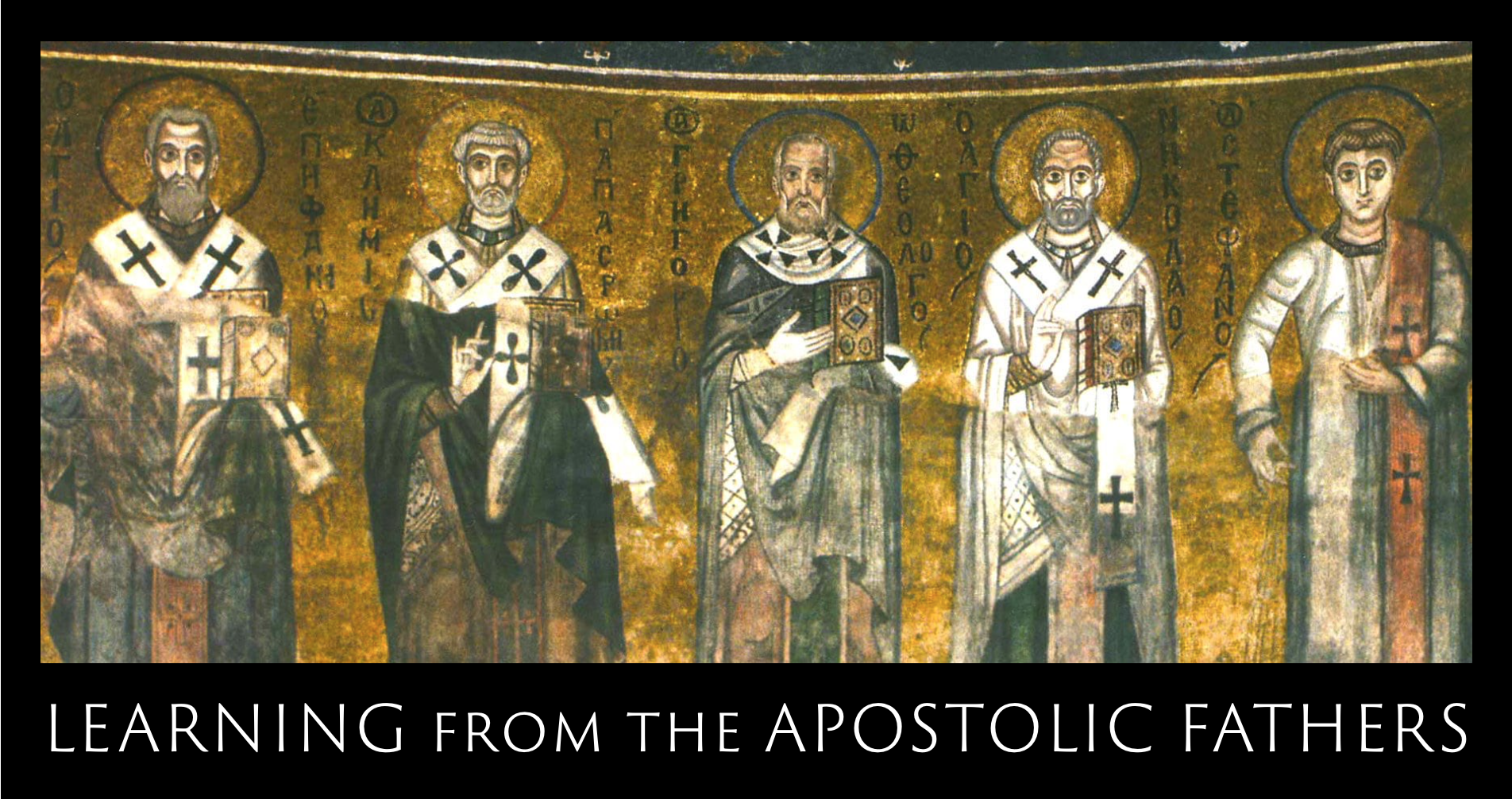
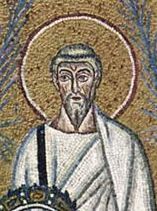
Learning from the Apostolic Fathers: Polycarp

As I wrote in the first post in this series, I have been reading through Michael W. Holmes’s edition of The Apostolic Fathers in English as part of my daily devotional readings. Generally speaking, the term “Apostolic Fathers” refers to early Christian theologians from the 1st and 2nd centuries AD, some of whom would have known some of the apostles personally and sought to pass on their teachings. More specifically, “Apostolic Fathers” is frequently used in reference to Clement of Rome, Ignatius of Antioch, and Polycarp of Smyrna. Today, I want to focus on Polycarp.


The Life and Letter of Polycarp

Polycarp of Smyrna

Polycarp served as the bishop of Smyrna in Asia Minor, and was the recipient of one of the letters of Ignatius of Antioch, his friend and mentor. Polycarp is one of the more notable figures of the early (post-apostolic) church,[1] and his fame stems from at least three streams:

  • His writing The Letter of Polycarp to the Philippians
  • His death as a martyr in AD 155-160, the details of which are shared in The Martyrdom of Polycarp
  • His status as a significant link in the chain of apostolic tradition: as a child, Polycarp knew John the Apostle in his old age, and, in turn, later in his own life knew Irenaeus of Lyons when the latter was a child

In The Letter of Polycarp to the Philippians, Polycarp relies heavily on both the Old Testament scriptures and also early Christian writings and emphasizes the strong connection between orthodoxy and orthopraxy: wrong beliefs inevitably lead to wrong behaviors, and wrong behaviors are evidence of wrong beliefs.[2]

In The Martyrdom of Polycarp (written by anonymous eyewitnesses) records the account of the pursuit, arrest, trial, and execution of Polycarp, who is martyred for his faith at the age of 86. The Martyrdom of Polycarp reveals the growing challenge that the church of the mid-second century faced for its proclamation that Jesus was Lord. Situated firmly in an empire that proclaimed that Caesar was Lord, the Christian proclamation could not be left unchallenged, and persecution and martyrdom was increasingly the fate who held to their confession of faith in Jesus.

Themes and Insights from Polycarp

The Importance of Right Beliefs: Polycarp clearly shows a strong reaction against gnostic teaching, and echoes words from 1 John. Indeed, he holds the incarnation, crucifixion, and resurrection of Jesus and His role as judge to be essential aspects of Christian faith.

“For everyone who does not confess that Jesus Christ has come in the flesh is antichrist; and whoever does not acknowledge the testimony of the cross is of the devil; and whoever twists the sayings of the Lord to suit his own sinful desires and claims that there is neither resurrection nor judgment—well, that person is the firstborn of Satan. Therefore let us leave behind the worthless speculation of the crowd and their false teachings and let us return to the word delivered to us from the beginning; let us be self-controlled with respect to prayer and persevere in fasting, earnestly asking the all-seeing God to lead us not into temptation, because, as the Lord said, ‘the spirit is indeed willing, but the flesh is weak.’”

(Polycarp, To the Philippians 7.1-2)

The Importance of Right Behaviors: A key theme of Polycarp’s letter is his discussion of righteousness, which the Philippians had apparently asked him about. Relying heavily on New Testament teaching, Polycarp addresses wives, widows, deacons, younger men, and elders, instructing each group to lead righteous lives. Living a righteous life that pleases God is very important:

“If we please him in this present world, we will receive the world to come as well, inasmuch as he promised that he will raise us from the dead and that if we prove to be citizens worthy of him, we will also reign with him—if, that is, we continue to believe.”

(Polycarp, To the Philippians 5.2b)

Willingness for Martyrdom: With Ignatius, we saw an eagerness for martyrdom that is startling to modern ears. With Polycarp, one does not sense the same degree of eagerness (Polycarp actually leaves the city and then changes location again to avoid the authorities who are searching for him), but he is certainly willing to die for his faith.

After he is caught and implored to swear an oath by Caesar to deny Christ in order to secure his release, Polycarp famously responds:

“For eighty-six years I have been His servant, and He has done me no wrong. How can I blaspheme my King who saved me?”

(Martyrdom of Polycarp 9.3b)

When the proconsul persists and threatens him with death by fire, Polycarp remains firm:

“You threaten with a fire that burns only briefly and after just a little while is extinguished, for you are ignorant of the fire of the coming judgment and eternal punishment, which is reserved for the ungodly. But why do you delay? Come, do what you wish.”

(Martyrdom of Polycarp 11.2b)

Polycarp is killed for his faith, and his martyrdom is “in accord with the pattern of the gospel of Christ” (19.1), as he followed the example of Jesus, an innocent who was killed unjustly. His last words are a prayer to God:

“O Lord God Almighty, Father of your beloved and blessed Son Jesus Christ, through whom we have received knowledge of you, the God of angels and powers and of all creation, and of the whole race of the righteous who live in your presence, I bless you because you have considered me worthy of this day and hour, so that I might receive a place among the number of the martyrs in the cup of your Christ, to the resurrection to eternal life, both of soul and of body, in the incorruptibility of the Holy Spirit.”

(Martyrdom of Polycarp 14.1b-2b)

Powerful hope inspires powerful courage.

Concluding Thoughts

The Letter of Polycarp to the Philippians is so heavily influenced by Scripture that large chunks of it are very familiar, and read like a cut-and-pasted pastiche of biblical teaching. It is a simple and edifying read. The Martyrdom of Polycarp is a compelling narrative that fills the reader with admiration for this elderly churchman who has clung to Christ all his life, and is determined to cling to Him in death as well.

Polycarp is burned at the stake for refusing to forsake Jesus.


[1] Michael W. Holmes, ed., The Apostolic Fathers in English (Grand Rapids: Baker Academic, 2006): 130.

[2] Holmes, 132.

© 2026 The Doc File

Theme by Anders Noren — Up ↑