
The online journal of Luke Dockery

Tag: The Anxious Generation

Reading in 2025

Reading and making lists are both big parts of my life, and this yearly post involves both of those activities! I will offer some thoughts on my favorite books of the year below, but first, here is the list of books I read in 2025 (an asterisk* indicates that the book was on my “to-read” shelf/list):

  1. The Biggest Story Bible Storybook, by Kevin DeYoung and Don Clark
  2. The Mythmakers: The Remarkable Fellowship of C.S. Lewis and J.R.R. Tolkien, by John Hendrix
  3. The Little Liar, by Mitch Albom
  4. Seasons of Sorrow: the Pain of Loss and the Comfort of God, by Tim Challies
  5. Harry Potter and the Prisoner of Azkaban, by J.K. Rowling
  6. The Life We Bury, by Allen Eskens
  7. Living in a Gray World: A Christian Teen’s Guide to Understanding Homosexuality, by Preston Sprinkle
  8. The Demon of Unrest: A Saga of Hubris, Heartbreak, and Heroism at the Dawn of the Civil War, by Erik Larson
  9. 10 Hours to Go, by Keely Parrack
  10. The Guise of Another, by Allen Eskens
  11. Tell Her Story: How Women Led, Taught, and Ministered in the Early Church, by Nijay Gupta
  12. The Tattooist of Auschwitz, by Heather Morris
  13. The Last Green Valley, by Mark Sullivan
  14. King Solomon’s Mines, by H. Rider Haggard
  15. Fountains of Silence, by Ruta Sepetys
  16. Origin Story: Churches of Christ and the Restoration Movement, by Luke Dockery and Jared Pack
  17. The Bomber Mafia: A Dream, a Temptation, and the Longest Night of the Second World War, by Malcolm Gladwell
  18. Harry Potter and the Prisoner of Azkaban, by J.K. Rowling
  19. Hero of the Empire: The Boer War, a Daring Escape, and the Making of Winston Churchill, by Candice Millard
  20. Midnight in Chernobyl: The Untold Story of the World’s Greatest Nuclear Disaster, by Adam Higginbotham
  21. O Come, O Come, Emmanuel: A Liturgy for Daily Worship from Advent to Epiphany, by Jonathan Gibson
  22. The Whole Art of Detection: Lost Mysteries of Sherlock Holmes, by Lyndsay Faye
  23. Observations by Gaslight: Stories from the World of Sherlock Holmes, by Lyndsay Faye
  24. The Shadows We Hide, by Allen Eskens
  25. Reviving the Ancient Faith: The Story of Churches of Christ in America, Third Edition, by Richard T. Hughes and James L. Gorman*
  26. Practicing the Way: Be with Jesus. Become like him. Do as he did. by John Mark Comer*
  27. Midnight, by Amy McCulloch
  28. On the Edge of the Dark Sea of Darkness, by Andrew Peterson
  29. Introducing Jesus: A Study of the Gospel of Mark, by Jeremy Myers
  30. The Prodigal God: Recovering the Heart of the Christian Faith, by Timothy Keller
  31. Star Wars: Brotherhood, by Mike Chen
  32. The Brightwood Code, by Monica Hesse
  33. River of the Gods: Genius, Courage, and Betrayal in the Search for the Source of the Nile, by Candice Millard
  34. The Anxious Generation; How the Great Rewiring of Childhood is Causing an Epidemic of Mental Illness, by Jonathan Haidt*
  35. Star Wars: Shadow of the Sith, by Adam Christopher
  36. On the Edge of the Dark Sea of Darkness, by Andrew Peterson
  37. The Templars: The Rise and Spectacular Fall of God’s Holy Warriors, by Dan Jones
  38. The Word on Fire Bible: Acts, Letters, and Revelation
  39. The Adventures of Huckleberry Finn, by Mark Twain
  40. The Benedict Option: A Strategy for Christians in a Post-Christian Nation, by Rod Dreher*
  41. Travelers in the Third Reich: The Rise of Fascism, 1919-1945, by Julia Boyd
  42. James, by Percival Everett
  43. The Heavens May Fall, by Allen Eskens
  44. Live Not by Lies: A Manual for Christian Dissidents, by Rod Dreher
  45. The Indian in the Cupboard, by Lynne Reid Banks
  46. The Return of the Indian, by Lynne Reid Banks
  47. The Measure of a Man: A Spiritual Autobiography, by Sidney Poitier
  48. May the Wolf Die, by Elizabeth Heider
  49. Five Total Strangers, by Natalie D. Richards
  50. The Wild Robot, by Peter Brown
  51. The Secret of the Indian, by Lynne Reid Banks
  52. Water in Her Veins, by Shannon Schumer
  53. Exiles in Their Own Land: A Study of 1-2 Peter, by Gary Holloway
  54. The Mystery of the Cupboard, by Lynne Reid Banks
  55. Broiler, by Eli Cranor
  56. Just the Nicest Couple, by Mary Kubica
  57. The Nickel Boys, by Colson Whitehead
  58. Just Another Missing Person, by Gillian McAllister
  59. The Underground Railroad, by Colson Whitehead
  60. Life Together, by Dietrich Bonhoeffer*
  61. North! Or Be Eaten, by Andrew Peterson
  62. A Slow Fire Burning, by Paula Hawkins
  63. Redwall, by Brian Jacques
  64. Famous Last Words, by Gillian McAllister
  65. Prey: Immigration, Islam, and the Erosion of Women’s Rights, by Ayaan Hirsi Ali
  66. Master and Commander, by Patrick O’Brian
  67. Story of Glory: Why Did Jesus Come to Save the World?, by Jason Hart
  68. Contemplative Youth Ministry: Practicing the Presence of Jesus, by Mark Yaconelli*
  69. A Burden Too Heavy: An Invitation to the Spiritual Discipline of Confession, by Paul Alan Smith*
  70. Post Captain, by Patrick O’Brian
  71. North! Or Be Eaten, by Andrew Peterson
  72. Yucatan 1512, by Alex Vede

A few observations before I talk about my favorite books of the year:

  • My reading total increased from 70 books in 2024 to 72 in 2025. This is the most books I have read in a year since I started counting.
  • Overall, my reading for the year was somewhat… “meh.” I’m reading too much entertainment that courts my attention rather than edification that stirs my soul. A big part of this is that much of my reading has shifted to audiobooks, all of which I get free via the Libby app. This tends to steer my selections in certain directions. For 2026, I plan to focus more on the reading of physical books, and am considering getting an Audible subscription to give me greater access to other types of books.
  • In the realm of fiction, I did discover two authors/series this year that I enjoyed and intend to continue reading from: Allen Eskens’s loosely connected Max Rupert/Joe Talbert series, and Patrick O’Brian’s naval series focused on Jack Aubrey and Stephen Maturin.
  • I have a long “Books to Read” list of books that I already own. I didn’t do as good of a job reading from that list as I would have liked—only seven of my books from the list above (marked with an *) came from that list. I hope to read more from this list in 2026.

Here are my Top 10 books for the year with some brief thoughts on each (presented in order of when I read them, not ranked 1-10):
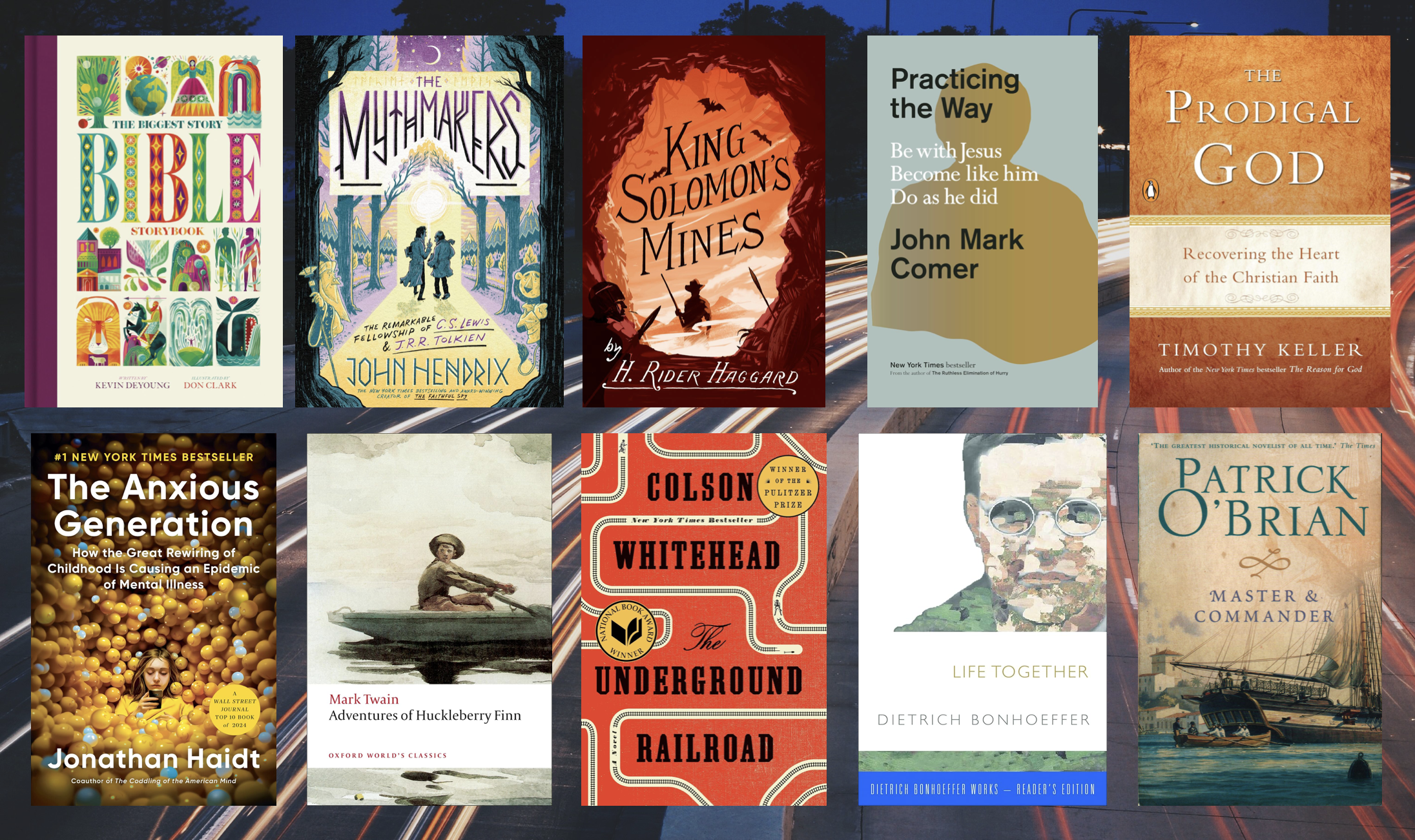
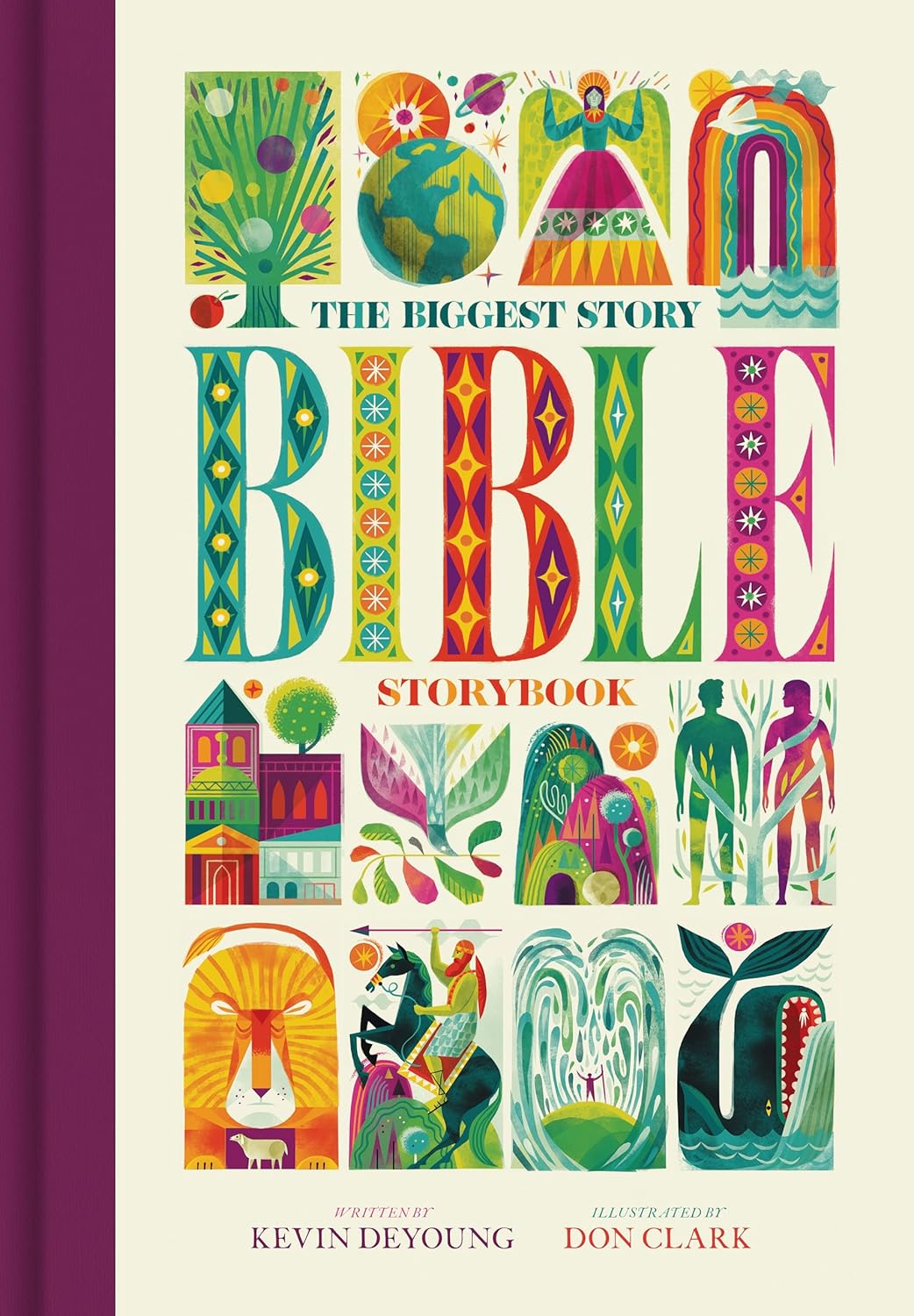
The Biggest Story Bible Storybook, by Kevin DeYoung: Family worship is a staple at our house, and as part of that, we have a Bible component. Sometimes that is reading directly from the Bible, but with kids aged 14, 9, and 3, sometimes we use Bible storybooks, which are not all created equal. Some significantly water down or distort the stories, and some that tell the stories faithfully still teach them in a disjointed, episodic fashion. DeYoung excels at presenting narratives throughout the Bible as part of a grander narrative focusing on how the Snake-Crusher will ultimately defeat sin and help us return to the Garden.

This is an excellent resource for families to use with their children at home, but would also work well as the basis for a children’s Bible class curriculum in a church setting.
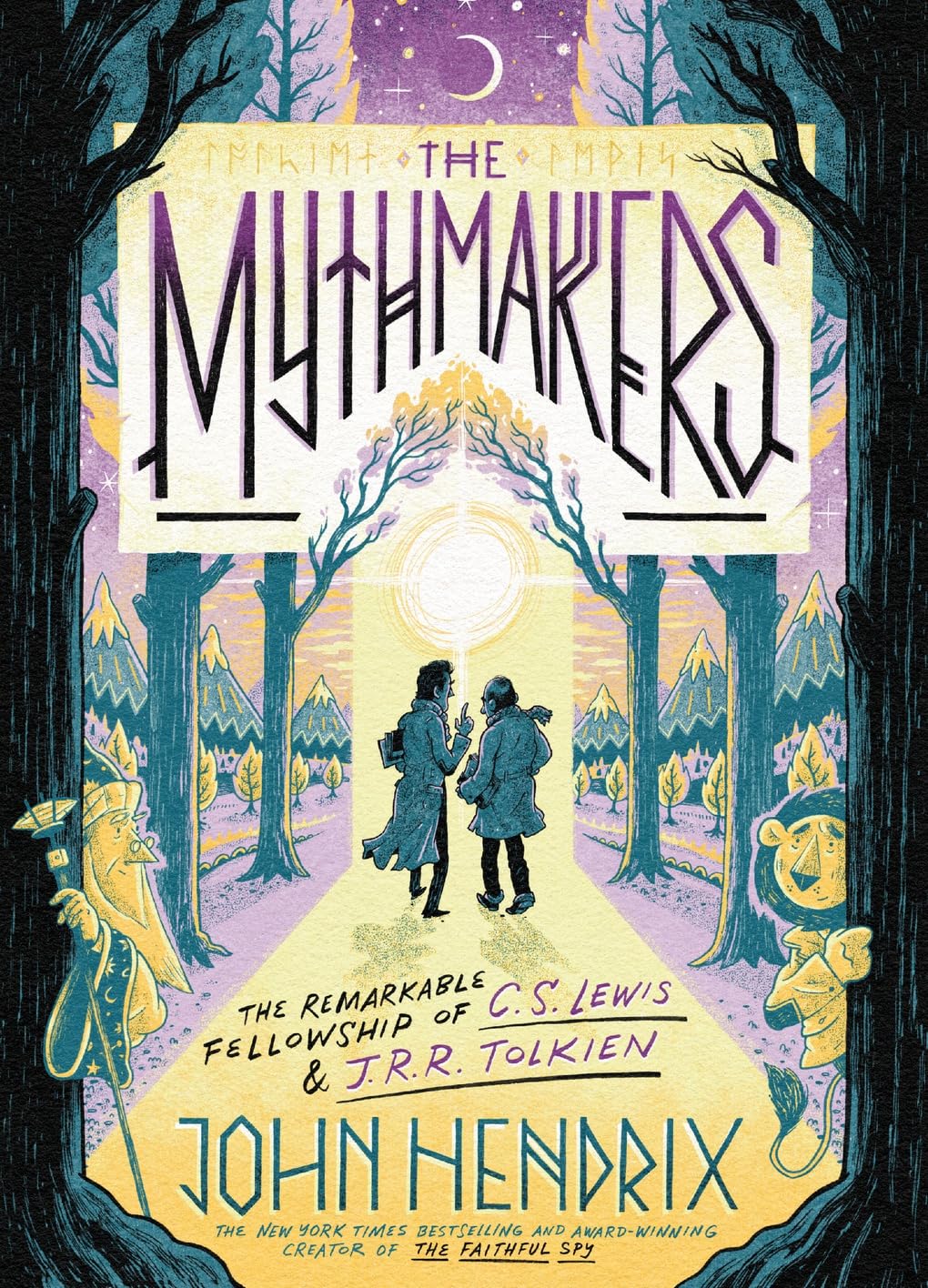
The Mythmakers: The Remarkable Fellowship of C.S. Lewis and J.R.R. Tolkien, by John Hendrix: I knew nothing about this book before I received it as a Christmas gift from my sister-in-law, but it was my favorite book of the year. The Mythmakers is a beautifully illustrated graphic novel that reads like a biography of C.S. Lewis and J.R.R. Tolkien, with a special emphasis on their relationship together. Their friendship was a special one, but also suffered a falling out that was never fully reconciled this side of eternity. This was an incredibly poignant and moving read that I highly recommend for fans of Lewis and/or Tolkien.

King Solomon’s Mines, by H. Rider Haggard: This was a re-read for me, as I think I previously read it when I was a teenager (but that was a long time ago now!). Haggard’s book is a classic tale of adventure and treasure hunting, but was also ground breaking in its day, as the first of a genre of “Lost World” romances that were inspired by the exploits of British explorers in colonial Africa (and a precursor to modern science fiction).

King Solomon’s Mines was written in 1885, and thus, there are elements—especially relating to colonialism, race, and gender—that are awkward for modern sensibilities. Still, amidst a tale of adventure, danger, and discovery, the book actually reflects surprisingly forward social thinking, portraying some African characters as barbarians and others as heroes (it depends on their character, not their ethnicity), and even includes an interracial romance. On the whole, it is just a fun story: Haggard was inspired to write an entertaining story for boys after reading Robert Louis Stevenson’s Treasure Island, and he succeeds.
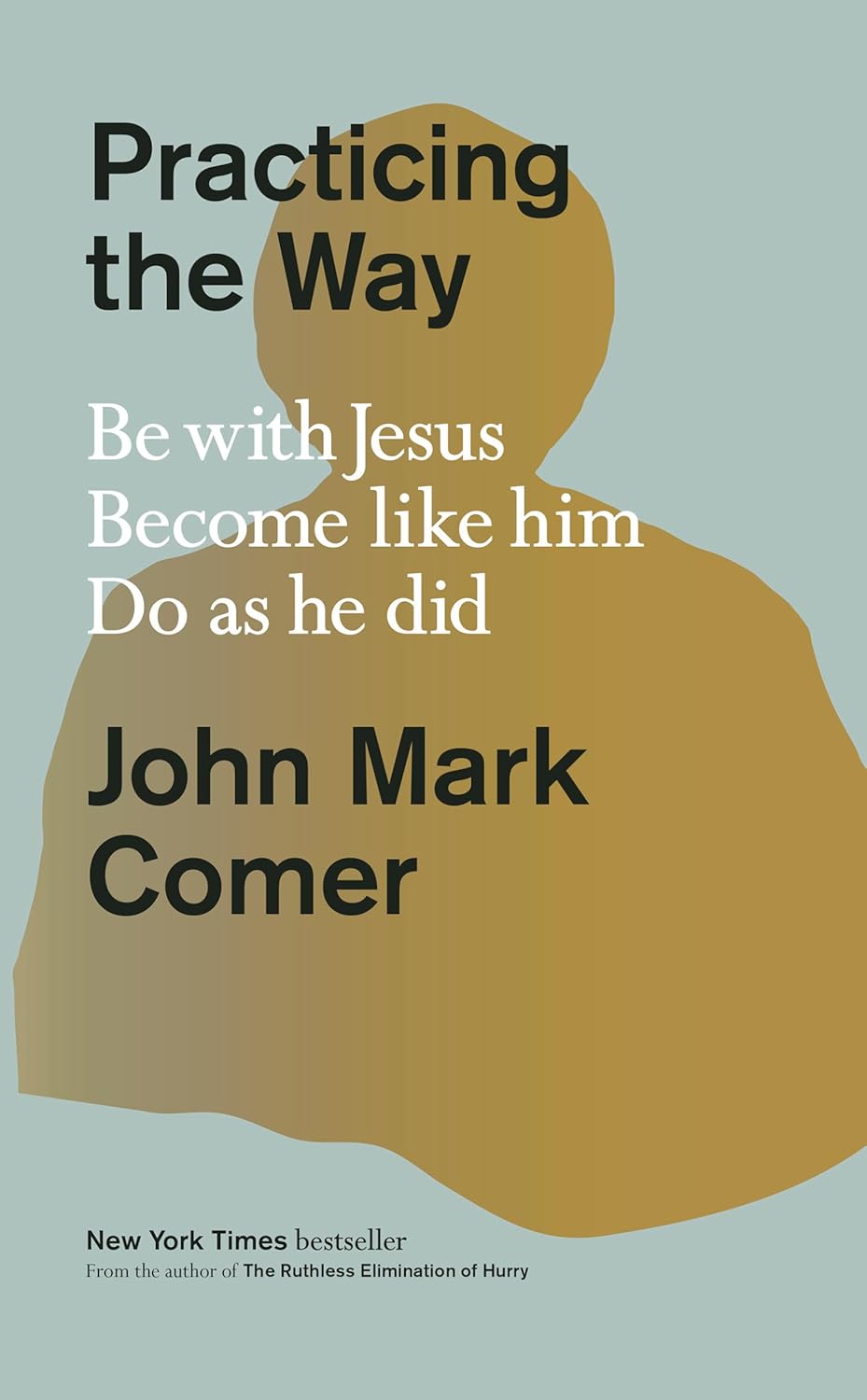
Practicing the Way: Be with Jesus. Become Like Him. Do As He Did, by John Mark Comer: Comer has made my Top 10 list for three years in a row (previously with The Ruthless Elimination of Hurry and Live No Lies), so clearly I appreciate him. I don’t actually love his writing style,[1] and the covers of his books are hideous,[2], but Comer continues to solidify his position as a trusted, historically orthodox Christian voice who is able to be conversant and relevant in our post-Christian context.[3] Practicing the Way is essentially a new look at very old Christian practices (spiritual disciplines), and Comer’s description of discipleship as being apprentices of Jesus is helpful.
The Prodigal God: Recovering the Heart of the Christian Faith, by Tim Keller: This is another re-read, as I first read it back in 2010. Keller has become a significant influence for me over the last decade or so, and this book hit me on a much deeper level than I remember from when I first read it. The Prodigal God examines the story of the Two Lost Sons from Luke 15, and emphasizes that this story represents the heart of the Christian message. The Christian faith isn’t ultimately about our goodness, religious devotion, or work ethic; it’s about a God who loves us recklessly (“prodigal” means “recklessly spendthrift”) as His children.

Ultimately, I was so struck by The Prodigal God this time around that I wrote a three-part series reflecting some of the ideas therein: “The Elder Brother We Need,” “Exiled from Home,” and “Jesus Cooked Breakfast: The Materialistic Nature of Christianity.”

The Anxious Generation; How the Great Rewiring of Childhood is Causing an Epidemic of Mental Illness, by Jonathan Haidt: If The Mythmakers was my favorite read in 2025, this was the most significant. This is a book that seemingly everyone has talked about over the last 18 months or so (I reviewed it myself), but in case you have missed it, the current generation of teens and young adults—Generation Z—is widely known to be the most mentally unwell of all generations with off-the-charts instances of anxiety, depression, and other mental health issues. Haidt’s basic contention in the book is that two factors, the decline of a “play-based childhood” (kids running around their neighborhoods exploring, creating games and entire worlds with friends and returning home for meal times or when it gets dark) coupled with the rise of a “phone-based childhood” (kids staying indoors and staring at screens especially on their smartphones and spending hours and hours on social media platforms) have led to the devastating mental health outcomes that we see in members of Gen Z.

I think this is a brilliant book, and I think it is essential reading for anyone living today who has any significant interaction with or influence over kids and teens, or has any interaction with a smartphone. (So yes, basically everyone needs to read this book!)
The Adventures of Huckleberry Finn, by Mark Twain: I had read this classic previously many years ago, but this year, I read it again in conjunction with Percival Everett’s James. James is a retelling of the Huckleberry Finn saga from the perspective of the enslaved Jim, and I wanted to be thoroughly familiar with the arc of the original narrative in order to compare the two. James is interesting and compelling in various ways, but ultimately, I disagreed with some of Everett’s creative license in departing from the storyline and preferred the original. The Adventures of Huckleberry Finn shines with the characteristic Twain wit, but also provides serious social commentary. In particular, the relationship between Huck and Jim provides the moral center for the tale, as Huck, driven by his love for Jim, decides to embrace the morally “evil” choice of helping him to freedom rather than do what society tells him is the “right thing” and turn Jim in as a runaway.

For what it’s worth, I highly recommend reading The Adventures of Huckleberry Finn and James back to back.
The Underground Railroad, by Colson Whitehead: This was a powerfully poignant and mournful book, which shouldn’t have been surprising considering that it won a Pulitzer Prize. Cora is enslaved on a cotton plantation in Georgia where she is an outcast even among her fellow slaves. With no future to look forward to, she takes the ultimate risk of running away on the Underground Railroad, which in Whitehead’s imaginative universe, is an actual network of tracks, tunnels, and stations underneath the slave states. Cora embarks on a treacherous journey where she encounters a different face to slavery and race relations at each stop.

It is an engaging story, but also a painful one, as it forces readers to reflect on the variety of ways that we, as a nation, have dealt with the problem of race in unacceptable ways. Lord, have mercy.
Life Together, by Dietrich Bonhoeffer: This is considered to be a Christian classic, and I can see why. Life Together is a collection of Bonhoeffer’s reflections on Christian community, and is based on the common life he shared with his students at the Finkenwalde Seminary from 1935-37. Many of the reflections and observations are made more poignant upon the realization that this experiment in Christian community was illegal—Finkenwalde was an Underground Seminary and was closed by the Gestapo in 1937:

“It is easily forgotten that the community of Christians is a gift of grace from the kingdom of God, a gift that can be taken from us any day—that the time still separating us from the most profound loneliness may be brief indeed.” (4)

Bonhoeffer would find himself in a situation where this gift was taken away from him, and would end his days in isolation in a Nazi prison.

I firmly believe that the church—the Christian community, the family of faith—is one of the greatest untapped sources of spiritual strength for most Christians, and Life Together shows why this is in penetrating fashion.
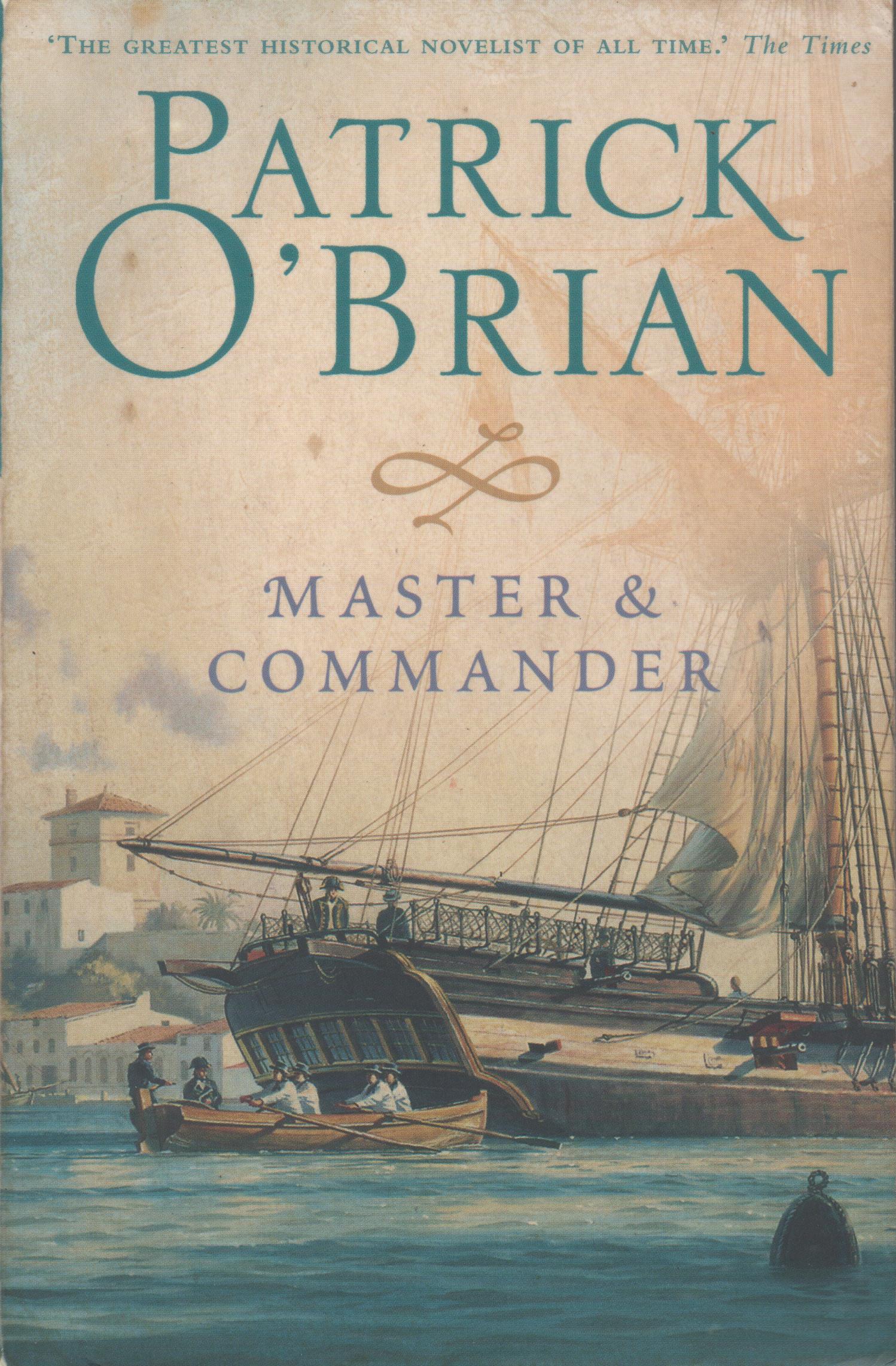
Master & Commander, by Patrick O’Brian: Years ago I watched and enjoyed the Russell Crowe film based on these books, but checked out an audiobook version from the library and greatly enjoyed it. The characters of Jack Aubrey and Stephen Maturin are complex and the depiction of their relationship is superb, and is a helpful corrective for our present time, when masculine affection is so culturally awkward.

As an author, O’Brian excels at subtlety, and the reader (or, in my case, listener) has to pay careful attention lest they miss important details or hilarious observations. I enjoyed Master & Commander enough that I have continued with the series; I read the first book in the series at the end of November, and am currently on the third.


That was my reading in 2025! For comparison’s sake, if you are interested, you can see my reading lists from previous years:

What are some of the best books you read this past year?


[1] He frequently writes in short sentences and one-sentence paragraphs in a way that reminds me of Max Lucado or Rob Bell. No, this is not a compliment.

[2] Yes, I do actually judge books by their covers.

[3] Some may want to quibble about the extent of the “post-Christian” nature of our society, especially in some regions of the country, and that is fine. Comer ministered in Portland for 20 years and now lives in L.A., so he is definitely engaging a post-Christian context.
Book Review: The Coddling of the American Mind

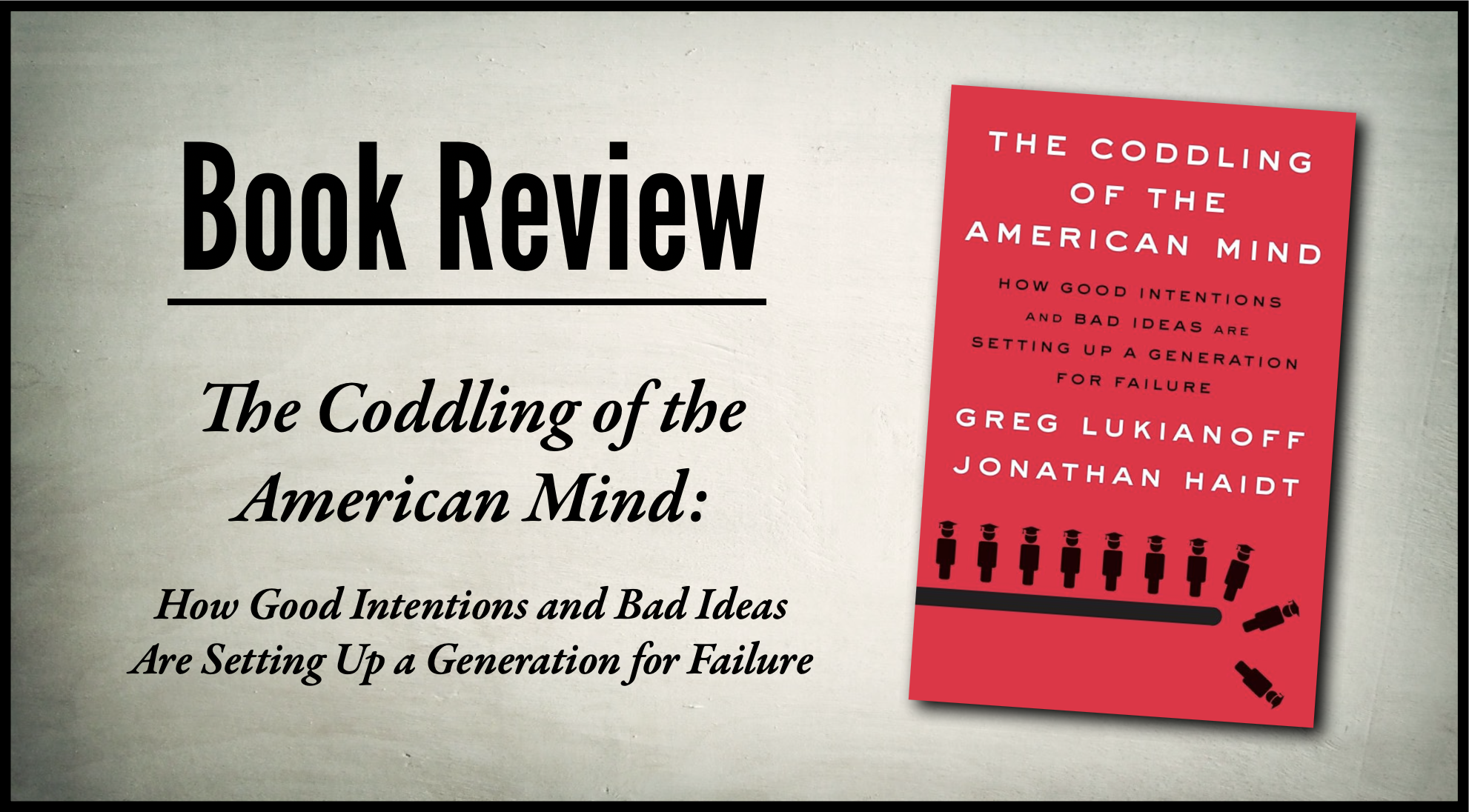
Recently in my college youth ministry class, I was sharing research on current teenagers and college students, and while sharing some main ideas from The Coddling of the American Mind by Greg Lukianoff and Jonathan Haidt, I realized that I had never reviewed the book here on The Doc File. Earlier this year, I wrote a review of Haidt’s The Anxious Generation, and I shared how much I have benefitted from Haidt’s work, and how The Coddling of the American Mind was one of my top books in 2021.

But I want to share more about it, here. The Coddling of the American Mind is, I believe, a really helpful book. It is based on extensive research of the two authors, who come from different professional backgrounds (Lukianoff is an attorney and Haidt is a social psychologist). Politically, they would likely be described as moderate liberals, or centrists or something like that, and they do not write from a religious perspective (I am unsure about Lukianoff, but Haidt is an atheist). I mention that, because some of the central claims of their book resonate with conservative Christians like myself, but they are distinctly not writing from that perspective.

Their research is focused particularly on the culture of college campuses and the characteristics of Gen Z students. The basic premise of the book is that there are three widely-held false beliefs—Lukianoff and Haidt call them untruths—among this generation. To be clear, they are not blaming this generation for holding these beliefs; rather, they are “proposing that today’s college students were raised by parents and teachers who had children’s best interests at heart” but who ultimately raised them in some unhelpful ways.[1]

Part I, which I consider to be the best part of the book, examines these three untruths in great detail:

(1) The Untruth of Fragility: What Doesn’t Kill You Makes You Weaker

This is the basic idea that people are fragile and need to be protected from things that harm them. Not just actual, physical dangers, but also the perception of danger or ideas that they disagree with. Lukianoff and Haidt have major issues with this, however.[2]

First, children are antifragile. Their brains require a wide range of inputs from their environments in order to configure themselves for those environments. Similar to an immune system, children must be exposed to challenges and stressors (within limits, in age-appropriate ways), or they will fail to mature into strong and capable adults, able to productively engage with people and ideas that challenge their beliefs and moral convictions.

Second, concepts like “trauma” and “safety” have expanded so far since the 1980s that they are often employed in ways that are no longer grounded in legitimate psychological research. Grossly expanded conceptions of trauma and safety are now used to justify the overprotection of children of all ages—even college students, who are sometimes said to need safe spaces and trigger warnings lest words and ideas put them in danger. 

Finally, L&H discuss safetyism, or the cult of safety, an obsession with eliminating threats (both real and imagined) to the point where people become unwilling to make reasonable trade-offs demanded by other practical and moral concerns. Safetyism deprives young people of the experiences that their antifragile minds need, thereby making them more fragile, anxious and prone to seeing themselves as victims.[3]

To be clear, the three untruths discussed in Coddling of the American Mind are based on research from the social sciences rather than biblical teaching or some sort of Christian worldview. However, part of the reason this resonates with me so deeply and I teach this material in a college Bible class is because it coheres so well with biblical teaching:

[1] Therefore, since we have been justified by faith, we have peace with God through our Lord Jesus Christ. [2] Through him we have also obtained access by faith into this grace in which we stand, and we rejoice in hope of the glory of God. [3] Not only that, but we rejoice in our sufferings, knowing that suffering produces endurance, [4] and endurance produces character, and character produces hope, [5] and hope does not put us to shame, because God’s love has been poured into our hearts through the Holy Spirit who has been given to us.

(Romans 5.1-5)

Scripture doesn’t teach that hard times in life are tragedies to be avoided at all costs; on the contrary, God works through the suffering in our life to help us grow and mature.

(2) The Untruth of Emotional Reasoning: Always Trust Your Feelings

The basic idea here is that we that we often allow our emotions to be the ultimate interpreter of reality for us. This is problematic for several reasons, though:[4]

One of the most universal insights in the world’s wisdom traditions across time and culture is that what really frightens and dismays us is not external events themselves as much as the way in which we think about them. Put in other words, the things that we worry about tend to be less damaging than the fact that we worry about them!

L&H discuss Cognitive Behavior Therapy at some length, which is a very effective form of therapy that basically involves identifying common cognitive distortions (inaccurate, unhealthy thoughts) and then changing patterns of thinking. I am not a psychologist and this is not a book primarily about psychology, but the point here is that there is an entire branch of psychotherapy based on the understand that our thoughts and emotions can mislead us.

Finally, they discuss the practice of disinviting speakers from giving talks on college campuses due to the claim that these speakers will cause harm to students with their words. The Coddling of the American Mind was written back in 2018 when this practice was increasingly spreading to ridiculous proportions. In some of the fallout and cultural reaction to overreach from the left in the last few years, this practice of disinviting speakers is probably less than it was, but it is still a reality. Here’s the problem, though: feeling a negative emotional response because you disagree with someone is not the same as being harmed by them, and it actually diminishes and disregards real, actual harm when we pretend like it does (this also goes back to fragility).

Of course, none of this means that our emotions are bad or that we should ignore them. Indeed, our emotions are a gift from God. At the same time, our own emotional perceptions of things should not be final judge of reality. Again, this is a very biblical idea:

[12] There is a way that seems right to a man, but its end is the way to death.

(Proverbs 14.12)

[26] Whoever trusts in his own mind is a fool, but he who walks in wisdom will be delivered.

(Proverbs 28.26)

We should be skeptical of our emotions, and it is foolish to base our understanding of the world solely on our own thoughts and feelings.

(3) The Untruth of Us Versus Them: Life Is a Battle Between Good People and Evil People

The basic idea here is that our current cultural context emphasizes Common-Enemy Identity Politics: we identify a person or group that we classify as “evil” and then unite with others in opposition to that “evil” person or group. This should be readily apparent to anyone who pays any attention to public discourse—just think of the labels we use to vilify groups of people with whom we disagree: Trump-supporters, Marxists, Racists, Leftists, Anti-Vaxxers, etc. Again, this is problematic.[5]

It does seem to be true that the human mind functions in such a way that it readily divides the world into us/them categories. Haidt’s earlier work, The Righteous Mind, delves into this more, but if you spend much time with kids, you know how easily and naturally they divide into groups and teams to compete with each other (boys vs. girls, cops and robbers, etc.). L&H are not championing this reality and are not saying it’s something we should seek to amplify, but are simply acknowledging that it is a reality.

It becomes concerning, though, when it naturally leads to Common-Enemy Identity Politics (used both by those on the far right and the far left), which tries to unite a coalition against the “other” group. We determine our identity by what distinguishes us from those other people, who are, of course, inferior to us and quite likely evil to the core. This idea is quite different from Common-Humanity Identity Politics, which was used by people like Dr. Martin Luther King, Jr. MLK humanized his opponents and appealed to their common humanity, rather than demonizing them and emphasizing their differences as enemies.

Common-Enemy Identity Politics produces a call-out culture where almost anything can result in public shaming, which causes people to engage in self-censorship because they are afraid of what will happen if they say what they think (think: cancel culture). In a college context, call-out cultures are detrimental to students’ education and bad for their mental health. Additionally, call-out cultures and us-versus-them thinking are incompatible with the educational and research missions of universities, which require free inquiry, dissent, evidence-based argument, and intellectual honesty. 

And, again, this notion that life is a battle between good people and evil people is not a biblical idea, either. The Bible teaches that all humans are created good, in God’s image, but that all of us are tainted by sin and susceptible to its influence:

[10] Finally, be strong in the Lord and in the strength of his might. [11] Put on the whole armor of God, that you may be able to stand against the schemes of the devil. [12] For we do not wrestle against flesh and blood, but against the rulers, against the authorities, against the cosmic powers over this present darkness, against the spiritual forces of evil in the heavenly places.

(Ephesians 6.10-12)

It’s not that I am good and you are evil, or vice versa—it’s that the battle between good and evil is being waged within our own hearts, as we seek to resist evil spiritual influences

To be clear, what I have shared so far is not the entire book—it’s just Part I! This is the part that I found most helpful in terms of its cultural analysis and bringing clarity to some of what seems to have gone so wrong in our current context, but there are three other sections:

  • Part II looks at what these bad ideas actually look like in action, detailing various recent examples and case studies of events that show the negative effects of living out these ideas in the real world. This is very helpful in establishing that the untruths from Part I truly are widespread and damaging.
  • Part III provides an historical overview of how we go to this point, touching on topics of polarization, anxiety and depression, paranoid parenting, decline of free play, the problems of safetyism, and the quest for justice. Readers of Haidt’s The Anxious Generation and The Righteous Mind will find a lot of familiar territory here. This section is really helpful from an orientation perspective, especially for those who look at the untruths and how they are impacting our society and are scratching their heads: “How did we get here?”
  • Part IV seeks to offer some suggestions for a better way forward, and focuses those suggestions in three areas, helping to form Wiser Kids, Wiser Universities, and Wiser Societies. This section is practical, and provides some ideas for improvement for pretty much anyone, regardless of your context or influence.

I think this is a really helpful book, and I strongly recommend it. It has been overshadowed by the overwhelming popularity of The Anxious Generation (which is great and a must-read), but if you enjoyed that book, there’s likely a lot here for you as well.


[1] Greg Lukianoff and Jonathan Haidt, The Coddling of the American Mind: How Good Intentions and Bad Ideas Are Setting Up a Generation for Failure (New York: Penguin Press, 2018), 31.

[2] Lukianoff and Haidt, 19-32.

[3] Haidt further develops this idea significantly in The Anxious Generation.

[4] Lukianoff and Haidt, 33-51.

[5] Ibid., 53-77.

Book Review: The Anxious Generation

Jonathan Haidt is one of several scholars I have benefited from over the last few years who do not write from a faith perspective but end up saying many things that resonate well with a Christian worldview.[1] I first encountered Haidt when I read and enjoyed The Righteous Mind after a friend recommended it to me in 2020, and The Coddling of the American Mind was one of my favorite reads in 2021. Ever since then, I have paid attention anytime I see an article shared by Haidt, and I was so convicted by his article in The Atlantic on the damage caused by social media to teen girls that I discontinued our youth group Instagram account.

The Anxious Generation: How the Great Rewiring of Childhood is Causing an Epidemic of Mental Illness was published in 2024 and made an immediate splash, but I was slow to read it myself because I was already familiar with a lot of Haidt’s work, had heard multiple presentations on this book in particular, and there were a lot of other books on my to-read list. So, I have been slowly working my way through The Anxious Generation this year and finished it earlier this week. In short, Haidt’s work is a tour de force, and I think it is essential reading for anyone living today who has any significant interaction with or influence over kids and teens.

The current generation of teens and young adults—Generation Z—is widely known to be the most mentally unwell of all generations with off-the-charts instances of anxiety, depression, and other mental health issues. Haidt’s basic contention in the book is that two factors, the decline of a “play-based childhood” (kids running around their neighborhoods exploring, creating games and entire worlds with friends and returning home for meal times or when it gets dark) coupled with the rise of a “phone-based childhood” (kids staying indoors and staring at screens especially on their smartphones and spending hours and hours on social media platforms) have led to the devastating mental health outcomes that we see in members of Gen Z. Haidt’s book has some three major strengths that I want to highlight.

First, Haidt does an excellent job laying out his case. He sets the landscape by identifying the mental health epidemic facing Gen Z, then offers his background narrative of how we got here. He then interacts with tons of research that indicates how a phone-based childhood disrupts child development in four key ways: (1) sleep deprivation, (2) social deprivation, (3) attention fragmentation, and (4) addiction.

Second, Haidt offers actionable advice regarding what we can do about this crisis. It is common for authors to spend the vast majority of their books describing a problem and then to offer a few pages of how we can respond to the problem at the very end. Haidt, however, offers a substantial Part 4, “Collective Action for Healthier Childhood” with dozens of ideas and examples of tangible things that governments and tech companies, schools, and parents can do now to address this problem and turn the tide of the mental health crisis. These suggestions fall into four foundational reforms: (1) No smartphones before high school, (2) No social media before age 16, (3) Phone-free schools, and (4) Far more unsupervised play and childhood independence.

Third, the book is written in such a way that it is really easy to come away with the main thrust of his arguments without getting lost in the weeds. The book is 300 pages long with another 40 pages of footnotes. To me that’s very manageable and I thought it was an enjoyable read, but I realize that is not the case for everyone. Never fear! At the end of each chapter, Haidt has an “In Sum” section where he offers a bulleted list of the main ideas of the chapter. This means that you could spend half an hour reading the summary sections at the end of each chapter and come away with a really solid understanding of his argumentation in the book—this is a great feature!

The book is so well done; I don’t think there are any major weaknesses. Haidt can come across a little strong at times (especially in the sense that his explanation is the explanation for the mental health epidemic), but he works hard to establish his claims, feels passionately about them, and honestly acknowledges places where his conclusions aren’t yet supported by rigorous research or where others disagree. Additionally, as I mentioned above, Haidt writes from a secular perspective and as part of that, he taps heavily into evolution as the explanation for how kids are naturally supposed to develop and how a phone-based childhood disrupts that. This can be frustrating at times, especially when he says things about how evolution designs certain characteristics, but ultimately, I was still able to appreciate the point he was making and attribute the element of human nature in question to the design work of a Creator, whether brought about through evolution or some other process.

Normally I like to share quotations, but there are simple too many noteworthy observations in the book to include here; I have highlights on almost every page. The Anxious Generation will definitely make my Top-10 list for 2025; I highly recommend it.


[1] See also Tom Holland, Jordan Peterson, and Louise Perry.

Do Not Be Anxious about Your Life

This is an edited version of a sermon that I recently preached at Cloverdale Church of Christ.

I think that some people are naturally inclined toward worry, and I confess that I am one of those people. For as far back as I can remember, I have always struggled with worrying about things. This is still true today. In fact, over the last several months (with brief interludes), I have been stressed about a lot of different things and worried about fulfilling all of the commitments that I’ve made. And, of course, I know it’s not healthy to carry so much stress, so at times I worry about that too! I’m stressed out about how much stress I have! What an ironic and annoying cycle that is.

I suspect that I’m not the only one who struggles with this. Not the only person who feels stressed out and overstretched, not the only person who worries about people I love, not the only person who is uncertain about the future and the world in which we live, not the only person who is tempted to be anxious about a lot of things. I suspect that because we live in anxious times.

Anxious Times

Social psychologist Jonathan Haidt recently published a book, The Anxious Generation, that chronicles the alarming state of mental health among Generation Z, those individuals roughly between the ages of 10-25. By virtually any measure of mental health—psychological disorders, diagnoses of anxiety and depression, instances of non-fatal self-harm, and suicide rates—Gen Z is in a rough spot. Haidt ties this significantly to smartphones and social media because it was around 2010—when smartphones with social media apps became prevalent—that all of these measures began to spike upward. But there are other correlating factors too: drastically reduced amounts of sleep (which basically makes every aspect of life worse), breakdown of real-life interpersonal relationships, and certain parenting trends. An additional factor that I would add, which Haidt (who is not religious) leaves out: research consistently indicates a wide array of positive traits (including positive mental health outcomes) related to religious faith, but we live in a rapidly secularizing society where faith is on the decline. That is certainly part of the picture as well.


And while Haidt’s research focuses on Generation Z, these spikes in anxiety and depression are present in other generations as well. The spikes may not be quite as severe, but they’re there and they are significant. 

What sorts of things make you anxious?

  • Maybe it’s financial issues: will your paycheck stretch enough to be able to last for the whole month? Are you putting enough aside to live on when you retire? Is retirement even an option? 
  • Forget about retirement: maybe you’re anxious simply about the prospect of being able to get a job that will support a family. Maybe you’re worried about all of the schooling that lies between you and that job and all of the stress that comes with it.
  • Maybe it’s relational: maybe you are concerned about your relationship with your spouse, or your boyfriend or girlfriend, or your roommate, or your boss, or your co-workers, or your parents, or your children, or you adult children.
  • Maybe you are concerned about the health of a family member, or your own health—a recent diagnosis.
  • Maybe you’re worried about the upcoming election season—the direction of our country, the future of our nation.

We live in anxious times, and there is so much that can drive us to anxiety and worry if we let it. But Jesus has something to say about this. He has counsel for us to consider. Before we get into that, there are two things I want to mention briefly, just so you can be sure of what I’m not trying to say:

  • I don’t believe that Jesus’s teaching about anxiety means that you are a deficient Christian if you struggle with this or that it is wrong for you to seek help from a licensed counselor. Not at all. If you have an anxiety disorder, going to get help with that disorder is an exercise in actually trying to obey what Jesus says here. 
  • Also, not all worries and concerns are the same. The Bible actually speaks positively about Paul’s anxiety for the churches (2 Cor 11.28) and Timothy’s anxiety for the welfare of the Philippians (Phil. 2.20). Some issues are more worthy of our concern than others. But even in those areas, I think what Jesus says here is still helpful.

What Jesus Wants Us to Remember in Anxious Times

22 And he said to his disciples, “Therefore I tell you, do not be anxious about your life, what you will eat, nor about your body, what you will put on. 23 For life is more than food, and the body more than clothing. 24 Consider the ravens: they neither sow nor reap, they have neither storehouse nor barn, and yet God feeds them. Of how much more value are you than the birds! 25 And which of you by being anxious can add a single hour to his span of life? 26 If then you are not able to do as small a thing as that, why are you anxious about the rest? 27 Consider the lilies, how they grow: they neither toil nor spin, yet I tell you, even Solomon in all his glory was not arrayed like one of these. 28 But if God so clothes the grass, which is alive in the field today, and tomorrow is thrown into the oven, how much more will he clothe you, O you of little faith! 29 And do not seek what you are to eat and what you are to drink, nor be worried. 30 For all the nations of the world seek after these things, and your Father knows that you need them. 31 Instead, seek his kingdom, and these things will be added to you.

32 “Fear not, little flock, for it is your Father’s good pleasure to give you the kingdom. 33 Sell your possessions, and give to the needy. Provide yourselves with moneybags that do not grow old, with a treasure in the heavens that does not fail, where no thief approaches and no moth destroys. 34 For where your treasure is, there will your heart be also.

(Luke 12.22-34)

In this passage, beginning in Luke 12.22, Jesus tells His disciples, “Do not be anxious about your life, what you will eat, nor about your body, what you will put on.” It’s probably worth noting up front that Jesus is very aware that there are things in life that will prompt us to worry.

Look at the life of Jesus: did He experience financial insecurity? Of course: He was essentially homeless during His public ministry, and had to rely on the generosity of others or the occasional coin from the mouth of a fish to cover His expenses. Did He have relational problems? His brothers thought he was crazy, his cousin John was murdered, and one of His followers betrayed Him. Did he carry a lot of stress related to work? Well, His job was to be the Savior of the entire world, so yes, I think you could say that there was stress involved in work of that magnitude. 

Jesus wasn’t sheltered from the anxiety we feel. He lived in anxious times, too.

From Luke 12, here’s what Jesus wants us to remember in anxious times:

(1) Your Father knows, and He loves you.

We need to note that Jesus addresses this entire section of teaching to disciples—people who know God as their Father and are seeking to entrust Him with their lives. I say this because, if you don’t know God as your Father, I do genuinely believe that there is a lot to be worried about. Not just because of your eternal destination, but on a fundamental level, without God as your Father, you basically believe that it’s all up to you. You’re on your own in this life and you have to figure out your troubles yourself. 

But if we are disciples of Jesus, it should be different. God provides for the ravens, and He values us much more than they—we shouldn’t worry about our food. God clothes the lilies of the field and makes them beautiful, and values us much more than they—we shouldn’t worry about our clothing.

Jesus says in Luke 12.30 that “the nations of the world”—the Gentiles, those who don’t know God—they worry about these things. And that makes sense: they don’t know God as their Father. But it doesn’t make sense for those of us who claim God as our Father to worry about these things. If we are believers, we shouldn’t live like atheists. 

God is our Father. He knows what we need, and He loves us.

(2) Worrying doesn’t help.

Jesus asks in Luke 12.25, “Which of you by being anxious can add a single hour to his span of life?” Jesus is underscoring here the impotence, the powerlessness of worry—which of your problems can you solve by worrying about them?

A lot of the time we worry about things that are cloaked in the uncertainty of the future: an important meeting or presentation that is coming up, a difficult conversation that you are dreading, or the results from a medical scan that might change your life. But really, worrying about the future is just a way for us to increase the amount of trouble we have without solving anything. After all, if what we are worried about doesn’t come to pass, then we have worried for no reason. If the thing we are worried about does come to pass, we’ve robbed ourselves of peace of mind without positively affecting the situation in any way.

Worrying doesn’t help things. 

(3) Seek first God’s kingdom. 

Instead of being preoccupied with the worries and concerns of this world, we should instead seek God’s kingdom (Luke 12.31). Another way we could say this as disciples of Jesus is that we should emulate His way of life and make His priorities our priorities. 

And if we do that, Jesus says, all of these other things that we need will be added to us. And, by the way, don’t think that this emphasis on the kingdom means that we should add the kingdom to the list of things that plague us with anxiety—that kind of misses the point. Instead, we should seek the kingdom knowing that it is our Father’s “good pleasure to give it to us” (12.32).

We live in anxious times. But remember, Jesus says: your Father knows and He loves you, worrying doesn’t help, seek first God’s kingdom, and the other things will be added to us.

Where Do We Go From Here?

As we seek to apply Jesus’s teaching to our lives, here are a few things to consider:

(1) Take your worries to your Father.

Anxieties will come. We live in anxious times and there’s much to worry about if we indulge those impulses. When you feel the burdens and stresses of life weighing you down, when you feel the stress and anxiety spiking your blood pressure, take it to God in prayer.

Earlier I mentioned the experience of Jesus and the anxieties He must have felt, but generally speaking, He never let it show. But that changed on the night He was betrayed, in the Garden of Gethsemane—it all seemed to come crashing down. Jesus was clearly anxious as He anticipated the horrendous death that was approaching. So what did He do? He took it to the Father, and in so doing, received the strength He needed to face what was coming.

It has been true in my life that I tend to worry less when I pray more.

(2) Count your blessings, not your concerns.

I don’t know about you, but one of the hardest times for me can be at night, lying awake, worrying about all the things I need to get done, all the problems I need to solve, all the people I need to fix (ha!). 

As I am tempted to just lay there, doom cycling through all of my concerns, I’ve found that a helpful practice instead is to focus on my blessings rather than my worries. Sometimes I’ll work my way through the alphabet, thinking of a blessing in my life that begins with each letter. 

This accomplishes multiple purposes: it distracts me from the things I was obsessively worrying about, it reminds me of blessings that I may have otherwise overlooked, and it shifts my focus from the things in life that I think I have to take care of to the Father who takes care of me. (And it puts me to sleep, which is an added bonus!)

It has been true in my life that I tend to worry less when I thank God more.

(3) Freely give of your money, possessions, and time.

Jesus especially focuses on material possessions when talking about things that we shouldn’t worry about. It is no coincidence that right before this, we have the Parable of the Rich Fool, who tries to hoard wealth in an effort to provide peace and security for his life, and at the end of this passage, beginning in 12.33, Jesus says, “Sell your possessions, and give to the needy. Provide yourselves with moneybags that do not grow old, with a treasure in the heavens that does not fail, where no thief approaches and no moth destroys. For where your treasure is, there will your heart be also.”

If our lives revolve around the acquisition of wealth, comfort, status, and security, then that’s where our hearts will and we will be consumed by anxiety for those things. But if our lives revolve around God’s kingdom, then we will freely give those things away and in the process, they will lose their hold over us. Where your treasure is, there will your heart be also.

It has been true in my life that I tend to worry less when I give more.

Jesus says, “Do not be anxious about your life.” He says that not to shame you, but to save you.

© 2026 The Doc File

Theme by Anders Noren — Up ↑