Today’s reflection comes from Acts 17, where Paul and Silas travel to Thessalonica as part of the Second Missionary Journey. As was Paul’s custom, they head first to the synagogue and tell the Jews there about Jesus, using the Hebrew Bible. This method is successful, at least with some:
“Some of the Jews believed Paul and Silas and joined them. In the synagogue there were many Greeks. They worshiped the one true God. There were also many important women. They joined Paul and Silas too.
(Acts 17.4, IEB)
But there are also some Jews who reject Paul and Silas’s message and who, out of jealousy (v.5), hire some men to stir up trouble against them. A mob ensues, and cries out:
”[These men] do things against the laws of Caesar. They say that there is a different king named Jesus.”
(Acts 17.7b)
This proclamation (from a mob, no less!) highlights one of the central truths of Scripture, but one that needs to be carefully nuanced: Jesus is the King of the world.
This idea, that Jesus is King, is what the most popular titles used for Jesus are getting at. When we say that Jesus is Messiah or Christ (the same term in two different languages), the idea is that He is the promised king from the line of David, the One to whom the narrative of the Hebrew Bible points. When we say that Jesus is Lord, we are moving from Hebrew to Roman thought: Lord was the title given to Caesar, the presumed king of the known world. To say that “Jesus is Lord” is to necessarily imply that Caesar is not.
And, indeed, this is the very notion proclaimed in the verse quoted above—the mob was right. Jesus is the King of the world, seated at the right hand of God the Father since His resurrection and ascension. Followers of King Jesus owe ultimate allegiance to Him, and this will invariably put them at odds with various other would-be kings from time to time. For those who are desperate to cling to worldly power and demand ultimate allegiance from their subjects, citizenship in God’s kingdom is an inherent threat. May we never forget that King Herod sought to eliminate the baby Jesus who He viewed as a rival, that Jesus was ultimately crucified with “King of the Jews” nailed above His head as the charge of which He was guilty, and that Peter and Paul would ultimately be martyred under the authority of a rival king (Nero) because of their allegiance to Jesus.
But, the mob was also wrong. While Jesus is certainly King, He is a different kind of king. He wasn’t seeking Herod’s throne, control of the Jewish establishment in Jerusalem, or even the overthrow of the Roman Empire. Such prizes were much too petty for the rightful King of the Universe. This is why Jesus can clearly state that His kingdom is not of this world and that His followers will not use violence to bring it about. It is why early Christians were at pains to show that they were good citizens who sought the welfare of the communities in which they lived (cf. Jeremiah 29.7), loved their neighbors, and submitted to government authorities.
The nuanced kingship of Jesus must lie at the center of the lives and identity of Christians today. On the one hand, Christians should be the best neighbors and citizens around. We are willing to help and sacrifice for our communities because we love others (including our enemies!). We seek to be at peace with all people, so we avoid controversies and quarrels. We appreciate the value of submission, so we obey the laws of our land whenever we can do so in good conscience, even when we find those laws irksome.
On the other hand, our ultimate allegiance is to King Jesus, and our primary citizenship lies in His kingdom, not in whatever earthly nation that we happen to inhabit. This means that we are all-too-aware of the fallenness of our earthly nations. We should not hesitate to critique them when they are in the wrong, and we should not be surprised when they demand from us more allegiance than they have a right to (after all, this is what fallen earthly kingdoms invariably do).
And if and when we are ever placed in a position where we must choose where our loyalties lie, there is no choice: our allegiance is to a different King, and His name is Jesus.
If and when we are ever placed in a position where we must choose where our loyalties lie, there is no choice: our allegiance is to a different King, and His name is Jesus. Share on XThe point of this post—that Jesus is the King of the universe and it is to Him that Christians owe ultimate allegiance—may seem like an obvious point, and, indeed, I think it should be obvious. Sadly, though, research proves otherwise. Consider the following survey results (sourced at the bottom of the graphic):
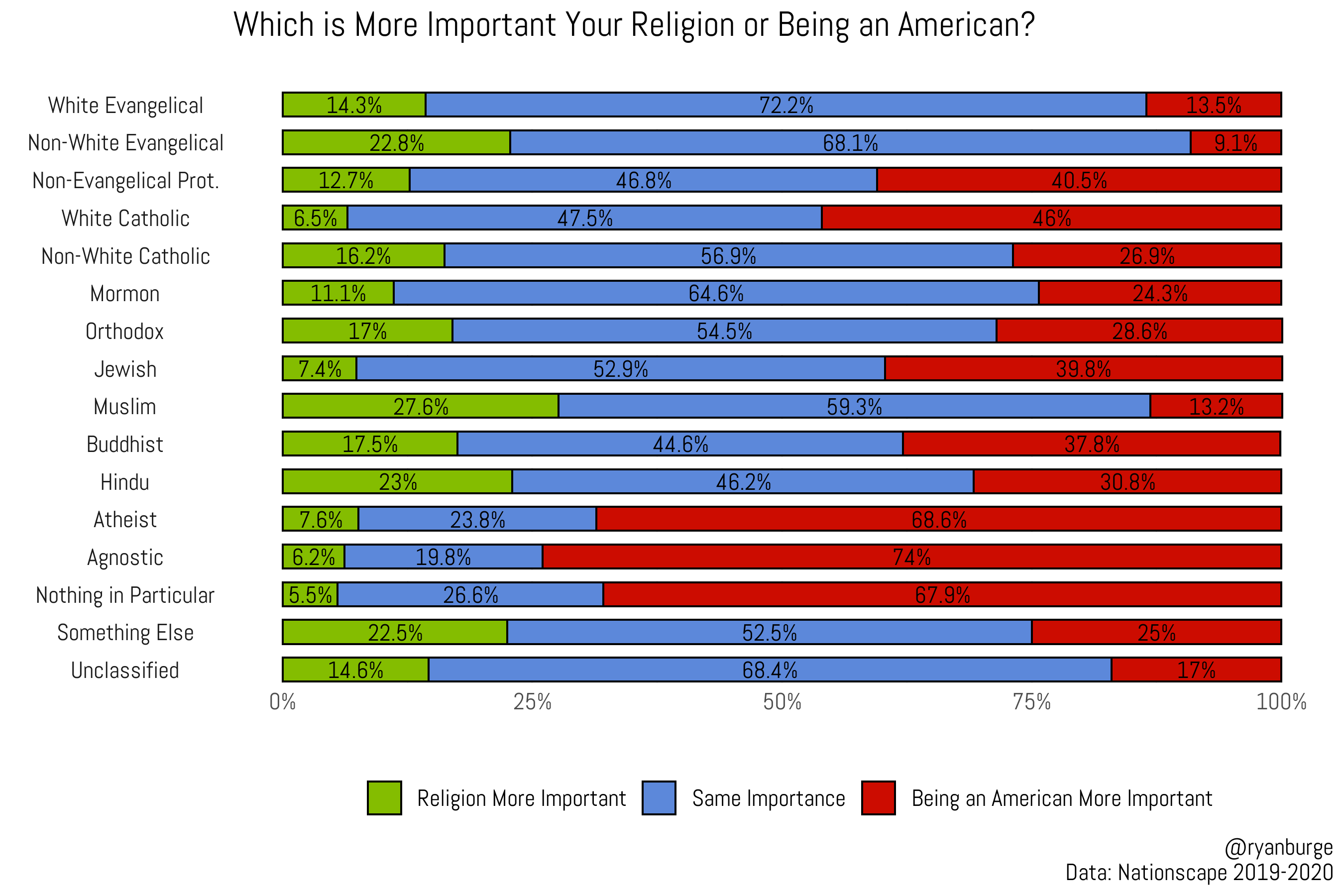
Obviously, there are many, many people who claim to be “Christian”, but do not embrace the reality at the center of the Christian faith: Jesus is Lord, and that means that no one else is.

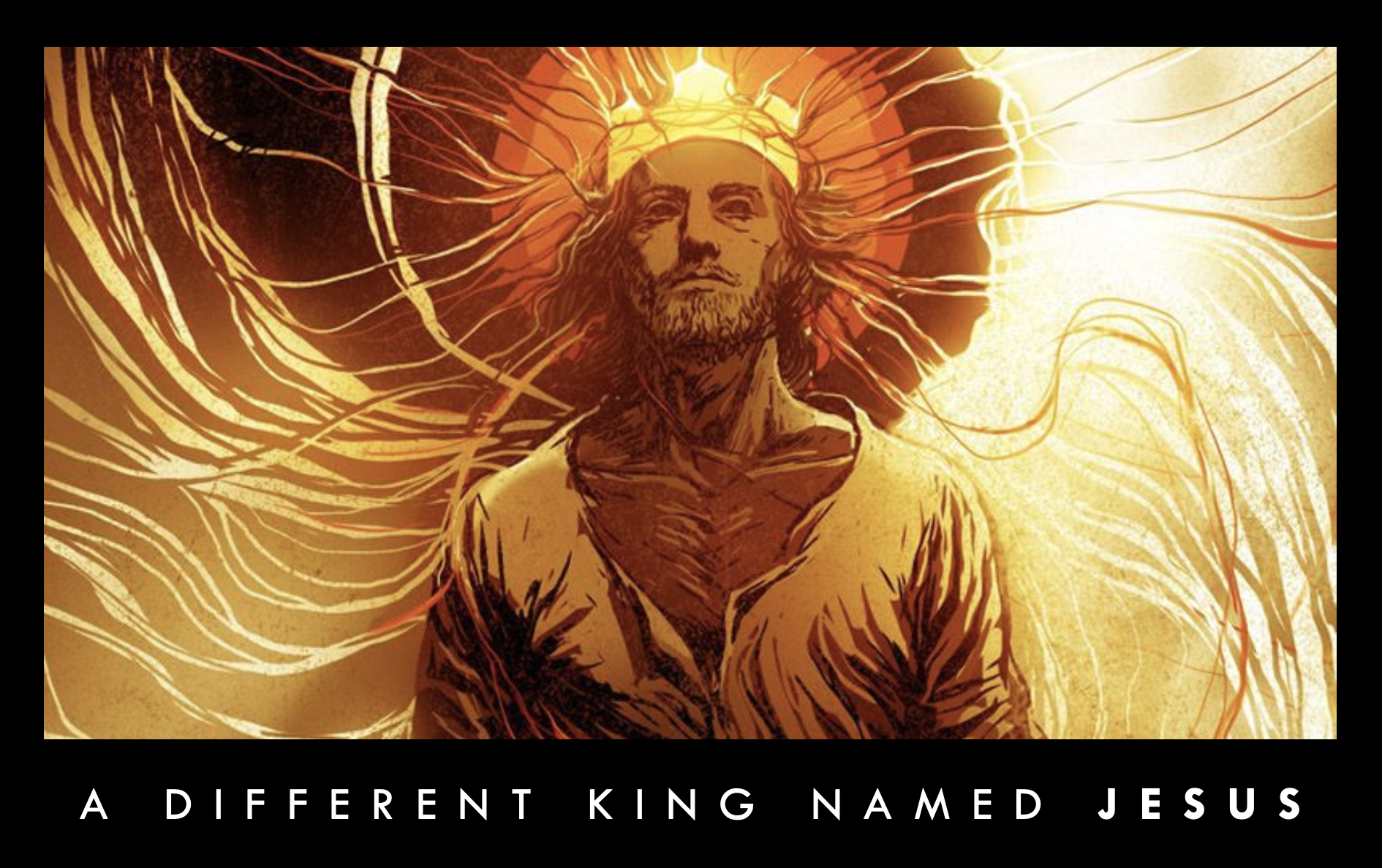
This image, drawing inspiration from the book of Revelation, is one of my favorite images depicting Jesus as King. The artist is Chris Koelle, and it comes from a graphic novel of the Book of Revelation that I highly recommend.
 In this loose series of Scripture Reflections, I am sharing brief thoughts spurred on by my Bible reading this year. By way of reminder, my goal for these brief posts is two-fold:
(1) To remark on aspects of the biblical text that I find to be of interest that the reader may or may not have thought about previously.
(2) When possible, to point ahead to the work and person of Jesus Christ. I believe the Bible is a unified story that points to Jesus, which means that He is frequently alluded to or foreshadowed in some way throughout the biblical canon.