The online journal of Luke Dockery

Category: Reviews (Page 2 of 16)

Exiled from Home

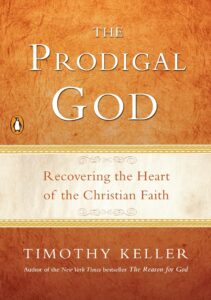
This is the second in a short series of posts based on a rereading of Tim Keller’s The Prodigal God. As I mentioned in the first post, although I liked the book the first time I read it, I suspect that I wasn’t quite at the place in life to fully appreciate it and I enjoyed it much more the second time around.


In The Prodigal God, Keller describes how all of us can identify with the younger brother. This doesn’t mean that we have dramatic departures from home, characterized by reckless, sinful living in the far country. Indeed, I personally don’t identify with this aspect of the younger son; it has always been the elder brother that strikes a little too close to home for me.

But there is another sense that we are like the younger brother: we feel like we are away from home, and there is a yearning that nothing quite seems to meet. Indeed, this element of being exiled from home is a key feature of the biblical narrative:[1]

We are all exiles, always longing for home. We are always traveling, never arriving. The houses and families we actually inhabit are only inns along the way, but they aren’t home. Home continues to evade us.

Why would “home” be so powerful and yet so elusive for us? The answer can be found as we examine one of the most pervasive themes of the Bible. The experience we have been describing is the trace in our souls of this larger story.

In the beginning of the book of Genesis we learn the reason why all people feel like exiles, like we aren’t really home. We are told there that we were created to live in the garden of God. That was the world we were built for, a place in which there was no parting from love, no decay or disease. It was all these things because it was life before the face of God, in his presence. There we were to adore and serve his infinite majesty, and to know, enjoy, and reflect his infinite beauty. That was our original home, the true country we were made for.

However, the Bible teaches that, as in Jesus’s parable, God was the “father” of that home and we chafed under his authority. We wanted to live without God’s interference, and so we turned away, became alienated from him, and lost our home for the same reason the younger brother lost his. The result was exile.

So, this is another element of tragedy that comes from the story of rebellion and fall in the Garden of Eden. In addition to the devastating effects of sin, the feeling of being exiled from home becomes a defining characteristic of our lives. Like the younger son, we rebel against our father, and like the younger son, we suffer from homelessness as a result.

The Bible says that we have been wandering as spiritual exiles ever since. That is, we have been living in a world that no longer fits our deepest longings. Though we long for bodies that “run and are not weary,” we have become subject to diseases, aging, and death. Though we need love that lasts, all our relationships are subject to the inevitable entropy of time, and they crumble in our hands. Even people who stay true to us die and leave us, or we die and leave them. Though we long to make a difference in the world through our work, we experience endless frustration. We never fully realize our hopes and dreams. We may work hard to re-create the home that we have lost, but, says the Bible, it only exists in the presence of the heavenly father from which we have fled.

Here, Keller comes to the crux of our existential crisis: we have been living in a world that no longer fits our deepest longings. Keller mentions three aspects of this:

  1. The physical decay of our bodies, ultimately resulting in death
  2. The disintegration of our valued relationships
  3. The ultimate futility of our desire to leave a legacy or make a difference in the world

This is straight out of the book of Ecclesiastes: the hebel or vanity of life.

This is an element of The Prodigal of God that resonates much more deeply as I read this now than when I was in my mid-20s. I am aware of the physical decay of my body and the overall fragility of life. I am not as fast as I used to be, I have to work harder to be strong, I get injured more easily, and it takes longer to recover. I am too keenly aware of people whose lives are snuffed out at a young age through accident, illness, or tragedy, and I have witnessed more and more people that I care about pass away.

In my mid-20s, my friendships seemed so healthy and even “old friendships” seemed very recent, but since then I have seen how they are “subject to the inevitable entropy of time.” I have witnessed the dissolution of the marriages of couples that I have loved, and the ending of many of my friendships—sometimes abruptly through events I don’t even understand, sometimes through a change in lifestyle and values, and sometimes just the slow fade caused by geographical distance. And, as Keller points out, even the very best and most faithful relationships end in death (theirs or ours).

In my mid-20s, it seemed like my whole life was ahead of me, and I had plenty of time to make my mark on the world (whatever that would look like). Now, I am days away from my 42nd birthday, decidedly middle-aged, and keenly aware that I am not going to find lasting significance in my work or accomplishments and that I will be forgotten shortly after I die (echoes of Ecclesiastes again). I am incapable of accomplishing everything I want to, regardless of how hard I work.

And these are universal feelings: 

This theme is played out again and again in the Bible. After Adam and Eve’s exile from the ultimate home, their son Cain was forced to restlessly wander the earth because he murdered his brother Abel. Later Jacob cheated his father and brother and fled into exile for years. After that, Jacob’s son Joseph and his family were taken from their homeland into Egypt because of a famine. There the Israelites were enslaved until, under Moses, they returned to their ancestral home. Centuries after this, David, before he became king, lived as a hunted fugitive. Finally the whole nation of Israel was exiled again, taken captive to Babylon by King Nebuchadnezzar.

It is no coincidence that story after story contains the pattern of exile. The message of the Bible is that the human race is a band of exiles trying to come home. The parable of the prodigal son is about every one of us.

Now, all of this sounds depressing, but none of this should drive us to despair. It should, however, help us “come to our senses” (Luke 15.17), realize how good things are with our Father, and come home to Him!

Or, in the words of C.S. Lewis: “If we find ourselves with a desire that nothing in this world can satisfy, the most probable explanation is that we were made for another world.”[2] These longings that we have are not inappropriate or outrageous, but we will not find them here.

So, the Christian is like the prodigal son: there is an uneasy realization that we are exiles far from home, and we are trying to get home to our Father (and the Elder Brother that we need). And one glorious day, we will be exiled no longer.


[1] The quoted portions are from Timothy Keller, The Prodigal God: Recovering the Heart of the Christian Faith (New York: Dutton, 2008), 95-98.

[2] C.S. Lewis, Mere Christianity (San Francisco: HarperOne, 2001), 136-37.

The Elder Brother We Need

Rereading books is such an interesting enterprise for me. Multiple times, I have been surprised at how much more I appreciate a book the second time I read it, and that is certainly the case with Timothy Keller’s The Prodigal God. I first read this book over 15 years ago when I was still a new minister, and back then, I thought it had some good things to say but wasn’t overly impressed. I reread it earlier this year, and several things have changed significantly since I first read it, including that I am now a father, I have been in the trenches of ministry for nearly two decades, I have developed a deep appreciation for the ministry and wisdom of Tim Keller, and I have developed a keen awareness of my own sinfulness. Taken together, this means that The Prodigal God struck me differently the second time through—I loved it.


In The Prodigal God, Keller uses Jesus’s famous parable of the Prodigal Son as a lens to examine the heart of the Christian gospel. It is a short book—less than 150 pages—and can easily be read in a few hours, but it is packed with wisdom and insight. I’d like to write a few short posts to focus on some of the ideas that struck me most.

In popular tellings of the Prodigal Son, much of the attention is given to the younger son, who demands his share of his father’s inheritance, moves off to a far country, squanders everything he has, and then returns home to his father when he is destitute. When he returns, his father welcomes him back and throws a party for him, and this element of the story emphasizes key aspects of the gospel story—our sinfulness and lack of gratitude, and the love, generosity, mercy, and forgiveness of God.

All of this is important, but of course, in Jesus’s telling of the story, there are two sons, and they are both important if we are to understand the nature of humanity and the truth of the gospel. There is also an elder brother who stays at home dutifully working for his father, and who is embittered when his younger brother returns and is celebrated by his dad. If the younger brother represents the “tax collectors and sinners” that Jesus spent so much time with, the elder brother represents the Pharisees and religious leaders who were dutiful but hard-hearted and misunderstood the nature of God.

From Keller:

By putting a flawed elder brother in the story, Jesus is inviting us to imagine and yearn for a true one.

And we have him. Think of the kind of brother we need. We need one who does not just go to the next country to find us but who will come all the way from heaven to earth. We need one who is willing to pay not just a finite amount of money, but, at the infinite cost of his own life to bring us into God’s family, for our debt is so much greater. Either as elder brothers or as younger brothers we have rebelled against the father. We deserve alienation, isolation, and rejection. The point of the parable is that forgiveness always involves a price—someone has to pay. There was no way for the younger brother to return to the family uniless the older brother bore the cost himself. Our true elder brother paid our debt, on the cross, in our place.

There Jesus was stripped naked of his robe and dignity so that we could be clothed with a dignity and standing we don’t deserve. On the cross Jesus was treated as an outcast so that we could be brought into God’s family freely by grace. There Jesus drank the cup of eternal justice so that we might have the cup of the Father’s joy.  There was no other way for the heavenly Father to bring us in, except at the expense of our true elder brother.[1]

Jesus is the elder brother we so desperately need: He goes to great lengths to pursue us, assumes our debt Himself, and celebrates our return.


[1] Timothy Keller, The Prodigal God: Recovering the Heart of the Christian Faith (New York: Dutton, 2008), 84-85.


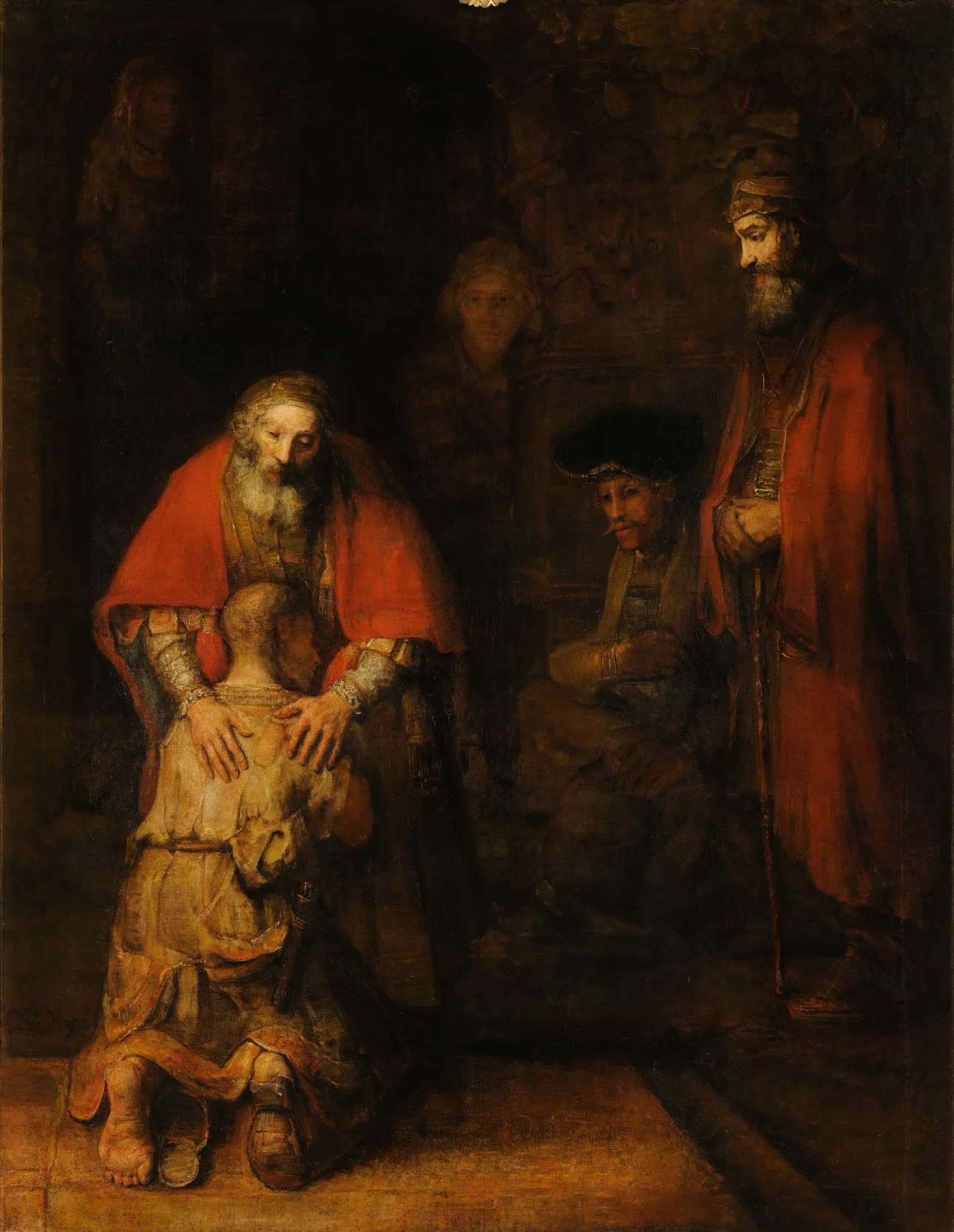
The image above is from Rembrandt’s 1669 masterpiece, “The Return of the Prodigal Son.” The elder brother stands on the right, literally and figuratively looking down on his younger brother.

Book Review: The Anxious Generation

Jonathan Haidt is one of several scholars I have benefited from over the last few years who do not write from a faith perspective but end up saying many things that resonate well with a Christian worldview.[1] I first encountered Haidt when I read and enjoyed The Righteous Mind after a friend recommended it to me in 2020, and The Coddling of the American Mind was one of my favorite reads in 2021. Ever since then, I have paid attention anytime I see an article shared by Haidt, and I was so convicted by his article in The Atlantic on the damage caused by social media to teen girls that I discontinued our youth group Instagram account.

The Anxious Generation: How the Great Rewiring of Childhood is Causing an Epidemic of Mental Illness was published in 2024 and made an immediate splash, but I was slow to read it myself because I was already familiar with a lot of Haidt’s work, had heard multiple presentations on this book in particular, and there were a lot of other books on my to-read list. So, I have been slowly working my way through The Anxious Generation this year and finished it earlier this week. In short, Haidt’s work is a tour de force, and I think it is essential reading for anyone living today who has any significant interaction with or influence over kids and teens.

The current generation of teens and young adults—Generation Z—is widely known to be the most mentally unwell of all generations with off-the-charts instances of anxiety, depression, and other mental health issues. Haidt’s basic contention in the book is that two factors, the decline of a “play-based childhood” (kids running around their neighborhoods exploring, creating games and entire worlds with friends and returning home for meal times or when it gets dark) coupled with the rise of a “phone-based childhood” (kids staying indoors and staring at screens especially on their smartphones and spending hours and hours on social media platforms) have led to the devastating mental health outcomes that we see in members of Gen Z. Haidt’s book has some three major strengths that I want to highlight.

First, Haidt does an excellent job laying out his case. He sets the landscape by identifying the mental health epidemic facing Gen Z, then offers his background narrative of how we got here. He then interacts with tons of research that indicates how a phone-based childhood disrupts child development in four key ways: (1) sleep deprivation, (2) social deprivation, (3) attention fragmentation, and (4) addiction.

Second, Haidt offers actionable advice regarding what we can do about this crisis. It is common for authors to spend the vast majority of their books describing a problem and then to offer a few pages of how we can respond to the problem at the very end. Haidt, however, offers a substantial Part 4, “Collective Action for Healthier Childhood” with dozens of ideas and examples of tangible things that governments and tech companies, schools, and parents can do now to address this problem and turn the tide of the mental health crisis. These suggestions fall into four foundational reforms: (1) No smartphones before high school, (2) No social media before age 16, (3) Phone-free schools, and (4) Far more unsupervised play and childhood independence.

Third, the book is written in such a way that it is really easy to come away with the main thrust of his arguments without getting lost in the weeds. The book is 300 pages long with another 40 pages of footnotes. To me that’s very manageable and I thought it was an enjoyable read, but I realize that is not the case for everyone. Never fear! At the end of each chapter, Haidt has an “In Sum” section where he offers a bulleted list of the main ideas of the chapter. This means that you could spend half an hour reading the summary sections at the end of each chapter and come away with a really solid understanding of his argumentation in the book—this is a great feature!

The book is so well done; I don’t think there are any major weaknesses. Haidt can come across a little strong at times (especially in the sense that his explanation is the explanation for the mental health epidemic), but he works hard to establish his claims, feels passionately about them, and honestly acknowledges places where his conclusions aren’t yet supported by rigorous research or where others disagree. Additionally, as I mentioned above, Haidt writes from a secular perspective and as part of that, he taps heavily into evolution as the explanation for how kids are naturally supposed to develop and how a phone-based childhood disrupts that. This can be frustrating at times, especially when he says things about how evolution designs certain characteristics, but ultimately, I was still able to appreciate the point he was making and attribute the element of human nature in question to the design work of a Creator, whether brought about through evolution or some other process.

Normally I like to share quotations, but there are simple too many noteworthy observations in the book to include here; I have highlights on almost every page. The Anxious Generation will definitely make my Top-10 list for 2025; I highly recommend it.


[1] See also Tom Holland, Jordan Peterson, and Louise Perry.

Ranking Disney Parks: Disneyland Edition

Last March, I wrote a post in which I ranked the Walt Disney World Parks after my family traveled there in December 2023. This past March, Caroline and I took a trip to California and as part of that, got to visit the original Disneyland. It seemed only fitting for me to review Disneyland using the same criteria I used to evaluate the Disney World parks, and then see how it compares.

In many ways, Disneyland reminded me a lot of Magic Kingdom (of course, really, it’s the other way around since Disneyland is the original, but I went to Magic Kingdom first) with the added bonus of having the best part of Hollywood Studios thrown in (Star Wars: Galaxy’s Edge). It is a really good park.

Here are the criteria I will use in rating the park:

  • Rides: Rides are the first thing that people care about. Here, I won’t be evaluating the parks on the overall number of rides specifically (though that could come into play under “Special Considerations” below). Rather, my ratings will be specifically based on the number of Tier 1 and Tier 2 rides in each park.[1] I will rate the parks’ rides on a scale of 1-10.
  • Theming: Something that really sets Disney apart from other amusement parks is the level of detail they bring to their theming. You actually feel like you have been transported to other countries (or galaxies!). Still, some of the parks do a better job at this than others. I will rate the parks’ theming on a scale of 1-10.
  • Special Considerations: Basically, this is everything that doesn’t quite fit into the other categories. This might include things like shows, park layout, and other things. Parks can receive bonus points or penalties for these considerations.

I will talk about the parks in the order in which we visited them, and then circle back at the end to put the rankings side by side.


Rides

When I ranked Magic Kingdom, I said that it had a ton of rides, but that they weren’t great, at least for adults. Disneyland is similar. There is a ton of stuff to do for kids, and there are good rides for adults, too, but none that would qualify as Tier 1 in my opinion. However, because, as noted above, Disneyland is basically a combination of Magic Kingdom and Hollywood Studios, there are more Tier two rides at Disneyland than any of the Disney World parks.:

  • Big Thunder Mountain seems to be the same ride, or very similar, as the one at Magic Kingdom. It is a solid Tier 2—not spectacular, but a good, fun coaster.
  • Disneyland has a Space Mountain like Magic Kingdom, but when we were there, it was Star Wars themed as Hyperspace Mountain. This means it was basically the same ride, but instead of complete darkness, there were now projections of TIE fighters and Star Destroyers. This was a really cool touch that we both thought added to the experience.
  • Disneyland has Star Wars: Galaxy’s Edge just like Hollywood studios, which means that there are multiple good Star Wars rides: Star Wars: Rise of the Resistance, Millennium Falcon: Smugglers Run, and Star Tours. I wrote about these in the other post, so I won’t rehash that here other than to say they are all fun rides worth riding and my personal hot take is that Star Tours is the best of the three (despite being the oldest and least hyped). I just love how it is a different experience every time.
  • Tiana’s Bayou Adventure wasn’t open yet when we went to Magic Kingdom, but we got to catch it here and it was really good. It is a pretty standard log flume water ride, but with really good theming and technology and four different drops.

Sadly, Indiana Jones Adventure was closed for repairs while we were there, which bummed me out because I am a big Indiana Jones fan and this was the ride I was most excited about (since most of the others I had ridden before). I suspect it would have been another Tier 2 ride.

Rides: 9/10

This is a higher score than I gave any of the Disney World parks. Honestly, by my ranking system it should be a 10/10, but I just can’t give a perfect score when there’s not a single Tier 1 in the park. But Disneyland has a large quantity of really good rides.

Theming

Despite the similarities to Magic Kingdom, I was more impressed with the theming here:

  • I thought the details in Fantasyland were more impressive than its counterpart in Magic Kingdom. This could have been an entirely subjective experience based on my mood at the time, but it seemed more immersive. Frontierland and Adventureland were not particularly exciting. Tomorrowland was very much like Magic Kingdom: it’s like what we thought the future would look like back in the 1960s.
  • I thought New Orleans Square and Bayou Country were both done well and blended in well with each other. Especially at night, they succeeded in giving off a distinct New Orleans vibe.
  • I thought Mickey’s Toontown was pretty neat—it reminded me of Who Framed Roger Rabbit? and was, therefore, very nostalgic for me.
  • Main Street, U.S.A., which was the high point of Magic Kingdom, was a little disappointing here. Sleeping Beauty’s Castle may be the original, but it doesn’t compare to Cinderella’s.
  • I said that Star Wars: Galaxy’s Edge was the most immersive area of anything in Disney World, and it was the same here. It was, perhaps, less exciting to me since I had seen it before, but it was still amazing. I spent a long time here and loved it.

Theming: 8.5/10

Special Considerations

Here are some features or characteristics of Magic Kingdom that are worth special attention:

  • The Beef Birria Toasted Cheese Sandwich at the Jolly Holiday Bakery Cafe was the best meal I have ever eaten at Disney. It was one of the best things I have ever eaten in my life—Caroline and I just sat there stunned by how good it was. (+1)
  • Like with Magic Kingdom, there is a ton to do here. You’ll never feel like you exhausted everything in one day. (+1)
  • I was really, really disappointed in the Matterhorn. It looks awesome from a distance and reminded me of Animal Kingdom’s Expedition Everest, but that raised my expectations too much. It’s a bobsled ride that takes you through a mountain but it is uncomfortable, not very fast, and not very thrilling. It also had a long line. This is definitely a ride that I would skip. (-1)
  • Adventureland Treehouse is very much like Swiss Family Treehouse from Magic Kingdom, but has apparently been rebranded. I couldn’t tell the difference while I was there, and this is a nostalgic favorite for me (and hey, these are my rankings!). (+1/2)

Special Considerations: +1 1/2

Total Score: 19


Final Results

Putting all of this together, Luke’s definitive ranking of Disney Parks, including Disney World and Disneyland is as follows:

  1. Animal Kingdom (20.5)
  2. Epcot (19.5)
  3. Disneyland (19.0)
  4. Hollywood Studios (16.5)
  5. Magic Kingdom (16.0)

So, Disneyland comes in right in the middle in terms of ranking, but it is definitely in the upper tier with Animal Kingdom and Epcot, and is better than both of the parks that it overlaps significantly with. This feels right to me—the lack of a clear Tier 1 ride makes it hard to put any higher.


[1] In my personal classification system, ride tiers are as follows:

  • Tier 1 rides are awesome, can’t-miss experiences. They are worth long waits, or paying extra money to guarantee riding. These are fun, thrilling, and creative. They are also rare; I only consider three total rides at Disney World to be in the Tier 1 category.
  • Tier 2 rides are also a lot of fun. To me, they are usually lacking something that Tier 1 rides have—maybe not quite as exciting or innovative. These are absolutely worth riding, but maybe not worth paying extra for.
  • Tier 3 rides are fun and worth riding, but are the sort of rides you fit into your schedule rather than planning a day around. These are definitely not rides that you want to wait in line a long time for.
  • Tier 4 rides are those that you want to skip (if you can get away with it).

Ultimately, only Tier 1 and 2 rides count enough to move the needle positively in my rating system.

Reading in 2024

Reading and making lists are both big parts of my life, and this yearly post involves both of those activities! I will offer some thoughts on my favorite books of the year below, but first, here is the list of books I read in 2024:

  1. The Warden and the Wolf King, by Andrew Peterson
  2. The Freedom of Self-Forgetfulness: The Path to True Christian Joy, by Timothy Keller
  3. Harry Potter and the Chamber of Secrets, by J.K. Rowling
  4. Exiles, by Jane Harper
  5. The Fire Next Time, by James Baldwin
  6. Ephesians: 11 Studies for Individuals and Groups, by N.T. Wright
  7. You Lost Me: Why Young Christians Are Leaving Church…And Rethinking Faith, by David Kinnaman*
  8. Losing Our Religion: An Altar Call for Evangelical America, by Russell Moore
  9. Wingfeather Tales, edited by Andrew Peterson
  10. Miracles, by C.S. Lewis*
  11. All My Knotted-Up Life: A Memoir, by Beth Moore
  12. Orthodoxy, by G.K. Chesteron*
  13. Timothy Keller: His Spiritual and Intellectual Formation, by Collin Hansen
  14. Generous Justice: How God’s Grace Makes Us Just, by Timothy Keller
  15. The $100 Startup: Reinvent the Way You Make a Living, Do What You Love, and Creat a new Future, by Chris Guillebeau
  16. The Weight of Glory, by C.S. Lewis*
  17. A Flicker in the Dark, by Stacy Willingham
  18. Near the Banks of the River: Celebrating Harding School of Theology in Memphis, ed. by Mark E. Powell and Steve Cloer
  19. All the Light We Cannot See, by Anthony Doerr
  20. Gilead, by Marilynne Robinson
  21. All the Dangerous Things, by Stacy Willingham
  22. Berlin Diary: The Journal of a Foreign Correspondent, 1934-1941, by William L. Shirer
  23. How Far to the Promised Land: One Black Family’s Story of Hope and Survival in the American South, by Esau McCaulley
  24. Harry Potter and the Chamber of Secrets, by J.K. Rowling
  25. A Grief Observed, by C.S. Lewis
  26. The Action Bible, by Sergio Cariello
  27. iGen: Why Today’s Super-Connected Kids Are Growing Up Less Rebellious, More Tolerant, Less Happy—and Completely Unprepared for Adulthood—and What That Means for the Rest of Us, by Jean M. Twenge*
  28. The Audacity of Hope: Thoughts on Reclaiming the American Dream, by Barack Obama
  29. When Money Grew on Trees: The True Tale of a Marijuana Moonshiner and the Outlaw Sheriff of Madison County, Arkansas, by David Mac
  30. The Aquariums of Pyongyang: Ten Years in the North Korean Gulag, by Kang Chol-Hwan and Pierre Rigoulot
  31. The Door in the Wall, by Marguerite de Angeli
  32. Praying Circles around Your Children, by Mark Batterson
  33. 10 Questions Every Teen Should Ask (and Answer) about Christianity, by Rebecca McLaughlin
  34. Jerusalem: The Biography, by Simon Sebag Montefiore
  35. Where the Red Fern Grows, by Wilson Rawls
  36. The Great Divorce, by C.S. Lewis
  37. Zero Days, by Ruth Ware
  38. The Boxcar Children, by Gertrude Chandler Warner
  39. Basic Christianity, by John R. W. Stott*
  40. The It Girl, by Ruth Ware
  41. Unoffendable: How Just One Change Can Make All of Life Better, by Brant Hansen
  42. Midnight in the Garden of Good and Evil, by John Berendt
  43. Simply Christian: Why Christianity Makes Sense, by N.T. Wright
  44. Walking With Wisdom: A Study of Proverbs, by Lance Hawley
  45. The Last Murder at the End of the World: A Novel, by Stuart Tarton
  46. The Israeli-Palestinian Conflict: What Everyone Needs to Know, by Dov Waxman
  47. Thunderstruck, by Erik Larson
  48. Last Girl Breathing, by Court Stevens
  49. The Hunting Party, by Lucy Foley
  50. Adam of the Road, by Elizabeth Gray
  51. Stony the Road: Reconstruction, White Supremacy, and the Rise of Jim Crow, by Henry Louis Gates, Jr.
  52. Gorky Park, by Martin Cruz Smith
  53. Reflections on the Psalms, by C.S. Lewis*
  54. Burn, by Peter Heller
  55. Wrong Place Wrong Time, by Gillian McAllister
  56. “Captives of the Word”: The Restoration Movement in Northwest Arkansas, by Bobby Dockery
  57. American Dirt, by Jeanine Cummings
  58. The Last One at the Wedding, by Jason Rekulak
  59. My Name Was Eden, by Eleanor Barker-White
  60. The Nones: Where They Came From, Who They Are, and Where They Are Going, by Ryan P. Burge
  61. Live No Lies: Recognize and Resist the Three Enemies That Sabotage Your Peace, by John Mark Comer*
  62. The Case against the Sexual Revolution, by Louise Perry
  63. Ilium, by Lea Carpenter
  64. Light From Above: The Life of Alexander Campbell, by Bill J. Humble*
  65. The Hobbit, by J.R.R. Tolkien
  66. New International Version Bible
  67. The River of Doubt: Theodore Roosevelt’s Darkest Journey, by Candice Millard
  68. Abner Jones: A Collection, by Bradley S. Cobb*
  69. The Tower Treasure, by Franklin W. Dixon
  70. One Perfect Couple, by Ruth Ware

A few observations before I talk about my favorite books of the year:

  • My reading total increased from 68 books in 2023 to 70 in 2024. This is the most books I have read in a year since I started counting.
  • On the whole, I felt mildly disappointed with my reading this year. There were a lot of books that I enjoyed, but I’m not sure there were any new reads that I found to be particularly profound.
  • I have a long “Books to Read” list of books that I already own. I tried to intentionally read books from this list in 2024, and while I would have liked to have read more, I did finish ten books from that list this year (marked with an * above). I hope to read more from this list in 2025.
  • Unintentionally, I did quite a bit of reading that would qualify as memoir or biography (5, 8, 11, 13, 23, 28, 29, 30, 64, 68).
  • I read about 15 books this year from the mystery/thriller genre: too many from a “guilty pleasure” category.
  • Book #69, The Tower Treasure, was especially fun. I started reading Hardy Boys Mysteries when I was in second grade, and I have been trying to get my own second grader to read them for a while. He was determined that he had no interest in doing so, so I read this one with him and he absolutely loved it!

Here are my Top 10 books for the year with some brief thoughts on each (presented in order of when I read them, not ranked 1-10):

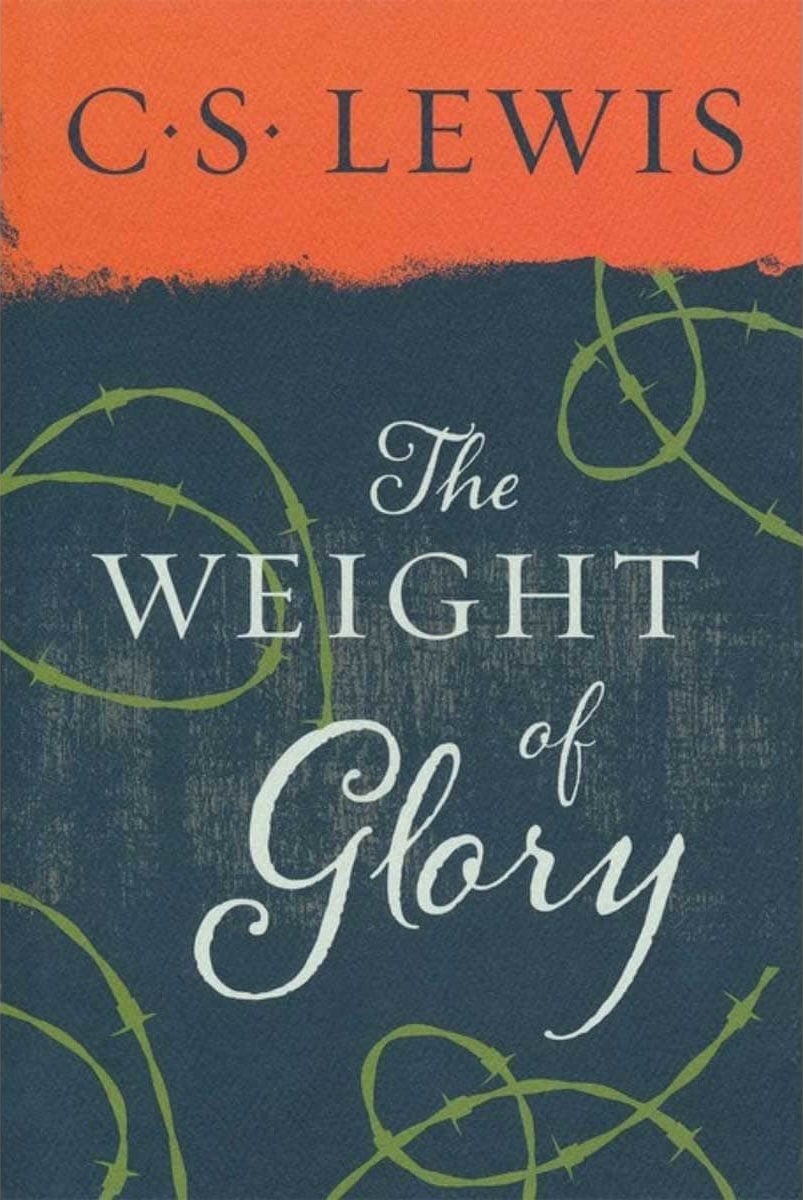
The Weight of Glory, by C.S. Lewis: This is a collection of sermons and speeches by Lewis and, as such, is a little more uneven than some of his best unified works (Mere Christianity, The Great Divorce, The Screwtape Letters). But it is still excellent. Rather than summarize such a varied volume, I thought I’d share a few quotations instead:

“To please God…to be a real ingredient in the divine happiness…to be loved by God, not merely pitied, but delighted in as an artist delights in his work or a father in a son—it seems impossible, a weight or burden of glory which our thoughts can hardly sustain. But so it is.” (39)

“The only people who achieve much are those who want knowledge so badly that they seek it while the conditions are still unfavorable. Favorable conditions never come.” (60)

“It is our daily bread that we are encouraged to ask for. The present is the only time in which any duty can be done or any grace received.” (61)

“What God does for us, He does in us. The process of doing it will appear to me (and not falsely) to be the daily or hourly repeated exercises of my own will in renouncing this attitude, especially each morning, for it grows all over me like a new shell each night. Failures will be forgiven; it is acquiescence that is fatal, the permitted, regularized presence of an area in ourselves which we still claim for our own. We may never, this side of death, drive the invader out of our territory, but we must be in the Resistance, not in the Vichy government.” (192)
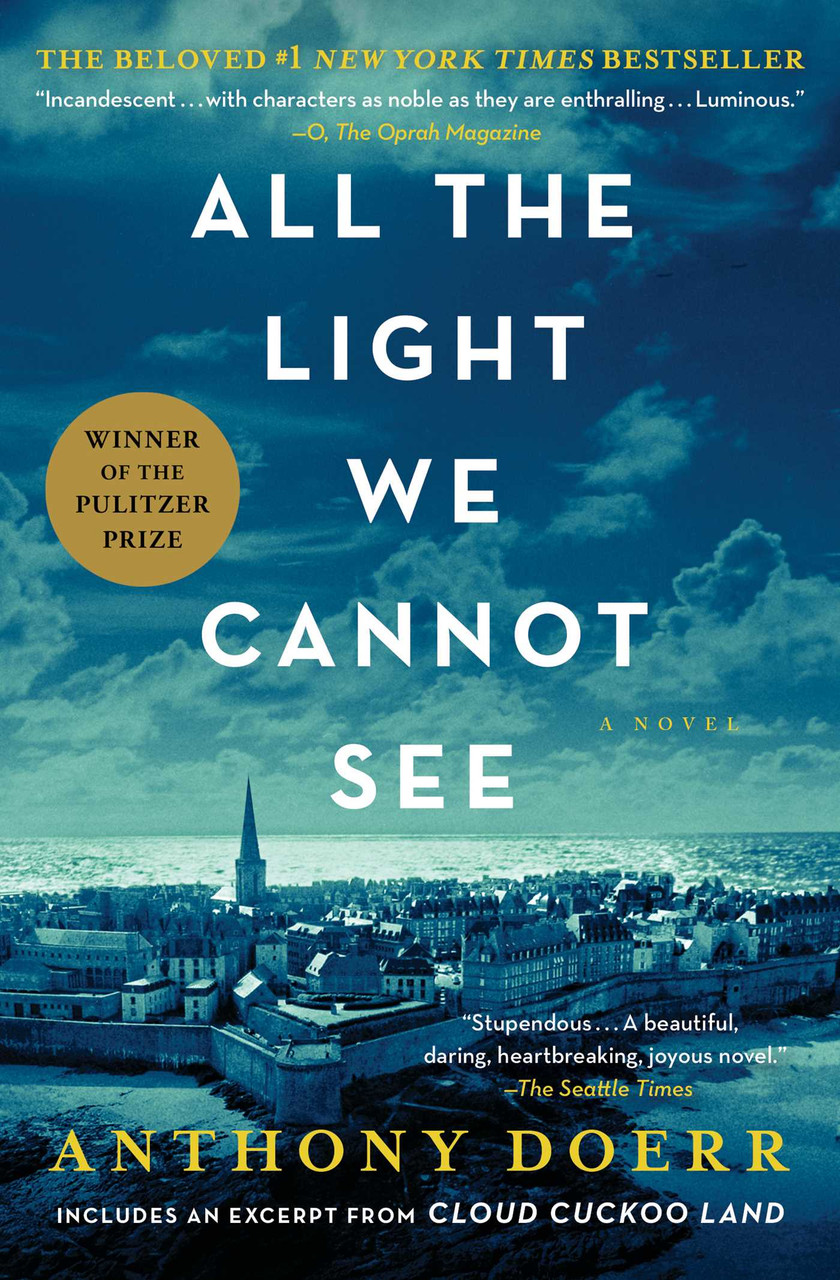
All the Light We Cannot See, by Anthony Doerr: I read this book back in 2017 and I liked it, but I didn’t love the ending and overall, I found it a little disappointing (it had won the Pulitzer Prize after all). Then it came out as a series on Netflix which I watched and enjoyed, and it made me want to go back and read the book again. This time I loved it. The novel is set in World War II, and follows the story of Marie-Laure, a blind French girl trying to survive German occupation in the town of Saint-Melo while working with the Resistance and trying to keep a priceless diamond hidden from a Nazi gemologist. The description of the narrow, multi-storied house is so detailed that you can picture yourself there, and the characterization of Marie-Laure is exquisite. My reading of this and its narration of the fall of France was heightened by reading about similar events in Berlin Diary at the same time (see below), and all in all, I found it to be a poignant story of love, loss, bravery, and sacrifice in difficult circumstances.
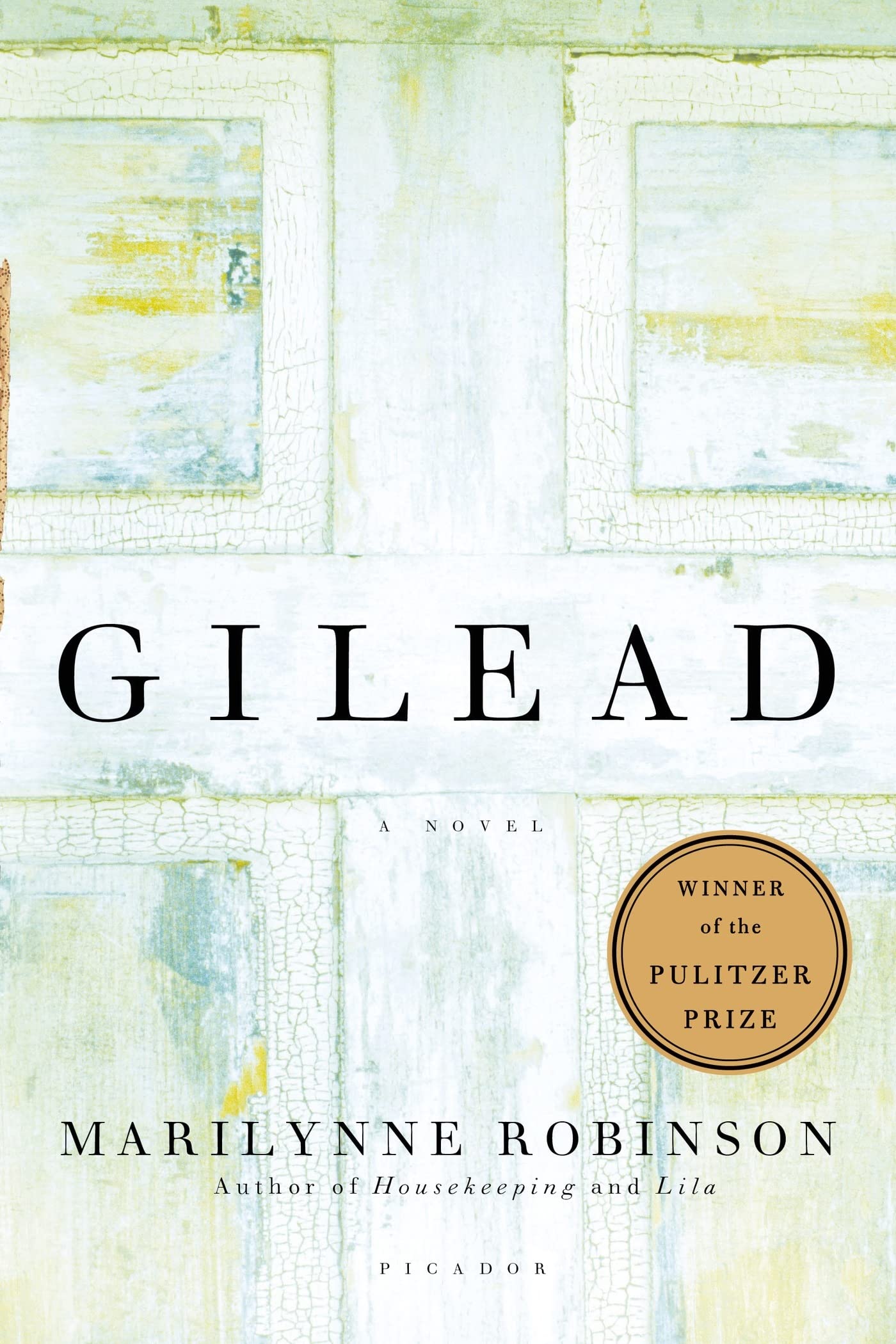
Gilead, by Marilynne Robinson: This novel won a Pulitzer Prize a couple of decades ago, but I only became aware of it quite recently. Gilead tells the story of John Ames, an aging Congregationalist pastor who is slowly dying of a heart condition. Realizing he doesn’t have much time left, Ames has a keen appreciation for the value of life and wants to share his memories and experiences of his father and grandfather with his seven-year-old son before he dies. It is a story of faith and doubt, love and loss, transgression and forgiveness, and a good man who feels wholly ill-equipped to carry out his important vocation (as a Pulitzer Prize-winning novel, obviously Gilead resonated with a lot of people, but I suspect it has a special poignancy for those engaged in congregational ministry).
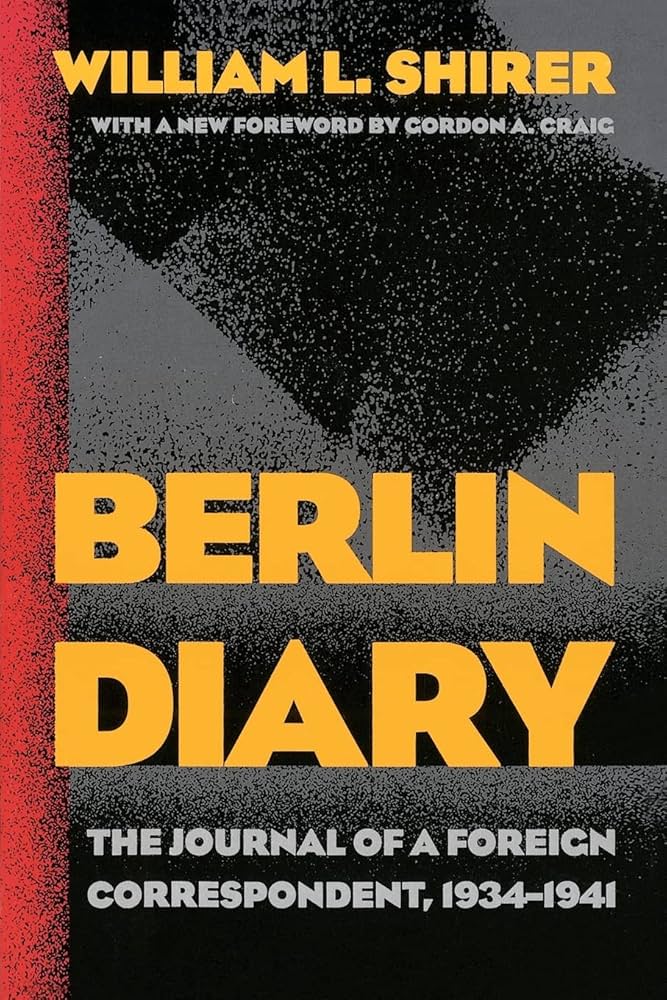
Berlin Diary: The Journal of a Foreign Correspondent, 1934-1941, by William L. Shirer: I randomly found this on a shelf at home and because I enjoy learning about World War II, decided to check it out. It is a fascinating account of the diary of Shirer, an American journalist who chronicles the rise of Hitler and the Nazis from within Germany. This was a fascinating read to me, as Shirer begins with almost a sense of admiration for Hitler and the way he rapidly consolidates power and changes national sentiment within Germany, but then becomes increasingly horrified as he witnesses what transpires. For me, as someone reading decades after the fact, I felt a growing sense of foreboding as the diary approached key events in the WWII timeline, and also the palpable shock felt by Shirer as Hitler unbelievably removes one nation after another from the map of Europe.
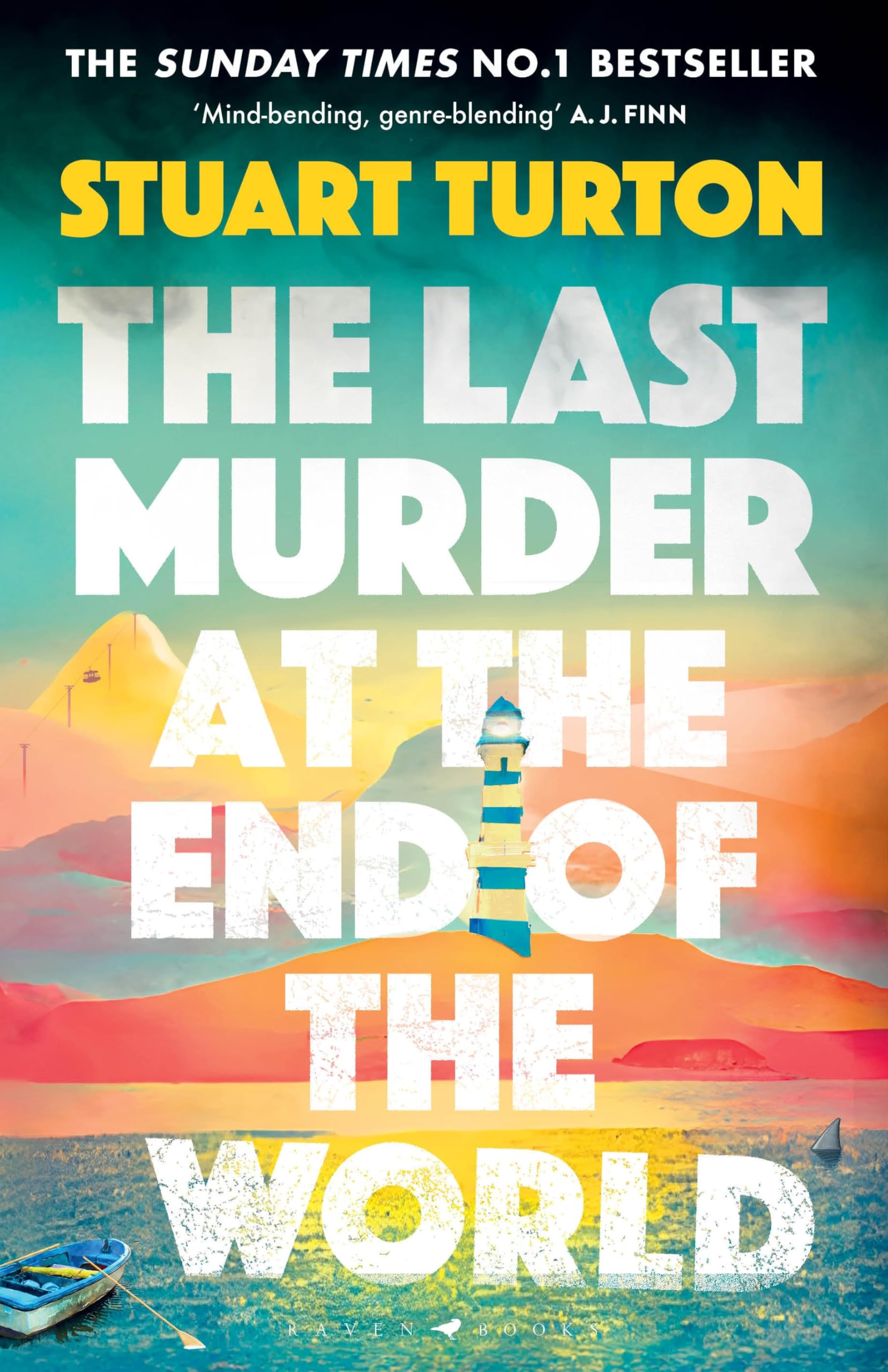
The Last Murder at the End of the World, by Stuart Turton: I hadn’t heard anything about this book and just found it randomly on my audiobook library app. This is a book that kind of defies and overlaps several different genres: dystopian, science fiction, murder mystery. I found it fascinating with several unexpected twists and turns, a satisfying ending, and a helpful, honest look at the seemingly inescapable dark side of humanity.

The Israeli-Palestinian Conflict: What Everyone Needs to Know, by Don Waxman: The Israeli-Palestinian Conflict flared up yet again in late 2023 and I was struck by the sharp rhetoric of terrorism on one side and genocide on the other, and the way that, in the US, these differing perspectives seemed to fall so closely along political lines (as everything does). Discontent with my understanding of the conflict, I wanted to learn more about it, so I read Simon Sebag Montefiore’s Jerusalem: A Biography (#34 above) and this one. Jerusalem was good, but this book was far shorter, and more useful for what I was looking for. Waxman also takes pains in trying to be as fair and objective as possible. In short, the Israeli-Palestinian Conflict is a mess, with decades of bad blood and hurt feelings caused by both sides. It seems like an intractable problem until both Israel and Palestine find themselves with leaders willing to seek peace and make concessions at great personal risk while simultaneously having a US leader who is determined to support a peace process without favoring either side.
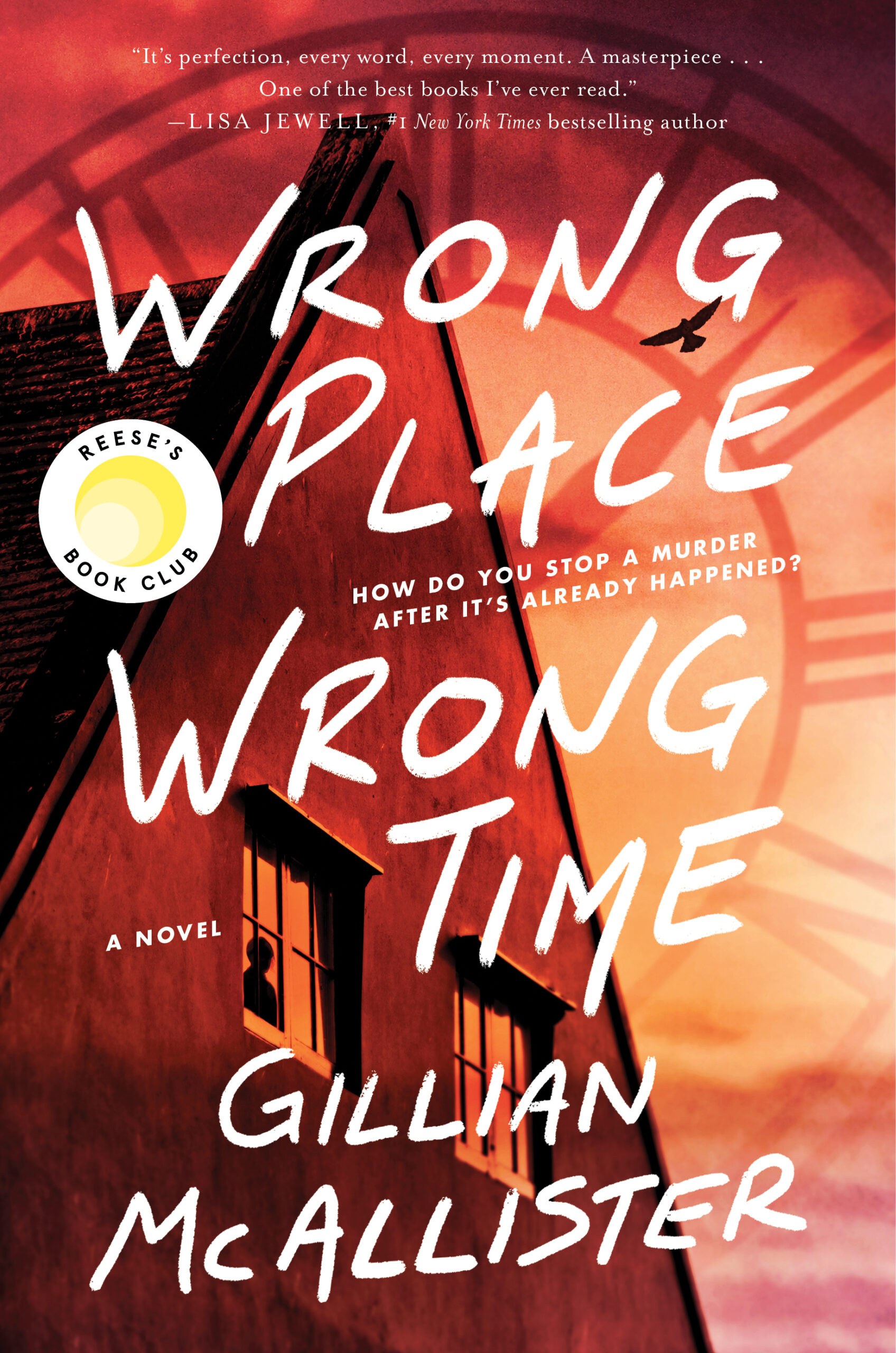
Wrong Place Wrong Time, by Gillian McAllister: Over the last few years I started reading more thriller/mystery books, generally as something entertaining to listen to while I drive or work out. Usually these aren’t particularly well written, and tend to fall into predictable patterns. Wrong Place Wrong Time was different, however, largely because of its very different premise: a woman watches her teenage son murder someone who is a complete stranger to her. After a long night at the police station, the mother falls asleep in despair, only to wake up the previous day, before the murder has occurred. So begins her travel backwards through time, as she seeks to unravel the chain of events leading up to the murder, and do what she can to prevent it from happening and saving her son’s life.
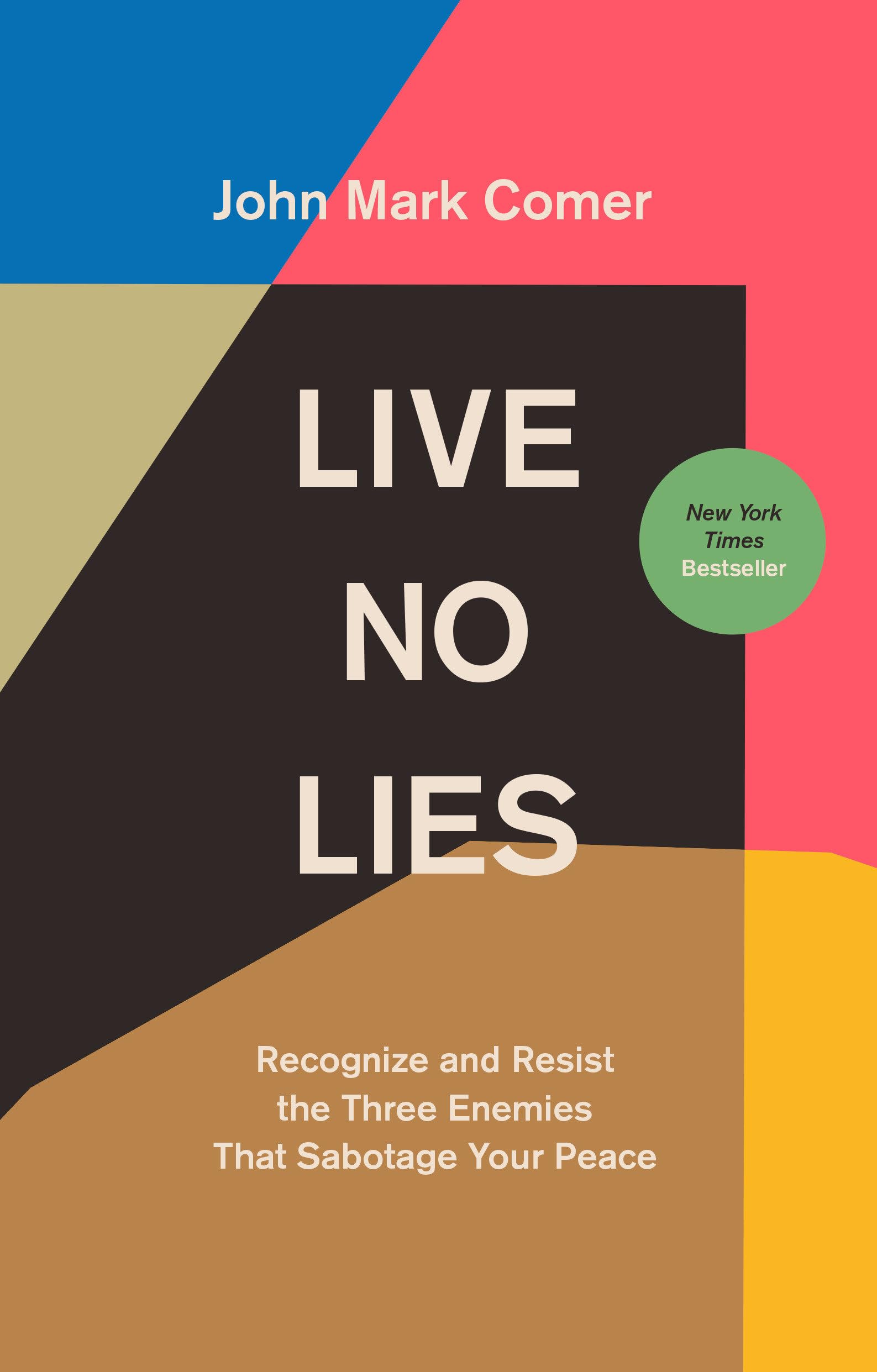
Live No Lies: Recognize and Resist the Three Enemies That Sabotage Your Peace, by John Mark Comer: Comer’s The Ruthless Elimination of Hurry made my Top 10 list last year, and while I didn’t enjoy Live No Lies quite as much, it was still really good. Basically, Live No Lies is a book on spiritual warfare, and follows a simple premise. Followers of Jesus are at war with the world, the flesh, and the devil and the way that plays out is that the devil, the father of lies, suggests deceptive ideas that play to our disordered desires (the flesh) that are then normalized in a sinful society (the world). The devil is real, Comer insists, not some sort of fictional boogeyman, but the prince of this world who wants to spread death, and his means for doing this is through lies and deception. These are not just lies that we tell, but lies that we live; they are part of the cultural air we breathe, often accepted without critical reflection: be true to yourself, give in to your desires, freedom means doing whatever we want. And the net result is that good and evil are constantly redefined and all sorts of evil, aberrant behaviors are normalized and even made into virtues (e.g., recasting abortion as “reproductive justice”).

What is the Christian response to these spiritual enemies? How do we engage in this spiritual struggle? With the call to discipleship: deny yourself and follow Jesus. We crucify the desires of our flesh (spiritual disciplines are a key part of this) and tap into our deeper desires for God Himself.

I find Comer to be particularly helpful not because he says new, brilliant things, but because he says very ancient, orthodox things in ways that connect with the current context.

The Case against the Sexual Revolution, by Louise Perry: I read this as part of a book club, and while it was not actually an enjoyable read (I often felt I needed to take a shower after reading a chapter), it is an important book. Perry writes from a secular, liberal perspective, but basically makes the argument that the sexual revolution has been harmful to women. The book might be summarized as follows: both Marilyn Monroe and Hugh Hefner were products of the sexual revolution, but only one of them enjoyed it.

As a Christian, I believe that Perry’s analysis ultimately falls short because she is missing a key part of the equation, but she raises a host of important questions that our sexually “liberated” society doesn’t have answers for.
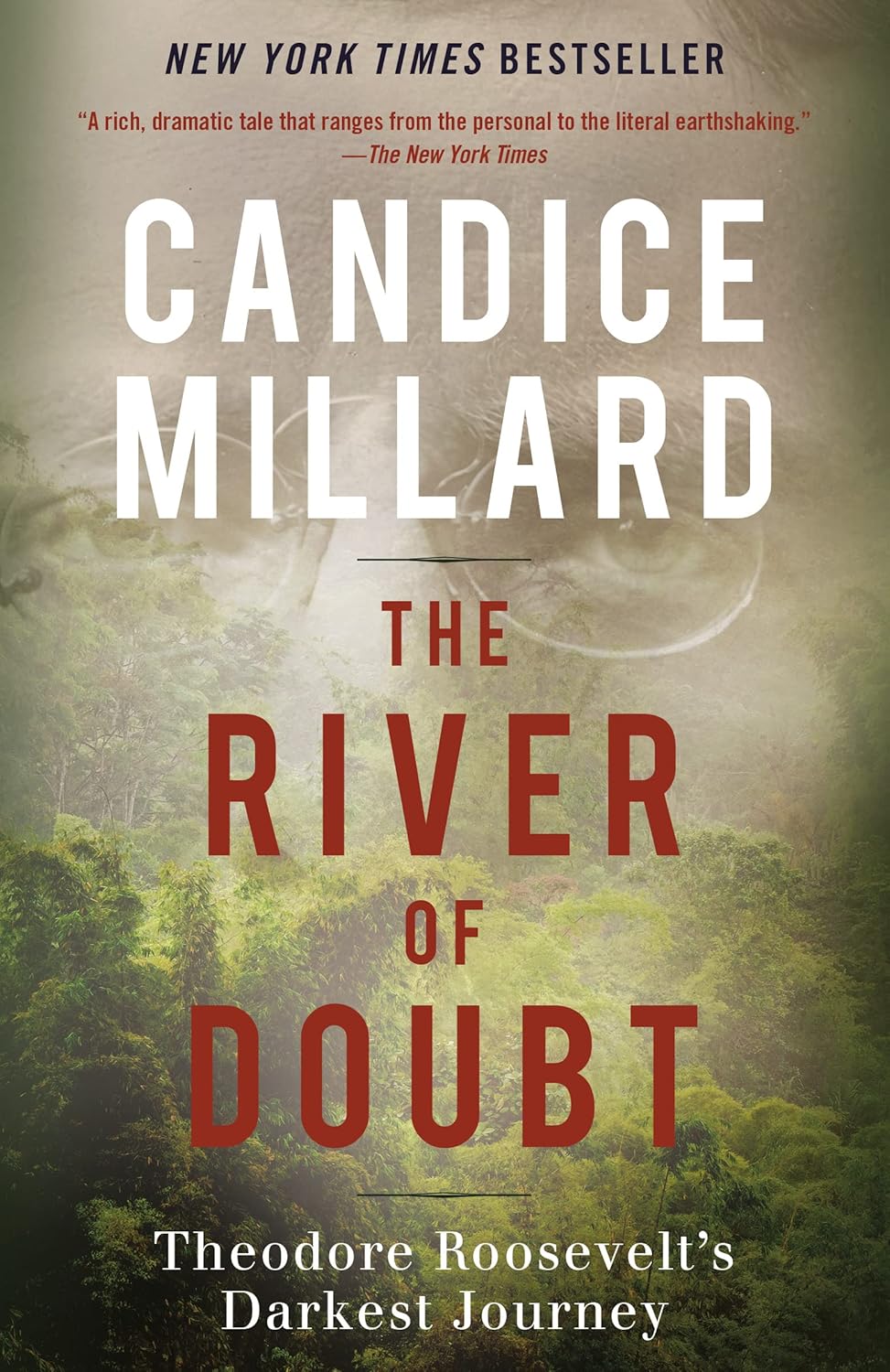
The River of Doubt: Theodore Roosevelt’s Darkest Journey, by Candice Millard: I read this book over a decade ago and loved it, and enjoyed it equally the second time (I only allow books to make my Top 10 list once, but I wasn’t making these lists when I read The River of Doubt the first time, so it was still eligible). The book begins by focusing on Theodore Roosevelt and the aftermath of the 1912 Presidential Election. Throughout his life, TR responded to personal setbacks by launching himself into challenging physical tasks, and after he was devastated by how badly he lost the 1912 election, he traveled to South America to explore a previously unmapped tributary of the Amazon—Rio da Dúvida, or the River of Doubt. It was a harrowing journey of hundreds of miles with risks of starvation, drowning, disease, and dangerous indigenous animals and tribes, and Roosevelt barely made it out with his life. The narrative is exquisitely recounted, and the character of Roosevelt is larger than life. A great, true-life adventure tale.


That was my reading in 2024! For comparison’s sake, if you are interested, you can see my reading lists from previous years:

What are some of the best books you read this past year?

« Older posts Newer posts »

© 2026 The Doc File

Theme by Anders Noren — Up ↑