The online journal of Luke Dockery

Category: Theology (Page 9 of 58)

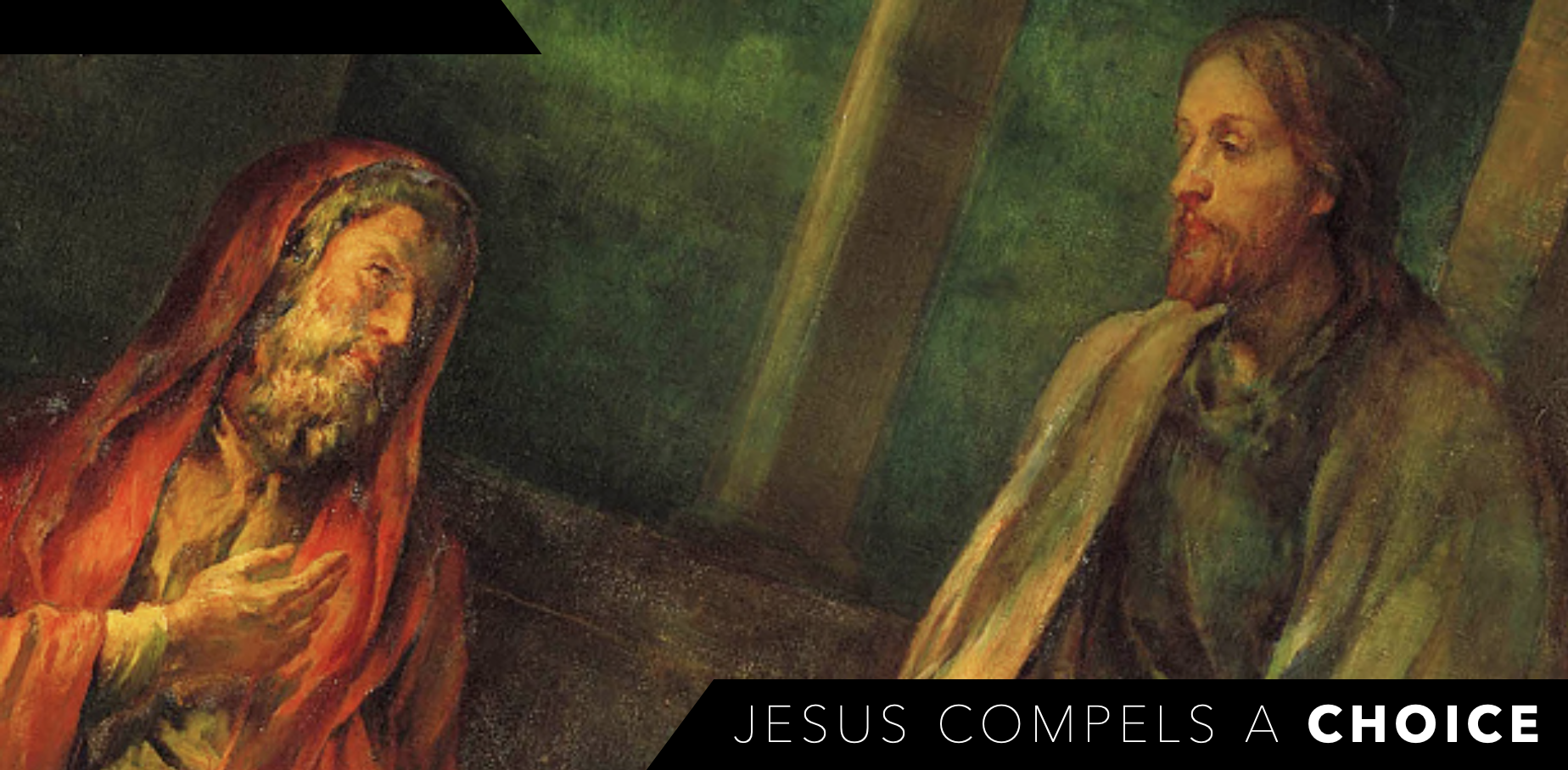
Jesus Compels A Choice

I mentioned previously that I had done some of my daily Bible reading this year out of Bishop Robert Barron’s The Word on Fire Bible. Overall, I have enjoyed it a lot, and occasionally, the commentary from Bishop Barron is outstanding.

Reflecting on John 14.6, “Jesus said to him, “I am the way, and the truth, and the life. No one comes to the Father except through me,” Barron muses on the exclusivity of the claims of Jesus. Channeling C.S. Lewis’s trilemma, Barron says that Jesus does not allow for a bland, middling position that tries to hold onto Jesus as an admirable teacher, but rejects His divinity:

“Thus Jesus compels a choice, a decision, in a manner that no other religious founder does. The Buddha could claim that he had found a way that he wanted to share with his followers, but Jesus said, “I am the way.” Mohammed could say that, through him, the final divine truth had been communicated to the world, but Jesus said, “I am the truth.” Confucius could maintain that he had discovered a new and uplifting form of life, but Jesus said, “I am the life.” And thus, we are either with Jesus or we are against him. No other founder forces that choice as clearly as Jesus does.”[1]

In recent times, in our increasingly globalist and pluralist world, there has been considerable effort to soften any sort of hard-edged exclusivity to the Christian message. In the current milieu, I certainly understand the temptation, but it simply will not do: disciples of Jesus must follow His example of posture to those who are not yet His followers: loving, open-armed, hospitable, and exclusive. There is salvation in no one else.


[1]Bishop Robert Barron, “Jesus Compels a Choice,” in The Word on Fire Bible: The Gospels (Park Ridge, IL: Word on Fire Catholic Ministries, 2020), 544.

Faith & Deconstruction

It’s likely that you’ve heard the term deconstruction quite a bit lately, as it has been used quite a bit in discussions surrounding the Christian faith, especially (though not exclusively) among young adults. As Christians, how should we respond to this phenomenon? How should the reality of deconstruction affect our ministry practices, especially with young people?

Which Deconstruction Are We Talking About?

Depending on who is using the term, deconstruction is variously held up as a virtuous act, dismissed as a fad, or condemned as faithlessness. Part of this range in response stems from the sad reality that we live in a polarized society where people tend to have extreme actions toward everything, but in this case, I think a big part of the issue is that deconstruction is a very nebulous term that reflects several different ideas.

I do not claim to be an expert on this topic, but I have tried to listen well to many who have deconstructed in some sense, and am convinced that we can actually identify at least four distinct processes or developments:

(1) Losing Faith: When some people talk about having deconstructed their faith, what they actually mean is that they have lost faith—at one point, they believed in God and were followers of Jesus, but now they are not. This process may have occurred for a variety of reasons and may have happened quickly or over a long period of time, but the end result is that their faith is gone.

(2) Leaving One “Kind” of Christianity for Another: The reality is that there are many different varieties or flavors of Christianity in the world. Many of the people who I have heard or read talking about deconstruction are actually talking about leaving a particular brand or denomination that they grew up in and now identifying with something else. Often, this is tied to the search for a different worship experience, sense of church history, or better alignment on theological perspectives.

(3) Extricating Essential Elements of Christianity from Cultural Trappings: The last few years have been quite revealing of the degree to which Christianity in the US is susceptible to the influence of unhealthy cultural influences. These influences are far-ranging, from racism and white supremacy, to political partisanship, to Christian nationalism, to sexual abuse in the church and related ideas about gender and sexuality. Although there is some overlap between this category and the previous one, the focus here is on trying to reclaim and preserve some core aspect of Christianity that is free of unhealthy (or even sinful) cultural baggage.

(4) Owning Faith: It is important to not overlook the fact that many (certainly not all) of those who are in the process of deconstruction are those in their late teens or early to mid-twenties. Until now, the faith they have had has largely been received from their parents, and now they are at a place where they are developing a faith of their own. That process involves examining and weighing the beliefs they have been taught and, ultimately, deciding what they will hang onto and what will be discarded.


How Should We Respond To Deconstruction?

Part of the reason that I wanted to delineate different expressions of deconstruction above is that I think how we respond should depend somewhat on which process we are actually witnessing. All of these processes do have at least a couple of elements in common, however:

  • Each is generally very difficult for the person going through it. It is not fun to lose your faith, leave your church, or feel the disorientation that comes from significantly changing your beliefs.
  • It is often not a process that the person going through it has actually chosen. Usually, a person doesn’t set out to deconstruct; they are responding to some sort of experience that has caused them to doubt or become unsatisfied with the faith they had previously.

Having established those commonalities, it is safe to say that, as Christians, we should approach such persons with compassion and understanding, in a non-adversarial sort of way (Jude 22: “Be merciful to those who doubt.”). These are not our enemies (though, they may act with anger or aggression), and even if they were, we owe them our love rather than our mockery or dismissiveness.

But, as I mentioned above, I do think that we should respond differently to people depending on which form of deconstruction they are wading through. Let’s start with the first and fourth categories, because I think those are the most straightforward.

Losing Faith: There are many reasons that lead to people losing their faith. Some are more understandable than others, and I have heard people who lost faith talk before and resonated strongly with some of what they say. But from a Christian perspective, losing faith is nothing sort of a tragedy. God loves all people, but a covenant relationship with God is based upon faith, and those who walk away from that faith are turning their backs on that covenant relationship. This grieves God, and obviously leaves the person without faith spiritually imperiled.[1] This sort of deconstruction is to be lamented.

Owning Faith: I have written and spoken at length of the importance of parents having faith and passing that faith onto their children. This is a crucial aspect of the spiritual formation as young people, and yet, we shouldn’t expect the spiritual lives of young adults to be carbon copies of their parents. In fact, if their spiritual lives are carbon copies of those of their parents, it likely means that they haven’t thought about faith much and are still fairly immature. I have immense respect for my parents and am deeply grateful for the faith they passed onto me, but my views are not identical in every detail to what they were when I was 18. The process of developing your own faith is challenging and risky[2], but it is essential: an inherited faith is an immature faith. If we are to grow in Christ, we have to reflect on what we have been taught, compare that with our understanding of God’s character and teachings as revealed in Scripture,[3] and, in that process, begin to build a faith of our own. This sort of deconstruction is to be praised (and guided, and prayed for).

Leaving One “Kind” of Christianity for Another: It is not my place or task to judge the faith of others, and I have no intention of doing that here. However, part of the reality of owning your faith is making determinations about what is right and pleasing to God and what is not, and it is obviously true that our views will more closely align with some Christian groups than others. I was raised and have spent my life in Churches of Christ, and am very grateful for many aspects of that heritage.[4] I am also quite aware of our many problems, historically and currently. Nevertheless, I continue to minister in the context of Churches of Christ not just out of comfort, but conviction: I think we get some really important things essentially right, and I would rather deal with our problems than trade them for the problems of some other group. I say all that in order to explain that how we feel about someone leaving one kind of Christianity for another will depend significantly on our own theological views: sometimes it may be a wonderful development, while at other times it may be very disappointing.[5]

Extricating Essential Elements of Christianity from Cultural Trappings: In my experience, this particular form of deconstruction is sometimes the messiest and most complicated, and thus, the most difficult to know how to respond to. I think this stems from the fact that this form of deconstruction occurs in reaction to something negative and, generally speaking, humans are really bad at reacting to something without overreacting. For example:

  • It is true that many Christians have allowed their faith to be overly tied to conservative (Republican) politics. But surely the answer to this is not to respond by tying our faith to liberal (Democratic) politics? And yet, I have observed some who have “deconstructed” from the former settle comfortably into the latter.
  • It is certainly true that racism and white supremacy have had strong and pernicious influence in the history of American Christianity, but does that mean that American churches are irredeemably racist or white supremacist? Does it mean that God has not and cannot work through such churches?
  • If some have overreached in their teaching about gender roles, is the proper response to teach that there are no gender roles?
  • If teaching on sexuality has been unhealthy, is the proper response to just allow culture to dictate sexual ethics instead?

It is a worthy endeavor to distinguish between teachings of Jesus and the Apostles and cultural trappings; I would argue that it’s something that all mature disciples should seek to do. It is also difficult. Ideally, this is the sort of thing that Christian community is for: as we individually seek to be faithful to the teachings of Scripture while living in a cultural setting that is often confusing, our fellow pilgrims help to sharpen and nuance our thinking on a variety of issues.

How Should The Phenomenon Of Deconstruction Affect Ministry With Young People?

This, for me, is the million dollar question, and I confess that I have not worked out a comprehensive answer. Here are some initial thoughts, though:

  • We should leave space for the expression of doubts and questions. Research shows that students who actually talk about their doubts are more likely to develop long-term faith than those who ignore them.
  • We should emphasize core doctrines of Christianity. There are essential, foundational beliefs that the vast majority of Christians have held for 2,000 years. We see them emphasized in Scripture and taught by the apostles. Extricating Christianity from unhelpful cultural baggage is easier for students who know what real Christianity looks like.
  • Be prepared to speak a prophetic word against cultural values that do not reflect Jesus. Especially do so across party lines, reinforcing the fact that all human ideologies fall short of the ways of God’s Kingdom.
  • Address difficult topics (sexuality, race, etc.).
  • Seek to connect students to the intergenerational community of faith. Real, authentic relationships with older, mature Christians give students conversation partners when they are wrestling with doubts, a voice if they have identified something harmful at church that needs to be changed, and resources and support as they work to develop their own faith.
  • Do some work with apologetics (especially, in my opinion, apologetics centered on Jesus).
  • Affirm the parents of students and the faith they have passed on, while acknowledging that, as they grow, developing a faith of their own will become a necessity.

If we aren’t doing these things, then I think we are probably contributing to unhealthy rather than healthy and necessary forms of “deconstruction”.


[1] This brings me to one of the worst phenomena I have witnessed as part of this larger conversation: seeing people rejoice at the loss of faith of Person X. Sometimes, this rejoicing even comes from someone who ostensibly still has faith themselves, but they are so wrapped up in celebrating some shallow victory (like Person X abandoning some specific doctrinal or political position as a part of their deconstruction) that they fail to appreciate the tragedy of Person X losing faith.

[2] How do we know that young people won’t develop a faith that looks very different from that of their parents, maybe even to an unhealthy degree? Ultimately, we don’t. There are no guarantees that this process will turn out well, but that doesn’t change the fact that it is a necessary process.

[3] More accurately, we could say, “as revealed in Jesus”, but the presentation of the Word made flesh occurs in the words of the Bible, so this is still accurate.

[4] Including the notion that we are not trying to be a Christian group or denomination to begin with. We don’t want to be a “kind” of Christianity, but just Christians. But, I digress.

[5] A few examples to help illustrate this point: if a friend from church were to suddenly leave our church and join the Roman Catholic Church, I would be saddened by this. I have friends who are Catholic and greatly appreciate certain aspects of the Catholic tradition, but that doesn’t change the fact that I perceive them to be in significant error on certain issues. In light of this, a step into Catholicism would be, from my perspective, unfortunate (though still a very different sort of development than walking away from faith!). On the other hand, if I had a friend at an LDS (Mormon) church who decided to become Catholic, I would actually view this as a positive development! It doesn’t change my (many) reservations about Catholic doctrine, but it would in my view represent a significant step in the right direction toward truth.

Furthermore, I should probably add that this doesn’t neatly fall along “conservative” or “liberal” lines. I would lament someone who took a “step to the right” if it meant that they had begun to read Scripture in overly literal ways that failed to honor what the text was trying to say, become sectarian in their outlook, and joined a church that was rigid and hateful. I would lament someone who took a “step to the left” if it meant that they had compromised on historic doctrines of the Christian faith.
The Doctrine of Unity

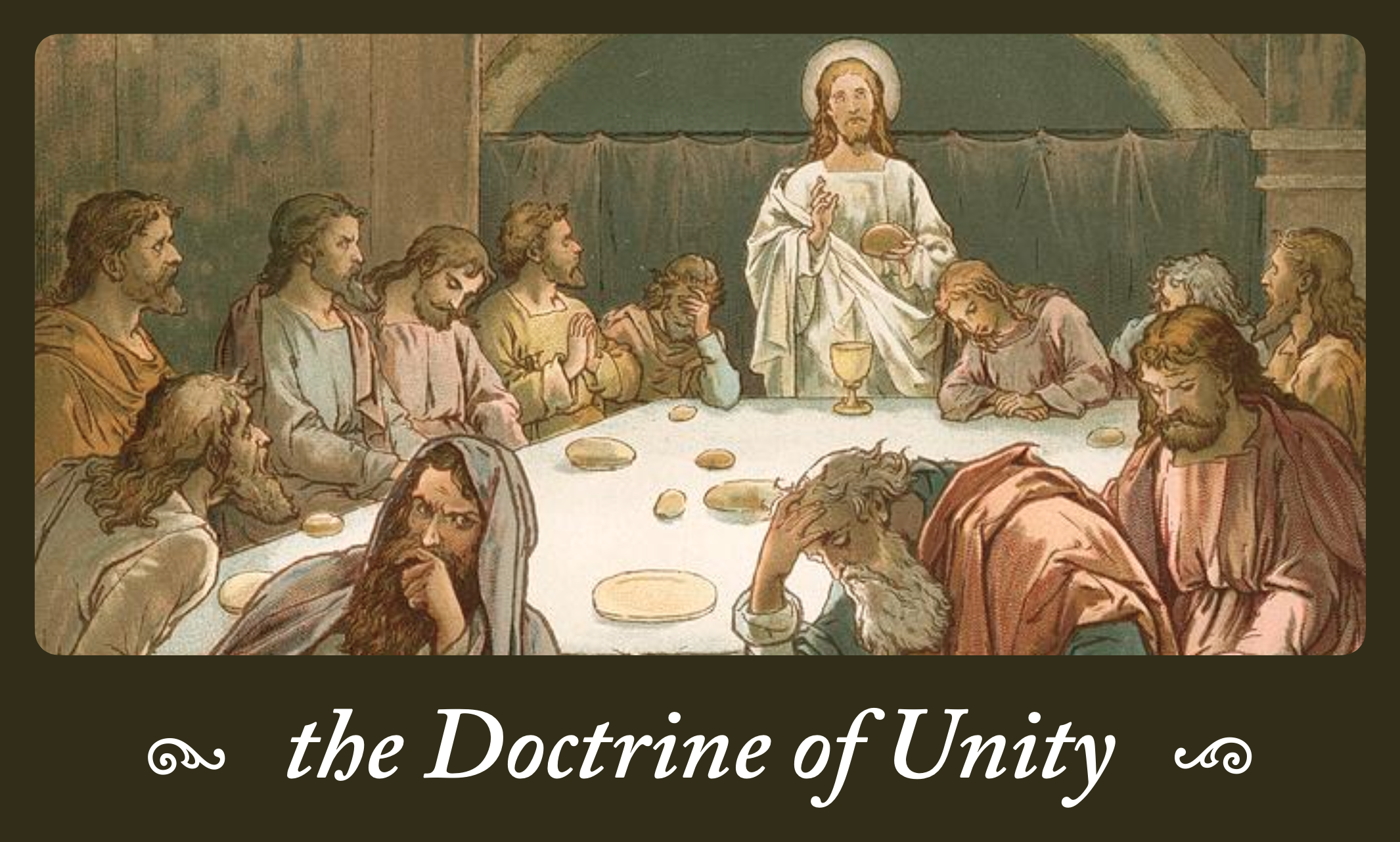
The Gospel of John differs from the other gospels in various ways, but one significant difference is John’s inclusion of the extensive time Jesus spends with His disciples on the night of His betrayal and arrest. This section spans John 13-17, and includes Jesus washing the disciples’ feet, His impending betrayal and Peter’s denial, His promise of the coming of the Holy Spirit and the accompanying revelation that He will be leaving them soon, and a repeated emphasis on the importance of love.

Near the end of this section, Jesus also teaches on the subject of unity:

“I do not ask for these only, but also for those who will believe in Me through their word, that they may all be one, just as You, Father, are in Me, and I in You, that they also may be in Us, so that the world may believe that You have sent Me. The glory that You have given Me I have given to them, that they may be one even as We are one, I in them and You in Me, that they may become perfectly one, so that the world may know that You sent Me and loved them even as You loved Me.”

(John 17.20-23)

Here, near the end of the “High Priestly Prayer”, Jesus prays for unity among His followers. When you think about it, this places followers of Jesus in an interesting position: generally, we pray to God asking Him to answer our prayers; in this instance, it seems remarkable to me that we have the opportunity to answer His. 

Furthermore, the unity that Jesus prays for is not arbitrary—it is both formative and practical. It is formative in the sense that, when followers of Christ are unified, we reflect the very nature of the Triune God who exists in perfect unity while displaying diversity. In other words, practicing and displaying unity forms us into the likeness of God. Additionally, unity is practical in the sense that it leads the world to realize the truth of the identity of Jesus Himself.

I have spent my life in Churches of Christ, a group of autonomous congregations of believers that have historical ties to the American Restoration Movement of the 1800s. This movement sought to strip away man-made traditions and restore the Church that they read about in the pages of the New Testament.

The American Restoration Movement (also called the Stone-Campbell Movement) was, significantly, a unity movement. Although the restoration of the New Testament Church was seen as important in its own right, it was also viewed as a means of bringing unity to a fragmented world of Christian denominations: if Christ-followers of different varieties could all just agree to follow the beliefs and practices described in the New Testament, then the elusive unity among His disciples for which Jesus prayed could finally be achieved. To an extent, it worked, as thousands of people left their respective denominations and linked up with the new movement, wanting to be known only as Christians and recognizing only the authority of the Bible. Alas, the unity did not last. Restoration congregations began to divide in the late 19th century, and in 1906, the U.S. Census recognized a formal division between Churches of Christ and Disciples of Christ.

I am proud of the initial focus on unity among my spiritual ancestors, and saddened by the degree to which that strain of our religious DNA later weakened—in the 20th century, Churches of Christ split and divided over all sorts of doctrinal issues (real or imagined), and a passion for unity was not something for which we were generally known. This is really unfortunate, though, because the reality is that more than just a good idea or a noble goal, unity is a doctrine—it is a clear teaching of Jesus. It is one of the last things He emphasized to His disciples before He went to the cross, and He said that it should be one of their defining characteristics.

More than just a good idea or a noble goal, unity is a doctrine. Share on X

This doesn’t mean that we should ignore all other doctrines for the sake of unity, but I do think that doctrinal disagreements that lead us to break unity with other believers should be at least as clearly taught or as central as the doctrine of unity is.

To put it another way, I want to be obedient to the teachings of Jesus. However, if my desire to properly understand and follow the teachings of Jesus has led me, in practice, to minimize the importance of seeking unity with others who proclaim Jesus as Lord, then it is important for me to realize that I am not actually being obedient. Because unity is a doctrine.

Doctrinal disagreements that lead us to break unity with other Christians should be at least as clearly taught or as central as the doctrine of unity is. Share on X

In this loose series of Scripture Reflections, I am sharing brief thoughts spurred on by my Bible reading. By way of reminder, my goal for these brief posts is two-fold:

(1) To remark on aspects of the biblical text that I find to be of interest that the reader may or may not have thought about previously.

(2) When possible, to point to the work and person of Jesus Christ. I believe the Bible is a unified story that points to Jesus, which means that He is frequently alluded to or foreshadowed in some way throughout the biblical canon.

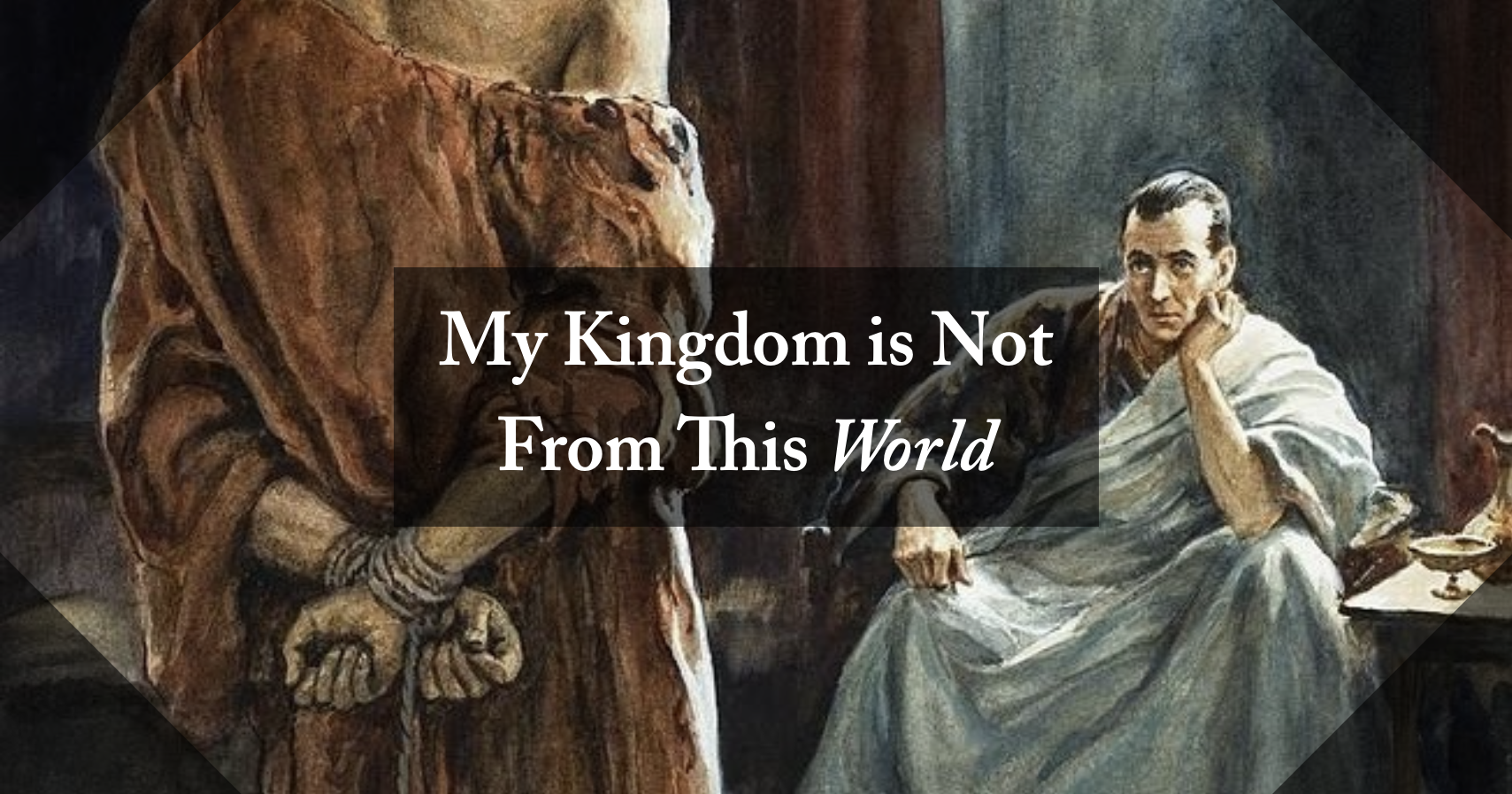
My Kingdom is Not From This World

I have been doing my daily Bible reading out of The Word on Fire Bible; it has been a novel experience that I have enjoyed. It is a project from Catholic Bishop Robert Barron, who pens articles throughout the volume. Here are some features that I have appreciated so far:

  • It is an NRSV, which, though a well-known and widely-read translation, is one I have not used significantly before, so I have enjoyed working through a new translation.
  • It contains beautiful artwork from Christian history along with theological reflections.
  • It contains several excerpts and articles from Catholic thinkers throughout history (including Bishop Barron). I am not a Roman Catholic and some of the interpretations I read seem, frankly, bizarre to me, but others have been very insightful, and even those that seem strange to me still help me to better understand the Catholic perspective.

Today, as I read John 18, I really appreciated Barron’s commentary on Jesus’ statement, “My kingdom is not from this world”:

We have to be careful in interpreting this observation, because there is always a double meaning to the term “world” in the Gospel of John. On the one hand, “world” designates the universe that God has created and that he sustains in love. This is the world that God loved enough to send his only Son as its Savior. On the other hand, “world” means that manner of ordering things which is out of step with God’s intentions; it indicates a political and cultural realm in which selfishness, hatred, division, and violence hold sway.

What Jesus implies, therefore, is not that his kingdom is irrelevant to ordinary experience, but that his way of ordering is radically out of step with the way practiced by Caesar, Pilate, Herod, and all the other usual suspects. In short, Jesus’ kingdom has everything to do with “this world” in the first sense of the term and nothing to do with it in the second.[1]

This is really helpful. I observe many Christians who emphasize the “spiritual” nature of God’s kingdom in a way that suggests we should be less interested in things that happen in this “world” and almost renders faith to be irrelevant to daily life, aloof from the goings-on in the world around us. Others, while claiming allegiance to Jesus, find themselves totally wrapped up in the “world’s” manner of ordering things, obsessed with the political machinations and societal influences of the day, and largely viewing things through the lens of power.

Properly understanding the different ways that John (and, indeed, the New Testament in general) uses the word “world” helps us to avoid either of these traps. God loves the world—it is His creation, filled with humans who bear His image—and showed this by His Son stepping into mundane human existence and living among us. What could be more practical or relevant than that? He lived among everyday people, attended weddings and funerals (doing some really surprising things at both), healed people who were sick, enjoyed children, criticized religious and political leaders, and taught about God. And in that teaching, He made very clear that God’s ways of doing things and the ideals He values were very different from the ways the “world” does things and the ideals it values (perhaps most clearly seen in the upside-down nature of the Beatitudes).

By all means, let us affirm that God’s kingdom is not from this world—but let’s make sure we know what Jesus meant when He said that.


[1] Bishop Robert Barron, “Christ the King,” in The Word on Fire Bible: The Gospels (Park Ridge, IL: Word on Fire Catholic Ministries, 2020), 562.

Knowing Good and Evil: Adam, Eve, and the Tree of Knowledge

The story of Adam, Eve, and the serpent in the Garden of Eden is one of the fundamental elements of the Story of Scripture—the Bible’s account for how things got to the messed up state that they are in. This story is well known, but, in my experience, an important detail of this story is not as well understood.

In Genesis 2, God tells humanity:

You may surely eat of every tree of the garden, but of the tree of the knowledge of good and evil you shall not eat, for in the day that you eat of it you shall surely die.

(Genesis 2.16b-17)

We hear a little more about this prohibition in a conversation between Eve and the crafty serpent at the beginning of Genesis 3:

He said to the woman, “Did God actually say, ‘You shall not eat of any tree in the garden’?” And the woman said to the serpent, “We may eat of the fruit of the trees in the garden, but God said, ‘You shall not eat of the fruit of the tree that is in the midst of the garden, neither shall you touch it, lest you die.’”

But the serpent said to the woman, “You will not surely die. For God knows that when you eat of it your eyes will be opened, and you will be like God, knowing good and evil.”

(Genesis 3.1b-5)

Often, you can hear this explained as the tree giving Adam and Eve the ability to recognize the difference between good and evil. However, when you think about it, this interpretation doesn’t make a lot of sense: how is it a bad thing to recognize the difference between good and evil? Isn’t a fundamental part of parenting helping our children learn the difference between good and evil, right and wrong? Doesn’t the biblical text frequently implore followers of God to pursue the way of blessing rather than the way of curses? The narrow way rather than the broad way? The fruit of the Spirit rather than the work of the flesh? Indeed, a significant aspect of preaching is helping the church to recognize the difference between good and evil.


Instead, a better understanding is that eating the fruit of the Tree of Knowledge represents defining good and evil for oneself. In other words, what the serpent tempted Adam and Eve with was moral autonomy: the right to decide for ourselves what is best.

As Christopher J.H. Wright states:

It is the prerogative of God in the supreme goodness of his own being to decide and define what constitutes goodness and therefore conversely what constitutes evil. Humans however, in choosing to decide for ourselves what we will deem good or evil usurp the prerogative of God in rebellious moral autonomy. And at the same time, of course, by making our own definitions in a state of rebellion and disobedience, we end up in the moral perversions and chaos that pervade fallen human life.[1]

Defining good and evil is God’s job; not ours. When we determine for ourselves what is right and wrong, we are seeking to climb onto a throne that rightly belongs to God alone.

Wright continues:

This interpretation of the phrase is supported by the way God recognizes the nature of what has happened: “The man has now become like one of us, knowing good and evil” (Gen 3:22). God accepts that humans have indeed breached the Creator-creature distinction. Not that humans have now become gods, but that they have chosen to act as though they were—defining and deciding for themselves what they will regard as good and evil. Therein lies the root of all other forms of idolatry: we deify our own capacities, and thereby make gods of ourselves and our choices and all their implications.[2]

Understanding the sin of Adam and Eve in this way helps us to see more clearly why it was such a big deal. Eating the fruit was not some curious attempt to learn something important that God had withheld from His human partners. It’s not that Adam and Eve were hopeless to recognize and distinguish good from evil: God had already told them. He had already defined for them what was good, and placed boundaries around what was not good for them. It was God’s definitions that the parents of humanity sought to challenge; they wanted the ability to define things for themselves. Indeed, eating the fruit was an act of rebellion, not curiosity.

Understanding the sin of Adam and Eve in this way also helps us to see how we are just like them. It can be easy to be hard on our ancestors for their sinful behavior and the way in which it has messed everything up in our world, but the reality is that every time we choose to do things that God has defined for us as evil, we become Adam and Eve; we reenact their rebellion. This is why the oft-heard statement, “I could never follow a God who…” is so dangerous: it inherently places ourselves upon the throne, defining what “good” should be like, and what God should be like. Ultimately, it creates a God in our image, rather than us reflecting the God in whose image we were created.

Every time we choose to do things that God has defined for us as evil, we become Adam and Eve; we reenact their rebellion. Share on X The oft-heard statement, “I could never follow a God who…” is so dangerous: it inherently places ourselves upon the throne, defining what “good” should be like, and what God should be like. Share on X

[1] Christopher J. H. Wright, The Mission of God: Unlocking the Bible’s Grand Narrative (Downers Grove, IL: IVP Academic, 2006): 164. Emphasis in the original.

[2] Ibid.

« Older posts Newer posts »

© 2026 The Doc File

Theme by Anders Noren — Up ↑