
Blessed Are the Poor in Spirit
The online journal of Luke Dockery
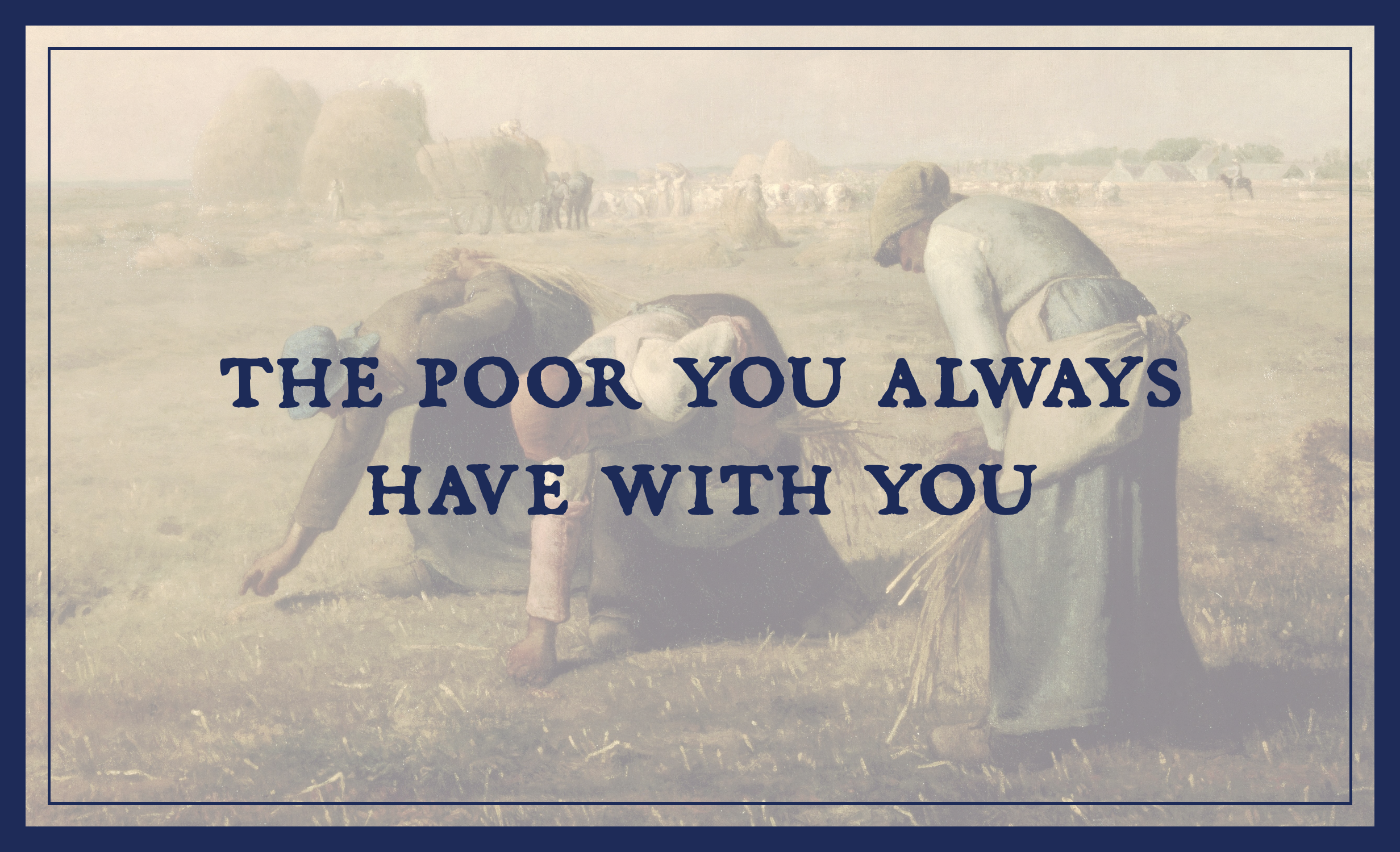
In a recent reading of Deuteronomy, I was struck by the following passage, specifically because of how it connected to other passages in the New Testament:
If among you, one of your brothers should become poor, in any of your towns within your land that the LORD your God is giving you, you shall not harden your heart or shut your hand against your poor brother, but you shall open your hand to him and lend him sufficient for his need, whatever it may be.
Take care lest there be an unworthy thought in your heart and you say, “The seventh year, the year of release is near,” and your eye look grudgingly on your poor brother, and you give him nothing, and he cry to the LORD against you, and you be guilty of sin. You shall give to him freely, and your heart shall not be grudging when you give to him, because for this the LORD your God will bless you in all your work in all that you undertake.
For there will never cease to be poor in the land. Therefore I command you, “You shall open wide your hand to your brother, to the needy and to the poor, in your land.”
(Deuteronomy 15.7-11)
One of the repeated themes of Torah is God’s concern for those on the margins of society, especially the poor, widows, orphans, and immigrants. Out of that concern, God clearly and repeatedly shares His expectation that His people will seek to take care of the poor in their land. This is to be accomplished in many ways, from the practice of gleaning, to levirate marriage, to sabbath years where debts are forgiven, to the general practice of prohibiting interest when loans are given.
But it was the beginning of the last verse that caught my attention—“For there will never cease to be poor in the land”—because of its similarity to something Jesus says in the Gospels. Matthew and John seem to recount versions of the same incident.[1] Jesus is eating a meal in Bethany when a woman (in John’s account, she is identified as Mary, the sister of Martha and Lazarus) comes in and anoints Jesus with expensive ointment, and wipes His feet with her hair.
The disciples see this and respond indignantly, suggesting how wasteful this was—the money spent for this ointment could have been given to the poor instead.[2] Jesus tells His disciples to leave her alone, praising the beautiful and extravagant thing that Mary has done for Him: “For the poor you always have with you, but you do not always have Me.”
I’ve heard these passages discussed before in a way that almost seems to make Jesus uncaring toward the poor, i.e., “You can help the poor anytime, so it’s really not a big deal,” but I think that really misses the mark. Jesus is talking here in terms of urgency, rather than importance: He is about to be crucified, and there won’t be a later opportunity to do what Mary has done. It’s not that helping the poor is unimportant; it’s just that the only opportunity to do so isn’t right now, unlike the opportunity to anoint Jesus.
This is further underscored when you realize how closely Jesus’ words seem to be based directly on this passage in Deuteronomy. Poverty is a real, persistent problem, and this side of eternity, there will always be people in need. This shouldn’t cause us to despair or somehow make us less inclined to help. Rather, the opposite is true: the ever-presence of the needy should make us ever-ready to help. It may not always present as an urgent issue (because you will have constant, repeated opportunities to help those mired in poverty), but it is certainly important: God’s heart for the needy is revealed repeatedly in the Torah, and Jesus affirms the same idea Himself. The poor will always be with us, so God’s people should always be for them.
The ever-presence of the needy should make us ever-ready to help. Share on X The poor will always be *with* us, so God’s people should always be *for* them. Share on X In this loose series of Scripture Reflections, I am sharing brief thoughts spurred on by my Bible reading. By way of reminder, my goal for these brief posts is two-fold:
(1) To remark on aspects of the biblical text that I find to be of interest that the reader may or may not have thought about previously.
(2) When possible, to point to the work and person of Jesus Christ. I believe the Bible is a unified story that points to Jesus, which means that He is frequently alluded to or foreshadowed in some way throughout the biblical canon.
[1] There is some disagreement about whether or not Matthew 26.6-13 and John 12.1-8 recount the same incident. There are differences: Matthew locates the event at the home of Simon the Leper, while John implies (but does not state) that the location is the home of Mary, Martha, and Lazarus. Furthermore, John identifies Mary as the one who anoints Jesus’ with perfume, while Matthew leaves the anointer unnamed. In Matthew, Jesus’ head is anointed, while in John, it is His feet. There are other, small differences as well. Nevertheless, the overall similarity between the two incidents is striking, and the differences can be accounted for in plausible ways. For the sake of this post, I will just treat it as one event described in two different Gospels.
[2] John informs us that it was Judas Iscariot who spoke out in criticism, but that his concern was not really for the poor, but rather, his own greed: as the treasurer for the group, he had access to the money bag and used to steal from it. Selling the ointment and giving the money to Jesus—ostensibly to care for the poor—would have benefited the thieving Judas.

I have not written as much recently here on The Doc File as I would like, largely because I have been busy with other things:
 To this list, most recently I have added a new project: my good friend Kevin Burr and I launched Regnum Media, a publishing house that will produce scholarly-yet-accessible Bible studies that are primarily intended for use in adult Bible classes as well as personal study. Regnum Media will be operating in partnership with the Center for Christian Studies, and will serve as the publishing imprint for CCS. CCS seeks to provide “scholarship for the church,” and has been doing this in excellent fashion already through video teaching modules and a scholarly journal that is released three times per year. We are excited to partner with CCS in this good work.
From the CCS press release about our partnership, here is a quotation from yours truly:
In our years of congregational ministry, both Kevin and I have become keenly aware of the need for quality Bible class resources that are trustworthy, scholarly, and engaging, and it was with this need in mind that Regnum Media was formed.
Regnum is the Latin word for ‘reign’ or ‘rule,’ and from the beginning it has been our goal to work for the good of the Kingdom, using our humble efforts to help the reign of God come more fully on earth as it is in heaven. We believe that quality biblical teaching that leads to discipleship in the local church is a key ingredient of that, and we are thrilled with the opportunity to partner with the good work that CCS is already doing in this regard.
We are planning to release four titles in 2023, including a version of my Ecclesiastes material specifically geared toward adults. You can follow our Facebook page to keep up to date on news and releases.
I still remain fully committed to all of the various roles and projects listed above, and intend to keep writing in this space as well. There are busy days ahead, but my hope is that God can use my humble efforts in the advancement of His kingdom.
I mentioned previously that I had done some of my daily Bible reading this year out of Bishop Robert Barron’s The Word on Fire Bible. Overall, I have enjoyed it a lot, and occasionally, the commentary from Bishop Barron is outstanding.
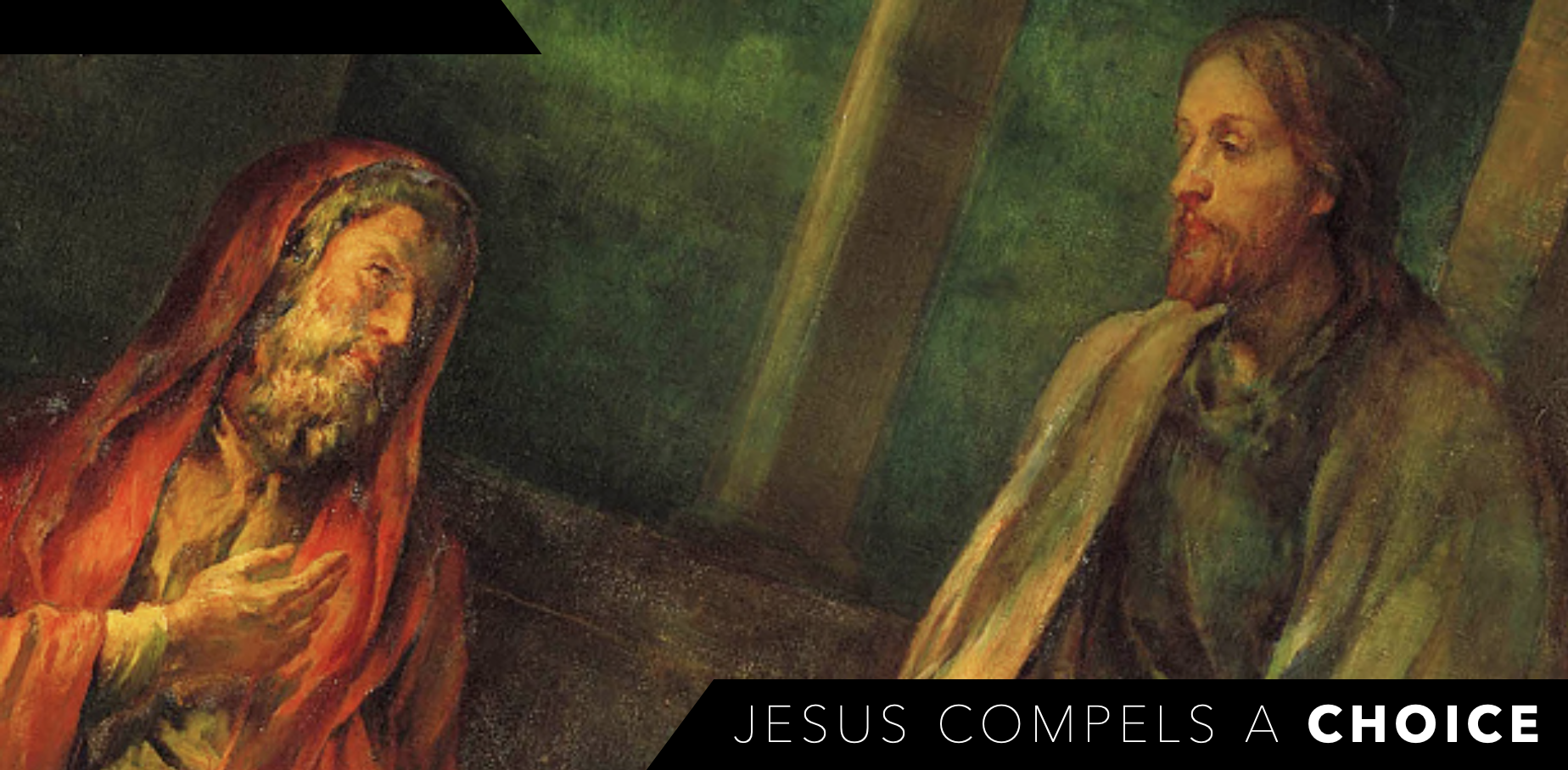
Reflecting on John 14.6, “Jesus said to him, “I am the way, and the truth, and the life. No one comes to the Father except through me,” Barron muses on the exclusivity of the claims of Jesus. Channeling C.S. Lewis’s trilemma, Barron says that Jesus does not allow for a bland, middling position that tries to hold onto Jesus as an admirable teacher, but rejects His divinity:
“Thus Jesus compels a choice, a decision, in a manner that no other religious founder does. The Buddha could claim that he had found a way that he wanted to share with his followers, but Jesus said, “I am the way.” Mohammed could say that, through him, the final divine truth had been communicated to the world, but Jesus said, “I am the truth.” Confucius could maintain that he had discovered a new and uplifting form of life, but Jesus said, “I am the life.” And thus, we are either with Jesus or we are against him. No other founder forces that choice as clearly as Jesus does.”[1]
In recent times, in our increasingly globalist and pluralist world, there has been considerable effort to soften any sort of hard-edged exclusivity to the Christian message. In the current milieu, I certainly understand the temptation, but it simply will not do: disciples of Jesus must follow His example of posture to those who are not yet His followers: loving, open-armed, hospitable, and exclusive. There is salvation in no one else.
[1]Bishop Robert Barron, “Jesus Compels a Choice,” in The Word on Fire Bible: The Gospels (Park Ridge, IL: Word on Fire Catholic Ministries, 2020), 544.

It’s likely that you’ve heard the term deconstruction quite a bit lately, as it has been used quite a bit in discussions surrounding the Christian faith, especially (though not exclusively) among young adults. As Christians, how should we respond to this phenomenon? How should the reality of deconstruction affect our ministry practices, especially with young people?
Depending on who is using the term, deconstruction is variously held up as a virtuous act, dismissed as a fad, or condemned as faithlessness. Part of this range in response stems from the sad reality that we live in a polarized society where people tend to have extreme actions toward everything, but in this case, I think a big part of the issue is that deconstruction is a very nebulous term that reflects several different ideas.
I do not claim to be an expert on this topic, but I have tried to listen well to many who have deconstructed in some sense, and am convinced that we can actually identify at least four distinct processes or developments:
(1) Losing Faith: When some people talk about having deconstructed their faith, what they actually mean is that they have lost faith—at one point, they believed in God and were followers of Jesus, but now they are not. This process may have occurred for a variety of reasons and may have happened quickly or over a long period of time, but the end result is that their faith is gone.
(2) Leaving One “Kind” of Christianity for Another: The reality is that there are many different varieties or flavors of Christianity in the world. Many of the people who I have heard or read talking about deconstruction are actually talking about leaving a particular brand or denomination that they grew up in and now identifying with something else. Often, this is tied to the search for a different worship experience, sense of church history, or better alignment on theological perspectives.
(3) Extricating Essential Elements of Christianity from Cultural Trappings: The last few years have been quite revealing of the degree to which Christianity in the US is susceptible to the influence of unhealthy cultural influences. These influences are far-ranging, from racism and white supremacy, to political partisanship, to Christian nationalism, to sexual abuse in the church and related ideas about gender and sexuality. Although there is some overlap between this category and the previous one, the focus here is on trying to reclaim and preserve some core aspect of Christianity that is free of unhealthy (or even sinful) cultural baggage.
(4) Owning Faith: It is important to not overlook the fact that many (certainly not all) of those who are in the process of deconstruction are those in their late teens or early to mid-twenties. Until now, the faith they have had has largely been received from their parents, and now they are at a place where they are developing a faith of their own. That process involves examining and weighing the beliefs they have been taught and, ultimately, deciding what they will hang onto and what will be discarded.
Part of the reason that I wanted to delineate different expressions of deconstruction above is that I think how we respond should depend somewhat on which process we are actually witnessing. All of these processes do have at least a couple of elements in common, however:
Having established those commonalities, it is safe to say that, as Christians, we should approach such persons with compassion and understanding, in a non-adversarial sort of way (Jude 22: “Be merciful to those who doubt.”). These are not our enemies (though, they may act with anger or aggression), and even if they were, we owe them our love rather than our mockery or dismissiveness.
But, as I mentioned above, I do think that we should respond differently to people depending on which form of deconstruction they are wading through. Let’s start with the first and fourth categories, because I think those are the most straightforward.
Losing Faith: There are many reasons that lead to people losing their faith. Some are more understandable than others, and I have heard people who lost faith talk before and resonated strongly with some of what they say. But from a Christian perspective, losing faith is nothing sort of a tragedy. God loves all people, but a covenant relationship with God is based upon faith, and those who walk away from that faith are turning their backs on that covenant relationship. This grieves God, and obviously leaves the person without faith spiritually imperiled.[1] This sort of deconstruction is to be lamented.
Owning Faith: I have written and spoken at length of the importance of parents having faith and passing that faith onto their children. This is a crucial aspect of the spiritual formation as young people, and yet, we shouldn’t expect the spiritual lives of young adults to be carbon copies of their parents. In fact, if their spiritual lives are carbon copies of those of their parents, it likely means that they haven’t thought about faith much and are still fairly immature. I have immense respect for my parents and am deeply grateful for the faith they passed onto me, but my views are not identical in every detail to what they were when I was 18. The process of developing your own faith is challenging and risky[2], but it is essential: an inherited faith is an immature faith. If we are to grow in Christ, we have to reflect on what we have been taught, compare that with our understanding of God’s character and teachings as revealed in Scripture,[3] and, in that process, begin to build a faith of our own. This sort of deconstruction is to be praised (and guided, and prayed for).
Leaving One “Kind” of Christianity for Another: It is not my place or task to judge the faith of others, and I have no intention of doing that here. However, part of the reality of owning your faith is making determinations about what is right and pleasing to God and what is not, and it is obviously true that our views will more closely align with some Christian groups than others. I was raised and have spent my life in Churches of Christ, and am very grateful for many aspects of that heritage.[4] I am also quite aware of our many problems, historically and currently. Nevertheless, I continue to minister in the context of Churches of Christ not just out of comfort, but conviction: I think we get some really important things essentially right, and I would rather deal with our problems than trade them for the problems of some other group. I say all that in order to explain that how we feel about someone leaving one kind of Christianity for another will depend significantly on our own theological views: sometimes it may be a wonderful development, while at other times it may be very disappointing.[5]
Extricating Essential Elements of Christianity from Cultural Trappings: In my experience, this particular form of deconstruction is sometimes the messiest and most complicated, and thus, the most difficult to know how to respond to. I think this stems from the fact that this form of deconstruction occurs in reaction to something negative and, generally speaking, humans are really bad at reacting to something without overreacting. For example:
It is a worthy endeavor to distinguish between teachings of Jesus and the Apostles and cultural trappings; I would argue that it’s something that all mature disciples should seek to do. It is also difficult. Ideally, this is the sort of thing that Christian community is for: as we individually seek to be faithful to the teachings of Scripture while living in a cultural setting that is often confusing, our fellow pilgrims help to sharpen and nuance our thinking on a variety of issues.
This, for me, is the million dollar question, and I confess that I have not worked out a comprehensive answer. Here are some initial thoughts, though:
If we aren’t doing these things, then I think we are probably contributing to unhealthy rather than healthy and necessary forms of “deconstruction”.
[1] This brings me to one of the worst phenomena I have witnessed as part of this larger conversation: seeing people rejoice at the loss of faith of Person X. Sometimes, this rejoicing even comes from someone who ostensibly still has faith themselves, but they are so wrapped up in celebrating some shallow victory (like Person X abandoning some specific doctrinal or political position as a part of their deconstruction) that they fail to appreciate the tragedy of Person X losing faith.
[2] How do we know that young people won’t develop a faith that looks very different from that of their parents, maybe even to an unhealthy degree? Ultimately, we don’t. There are no guarantees that this process will turn out well, but that doesn’t change the fact that it is a necessary process.
[3] More accurately, we could say, “as revealed in Jesus”, but the presentation of the Word made flesh occurs in the words of the Bible, so this is still accurate.
[4] Including the notion that we are not trying to be a Christian group or denomination to begin with. We don’t want to be a “kind” of Christianity, but just Christians. But, I digress.
[5] A few examples to help illustrate this point: if a friend from church were to suddenly leave our church and join the Roman Catholic Church, I would be saddened by this. I have friends who are Catholic and greatly appreciate certain aspects of the Catholic tradition, but that doesn’t change the fact that I perceive them to be in significant error on certain issues. In light of this, a step into Catholicism would be, from my perspective, unfortunate (though still a very different sort of development than walking away from faith!). On the other hand, if I had a friend at an LDS (Mormon) church who decided to become Catholic, I would actually view this as a positive development! It doesn’t change my (many) reservations about Catholic doctrine, but it would in my view represent a significant step in the right direction toward truth.
Furthermore, I should probably add that this doesn’t neatly fall along “conservative” or “liberal” lines. I would lament someone who took a “step to the right” if it meant that they had begun to read Scripture in overly literal ways that failed to honor what the text was trying to say, become sectarian in their outlook, and joined a church that was rigid and hateful. I would lament someone who took a “step to the left” if it meant that they had compromised on historic doctrines of the Christian faith.








© 2026 The Doc File
Theme by Anders Noren — Up ↑