The online journal of Luke Dockery

Category: Theology (Page 11 of 58)

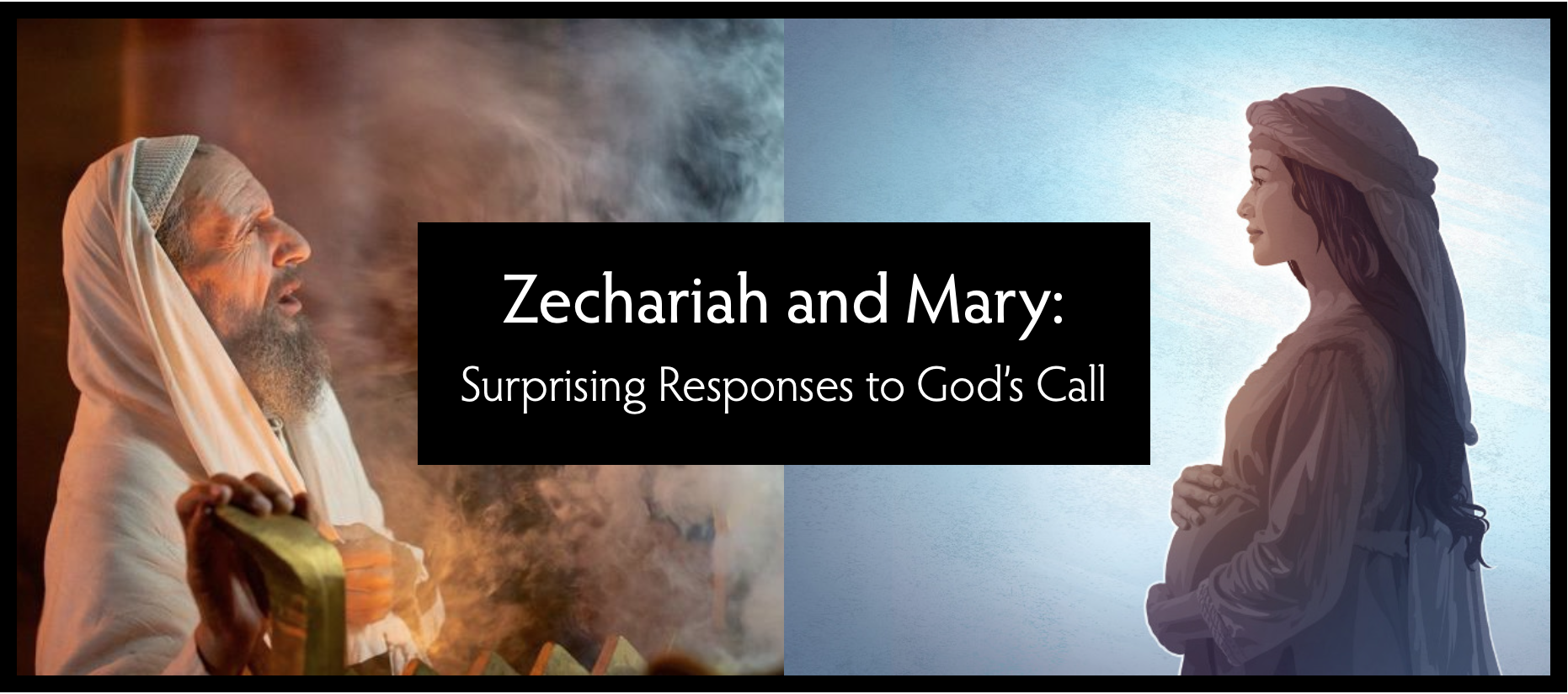
Zechariah and Mary: Surprising Responses to God’s Call

As is likely true for many, at this time of year my thoughts naturally turn to the early chapters of Matthew and Luke and the narratives surrounding the birth of Jesus. This year, I found myself reflecting on the way that Luke portrays the revelations of Gabriel the angel to Zechariah and Mary about the surprising births of their respective sons.

As I have written before, Scripture comes to us as brilliant literature, and we read Scripture better and more faithfully when we are attentive to the literary designs of its authors. In Luke 1, Luke intentionally sets the stories of Zechariah and Mary alongside each other as parallel accounts, and wants his readers to draw conclusions by comparing the two. A quick Google search will reveal that I am hardly the only person to point this out, and you can likely find much better and more detailed analyses than what I offer below. Nevertheless, here are my own brief thoughts.


Zechariah

We are introduced to Zechariah in Luke 1.5. Both he and his wife Elizabeth are from the tribe of Levi, and Zechariah serves as a priest. Both of them are “righteous before God, walking blamelessly in all the commandments and statues of the Lord” (Luke 1.6). Priests and especially chief priests will not always be portrayed positively in Luke’s gospel, but Zechariah is certainly introduced in positive terms. However, he and Elizabeth have lived a life characterized by wanting and heartache: they have no children because Elizabeth is barren, and it is now too late, because they are very old.

While serving in the temple as a priest, an angel appears to him: “Zechariah was troubled when he saw him, and fear fell upon him” (Luke 1.12). The angel tells him not to be afraid, that his prayer had been heard, and that Elizabeth would bear a son who would be named John, who would be great before the Lord, and who, in the spirit of Elijah, would help prepare people to make ready for the Lord.

Zechariah responds in disbelief: “How shall I know this? For I am an old man, and my wife is advanced in years?”[1] To be sure, this is surprising news, but a Priest of Israel could perhaps be expected to be better prepared to accept it, considering that Father Abraham, the progenitor of the Israelite people, experienced a very similar situation. Gabriel at least seemed to expect so, and he tells Zechariah that, as a result of his lack of belief, he will be unable to speak until the day of his son’s birth.[2]

Luke’s narrative diverges at this point to introduce us to Mary (see below). Zechariah’s story resumes later: just as Gabriel had predicted, Elizabeth became pregnant, and Zechariah remains mute until baby John is born. At that point, Zechariah’s tongue is loosened and he blesses God. He then goes on to prophesy about the salvation of God, His faithfulness to the descendants of Abraham, and the special role that John will play in God’s salvific plan.

Mary

We are introduced to Mary in Luke 1.26. She is described as a virgin betrothed to a man named Joseph from the house of David. Gabriel appears to her: “Greetings, O favored one, the Lord is with you!” (Luke 1.28.) She, like Zechariah, is greatly troubled, and is similarly reassured by Gabriel, who tells her not to be afraid, and then lets her know that she will bear a son named Jesus who will be called the Son of the Most High, and who will sit on the throne of David.

Mary responds with confusion: “How will this be, since I am a virgin?” It is likely that Mary is not very old at this point (probably still a teenager), but she is old enough to know that there is no natural way that she can be pregnant. Unlike Zechariah, Gabriel does not respond to Mary with any sort of punishment; rather, he gives her an explanation: it is by the power of the Holy Spirit that she will conceive, the child she bears will be called holy, and as evidence that God is capable of bringing all of this about, her own relative Elizabeth is pregnant as well, despite her age and barrenness. “For nothing will be impossible with God” (Luke 1.37).

Mary responds with humility: “Behold, I am the servant of the Lord; let it be to me according to your word” (Luke 1.37).

Mary then goes to visit her cousin Elizabeth, and stays with her for about three months. When Elizabeth hears Mary’s initial greeting, the baby leaps within her womb,[3] and Elizabeth talks about how blessed she is to be hosting the “mother of my Lord.” She then praises Mary: “blessed is she who believed that there would be fulfillment of what was spoken to her from the Lord” (Luke 1.45). This seems to underscore a fundamental difference in Mary’s response to Gabriel compared to Zechariah despite the superficial similarities: Zechariah was disbelieving; Mary was confused, but faithful.

Zechariah was disbelieving; Mary was confused, but faithful. Share on X

Mary then goes on to speak the beautiful words of the Magnificat, praising the God who looks down on the humble to raise them up, and who shows faithfulness to the descendants of Abraham.

Similarities and Differences

Luke has written these narratives in parallel fashion, and we are meant to compare them. Notice some of the following similarities and dissimilarities:

  • Zechariah is old; the indication is that Mary, unwed and still a virgin, is quite young.
  • Zechariah and Mary are both faithful believers in YHWH, the God of Abraham, Isaac, and Jacob.
  • Zechariah may or may not have been wealthy, but as an aged priest, he would have been a respected member of Jewish society and a religious expert. We have multiple indications that Mary was decidedly not wealthy, and that, combined with her age, marital status, and gender, would indicate that she certainly would not have been a highly respected member of Jewish society.
  • Gabriel the angel appears to both to give them surprising news about impending miraculous pregnancies.[4]
  • Zechariah and Mary are both greatly troubled by Gabriel’s appearance, and have to be reassured to not be afraid.
  • Although both pregnancies are unnatural and miraculous, that of Elizabeth (and Zechariah) has been heard of before: the famous ancestors of the Israelite people, Abraham and Sarah, had a similar story. Mary’s pregnancy is unprecedented.
  • In both of his announcements to Zechariah and Mary, Gabriel mentions the special role that both promised sons will grow up to play: John will prepare people for Jesus (indeed, just as in some ways, Elizabeth’s pregnancy will prepare for Mary’s pregnancy), and Jesus will sit upon the throne of David as the Son of God and promised Messiah.
  • The respected religious leader balks at the message; he seeks proof, is rebuked, and receives the sign of silence for his disbelief. The lowly teenage girl is confused by the message; she humbly submits to what she is told and is praised for her faithfulness…by the wife of the doubting religious leader!
  • Both Mary and Zechariah offer words of praise and prophecy, centering on the God who works in surprising ways in faithfulness to His promises to Abraham.

I’m confident that much more could be said, but these are immediate points of comparison that came to my attention.


So what are we to make of this? Again, I am sure much could be said, but I think that perhaps one of the main points is simply this: often, God does not work as we might expect. The incarnation of Jesus is a multi-faceted, many-layered example of shattered expectations:

  • The basic idea that the omnipotent God of the universe would become mortal and limited flesh at all is shocking.
  • That God would choose to become flesh among an oppressed and disempowered people group is shocking.
  • That God would choose to become flesh not in the circles of the religious elite, but through an unwed teenage girl is shocking.

I do not believe we should be too hard on Zechariah. Remember, he is praised as a righteous man, and despite his hesitating belief, God honors the faithfulness of this aged priest, and gives Zechariah and Elizabeth the honor of birthing and raising the Forerunner of the Messiah. But the greatest honor is reserved for the unwed, pregnant teenager who humbly offers her life in service to the Lord. Mary’s soul “magnified the Lord” (Luke 1.46), but, indeed, He has magnified her as well.

May we follow Mary’s example and say, “Behold, I am the servant of the Lord; let it be to me according to your word.”

May we, like Mary, say, “Behold, I am the servant of the Lord; let it be to me according to your word.” Share on X

[1]In Greek, Zechariah’s question is something like, “By what [thing? sign?] shall I know this?”—there is an implied object that is left unspecified, but Zechariah may be asking Gabriel for proof that what he has said will actually come to be.

[2]It seems that Zechariah gets the sign he is asking for, though it is unlikely that it is the sign that he would have preferred!

[3]John’s prenatal recognition of Jesus (or the mother of Jesus) seems to me to have striking theological significance in current debates regarding the personhood of infants prior to birth.

[4]Let this serve as your periodic reminder that biblical angels are not cute or cuddly; they are terrifying to behold.

Saltless Christians

In Matthew 5.13, early in the Sermon on the Mount, Jesus says,

“You are the salt of the earth, but if salt has lost its taste, how shall its saltiness be restored? It is no longer good for anything except to be thrown out and trampled under people’s feet.”

This is obviously a well-known passage, but what struck me about it this time is just how absurd the metaphor Jesus uses is and how harsh the implication of that metaphor is.

First, the absurdity: can you imagine sitting down at a restaurant with a plate of bland food and reaching for the salt only to discover that the salt had lost its flavor and was itself completely tasteless? Of course not: salt is inherently salty; it can’t be anything else. In the same way, it is absurd for someone to claim to be a Christian, and yet not “taste” anything like Christ. A saltless Christian should be an oxymoron.

And the harshness: did you catch what Jesus said about salt that had lost its taste? He said it was worthless and ought to be thrown out. So while it is absurd to have someone who claims to be a Christian but fails to exhibit the character of Christ, if that absurdity actually happens (and it does, all the time), then those “Christians” are worthless—“no longer good for anything.” Ouch.

It is very tempting for me to soften the words I just typed, but I’m not going to, because Jesus certainly didn’t soften them in the Sermon on the Mount. These words, which come right at the beginning of that sermon, are serious and weighty, and they provide sobering reminders for those of us who claim to be disciples of Jesus: (a) it is absurd for us to call ourselves Christians and then fail to resemble Him in our lives, and (b) if we do that, we are “no longer good for anything.”

According to Jesus, it is absurd for us to call ourselves Christians and then fail to resemble Him in our lives, and if we do that, we are “no longer good for anything” (Matthew 5.13). Share on X

In this loose series of Scripture Reflections, I am sharing brief thoughts spurred on by my Bible reading this year. By way of reminder, my goal for these brief posts is two-fold:

(1) To remark on aspects of the biblical text that I find to be of interest that the reader may or may not have thought about previously.

(2) When possible, to point ahead to the work and person of Jesus Christ. I believe the Bible is a unified story that points to Jesus, which means that He is frequently alluded to or foreshadowed in some way throughout the biblical canon.

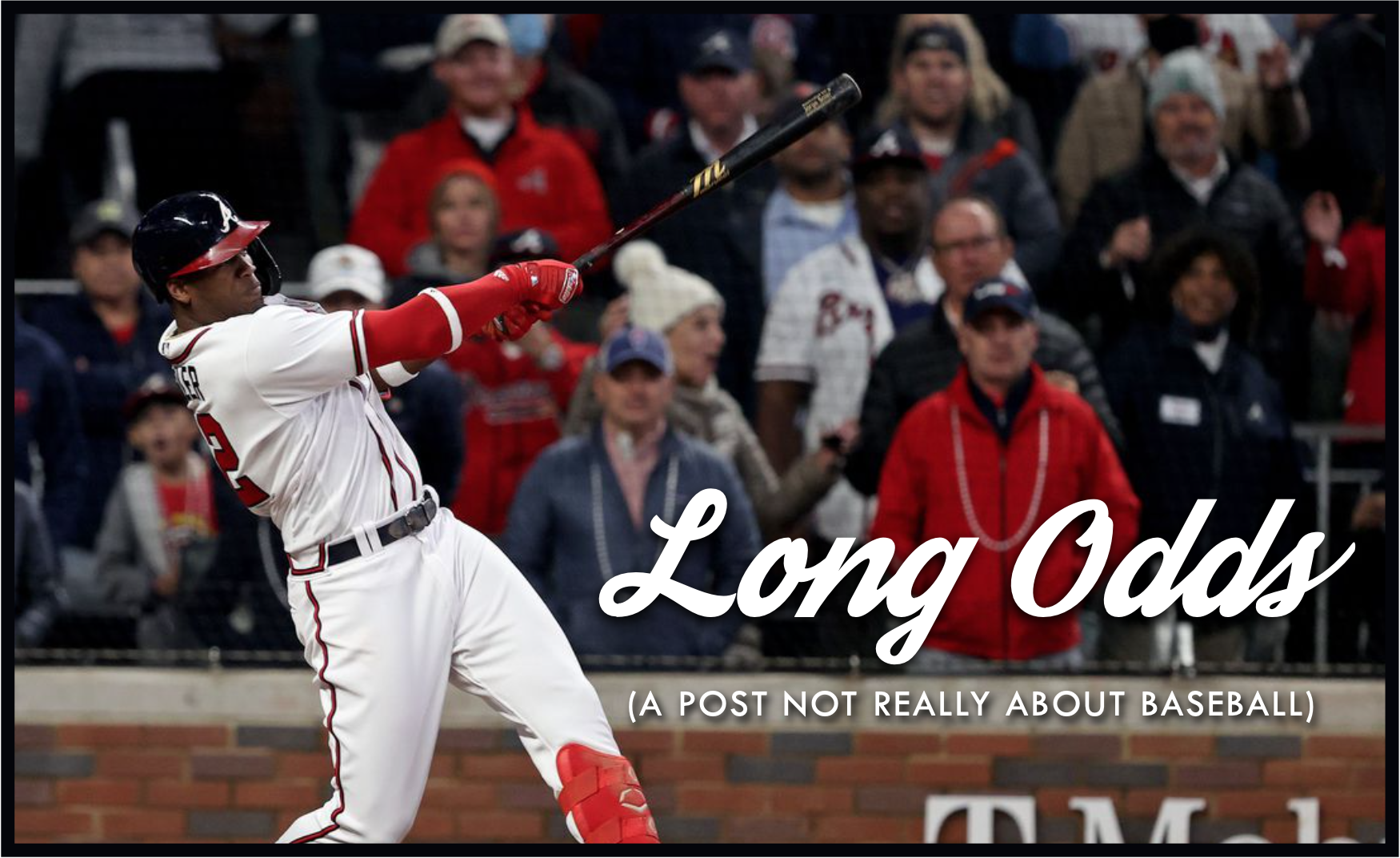
Long Odds (A Post Not Really About Baseball)

Elsa/Getty Images

My team, the Atlanta Braves, won the World Series this past Tuesday evening, defeating the Houston Astros in six games. It was their first World Series victory since 1995, when I was 12 years old. I used to write a lot about baseball and the Braves; I believe baseball is the greatest of sports, partially because of its rich history, and also because of the way that it reveals so much about life and the human condition.

This year’s Atlanta Braves is no different. Let me provide some brief context.

The 2020 Braves played really well in a COVID-shortened season, winning their division and taking the historically-good Los Angeles Dodgers to the brink of elimination in the National League Championship Series, before ultimately losing in heartbreaking fashion. Still, hopes were high for 2021; it looked like the Braves were poised to make another run at the World Series.

Then, everything went wrong.


The Braves’ projected pitching ace, Mike Soroka, who missed most of 2020 with a torn Achilles, tore it again and was lost for the season. Their biggest free-agent signing, Marcell Ozuna, was first injured and then suspended for the rest of the season after a domestic abuse incident with his ex-wife. Ronald Acuña, Jr., arguably the Braves’ best player and a legitimate MVP candidate, tore his ACL while chasing down a fly ball.

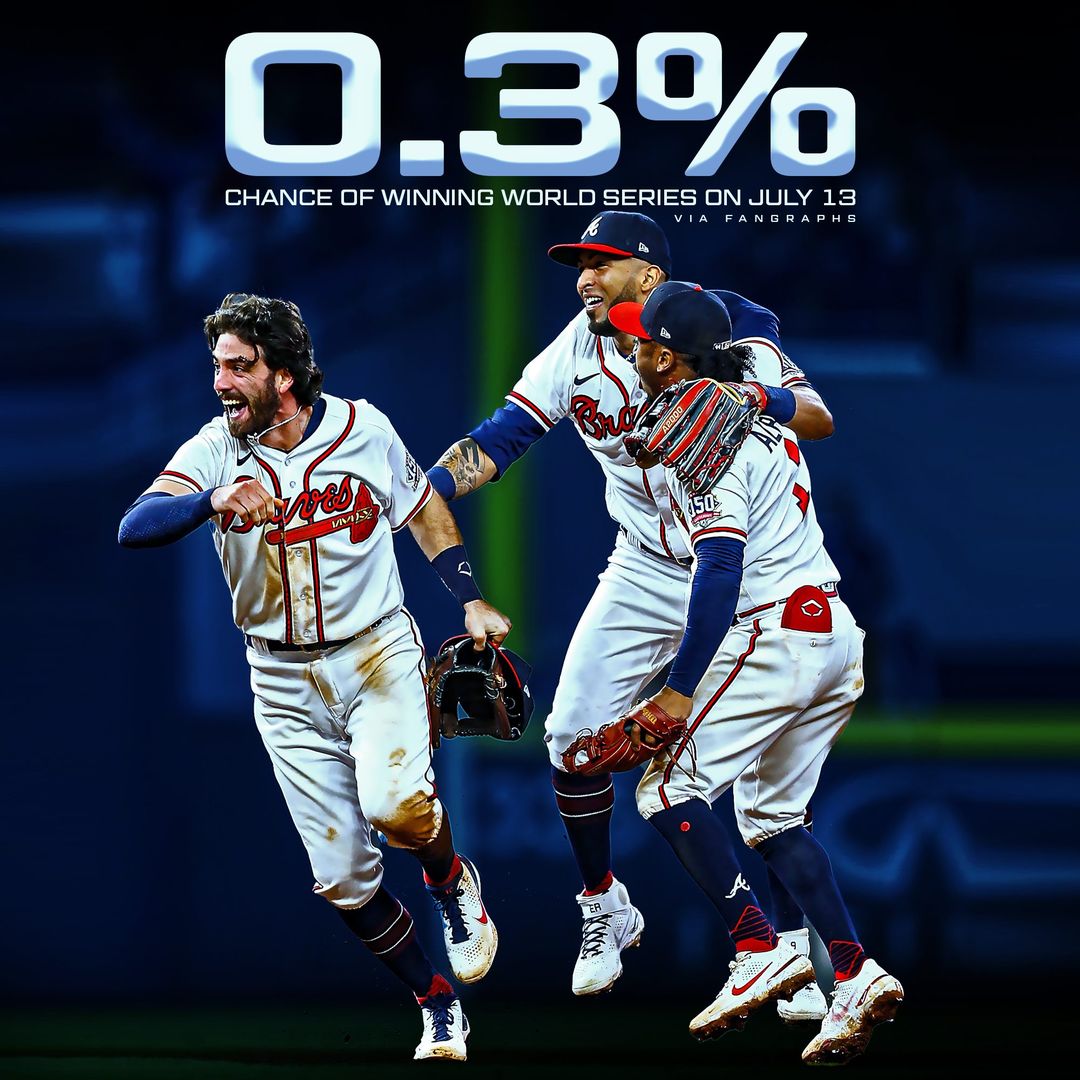
It was a really frustrating season. The Braves were still below .500 at the All-Star break, and, according to FanGraphs, by July 13, had just a 0.3% chance of winning the World Series. Those are long odds.

Against such odds, it would have been the most natural choice in the world for Braves management to throw in the towel, start selling players before the MLB trade deadline, and begin planning for next season. But that’s not what they did. Instead, believing in the team they had, they added several more pieces before the trade deadline, the season completely turned around, and three months later, they had won a World Championship.


Perhaps, you can already see where this not-really-about-baseball post is headed: how often in various aspects of life do we “listen to the odds” and throw in the towel rather than continuing to grind, maybe trying a new approach, and pressing on?

  • I’m thinking of those working or worshiping at declining churches where you just can’t envision how things might turn around…
  • I’m thinking about troubled marriages where it seems like “we’ve tried everything” and there doesn’t seem to be any hope for improvement…
  • I’m thinking of those who are trapped in patterns of sinfulness and can’t seem to break out…
  • I’m thinking of those dealing with estranged relationships with family members, unfaithful children, friendships destroyed by conflict, etc.…

The list goes on and on.


Ezekiel 37 recounts a bizarre story, where Ezekiel is taken to a valley full of bones and the LORD asks him, “Son of man, can these bones live?”

Ezekiel is very unsure about the entire situation. The bones are dry; far past life. The odds of them living again would be very long indeed. But it’s Yahweh that Ezekiel is talking to, and so he says, “O LORD, you know.” God tells him to prophesy over the bones, and as he does so, the bones come together, they are bound by sinews, and then covered with flesh and skin. Yahweh commands Ezekiel further, he prophesies again, and breath comes to the newly formed bodies. They are alive again.

This prophetic object lesson represents the house of Israel. Decimated by Babylon and taken into exile, it looked like all hope was lost. There didn’t seem to be any hope for the future. God was not finished with His people, though, and this was the message He wanted Ezekiel to understand and share.

Israel would live again, but they would be different: God would place His own Spirit within His people (Ezekiel 37.14).


To be clear, what I’m not saying in this post is that God had a hand in the Braves’ improbable World Series run, or that their season turnaround is somehow comparable to the events of Ezekiel 37. In my opinion, baseball is the greatest of all sports, but at the end of the day, it’s just a game. I don’t think that God was too concerned about who won the World Series.

Having said that, look at what can be accomplished through belief, determination, and calculated risk-taking! The Atlanta Braves of July 13 had a 0.3% chance of winning the World Series, but truly, that team didn’t win. Team management believed in the core players of the team, took risks by going out and adding additional players, and through the determination and perseverance of the revamped team, the season turned around completely. The Atlanta Braves won the World Series, but it wasn’t the same team from July. To improve their odds, they tried something different.


With all of this churning in my mind, I am left reflecting on some questions that are really not about baseball at all:

How often do we succumb to the odds simply because we give up too soon rather than continuing to struggle and persevere? It can be difficult to discern how long to stick with something that seems unlikely to work, but a common element of many success stories is the element of near despair before the turning point comes. If we throw in the towel too soon, we guarantee failure.

When the odds are long, are we willing to change the odds by taking risks and changing what we do? Churches that are declining shouldn’t continue to do all of the same things that led to decline in the first place. Those in troubled marriages need to change patterns of behavior if they want circumstances to improve.

Do we believe that God can overcome the long odds in our lives? If long odds—outcomes that seem impossible or at least very improbable—can be overcome by human effort, how much more so can this occur in circumstances where God’s guidance is being sought and where the outcome is clearly in accordance with His will? God may not care who wins the World Series, but don’t you believe He is interested in the health of His church, the healing of your marriage, or the defeat of sin in your life?

Perhaps, it all comes down to this: for those of us who worship a God who brings the dead to life, why would we be concerned about the improbable? What do long odds mean to us?

For those of us who worship a God who brings the dead to life, why would we be concerned about the improbable? Share on X

A Different King Named Jesus

Today’s reflection comes from Acts 17, where Paul and Silas travel to Thessalonica as part of the Second Missionary Journey. As was Paul’s custom, they head first to the synagogue and tell the Jews there about Jesus, using the Hebrew Bible. This method is successful, at least with some:

“Some of the Jews believed Paul and Silas and joined them. In the synagogue there were many Greeks. They worshiped the one true God. There were also many important women. They joined Paul and Silas too.

(Acts 17.4, IEB)

But there are also some Jews who reject Paul and Silas’s message and who, out of jealousy (v.5), hire some men to stir up trouble against them. A mob ensues, and cries out:

”[These men] do things against the laws of Caesar. They say that there is a different king named Jesus.”

(Acts 17.7b)

This proclamation (from a mob, no less!) highlights one of the central truths of Scripture, but one that needs to be carefully nuanced: Jesus is the King of the world.

This idea, that Jesus is King, is what the most popular titles used for Jesus are getting at. When we say that Jesus is Messiah or Christ (the same term in two different languages), the idea is that He is the promised king from the line of David, the One to whom the narrative of the Hebrew Bible points. When we say that Jesus is Lord, we are moving from Hebrew to Roman thought: Lord was the title given to Caesar, the presumed king of the known world. To say that “Jesus is Lord” is to necessarily imply that Caesar is not.

And, indeed, this is the very notion proclaimed in the verse quoted above—the mob was right. Jesus is the King of the world, seated at the right hand of God the Father since His resurrection and ascension. Followers of King Jesus owe ultimate allegiance to Him, and this will invariably put them at odds with various other would-be kings from time to time. For those who are desperate to cling to worldly power and demand ultimate allegiance from their subjects, citizenship in God’s kingdom is an inherent threat. May we never forget that King Herod sought to eliminate the baby Jesus who He viewed as a rival, that Jesus was ultimately crucified with “King of the Jews” nailed above His head as the charge of which He was guilty, and that Peter and Paul would ultimately be martyred under the authority of a rival king (Nero) because of their allegiance to Jesus.

But, the mob was also wrong. While Jesus is certainly King, He is a different kind of king. He wasn’t seeking Herod’s throne, control of the Jewish establishment in Jerusalem, or even the overthrow of the Roman Empire. Such prizes were much too petty for the rightful King of the Universe. This is why Jesus can clearly state that His kingdom is not of this world and that His followers will not use violence to bring it about. It is why early Christians were at pains to show that they were good citizens who sought the welfare of the communities in which they lived (cf. Jeremiah 29.7), loved their neighbors, and submitted to government authorities.

The nuanced kingship of Jesus must lie at the center of the lives and identity of Christians today. On the one hand, Christians should be the best neighbors and citizens around. We are willing to help and sacrifice for our communities because we love others (including our enemies!). We seek to be at peace with all people, so we avoid controversies and quarrels. We appreciate the value of submission, so we obey the laws of our land whenever we can do so in good conscience, even when we find those laws irksome.

On the other hand, our ultimate allegiance is to King Jesus, and our primary citizenship lies in His kingdom, not in whatever earthly nation that we happen to inhabit. This means that we are all-too-aware of the fallenness of our earthly nations. We should not hesitate to critique them when they are in the wrong, and we should not be surprised when they demand from us more allegiance than they have a right to (after all, this is what fallen earthly kingdoms invariably do).

And if and when we are ever placed in a position where we must choose where our loyalties lie, there is no choice: our allegiance is to a different King, and His name is Jesus.

If and when we are ever placed in a position where we must choose where our loyalties lie, there is no choice: our allegiance is to a different King, and His name is Jesus. Share on X

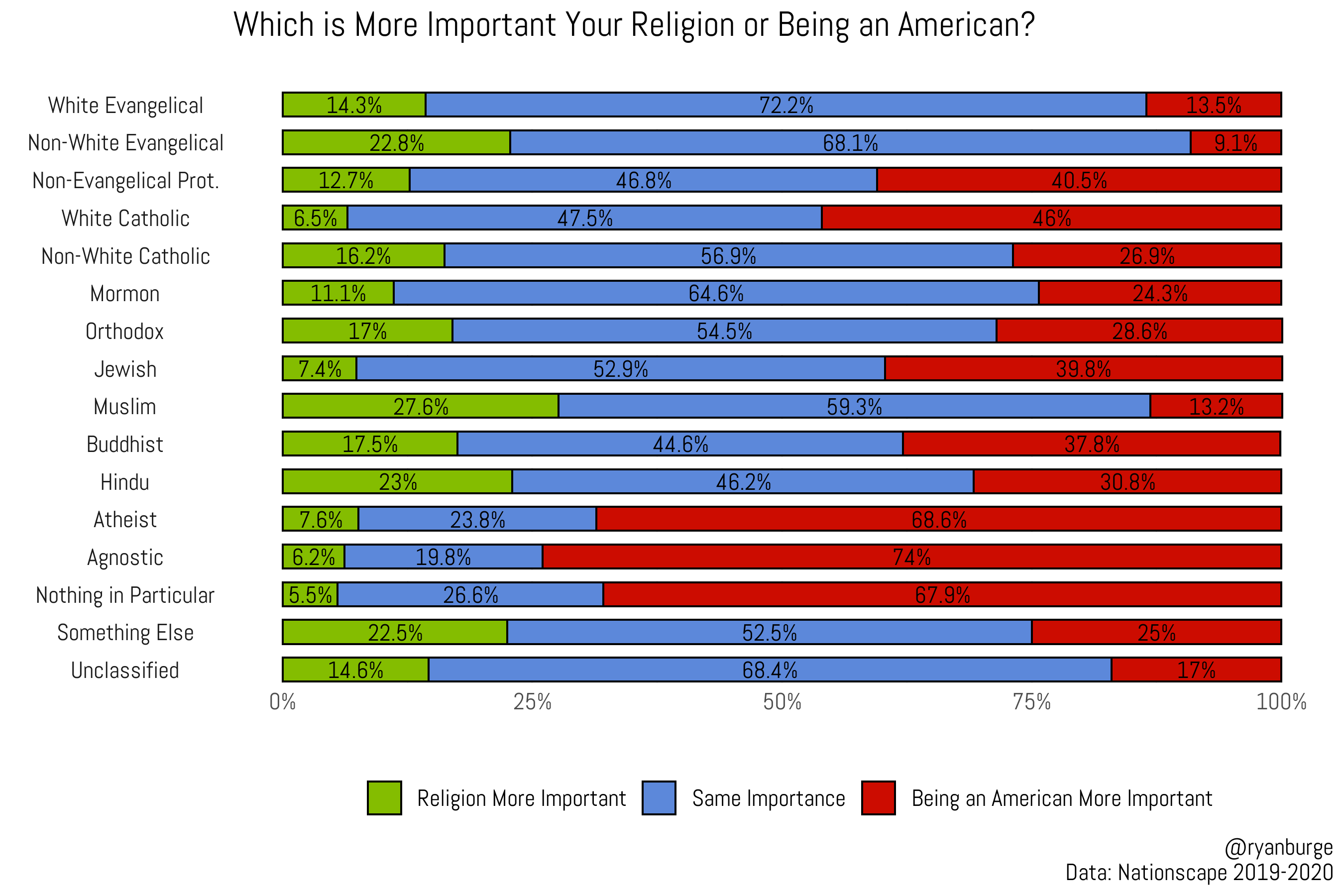
The point of this post—that Jesus is the King of the universe and it is to Him that Christians owe ultimate allegiance—may seem like an obvious point, and, indeed, I think it should be obvious. Sadly, though, research proves otherwise. Consider the following survey results (sourced at the bottom of the graphic):

Obviously, there are many, many people who claim to be “Christian”, but do not embrace the reality at the center of the Christian faith: Jesus is Lord, and that means that no one else is.


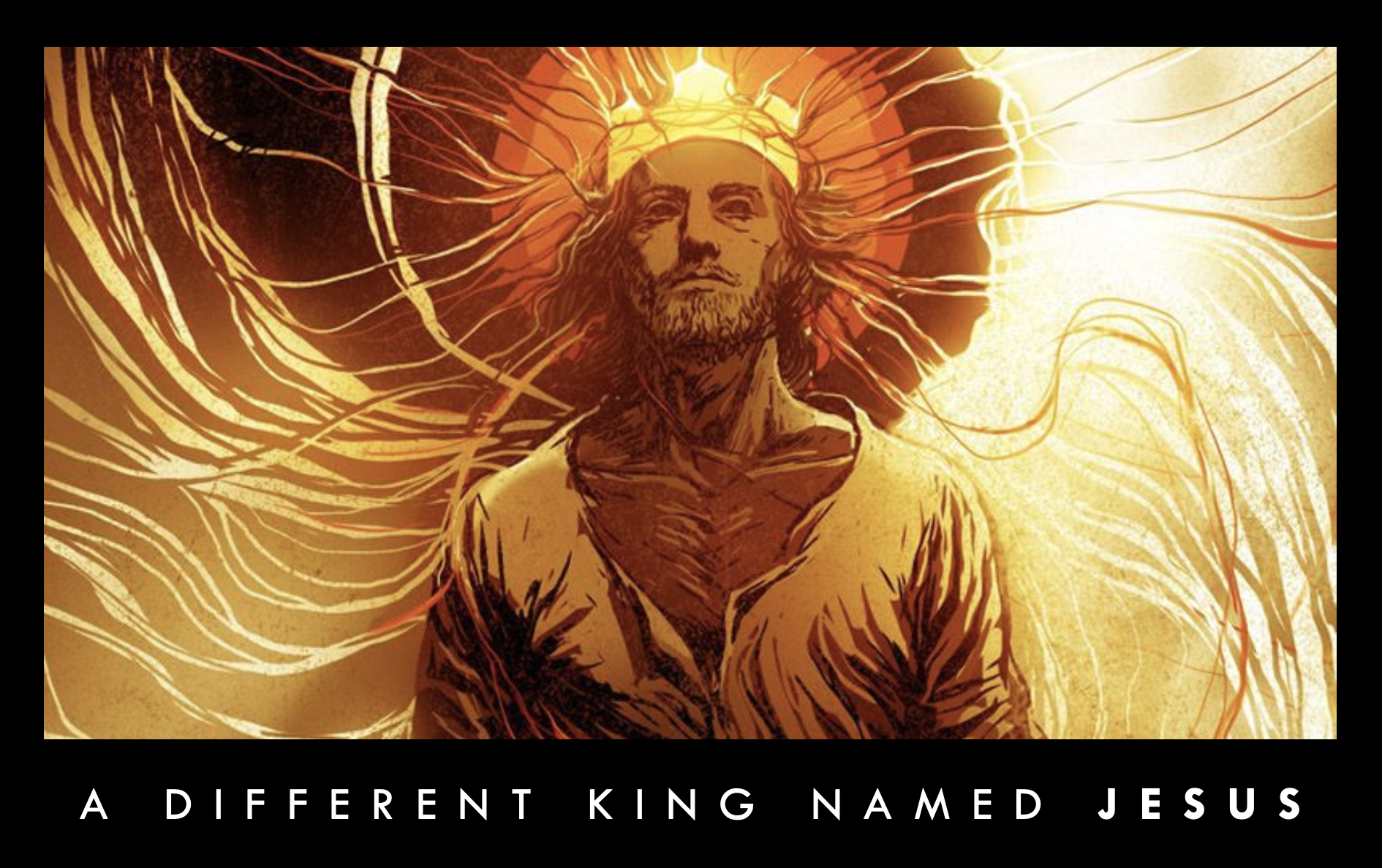
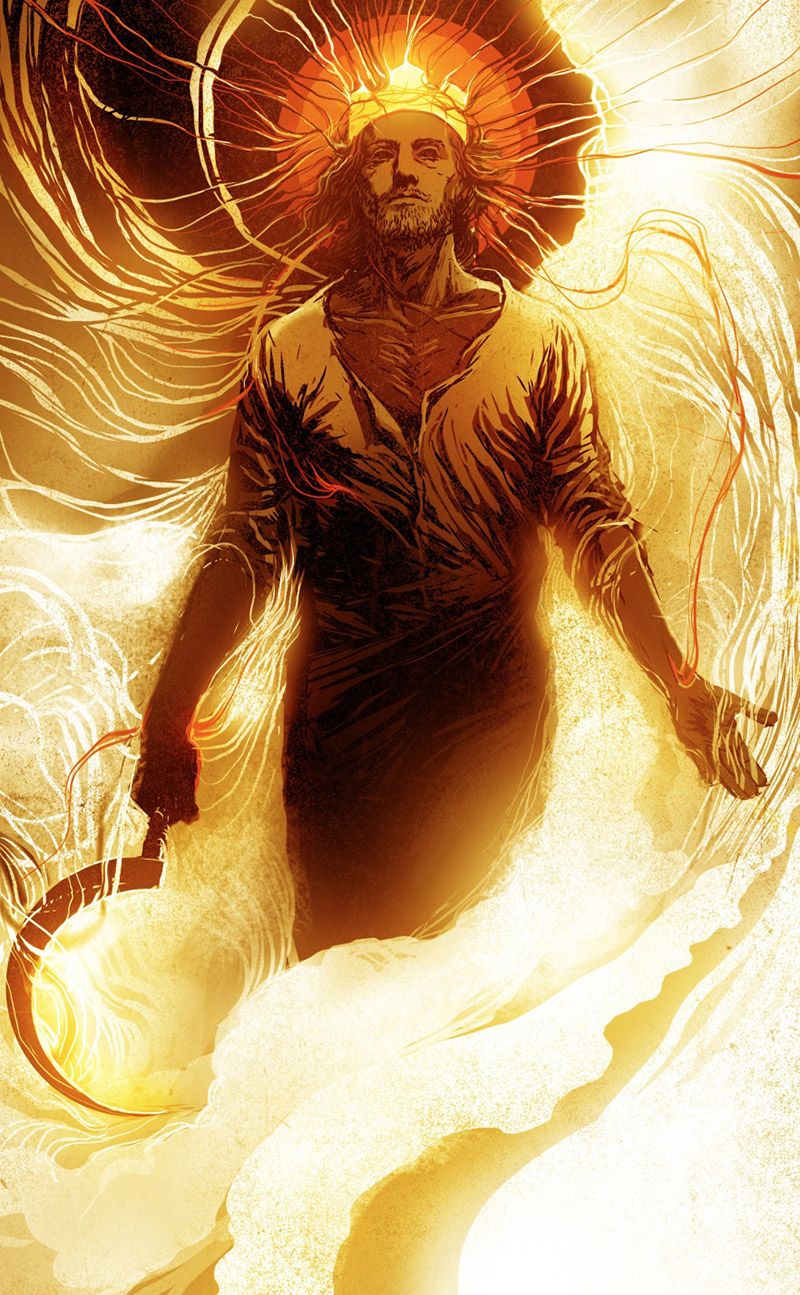
This image, drawing inspiration from the book of Revelation, is one of my favorite images depicting Jesus as King. The artist is Chris Koelle, and it comes from a graphic novel of the Book of  Revelation that I highly recommend.


In this loose series of Scripture Reflections, I am sharing brief thoughts spurred on by my Bible reading this year. By way of reminder, my goal for these brief posts is two-fold:

(1) To remark on aspects of the biblical text that I find to be of interest that the reader may or may not have thought about previously.

(2) When possible, to point ahead to the work and person of Jesus Christ. I believe the Bible is a unified story that points to Jesus, which means that He is frequently alluded to or foreshadowed in some way throughout the biblical canon.

Scripture Reflections Index

The goal for the Scripture Reflections series is two-fold:

(1) To remark on aspects of the biblical text that I find to be of interest that the reader may or may not have thought about previously.

(2) When possible, to point ahead to the work and person of Jesus Christ. I believe the Bible is a unified story that points to Jesus, which means that He is frequently alluded to or foreshadowed in some way throughout the biblical canon.

This is an ongoing series, so this post will function as a sort of index of texts that I have written about:

« Older posts Newer posts »

© 2026 The Doc File

Theme by Anders Noren — Up ↑