The online journal of Luke Dockery

Tag: Scripture Reflections (Page 6 of 7)

2021 Blog Review

I like to end the year by looking back and reviewing my year of blogging here at The Doc File (Here are some previous reviews from 2020, 2019, 2018, 2016, 2015, and 2012).

Overview

Last year was a big year around here, as I published over 50 posts and had the second busiest year in terms of blog traffic. That traffic was related, at least in part, to the uptick in the amount of writing I did, and that increased frequency of writing was significantly tied to COVID-19 and altered routines.

By comparison, 2021 represented a return to all sorts of activities, and especially since September, I have been in an extended season of busyness that has led to not writing much in this space. I published barely half as many posts this year (28) as last year (51). My blog traffic fell at a similar rate.

Top Posts

By traffic totals, here are my most-read posts during 2021:

  1. A New Heaven & A New Earth Series, April 29, 2020
  2. The Role and Character of Elihu in the Book of Job, December 3, 2010
  3. “You! Jonah!”, September 10, 2012
  4. A New Heaven & A New Earth: What the Bible Teaches about Eternity, April 9, 2020
  5. Creation and New Creation: Connections Between Genesis and Revelation, April 25, 2017

As far what was actually written in 2021, here are the top five most-read posts:

  1. Church Camp Baptisms and Mountaintop Christianity, July 2, 2021
  2. The Very Political Book of Revelation, March 25, 2021
  3. The Hero(ine) of It’s A Wonderful Life, December 24, 2021
  4. C.S. Lewis on Dogs and the Love of God, March 2, 2021
  5. Reading in 2020, January 4, 2021

None of my top five posts were written this year (only one top ten post was); my most-read post of the year is actually a table of contents of last year’s series on renewed eschatology, which continues to be read a lot. The posts on Elihu in the Book of Job and the connections between Genesis and Revelation receive a lot of traffic each year; I have no idea why the Jonah post received a lot of traffic.

As for this year’s top posts, “Church Camp Baptisms” was well received and generated a good bit of discussion, as did “The Very Political Book of Revelation.” I published “The Hero(ine) of It’s A Wonderful Life” just this past week, but it struck a chord with a lot of people in the holiday season. I was surprised that “C.S. Lewis on Dogs and the Love of God” and “Reading in 2020” were popular (by being early-year posts, they did have more time to accumulate traffic).

Blog Series

A lot of last year’s writing fit into various blog series. I didn’t do as much of this in 2021, but did work in a couple of series that I wanted to highlight here:

Learning from the Apostolic Fathers: This was a series from earlier in the year, and reflected my reading of The Apostolic Fathers in English and some lessons that I learned from them. This was an important read for me, because reading the early Church Fathers was a hole in my own theological reading (to be clear, I read excerpts from men like Clement, Ignatius, and Polycarp in graduate school, but had not fully read their writings).
This was a worthwhile project for me, but, to my shame, I didn’t finish it as I intended, and hope to conclude with one post on The Didache in early 2022.

Scripture Reflections: This was a series from several years ago that I revived in 2021. Basically, these brief posts are an outgrowth of my own devotional reading and/or Bible study. Generally speaking, my goal for these posts is to remark on aspects of the biblical text that I find to be of interest that the reader may or may not have thought about previously, and, when possible, to point to the work and person of Jesus Christ. Since I believe the Bible is a unified story that points to Jesus, that means that He is frequently alluded to or foreshadowed in some way throughout the biblical canon.

I plan to continue this series in 2022 (and, Lord-willing, beyond). Currently, there are seven posts in the Scripture Reflections Index, but it is my hope that, over time, this index will contains dozens of posts from throughout the biblical canon.


So, that was The Doc File in 2021! I’m not sure what 2022 will look like, but I have many things that I want to write about, and this continues to be a helpful space for me to process my thinking and, hopefully, bless others with what I share.

Thanks to everyone who continues to read and follow, and especially to those who comment and join in the conversation. May God bless each of you in the coming year!

People Jesus Cannot Help

There is an interesting episode recorded in Matthew 8.10-12, in the context of Jesus calling Matthew to follow Him:

And as Jesus reclined at table in the house, behold, many tax collectors and sinners came and were reclining with Jesus and His disciples. And when the Pharisees saw this, they said to his disciples, “Why does your teacher eat with tax collectors and sinners?” But when He heard it, He said, “Those who are well have no need of a physician, but those who are sick.”

Perhaps you have heard the expression, “The church is a hospital for sinners, not a museum for saints.” I have a few quibbles with that saying, but I think it does highlight the truth that the church is not a place for people who have everything figured out, but rather, is the place for people who realize that they absolutely cannot figure everything out on their own.


The Pharisees who feuded so frequently with Jesus were the sort of people who thought they had everything figured out on their own. They thought they had cornered the market on truth and personal holiness, and had rigid codes about who they would and would not associate with. For them, it was unthinkable that a genuinely holy teacher would willingly choose to associate with those who were spiritually sick, and they made every effort to keep their distance from the sinners who were so different from them.

The Pharisees were correct that there was a difference between them and the “tax collectors and sinners”, but it wasn’t the difference they assumed. You see, like the sinners they avoided, the Pharisees were sick too, because all people sin and fall short of God’s glory (Romans 3.23). The crucial difference was that unlike the tax collectors and sinners, who recognized their spiritual sickness and craved the healing presence of the Great Physician, the Pharisees deceived themselves into thinking they were well and thus, had no need of Jesus.

To return to an earlier metaphor, hospitals can help a lot of people who are ill, but they can’t help anyone who refuses admission to the hospital because they deny that they are sick! Put in another way, all of us are sick, but those who consider themselves to be well have no use for Jesus. And that is the really tragic thing: Jesus can help anyone who can admit that they need help! It is those who stubbornly maintain that there is no problem that He can do nothing for.

Jesus can help anyone who can admit that they need help! It is those who stubbornly maintain that there is no problem that He can do nothing for. Share on X

So the question we all must ask ourselves is, “Do I (mistakenly) believe I am healthy, or do I realize that I am sick?”

When I look at a person who is lost and in bondage to sin, there is a difference between that person and myself. The difference is not that they are spiritually sick and that I am immune from such a sickness; the difference is that I have been to see the Doctor! The Great Physician has diagnosed my illness and given me a prescription of His blood!

May we always be mindful of our own inherent sickness, humble enough to accept Christ’s cure, and caring enough to share that cure with others.


In this loose series of Scripture Reflections, I am sharing brief thoughts spurred on by my Bible reading this year. By way of reminder, my goal for these brief posts is two-fold:

(1) To remark on aspects of the biblical text that I find to be of interest that the reader may or may not have thought about previously.

(2) When possible, to point ahead to the work and person of Jesus Christ. I believe the Bible is a unified story that points to Jesus, which means that He is frequently alluded to or foreshadowed in some way throughout the biblical canon.

A Different King Named Jesus

Today’s reflection comes from Acts 17, where Paul and Silas travel to Thessalonica as part of the Second Missionary Journey. As was Paul’s custom, they head first to the synagogue and tell the Jews there about Jesus, using the Hebrew Bible. This method is successful, at least with some:

“Some of the Jews believed Paul and Silas and joined them. In the synagogue there were many Greeks. They worshiped the one true God. There were also many important women. They joined Paul and Silas too.

(Acts 17.4, IEB)

But there are also some Jews who reject Paul and Silas’s message and who, out of jealousy (v.5), hire some men to stir up trouble against them. A mob ensues, and cries out:

”[These men] do things against the laws of Caesar. They say that there is a different king named Jesus.”

(Acts 17.7b)

This proclamation (from a mob, no less!) highlights one of the central truths of Scripture, but one that needs to be carefully nuanced: Jesus is the King of the world.

This idea, that Jesus is King, is what the most popular titles used for Jesus are getting at. When we say that Jesus is Messiah or Christ (the same term in two different languages), the idea is that He is the promised king from the line of David, the One to whom the narrative of the Hebrew Bible points. When we say that Jesus is Lord, we are moving from Hebrew to Roman thought: Lord was the title given to Caesar, the presumed king of the known world. To say that “Jesus is Lord” is to necessarily imply that Caesar is not.

And, indeed, this is the very notion proclaimed in the verse quoted above—the mob was right. Jesus is the King of the world, seated at the right hand of God the Father since His resurrection and ascension. Followers of King Jesus owe ultimate allegiance to Him, and this will invariably put them at odds with various other would-be kings from time to time. For those who are desperate to cling to worldly power and demand ultimate allegiance from their subjects, citizenship in God’s kingdom is an inherent threat. May we never forget that King Herod sought to eliminate the baby Jesus who He viewed as a rival, that Jesus was ultimately crucified with “King of the Jews” nailed above His head as the charge of which He was guilty, and that Peter and Paul would ultimately be martyred under the authority of a rival king (Nero) because of their allegiance to Jesus.

But, the mob was also wrong. While Jesus is certainly King, He is a different kind of king. He wasn’t seeking Herod’s throne, control of the Jewish establishment in Jerusalem, or even the overthrow of the Roman Empire. Such prizes were much too petty for the rightful King of the Universe. This is why Jesus can clearly state that His kingdom is not of this world and that His followers will not use violence to bring it about. It is why early Christians were at pains to show that they were good citizens who sought the welfare of the communities in which they lived (cf. Jeremiah 29.7), loved their neighbors, and submitted to government authorities.

The nuanced kingship of Jesus must lie at the center of the lives and identity of Christians today. On the one hand, Christians should be the best neighbors and citizens around. We are willing to help and sacrifice for our communities because we love others (including our enemies!). We seek to be at peace with all people, so we avoid controversies and quarrels. We appreciate the value of submission, so we obey the laws of our land whenever we can do so in good conscience, even when we find those laws irksome.

On the other hand, our ultimate allegiance is to King Jesus, and our primary citizenship lies in His kingdom, not in whatever earthly nation that we happen to inhabit. This means that we are all-too-aware of the fallenness of our earthly nations. We should not hesitate to critique them when they are in the wrong, and we should not be surprised when they demand from us more allegiance than they have a right to (after all, this is what fallen earthly kingdoms invariably do).

And if and when we are ever placed in a position where we must choose where our loyalties lie, there is no choice: our allegiance is to a different King, and His name is Jesus.

If and when we are ever placed in a position where we must choose where our loyalties lie, there is no choice: our allegiance is to a different King, and His name is Jesus. Share on X

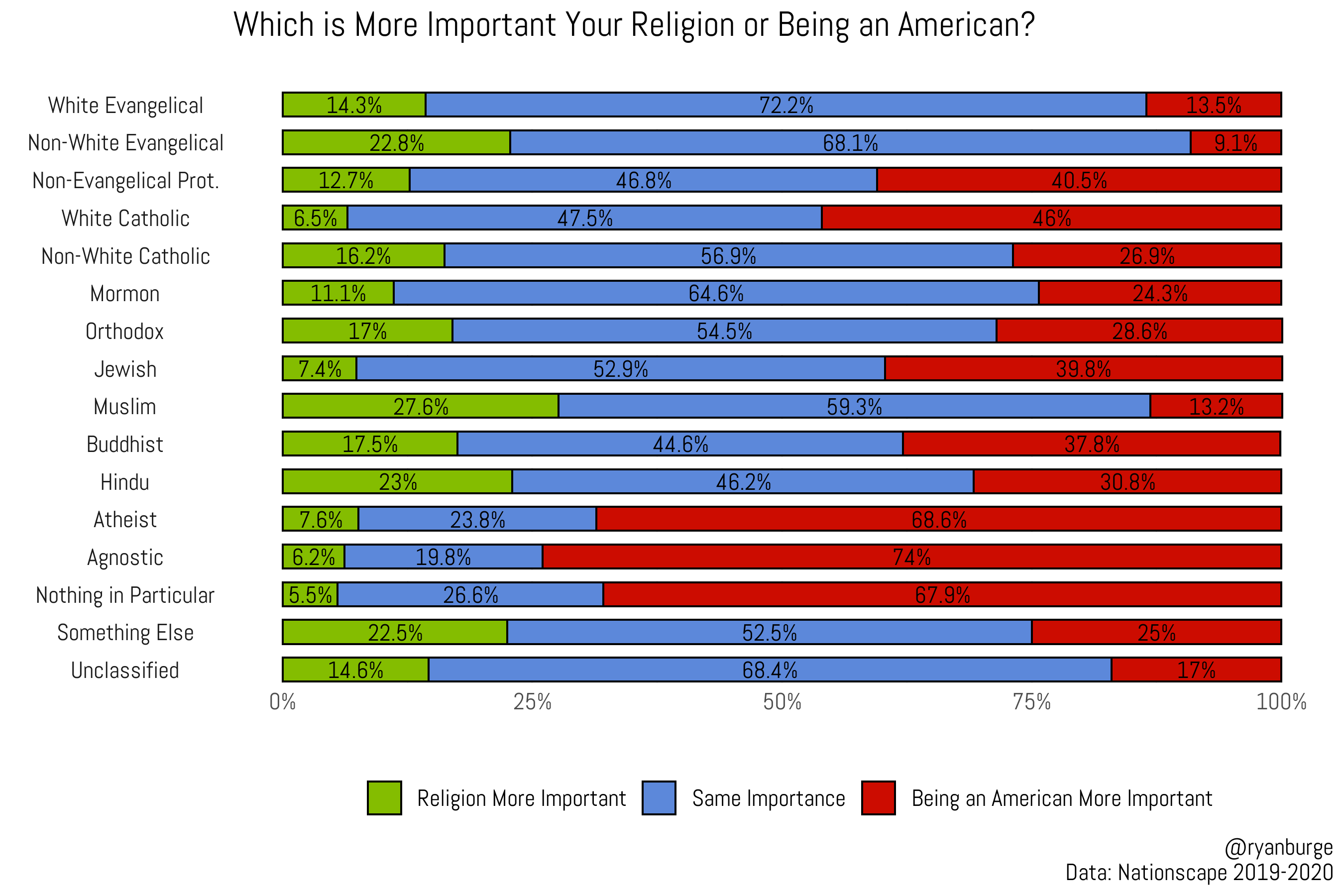
The point of this post—that Jesus is the King of the universe and it is to Him that Christians owe ultimate allegiance—may seem like an obvious point, and, indeed, I think it should be obvious. Sadly, though, research proves otherwise. Consider the following survey results (sourced at the bottom of the graphic):

Obviously, there are many, many people who claim to be “Christian”, but do not embrace the reality at the center of the Christian faith: Jesus is Lord, and that means that no one else is.


This image, drawing inspiration from the book of Revelation, is one of my favorite images depicting Jesus as King. The artist is Chris Koelle, and it comes from a graphic novel of the Book of  Revelation that I highly recommend.


In this loose series of Scripture Reflections, I am sharing brief thoughts spurred on by my Bible reading this year. By way of reminder, my goal for these brief posts is two-fold:

(1) To remark on aspects of the biblical text that I find to be of interest that the reader may or may not have thought about previously.

(2) When possible, to point ahead to the work and person of Jesus Christ. I believe the Bible is a unified story that points to Jesus, which means that He is frequently alluded to or foreshadowed in some way throughout the biblical canon.

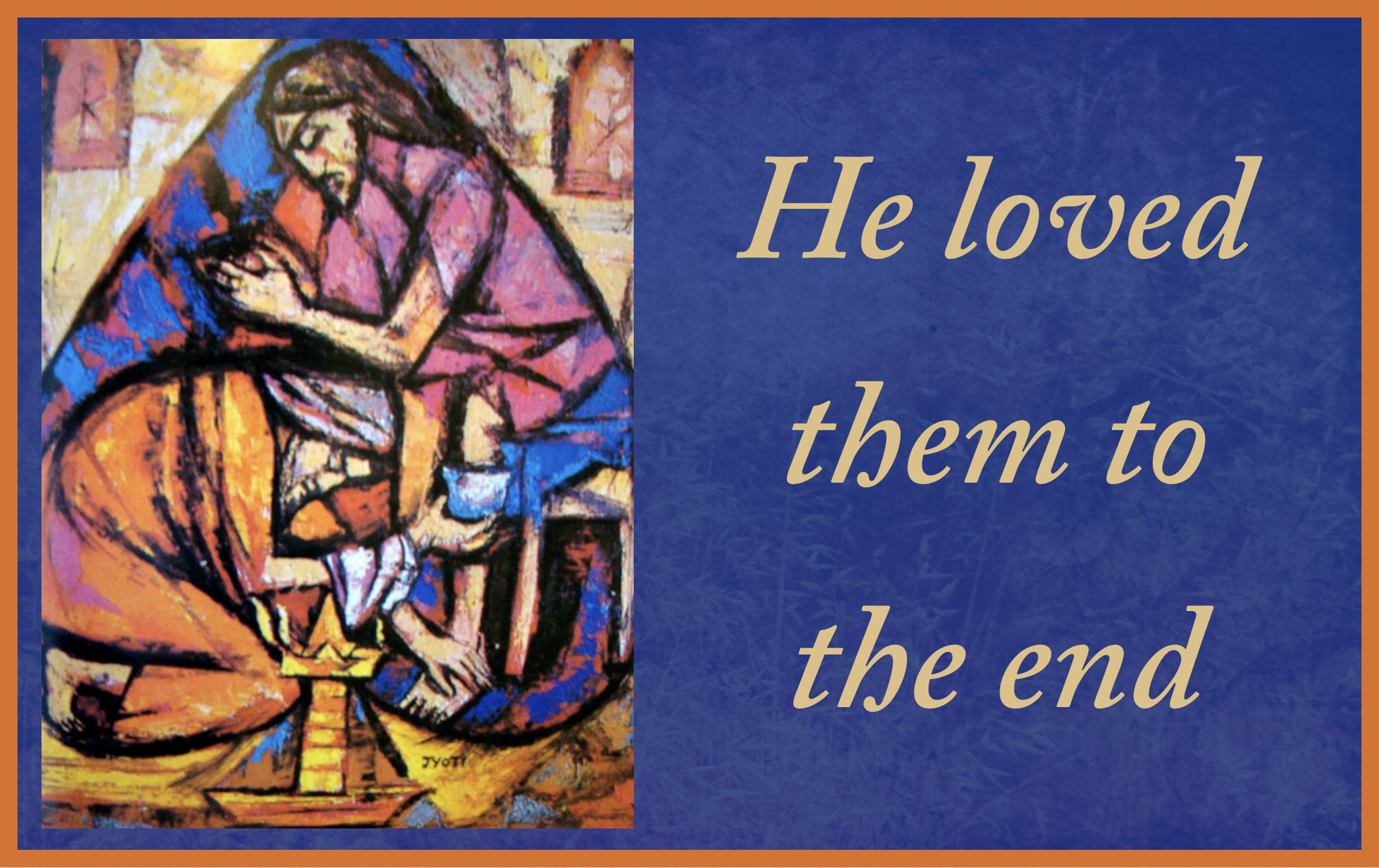
“He Loved Them to the End”

Today’s reflection comes from John 13 (the daily Bible reading format I am following this year involves readings from both testaments each day), the beginning of what is typically referred to as Jesus’ “Farewell Discourse”—teachings from John 13-17 that Jesus delivers to His disciples on the night that He was betrayed.

The content of John 13 is introduced to us in verse 1 with these interesting words:

“Now before the Feast of the Passover, when Jesus knew that His hour had come to depart out of this world to the Father, having loved His own who were in the world, He loved them to the end.”

Jesus knows He is about to die, and with this knowledge in mind, how does He spend His last evening? He chooses to spend it with “His own”, the disciples He had led and lived with for years, whom He loved. This seems straightforward enough, right? If you knew that you were about to die, I suspect that you would want to spend your remaining time with those you love. I would too.

But there is more to the story. John 13 is all about love, and the introductory verse we just read sets us up to examine the love that Jesus shows for His disciples compared to their response to Him.

The chapter looks something like this, in outline form:

13.1: Jesus loved His own to the end [Summary Statement]

13.2-20: Jesus shows His love by washing the disciples’ feet [Exemplary Love of Jesus]

13.21-30: Jesus predicts the betrayal by Judas [Disciples’ Failure to Love]

13.31-35: Jesus encourages the disciples to love like He has loved them [Exemplary Love of Jesus]

13.26-38: Jesus predicts the denial by Peter [Disciples’ Failure to Love]

With this outline in mind, the last night of Jesus becomes remarkable rather than straightforward. Jesus spends His last night washing the feet of those who will betray, deny, and desert Him hours later. He knows that this will happen, and this is still how He chooses to spend His last evening: loving those who will fail to love Him.

If you knew you were about to die, is this what you would do? Neither would I.

As I look around in the world in which we live, I see a desperate need for love. I witness all sorts of people cutting off ties and cancelling relationships with “their own”—family members, longtime friends, brothers and sisters in Christ—rather than “loving them to the end.”

I think we find God’s answer to the bitter division and rancor of our times in this text and the example of Jesus: we are to love as Christ has loved us. Jesus loved His disciples even when He knew they would fail to love Him in return. He loves us even when we forsake Him. And He calls us to love in the same way.

In a society that normalizes and encourages the dissolution of relationships when we disagree over a whole host of issues, Jesus offers—commands, actually—another way.

It is not easy, but it is clear: “He loved them until the end.”

Jyoti Sahi, Jesus Washing the Feet of Peter, Oil on Canvas


In this loose series of Scripture Reflections, I am sharing brief thoughts spurred on by my Bible reading this year. By way of reminder, my goal for these brief posts is two-fold:

(1) To remark on aspects of the biblical text that I find to be of interest that the reader may or may not have thought about previously.

(2) When possible, to point ahead to the work and person of Jesus Christ. I believe the Bible is a unified story that points to Jesus, which means that He is frequently alluded to or foreshadowed in some way throughout the biblical canon.

Scripture Reflections Index

The goal for the Scripture Reflections series is two-fold:

(1) To remark on aspects of the biblical text that I find to be of interest that the reader may or may not have thought about previously.

(2) When possible, to point ahead to the work and person of Jesus Christ. I believe the Bible is a unified story that points to Jesus, which means that He is frequently alluded to or foreshadowed in some way throughout the biblical canon.

This is an ongoing series, so this post will function as a sort of index of texts that I have written about:

« Older posts Newer posts »

© 2026 The Doc File

Theme by Anders Noren — Up ↑